What is a control room? A guide for UK security professionals
TL;DR:
- Modern control rooms are centralized hubs integrating surveillance, alarms, sensors, and communication systems.
- Progression from reactive to proactive, intelligence-led operations improves response speed and effectiveness.
- Skilled staff and governance are more critical than technology alone for effective security management.
Control rooms are routinely dismissed as rooms full of screens and bored operators watching CCTV feeds. That view is dangerously outdated. In reality, a control room is the operational nerve centre of any serious security operation, the place where information converges, decisions get made, and incidents are prevented before they escalate. For security professionals across the UK, understanding what a control room truly does, how it evolves, and what it demands of the people inside it is no longer optional. It is fundamental to performing your role well and progressing your career in a sector that is growing rapidly in complexity and expectation.
Table of Contents
- Defining the modern control room
- Control room maturity: From reactive to proactive operations
- The impact of technology and skilled staff
- Benchmarking, compliance, and real-world challenges in the UK
- Why the human factor still trumps technology in control rooms
- Advance your security career in control room operations
- Frequently asked questions
Key Takeaways
| Point | Details |
|---|---|
| Central role | Control rooms serve as the operational core for security professionals, enabling rapid detection and response. |
| Maturity matters | Advancing from reactive to intelligence-driven operations boosts safety and efficiency. |
| Skilled staff | Well-trained operators are as important as advanced technology in effective control room management. |
| Compliance and benchmarks | UK control rooms improve outcomes by meeting compliance, benchmarking, and addressing complex incidents. |
| Career growth | Mastering control room skills opens doors to rewarding roles in modern security. |
Defining the modern control room
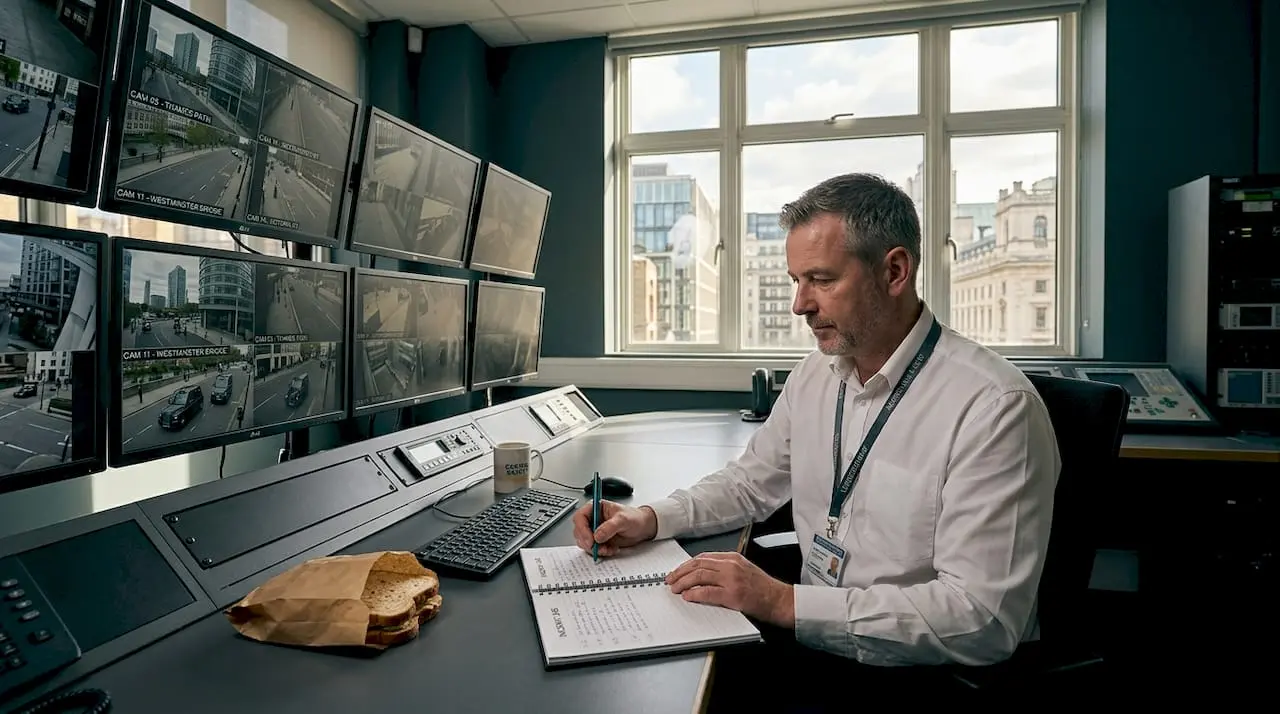
Ask ten people in the industry to define a control room and you will get ten slightly different answers. Some focus on the hardware. Others talk about the staff. The most accurate definition brings both together. A security control room is a centralised hub where personnel monitor real-time data from CCTV, alarms, sensors, and other systems to detect anomalies, coordinate responses, and manage incidents for enhanced safety and efficiency.
That centralisation is the key word. A control room is not just a place to observe; it is where fragmented information from across a site or multiple sites is pulled into a single operational picture. Without that centralisation, security becomes a patchwork of disconnected responses. With it, you get coordinated, consistent, fast action.
In UK security contexts, a control room will typically integrate several core systems working together:
- CCTV and video analytics for visual surveillance and automated anomaly detection
- Intruder alarm systems linked to zonal maps for immediate spatial awareness
- Environmental sensors such as smoke, heat, and flood detectors for life safety
- Access control systems monitoring entry and exit across secured perimeters
- Radio and communications infrastructure connecting control room operators to mobile response teams
- Visitor management and intercom systems for controlled site access
The essential outputs from all of this are detection, coordination, and incident management. Detection means identifying a threat or anomaly before it becomes a crisis. Coordination means getting the right people and resources responding in the right order. Incident management means documenting, escalating, and resolving events in a structured way that protects both people and organisations legally.
Good CCTV monitoring in security is only one layer of the picture. What makes a control room genuinely powerful is the way it ties integrated security systems together into a coherent operational framework. Without that integration, you are effectively running several isolated operations under one roof, which defeats the purpose entirely.
“The value of a control room is not measured by the number of screens on the wall. It is measured by the quality of decisions made and the speed at which the right people act on them.”
Operationally, a well-run control room reduces physical guarding costs, improves situational awareness, shortens response times, and provides an auditable record of events. For anyone working in or managing security operations across the UK, these are not abstract benefits. They translate directly into safer sites and stronger client relationships.
Control room maturity: From reactive to proactive operations
Not all control rooms are created equal. Some function as little more than alarm monitoring stations. Others operate as intelligence-led command centres capable of anticipating threats before they materialise. The difference lies in what security professionals refer to as control room maturity.
Maturity levels progress from reactive monitoring at Level 1 through to intelligence-led operations at Level 5, incorporating governance, analytics, and standard operating procedures (SOPs) at each stage.
Understanding where a control room sits on this spectrum helps you identify what needs to change and in what order.
| Maturity level | Description | Key features |
|---|---|---|
| Level 1: Reactive | Basic alarm and CCTV monitoring | Manual logs, no SOPs, ad hoc responses |
| Level 2: Aware | Consistent incident recording | Basic SOPs, some training in place |
| Level 3: Structured | Defined processes and governance | Role clarity, escalation protocols, KPIs tracked |
| Level 4: Analytical | Data-driven operations | Video analytics, trend analysis, shift debriefs |
| Level 5: Adaptive | Intelligence-led, proactive security | Predictive tools, continuous improvement, full governance |
Most UK commercial control rooms currently operate between Level 2 and Level 3. That leaves a significant gap between where operations typically sit and where they could be. The jump from Level 2 to Level 3 alone requires investment in clear documentation, defined roles, and structured training. None of that is especially costly. What it demands is discipline and commitment from leadership.
Advancing up the maturity ladder delivers tangible benefits. At Level 3, response times improve because everyone knows their role. At Level 4, false alarm rates drop as analytics filter out noise. At Level 5, security teams shift from responding to threats to predicting and preventing them. That is a fundamentally different and far more valuable service.
Pro Tip: Before investing in new technology, audit your existing SOPs and training quality. A Level 5 technology stack installed in a Level 1 culture will perform like a Level 1 operation. Raising your team’s competence through practical security training consistently delivers better returns than hardware upgrades alone.
The maturity model also helps with client conversations. Being able to demonstrate that your control room operates at Level 4 with measurable KPIs and documented governance is a significant commercial differentiator in a competitive market.
The impact of technology and skilled staff
Technology has transformed what is possible in a control room environment. But the single most important insight from the last decade of control room development is this: technology alone does not make a control room effective. Advanced control rooms shift security from reactive to proactive via AI and predictive analytics, but success hinges on governance, skilled staff, and maturity progression rather than tech alone.
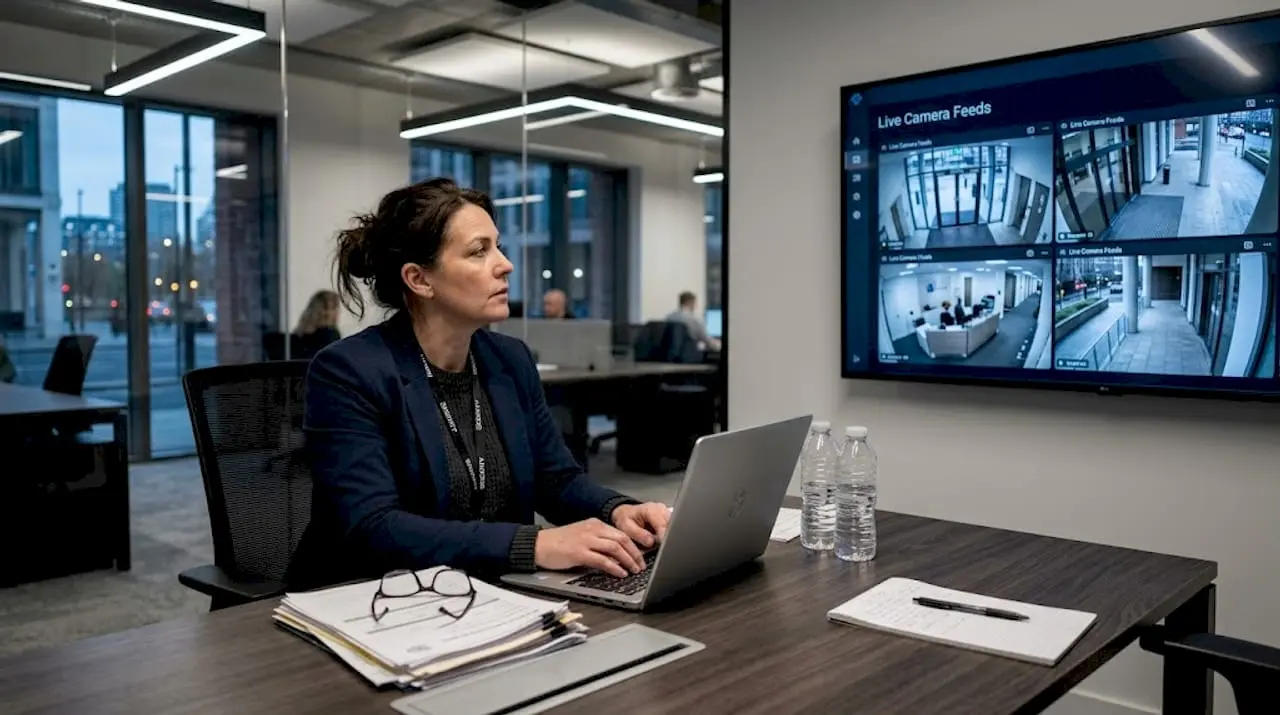
Modern control rooms deploy an impressive range of tools. Artificial intelligence can now scan hundreds of camera feeds simultaneously and flag unusual behaviour, such as someone moving against a crowd flow or loitering near a secured perimeter. Predictive analytics use historical incident data to identify times, locations, and conditions where threats are more likely. Communications platforms integrate radio, telephone, and digital channels to reduce response coordination time.
The data makes a compelling case for the impact these tools have when implemented correctly:
| Technology | Operational impact | Example metric |
|---|---|---|
| AI video analytics | Reduces manual monitoring load | Up to 60% fewer false alerts |
| Predictive analytics | Earlier threat identification | Incidents flagged 15 min earlier on average |
| Integrated comms platforms | Faster response coordination | Call handling times reduced by up to 30% |
| Access control integration | Faster site lockdown | Full perimeter secured in under 2 minutes |
But these numbers only hold when the humans using the systems are competent and supported. The roles required inside an effective control room go well beyond “CCTV operator.” Skilled control room personnel need to demonstrate:
- Situational awareness across multiple simultaneous information streams
- Decision-making under pressure without clear precedent or supervisor input
- Communication skills to coordinate mobile teams accurately and calmly
- Technical literacy to operate and troubleshoot integrated platforms
- Incident documentation to produce accurate, legally defensible records
Investing in security training examples for control room operators should be a priority for any organisation serious about operational effectiveness. And when hiring, screening for the key qualities in security staff that translate into control room performance, namely composure, attention to detail, and communication ability, is essential rather than optional.
The uncomfortable truth is that many organisations invest heavily in screens, software, and sensors, then staff those expensive systems with undertrained operators working from unclear procedures. The result is an expensive room that performs at Level 1 maturity. Technology amplifies what your people can do. It does not replace the need for capable, trained, well-supported staff.
Benchmarking, compliance, and real-world challenges in the UK
For security professionals working across the UK, control room performance is not just an internal aspiration. It is measured, regulated, and increasingly scrutinised by clients, regulators, and national bodies.
Performance benchmarks in UK control rooms typically focus on response times, false positive rates, and mean time to detect and resolve incidents. The impact of upgrading a control room can be dramatic. Following a system upgrade, Suffolk Police answered 91% of emergency calls within 10 seconds, demonstrating what structured investment in control room capability can achieve in practice.
Compliance frameworks shape how control rooms must operate. The National Protective Security Authority (NPSA) sets specific guidance for security control room operators working in environments exposed to terrorist risk. The Health and Safety Executive (HSE) imposes requirements around lone worker monitoring and emergency procedures. The UK’s broader counter-terrorism strategy requires that control rooms in high-risk locations demonstrate they can support evacuation, communication, and evidence capture under major incident conditions.
“Compliance is not a ceiling. It is a floor. The best-performing UK control rooms treat national standards as a starting point, not an endpoint.”
Real-world challenges in UK control rooms are diverse and demanding. Here are the core steps a well-prepared operator should follow when managing a serious incident, whether a security breach, fire, or suspected terrorist activity:
- Confirm the alert using multiple data sources to establish it is genuine, not a false positive
- Escalate immediately according to the site SOP, notifying supervisors and emergency services as appropriate
- Activate communications to coordinate mobile response teams and manage access points
- Deploy PA and CCTV to support crowd management and provide real-time situational awareness
- Document continuously throughout the incident, logging actions, timings, and personnel involved
- Support handover to emergency services with accurate, structured briefing on what has occurred
Specialist situations such as terrorist incidents introduce additional layers of complexity. The NPSA’s course for security control room operators specifically addresses anomaly detection, crowd evacuation using PA and CCTV systems, and the coordination required when multiple agencies are involved simultaneously. High-footfall environments like shopping centres, transport hubs, and stadiums present particular challenges where skilled operators, not technology, make the critical difference in the first minutes of an incident.
Operators who have developed strong conflict management skills are significantly better placed to perform under these conditions. Staying calm, prioritising accurately, and communicating clearly when everything is happening at once is what separates a good control room professional from an average one.
Why the human factor still trumps technology in control rooms
We spend a lot of time in this industry talking about the latest technology, and rightly so. AI video analytics, predictive platforms, and integrated communications genuinely change what is possible. But there is a tendency to assume that deploying better technology automatically produces better security. That assumption leads organisations into expensive mistakes.
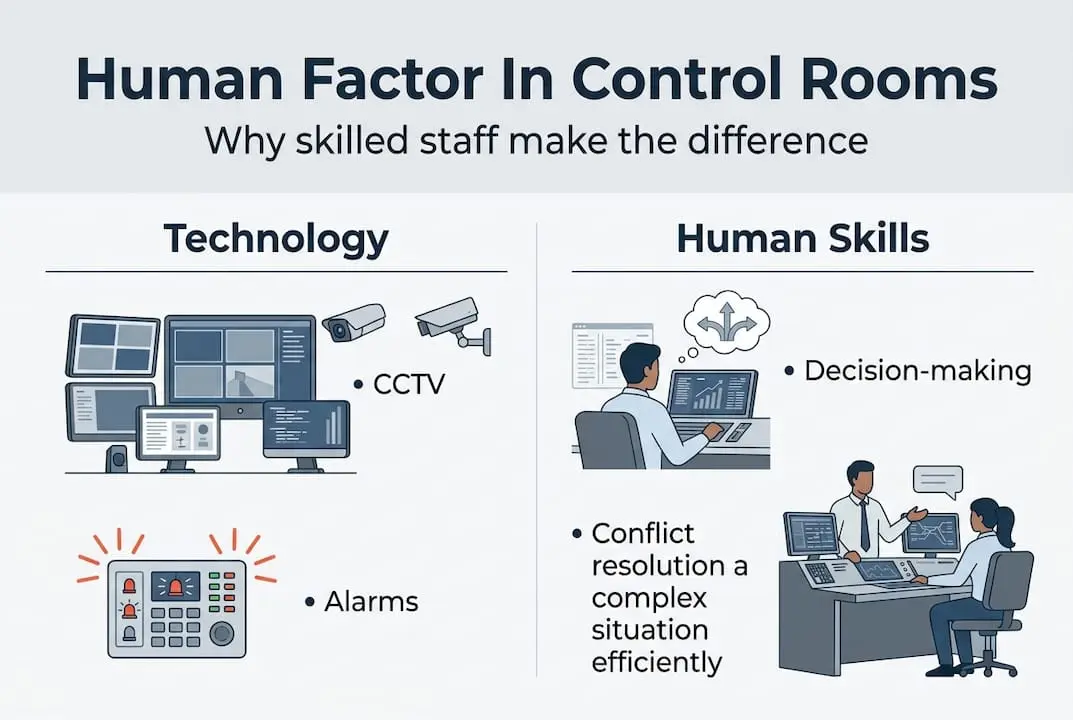
The truth, borne out by incident after incident in UK security operations, is that the human factor remains decisive. Speed, automation, and analytics shape a safer environment when the people operating those systems understand them, trust them, and know exactly what to do when they flag an alert. But those same systems create dangerous blind spots when staff are undertrained or SOPs are ignored or never clearly written in the first place.
We would argue that the most important investment any control room can make right now is not in hardware. It is in CPD for security professionals and in governance frameworks that make good practice consistent and sustainable. A team that trains regularly, reviews its incidents honestly, and understands its own maturity level will outperform a team with superior technology and weak culture every single time. The best control rooms in the UK know this. They treat their people as the primary asset, and their technology as the tool that makes those people more effective.
Advance your security career in control room operations
Control room expertise is one of the most in-demand skill sets in UK security right now. Organisations across every sector, from logistics and retail to transport and critical infrastructure, are investing in control room capability and they need experienced, trained professionals to run them effectively.

Whether you are looking to step into control room operations for the first time or advance into a supervisory or management role, the opportunities are growing. The Security Jobs Board connects you directly with employers actively recruiting for these positions across the UK. You can browse security control room jobs in Northern Ireland and across the country, or explore our career advice for security professionals to identify the skills and qualifications that will make your application stand out.
Frequently asked questions
What systems are typically monitored in a modern control room?
Control rooms typically monitor CCTV, alarms, environmental sensors, and communications infrastructure to maintain real-time situational awareness and manage incidents effectively.
How do control rooms improve response times?
Upgraded control rooms with advanced technology and well-trained staff can reduce emergency response times significantly. Following one UK upgrade, 91% of calls were answered within 10 seconds on average.
Are control rooms only for large organisations or public services?
No. Many commercial sites, including smaller businesses, operate control rooms scaled to their needs. Control rooms underpin safety and efficiency across all organisation sizes by centralising monitoring and coordinating responses effectively.
What challenges do UK control room operators face?
Operators must manage complex incidents such as crowd evacuation and terrorist threats, comply with NPSA and HSE frameworks, and adapt continuously to evolving risks. Terrorist incidents require anomaly detection and multi-agency coordination that demands both training and composure.


