Conflict Management: Key to Safer Security Teams
Frustration in Security teams often spirals from minor disagreements into full-blown confrontations before anyone realises the cause. For British Security managers and HR professionals, mastering conflict management is more than enforcing rules. Effective teams depend on clear communication, emotional intelligence, and structured decision-making to reduce risks and create safe, respectful interactions. This guide brings practical insights grounded in official Security Industry Authority standards to help you build stronger, safer workplaces and improve team dynamics.
Table of Contents
- Defining Conflict Management in Security Roles
- Types of Workplace Conflict in Security Teams
- Core Skills and SIA Training Standards
- Legal Responsibilities and Duty of Care
- Common Pitfalls and How to Avoid Them
Key Takeaways
| Point | Details |
|---|---|
| Emotional Intelligence is Essential | Security professionals must develop emotional intelligence to effectively manage conflicts and understand human behaviour. |
| Proactive Communication is Key | Implementing regular communication strategies helps prevent misunderstandings and reduces potential conflicts among team members. |
| Legal Compliance is Crucial | Security personnel should be well-versed in legal responsibilities to ensure safety and protect individual rights during interactions. |
| Continuous Professional Development is Necessary | Ongoing training and self-reflection are vital for improving conflict management skills and adapting to evolving best practices. |
Defining Conflict Management in Security Roles
Conflict management in security roles represents a sophisticated professional skill set that goes far beyond simple confrontation avoidance. The Security Industry Authority (SIA) defines this crucial discipline as a structured approach to maintaining safety through strategic communication and situational awareness.
At its core, conflict management involves several critical components that security professionals must master:
- Emotional Intelligence: Understanding and regulating personal and others’ emotional responses
- Risk Assessment: Identifying potential conflict triggers before escalation
- De-escalation Techniques: Using communication strategies to reduce tension
- Legal Compliance: Ensuring all interventions meet professional standards
Successful conflict management requires security personnel to develop a nuanced understanding of human behaviour. UK private security standards emphasise preventing aggression through proactive communication and decision-making skills. Physical intervention remains an absolute last resort, underlining the importance of interpersonal skills over physical confrontation.
Professional conflict management is not about winning, but about creating safe, respectful interactions that protect all parties involved. Security teams must learn to read situations quickly, communicate clearly, and make decisions that prioritise human safety and dignity.
Pro tip: Practice active listening and maintain a calm, neutral tone during potentially volatile interactions to reduce conflict escalation.
Types of Workplace Conflict in Security Teams
Workplace conflicts in security teams are complex interpersonal dynamics that can significantly impact team performance and organisational effectiveness. These conflicts emerge from various underlying factors, creating tension that demands professional management and strategic intervention.
The primary types of workplace conflicts in security environments typically include:
- Communication Breakdowns: Misunderstandings arising from unclear instructions or poor information sharing
- Role Ambiguity: Disagreements about professional responsibilities and team boundaries
- Personality Clashes: Interpersonal friction caused by differing work styles and personal approaches
- Resource Competition: Conflicts stemming from limited staffing, equipment, or shift allocations
- Stress-Related Tensions: Emotional pressures resulting from high-stakes security work environments
Security team conflict dynamics often escalate through predictable stages, beginning with minor misunderstandings and potentially progressing towards more serious confrontations. Understanding these progression patterns enables security managers to implement early intervention strategies that prevent minor disagreements from becoming significant organisational challenges.
Recognising the nuanced nature of workplace conflicts requires security professionals to develop emotional intelligence and sophisticated communication skills. Teams must cultivate an environment of mutual respect, active listening, and constructive dialogue to mitigate potential sources of tension before they become unmanageable.
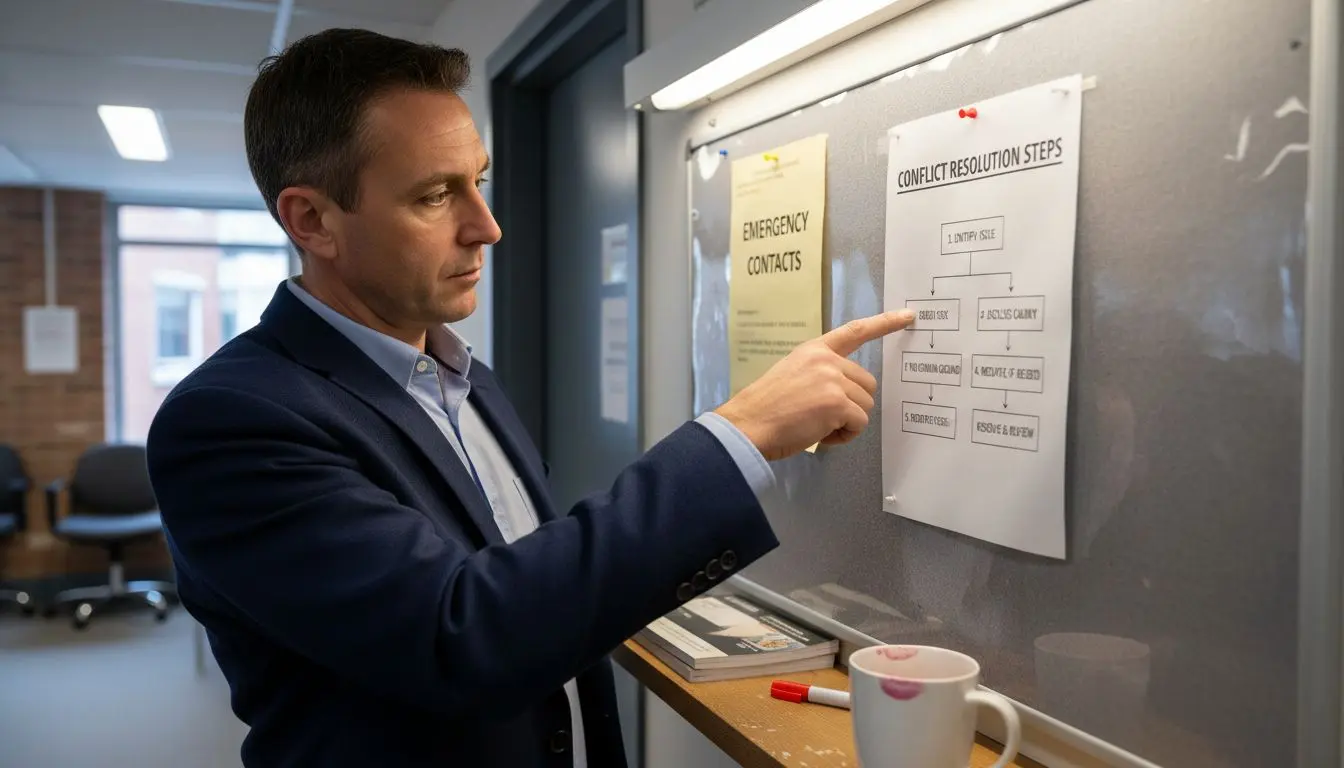
The following table contrasts common types of workplace conflict in security teams with their typical causes and recommended management strategies:
| Conflict Type | Typical Cause | Recommended Management Strategy |
|---|---|---|
| Communication Breakdown | Unclear instructions or poor updates | Implement regular team briefings |
| Role Ambiguity | Overlapping or unclear responsibilities | Clarify roles in written policy |
| Personality Clash | Conflicting work styles or beliefs | Facilitate mediation or team building |
| Resource Competition | Limited equipment or staff shortages | Schedule resource allocation meetings |
| Stress-related Tension | High workload or shift demands | Promote peer support and resilience |
Pro tip: Implement regular team debriefing sessions to address potential conflicts proactively and maintain open communication channels.
Core Skills and SIA Training Standards
SIA conflict management training represents a comprehensive framework designed to equip security professionals with essential skills for navigating complex interpersonal challenges. This structured approach goes beyond traditional security training, focusing on preventing, managing, and resolving potential conflicts through strategic communication and emotional intelligence.
The core skills mandated by SIA training standards encompass several critical competencies:
- Situational Awareness: Recognising potential conflict triggers and environmental risks
- Communication Strategies: Developing clear, empathetic communication techniques
- Risk Assessment: Systematically evaluating potential confrontation scenarios
- Emotional Regulation: Managing personal and professional emotional responses
- De-escalation Techniques: Applying specific communication methods to reduce tension
Conflict management standards emphasise the importance of maintaining lawful and proportionate responses during challenging interactions. Security professionals must demonstrate an ability to balance assertiveness with empathy, understanding that each interaction requires a nuanced approach tailored to specific circumstances.
Beyond technical skills, SIA training standards underscore the significance of continuous professional development. Security teams must consistently refine their approach, learning from each interaction and staying updated with evolving best practices in conflict resolution and personal safety management.
Here is a summary of core SIA conflict management competencies with their practical workplace benefit:
| Competency | Practical Workplace Benefit |
|---|---|
| Situational Awareness | Anticipates risks before escalation |
| Communication Strategies | Reduces misunderstandings under pressure |
| Emotional Regulation | Maintains professionalism in tense moments |
| De-escalation Techniques | Resolves issues without physical intervention |
| Risk Assessment | Supports safe, proportionate decision-making |
Pro tip: Regularly practice scenario-based training to develop muscle memory for effective conflict management techniques.
Legal Responsibilities and Duty of Care
Security officer legal responsibilities encompass a complex framework of ethical and legal obligations that extend far beyond simple security enforcement. These responsibilities demand a nuanced understanding of human rights, personal safety, and professional conduct in potentially challenging environments.
The core legal responsibilities for security professionals include:
- Human Rights Compliance: Protecting individual rights during all interactions
- Proportionate Response: Using minimum necessary force in conflict situations
- Incident Documentation: Accurately recording and reporting all significant events
- Vulnerable Person Protection: Ensuring special care for at-risk individuals
- Policy Adherence: Following organisational and statutory guidelines precisely
Legal guidelines for conflict management emphasise the critical importance of maintaining a balanced approach that prioritises safety while respecting individual dignity. Security professionals must navigate complex scenarios with a clear understanding that their actions carry significant legal and ethical implications.
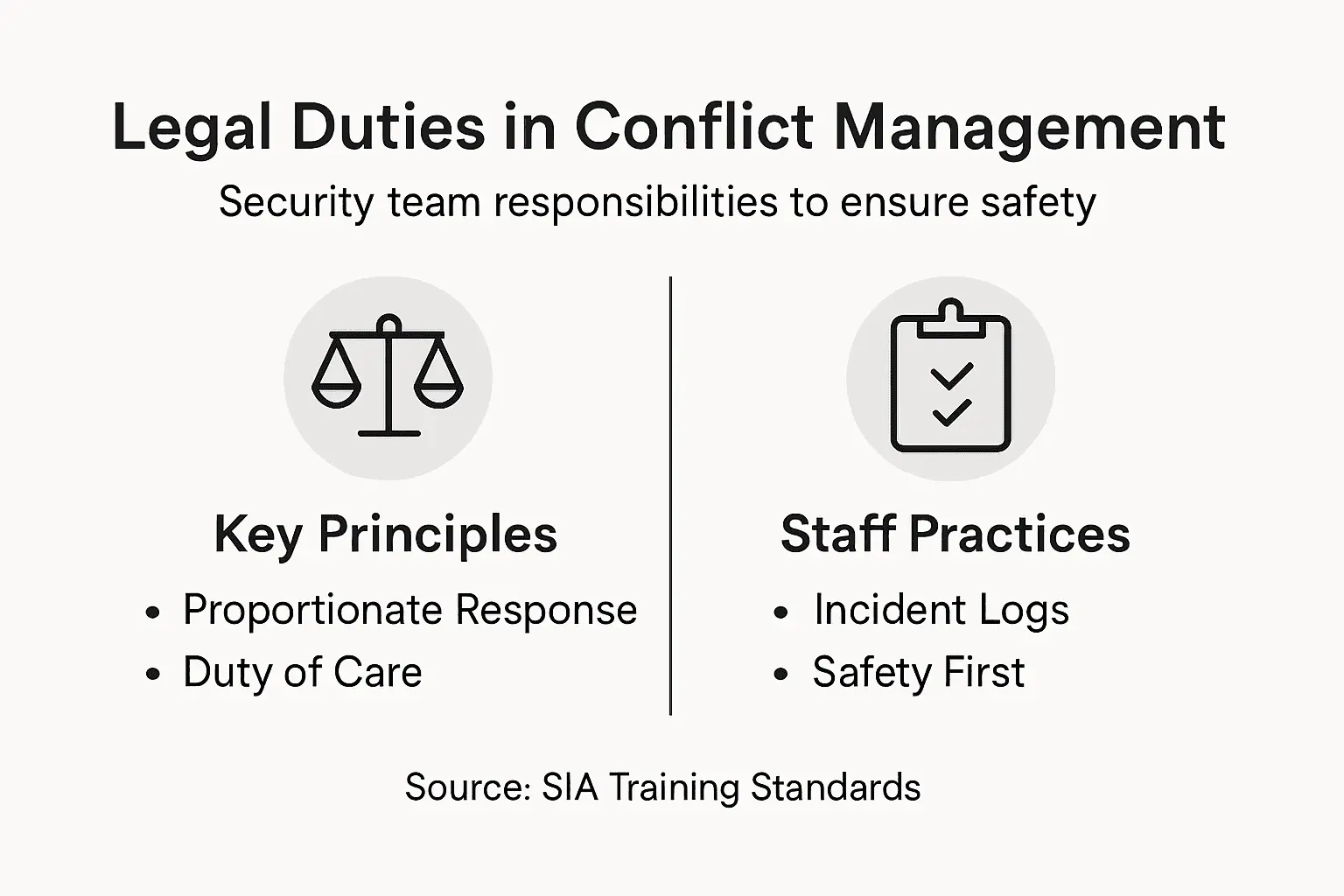
Duty of care represents a fundamental legal principle requiring security personnel to anticipate, prevent, and mitigate potential risks to individuals under their protection. This responsibility extends beyond physical safety to include psychological well-being, requiring a proactive and empathetic approach to conflict management and personal security.
Pro tip: Maintain detailed, contemporaneous incident logs to demonstrate legal compliance and professional decision-making.
Common Pitfalls and How to Avoid Them
Security team conflict management involves navigating complex interpersonal challenges that can quickly derail professional interactions. Understanding the most common pitfalls is crucial for maintaining team effectiveness and personal safety in high-pressure environments.
The most significant pitfalls security professionals must consciously avoid include:
- Emotional Reactivity: Allowing personal emotions to escalate confrontations
- Communication Breakdown: Failing to listen and understand underlying issues
- Inappropriate Force: Misunderstanding legal limits of physical intervention
- Risk Misassessment: Overlooking subtle warning signs of potential conflict
- Inadequate Documentation: Neglecting to record incident details systematically
Conflict resolution strategies emphasise the critical importance of maintaining professional composure and adopting a proactive approach to potential confrontations. Security teams must develop robust communication skills that prioritise de-escalation and mutual understanding over confrontational tactics.
Successful conflict management requires continuous learning and self-reflection. Security professionals must regularly review their approaches, seek feedback, and participate in ongoing training to refine their skills, recognising that each interaction provides an opportunity for growth and improvement.
Pro tip: Develop a personal checklist of de-escalation techniques to review before each shift, ensuring consistent and professional approach to potential conflicts.
Strengthen Your Security Career with Expert Conflict Management Skills
Effective conflict management is essential to creating safer, more resilient security teams. This article highlights the critical need for skills like emotional intelligence, clear communication, and legal compliance to prevent and resolve workplace conflicts. If you aspire to work in the UK security sector or want to join a team that values these key competencies, then positioning yourself with the right opportunities is vital.

Discover tailored job opportunities and career resources at The Security Jobs Board designed specifically for security professionals committed to excellence. Explore our platform to upload your CV, set alerts, and apply easily for roles that prioritise conflict management and professional growth. Employers using The Security Jobs Board are also seeking candidates who understand the importance of risk assessment and de-escalation techniques, making now the perfect time to advance your career with us.
Take the first step towards a safer, more successful security career by visiting security jobs for professionals. Your next role awaits with teams that value your skills in conflict management. Secure your future today.
Frequently Asked Questions
What is conflict management in security roles?
Conflict management in security roles refers to a structured approach used by security professionals to maintain safety through effective communication, emotional intelligence, and risk assessment, ensuring all interactions are conducted with respect and dignity.
What are the key skills required for effective conflict management?
The key skills for effective conflict management include emotional intelligence, situational awareness, communication strategies, risk assessment, and de-escalation techniques, all of which help security professionals navigate complex interpersonal situations.
How can security teams prevent workplace conflicts?
Security teams can prevent workplace conflicts by implementing clear communication strategies, defining roles and responsibilities, promoting teamwork through team-building activities, and engaging in regular debriefing sessions to address potential issues proactively.
What legal responsibilities do security professionals have in conflict situations?
Security professionals have several legal responsibilities, including ensuring human rights compliance, employing a proportionate response in conflict situations, documenting incidents accurately, and providing care for vulnerable individuals to ensure their safety and dignity.


