What Is Integrated Security? Complete Guide for 2025
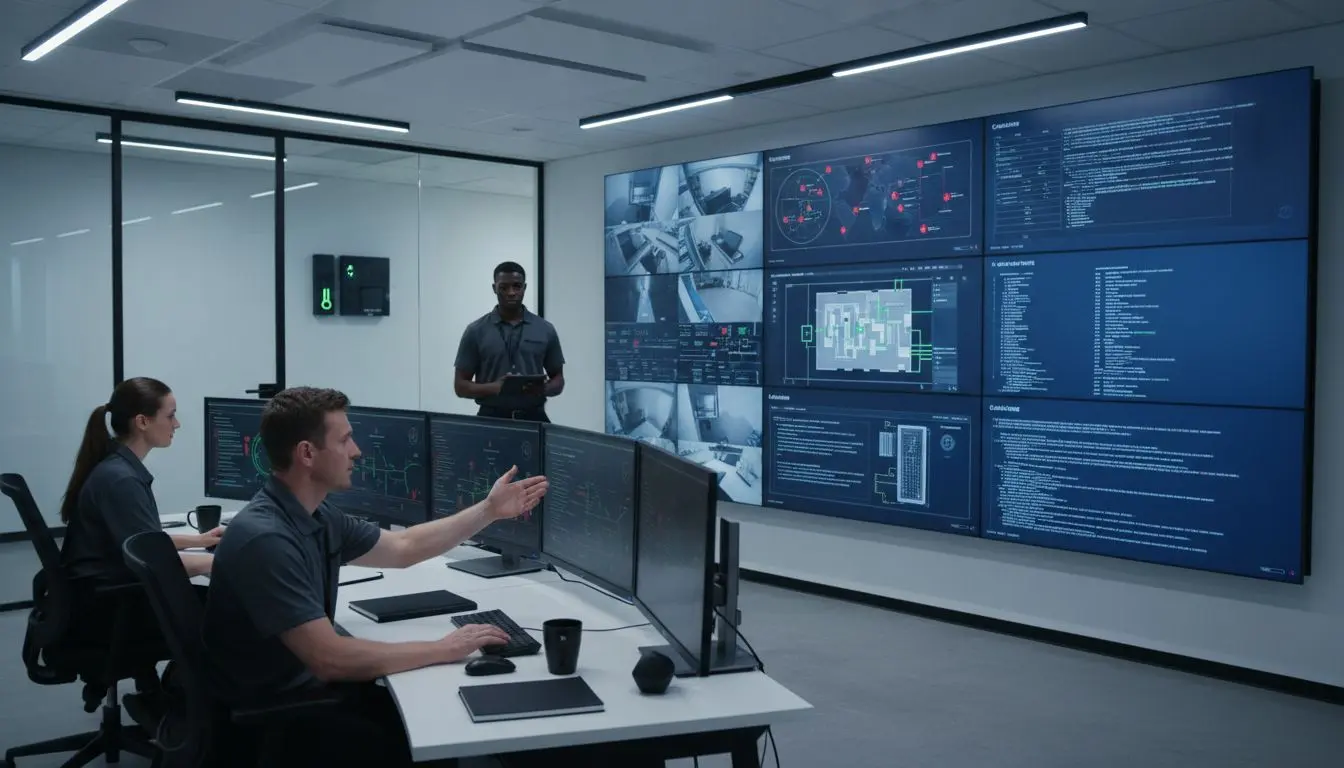
More than 80 percent of organizations experience security breaches that exploit gaps between their digital and physical protections. As threats grow more complex, relying on separate security tools no longer does the job. Integrated security brings everything together, allowing real-time collaboration and smarter defenses. This approach gives businesses and professionals a clear path to stronger, more adaptable protection for modern challenges.
Table of Contents
- Defining Integrated Security In Modern Environments
- Key Components Of Integrated Security Systems
- Main Types Of Integrated Security Solutions
- Benefits And Challenges For Uk Security Professionals
- Implementation Pitfalls And Best Practice Guidance
Key Takeaways
| Point | Details |
|---|---|
| Holistic Approach | Integrated security prioritizes the interconnectedness of various security domains rather than treating them as isolated units. |
| Core Components | Key elements include access control, video surveillance, and intrusion detection, working together for a comprehensive security strategy. |
| Strategic Implementation | Effective deployment requires compatibility assessments, scalability planning, and ongoing system audits for continuous improvement. |
| Professional Development | Security professionals must adapt to emerging technologies and regulations, ensuring continuous learning and strategic thinking in their roles. |
Defining Integrated Security in Modern Environments
In today’s interconnected digital landscape, integrated security represents a holistic approach that transcends traditional siloed protection strategies. According to research from rsisinternational, modern security frameworks must combine multiple protective systems to create comprehensive defense mechanisms.
The core philosophy of integrated security revolves around breaking down barriers between different security domains. Rather than treating intrusion detection, environmental monitoring, and technological safeguards as separate entities, this approach recognizes their interconnectedness. As demonstrated by the University of Surrey’s ‘Architectural Thinking for Security’ module, catalogue emphasizes that effective security must systematically integrate processes, people, and technology.
Key characteristics of integrated security include:
- Seamless communication between different security systems
- Real-time data sharing across multiple protective domains
- Adaptive response mechanisms
- Comprehensive risk assessment capabilities
- Unified monitoring and management platforms
Understanding integrated security requires recognizing that modern threats are complex and multifaceted. No single security measure can provide complete protection. By adopting an integrated approach, organizations create resilient systems that can anticipate, detect, and respond to emerging risks more effectively than traditional fragmented security strategies.
Key Components of Integrated Security Systems
Integrated security systems comprise multiple interconnected technologies designed to provide comprehensive protection. According to the bsia, these systems typically incorporate several critical core components that work together seamlessly to enhance overall security infrastructure.
The primary elements of an integrated security system include advanced technological solutions that communicate and collaborate in real-time. Athenalarm highlights five fundamental components that form the backbone of modern security frameworks:
- Access Control Systems: Regulating entry and exit points
- Video Surveillance: Continuous monitoring and recording
- Intrusion Detection: Identifying potential security breaches
- Intercom Systems: Facilitating communication and verification
- Central Management Platforms: Coordinating and analyzing security data
Each component plays a crucial role in creating a robust security ecosystem.
 Access control systems, for instance, not only restrict unauthorized entry but can also integrate with video surveillance to provide visual verification. Intrusion detection mechanisms can trigger immediate alerts across multiple platforms, enabling rapid response to potential threats. The central management system acts as the brain of the integrated security network, collecting, analyzing, and distributing information from various sensors and subsystems.

Implementing an integrated security system requires a strategic approach that considers the specific needs of an organization. This means selecting compatible technologies, ensuring seamless communication between different components, and creating a flexible infrastructure that can adapt to emerging security challenges. By treating security as an interconnected ecosystem rather than a collection of isolated tools, organizations can develop more intelligent, responsive, and effective protective strategies.
Main Types of Integrated Security Solutions
Integrated security solutions have evolved dramatically, offering comprehensive protection strategies that go beyond traditional standalone systems. According to Comelit-PAC, modern solutions now provide unified platforms that consolidate multiple security functions into seamless, interconnected networks.
Arksysinc highlights several primary types of integrated security solutions that organizations can implement:
- Enterprise-Wide Security Systems: Comprehensive solutions covering entire organizational infrastructure
- Physical Access Control Systems: Managing entry points and personnel movement
- Cyber-Physical Security Integrations: Combining digital and physical security mechanisms
- Threat Detection and Response Platforms: Real-time monitoring and incident management systems
- Intelligent Video Surveillance Networks: Advanced monitoring with predictive analytics
Each integrated security solution offers unique advantages tailored to specific organizational needs. Enterprise-wide systems, for instance, provide holistic protection by connecting traditionally separate security domains. Physical access control systems now incorporate biometric technologies, facial recognition, and intelligent tracking mechanisms that extend far beyond traditional lock-and-key approaches.
The future of integrated security solutions lies in their ability to adapt, learn, and predict potential security challenges. By leveraging artificial intelligence, machine learning, and advanced data analytics, these systems can now anticipate threats, automate response protocols, and provide unprecedented levels of situational awareness. Organizations can now move from reactive security models to proactive, intelligent defense strategies that offer comprehensive protection across physical and digital domains.
Benefits and Challenges for UK Security Professionals
The landscape of security professionals in the United Kingdom is undergoing significant transformation, presenting both unprecedented opportunities and complex challenges. According to the UK Government, integrated security programs are becoming critical in combating evolving threats from state and non-state actors, requiring professionals to develop increasingly sophisticated skill sets.
Key benefits for UK security professionals include:
- Enhanced Career Progression: Opportunities in emerging security domains
- Technological Skill Development: Mastering advanced integrated security systems
- Higher Earning Potential: Specialization in comprehensive security strategies
- National Security Contribution: Direct impact on protecting critical infrastructure
- Interdisciplinary Work Experience: Combining digital and physical security approaches
However, the challenges are equally significant. Wikipedia’s coverage of the Cyber Security and Resilience Bill highlights the increasing complexity of regulatory requirements and the need for continuous professional adaptation. Security professionals must now navigate rapidly changing technological landscapes, requiring constant upskilling and a deep understanding of both technological and human factors in security management.
Professionals in the UK security sector face a critical mandate: to remain agile, continuously learn, and develop holistic security competencies. The future belongs to those who can integrate technological expertise with strategic thinking, understanding that modern security is about creating intelligent, adaptive systems rather than implementing static protective measures. For professionals seeking to excel, understanding security consulting strategies will be crucial in navigating these complex professional terrains.
Implementation Pitfalls and Best Practice Guidance
Implementing integrated security systems requires strategic planning and a nuanced understanding of potential challenges. Tavcom emphasizes that successful implementation goes beyond simply acquiring technologies—it demands a comprehensive approach that considers system compatibility, current industry standards, and advanced integration methodologies.
According to Athenalarm, organizations should follow a structured approach to implementation, with key considerations including:
- Compatibility Assessment: Ensuring seamless communication between different security components
- Scalability Planning: Designing systems that can adapt to future technological advances
- Comprehensive Training: Developing staff competencies in integrated system management
- Regular System Audits: Continuously evaluating and updating security infrastructure
- Robust API Integration: Utilizing standardized communication protocols
Common implementation pitfalls include overengineering complex systems, underutilizing technological capabilities, and neglecting ongoing maintenance and training. Security professionals must approach implementation as a dynamic process, recognizing that integrated security is not a one-time installation but a continuous evolution of protective strategies. Successful deployment requires a holistic view that balances technological sophistication with practical usability.
To navigate these challenges effectively, organizations should adopt a phased implementation strategy. This involves starting with core systems, gradually expanding complexity, and maintaining flexibility for future technological integrations. Exploring security consulting strategies can provide additional insights into creating robust, adaptable security frameworks that meet both current and emerging organizational needs.
Take Control of Your Security Career with Integrated Expertise
The challenge of mastering integrated security systems is clear: professionals must understand complex, interconnected technologies like access control, video surveillance and intrusion detection to stay ahead. If you are eager to enhance your skills and secure a position within this evolving sector you need a dedicated resource tailored to your ambitions and the UK’s security market.

Explore hundreds of specialised roles and connect with leading employers on the Security Jobs Board. Build your profile, upload your CV and gain access to jobs that require the exact knowledge the article highlights. Whether you are starting out or looking to advance your career with integrated security solutions in mind start today and be ready for the future of security across physical and digital domains. Visit the Security Jobs Board landing page now and discover your next opportunity.
Frequently Asked Questions
What is integrated security?
Integrated security is a holistic approach to protection that combines multiple security systems and technologies to create comprehensive defense mechanisms. It aims to break down barriers between different security domains, allowing for seamless communication, real-time data sharing, and coordinated responses to threats.
What are the key components of integrated security systems?
Key components of integrated security systems include access control systems, video surveillance, intrusion detection systems, intercom systems, and central management platforms. These elements work together to provide a robust security ecosystem that enhances overall safety and monitoring.
What are the benefits of using integrated security solutions?
Integrated security solutions offer numerous benefits, such as enhanced protection across various security domains, improved monitoring capabilities, real-time threat detection and response, and the ability to create more adaptive and intelligent security strategies by leveraging technologies like AI and machine learning.
What challenges do organizations face when implementing integrated security systems?
Organizations may encounter challenges such as ensuring compatibility between different security components, overengineering complex systems, underutilizing technology capabilities, and the need for ongoing training and maintenance. A phased implementation approach can help address these issues effectively.


