Why CPD Is Important for Security Careers

Climbing the ladder in the United Kingdom security sector means more than collecting certificates or attending occasional seminars. Career advancement now demands ongoing evidence of real development, not just a one-time qualification. With new threats and responsibilities emerging across the industry, Continuing Professional Development (CPD) gives security professionals a flexible structure to improve practical skills, adapt to regulatory standards, and gain a competitive edge for specialist or management roles.
Table of Contents
- Understanding CPD in the Security Sector
- Types of CPD Activities for Security Roles
- Legal Requirements and SIA Licensing Standards
- How CPD Drives Career Progression
- CPD Compliance: Risks and Best Practices
Key Takeaways
| Point | Details |
|---|---|
| Importance of CPD | Continuing Professional Development is essential for security professionals to enhance their skills and remain current with industry changes. |
| Variety of Activities | Engaging in a mix of formal learning, work-based experience, professional involvement, and self-directed study is crucial for effective CPD. |
| Legal Compliance | For certain roles, CPD is a legal requirement; maintaining proper records is vital for professional standing and legality in the workplace. |
| Career Advancement | CPD actively contributes to career progression by equipping professionals with relevant skills and knowledge essential for higher responsibilities. |
Understanding CPD in the Security Sector
Continuing Professional Development (CPD) is the method by which security professionals maintain and enhance their skills, knowledge, and professional judgement throughout their careers. In the security industry, CPD isn’t a box-ticking exercise or a one-time qualification to earn. Rather, it’s an ongoing commitment to staying current with evolving threats, technologies, and best practices that directly impact your effectiveness on the job. The Security Institute recognises this reality and has shaped its CPD framework around learning outcomes, reflection, and genuine professional growth rather than simply counting attendance hours at training events.
What makes CPD particularly relevant to your career progression is how it works in practice. The framework supports both early-career professionals building foundational competence and experienced security managers seeking specialisation or advancement into leadership roles. When you engage with formal learning activities such as certified courses and industry conferences, you’re developing structured expertise. However, CPD also encompasses informal learning that you might already be doing—reading security industry publications, mentoring junior team members, or researching emerging threats. This breadth means you can build your professional development around the opportunities available to you, whether you’re balancing study with full-time security work or transitioning between different specialisations within the sector.
For professionals holding chartered status, the commitment becomes more formalised. Chartered Security Professionals must participate in annual CPD schemes where activities are tracked and assigned point values. You’ll need to meet annual point requirements across multiple activity types—mixing formal courses with informal learning—to maintain your professional standing. This structured approach ensures that security practitioners remain genuinely competent rather than relying on outdated training from years past. The updated framework taking effect from 2026 emphasises reflection on what you’ve learned and how you’ve applied it, creating accountability for your professional growth rather than passive attendance.
Professional advice Start tracking your CPD activities now, even if your organisation doesn’t require it yet—many employers value candidates who demonstrate intentional professional development, and having records ready positions you well when pursuing management roles or specialised certifications.
Types of CPD Activities for Security Roles
CPD isn’t confined to classroom learning or formal qualifications. The beauty of a well-designed CPD framework is that it recognises security professionals develop through multiple pathways. You can build your competence through formal learning, work-based experience, professional involvement, and self-directed study. Different security roles benefit from different mixes of these activities depending on what you need to progress. A security officer moving towards a supervisory position might prioritise management courses and reflective practice, whilst a specialist in counter-terrorism would focus on technical certifications and research. The Security Institute’s framework actively encourages you to balance across all four categories rather than concentrating on just one type of learning.
Let’s break down what each category actually looks like in practice. Formal learning includes the obvious ones: accredited security courses, industry conferences, seminars, and professional qualifications. Work-based learning means reflecting on your daily security responsibilities, evaluating decisions you’ve made, and learning from challenging situations on site. Professional involvement covers sitting on committees, contributing to your industry body, mentoring junior staff, or presenting at security forums. Self-directed learning involves reading sector publications, researching emerging threats like cyber security integration with physical security, or studying case studies relevant to your role. When you engage in reflective practice on work experiences, you’re turning everyday incidents and achievements into genuine professional development rather than just moving through your shift.
The key principle here is mixture and relevance. You can’t simply attend three conferences yearly and call that comprehensive CPD. Your activities must genuinely enhance your practice in your actual security role. If you work in facility security management, attending a lecture on access control systems directly serves you. If you’re eyeing different security career pathways, you might deliberately choose CPD that stretches into adjacent specialisations—studying executive protection techniques whilst managing building security, or learning cybersecurity fundamentals to understand physical security’s digital intersections. This intentional choice of varied activities demonstrates genuine commitment to employers and professional bodies alike.
Professional advice Create a CPD plan aligned with your next career move rather than choosing random activities each year. If you want a management role, prioritise leadership and communication training alongside technical updates. This focused approach strengthens your advancement prospects and makes your CPD time count double.
Here’s a quick reference comparing CPD activity categories in the security sector:
| Activity Category | Typical Activities | Skills Enhanced | Suitable Security Roles |
|---|---|---|---|
| Formal Learning | Accredited courses, industry conferences | Technical certification, theory | All roles, from officers to managers |
| Work-Based Experience | Reflective practice, on-the-job decisions | Critical thinking, leadership | Supervisors, managers, specialists |
| Professional Involvement | Committee membership, mentoring | Networking, presentation, coaching | Senior professionals, sector leaders |
| Self-Directed Study | Research, publication reading | Sector knowledge, emerging trends | Specialists, those changing focus |
Legal Requirements and SIA Licensing Standards
If you work in certain security roles across the United Kingdom, CPD isn’t just professional best practice—it’s a legal requirement. The Security Industry Authority (SIA) operates as the statutory regulator for the UK private security sector under the Private Security Industry Act 2001. This means specific security positions cannot be filled without proper licensing, and maintaining that licence involves ongoing professional development commitments. Understanding which roles require SIA licensing and what standards apply directly impacts your career prospects and legal standing. The SIA enforces strict standards for individuals working in door supervision, security guarding, CCTV operation, close protection, and cash transit roles. If you’re in one of these positions, you’re already operating within a regulated framework that expects continuous competence.
The stakes are serious. Operating without a valid SIA licence in a licensable role is a criminal offence. Convictions can result in substantial fines and even imprisonment, which would essentially end your security career before it properly starts. This harsh reality underscores why CPD matters beyond promotion and salary—it’s about maintaining your right to work legally in your chosen field. The SIA doesn’t just hand out licences and forget about professionals. They periodically review whether licence holders meet current standards, and CPD records provide evidence that you’re staying current with evolving best practices, security threats, and legal requirements. Your CPD activities become a protective buffer, demonstrating that you take your professional responsibilities seriously. When you decide to pursue obtaining your SIA licence, understanding the ongoing compliance obligations is just as important as passing the initial assessment.
Beyond the SIA’s direct requirements, sector-wide professional bodies like the Security Institute have shaped CPD expectations around compliance and legal knowledge. Your CPD activities should include staying updated on changes to security legislation, data protection regulations, and employment law that affects your role. A door supervisor needs to understand the latest legislation on use of force and liability. A CCTV operator must stay current with data protection obligations and GDPR compliance. A close protection specialist requires knowledge of threat assessment updates and legal frameworks governing their work. This isn’t abstract theoretical learning—it’s practical knowledge that protects both you and your employer from legal exposure. Security professionals who invest in CPD covering legal and compliance areas position themselves as trusted, aware operators rather than technicians simply following procedures.
Professional advice When selecting CPD activities, deliberately choose at least one annual course or reading focused on legal updates or compliance relevant to your specific role. This keeps you protected, demonstrates commitment to regulators, and makes you more attractive to employers seeking legally compliant teams.
The following table summarises key legal CPD considerations for major SIA-licensable roles:
| Role | Essential Legal Focus | Mandatory CPD Component | Common Risks if Neglected |
|---|---|---|---|
| Door Supervisor | Use of force, liability updates | Annual legal training | Licence loss, prosecution |
| CCTV Operator | Data protection, GDPR | Privacy compliance courses | Fines, disciplinary action |
| Close Protection | Threat assessment, legal frameworks | Advanced legal seminars | Employer liability, legal breaches |
How CPD Drives Career Progression
Think about the last time you interviewed for a promotion. The candidate who got the role probably wasn’t just doing their current job well—they were visibly preparing for the next one. That preparation often comes down to CPD. When you invest in continuous professional development, you’re not simply ticking boxes for compliance. You’re actively building the skills, knowledge, and confidence needed to move into supervisory roles, specialised positions, or management responsibilities. CPD keeps professionals up-to-date with evolving tools, policies, and industry standards, which directly translates into better performance in your current role and readiness for the next one. Employers notice this difference. A security officer who holds relevant certifications, understands emerging technologies, and can speak intelligently about sector developments looks fundamentally different on paper and in interviews compared to someone coasting on the same skills year after year.
The connection between CPD and progression works in concrete ways. Early in your career, CPD helps you build foundational habits—learning how to reflect critically on your work, identifying knowledge gaps, and seeking solutions. These habits create a mindset of continuous improvement that employers value across all levels. As you gain experience, CPD shifts your focus towards higher responsibilities. If you’re eyeing a team leader position, you’d pursue management and communication training. If you want to specialise in counter-terrorism or corporate security, you’d select qualifications that demonstrate expertise in those fields. CPD demonstrates commitment to professionalism, aiding progression and recognition within the security sector. This isn’t invisible—professional bodies, employers, and recruitment agencies all see it. When you’re competing with other candidates for a better role, your CPD record literally sets you apart.

Beyond the obvious career ladder benefits, CPD makes you more attractive to employers seeking staff with specific capabilities. If a security firm is bidding for a contract requiring advanced threat assessment or crisis management expertise, they’ll prioritise hiring staff with relevant CPD credentials. You become the person they rely on to fulfil contracts and train others. This creates opportunity—contract wins mean expanded teams, which means promotion pathways open up. Additionally, CPD bridging knowledge gaps means you gain confidence in unfamiliar areas. Moving from guard duty into investigations work, or from facility security into event management, feels manageable when you’ve deliberately studied the transition through CPD. You’re not starting blind; you’re arriving with foundational knowledge that accelerates your competence in the new role.
Professional advice Align your CPD choices strategically with the specific role you want in two to three years, rather than choosing general security courses. This focused approach creates a visible development trajectory that employers and recruitment consultants recognise as genuine progression planning.
CPD Compliance: Risks and Best Practices
Getting CPD right matters more than you might think. If you’re a member of a professional body like the Security Institute or hold chartered status, CPD compliance isn’t optional—it’s a contractual obligation. Failure to maintain proper CPD records or meet annual requirements can trigger disciplinary action, ranging from warnings to suspension or removal from the professional register. This isn’t a minor administrative issue. Losing your professional credentials can effectively end your career trajectory in security management and specialised roles. Beyond the disciplinary consequences, non-compliance suggests to employers that you’re not serious about professional development or that you’re disorganised about your own career management. When you’re competing for leadership positions or specialist roles, these perceptions can disqualify you before you even get an interview. The risks extend further: if an incident occurs at work and you’re called to account for your professional competence, weak CPD records become evidence that you weren’t maintaining your standards.
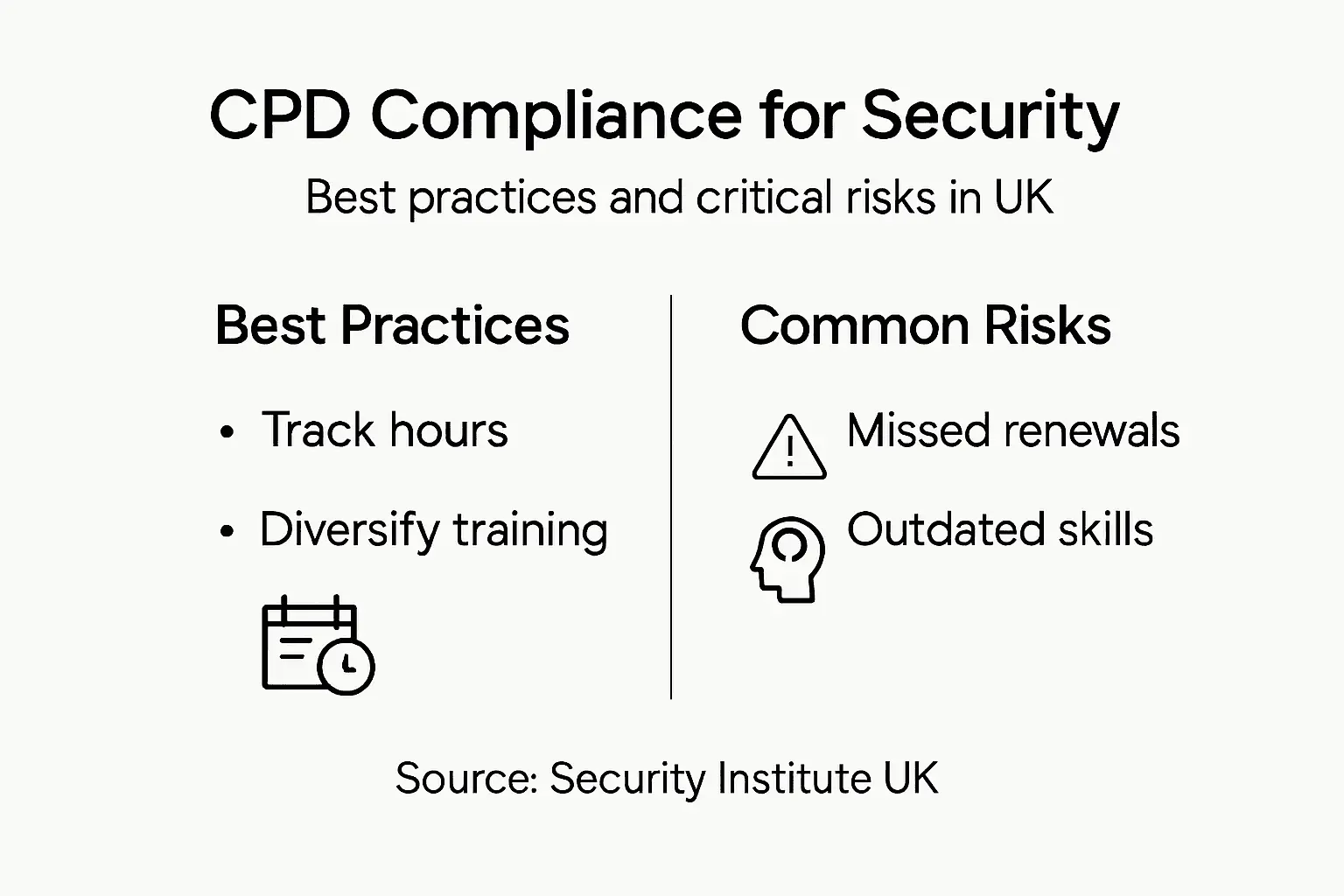
The best practice approach is actually straightforward once you commit to it. Professional bodies require members to maintain continuous records and ensure CPD activities relate to professional practice. This means you need a system—whether digital or paper-based—that documents what you’ve done, when you did it, how many hours or points it represents, and what you learned. Don’t wait until the compliance deadline to scramble together records from memory. Create a simple spreadsheet or use a dedicated app where you log activities shortly after completing them. Include the activity name, date, duration, activity type (formal course, conference, self-study, mentoring), and a brief note on relevance to your role. This ongoing habit takes five minutes per activity but saves enormous stress when your annual audit arrives. The other critical element is relevance. Activities must genuinely enhance your professional practice in security. Reading a thriller novel doesn’t count. Attending a leadership development programme whilst managing a security team absolutely does.
An outcomes-based approach focuses on the impact of learning rather than hours spent, meaning your CPD plan should connect directly to your role and career goals. If you work in corporate security, select CPD related to risk management, business continuity, or governance. If you’re in facility security management, choose technical updates on access control systems or security strategy. Create a written development plan at the start of each year outlining what you want to learn and why. This plan becomes your compliance evidence and demonstrates intentional professional growth. When audits occur—and they will—you’ll have clear documentation showing that you’ve thought strategically about your development rather than randomly collecting activity points. Life circumstances sometimes interrupt CPD routines. If you take career breaks, reduce hours, or face exceptional circumstances, communicate with your professional body. Most have provisions for adapting CPD requirements temporarily. Ignoring the problem and hoping nobody notices is the path to disciplinary action. Being proactive and transparent protects your standing.
Professional advice Start a simple CPD tracker today with columns for activity date, type, duration, and outcome learned. Review it quarterly to ensure you’re on track for annual requirements and that your activities connect strategically to your career goals.
Elevate Your Security Career with Strategic CPD and Targeted Job Opportunities
Continuing Professional Development is essential to stay competitive and legally compliant in the UK security sector. The challenge many security professionals face is not only tracking and selecting relevant CPD activities but also finding the right job opportunities that align with their ongoing development and career goals. Whether you are aiming for management roles, specialised positions, or SIA-licensable jobs, demonstrating your CPD commitment will set you apart from other candidates seeking advancement.

Unlock your career potential today by visiting the Security Jobs Board. Here, you can create a profile, upload your CV, and access vacancies tailored to your expertise and professional growth needs. Combine your CPD achievements with targeted job applications to fast-track your progress and showcase your dedication to continuous learning. Start building your career trajectory now with trusted support and timely opportunities from Security Jobs Board, the platform designed specifically for UK security professionals committed to excellence.
Frequently Asked Questions
What is Continuing Professional Development (CPD) in the security sector?
Continuing Professional Development (CPD) refers to the ongoing process by which security professionals enhance their skills, knowledge, and professional judgement throughout their careers. It involves both formal and informal learning activities to keep up-to-date with evolving threats and best practices.
Why is CPD important for advancing my career in security?
CPD is crucial for career progression as it helps professionals build essential skills, prepare for promotion, and stay relevant in an ever-evolving industry. Engaging in CPD makes you a more attractive candidate for advanced roles and demonstrates a commitment to professionalism.
What types of activities can qualify as CPD in the security field?
CPD activities include formal learning (accredited courses and conferences), work-based experience (reflective practice), professional involvement (mentoring, committee work), and self-directed study (reading industry publications, research).
How does CPD relate to legal requirements for security professionals?
In the UK, specific security roles require a licence from the Security Industry Authority (SIA), which mandates ongoing professional development. Maintaining your CPD records ensures you meet the necessary legal standards and remain compliant in your role.
Recommended
- The Essential Guide to Choosing the Security Industry|BM
- What Is Close Protection and Why It Matters | Brainiac Media
- 7 Career Paths in Security for Future Success | Brainiac Media
- 7 Key Examples of Security Roles Explained for Jobseekers|BM
- 7 Powerful Trades for Females to Consider Today – WorkWearComfort


