Access Control in Security – Protecting UK Workplaces
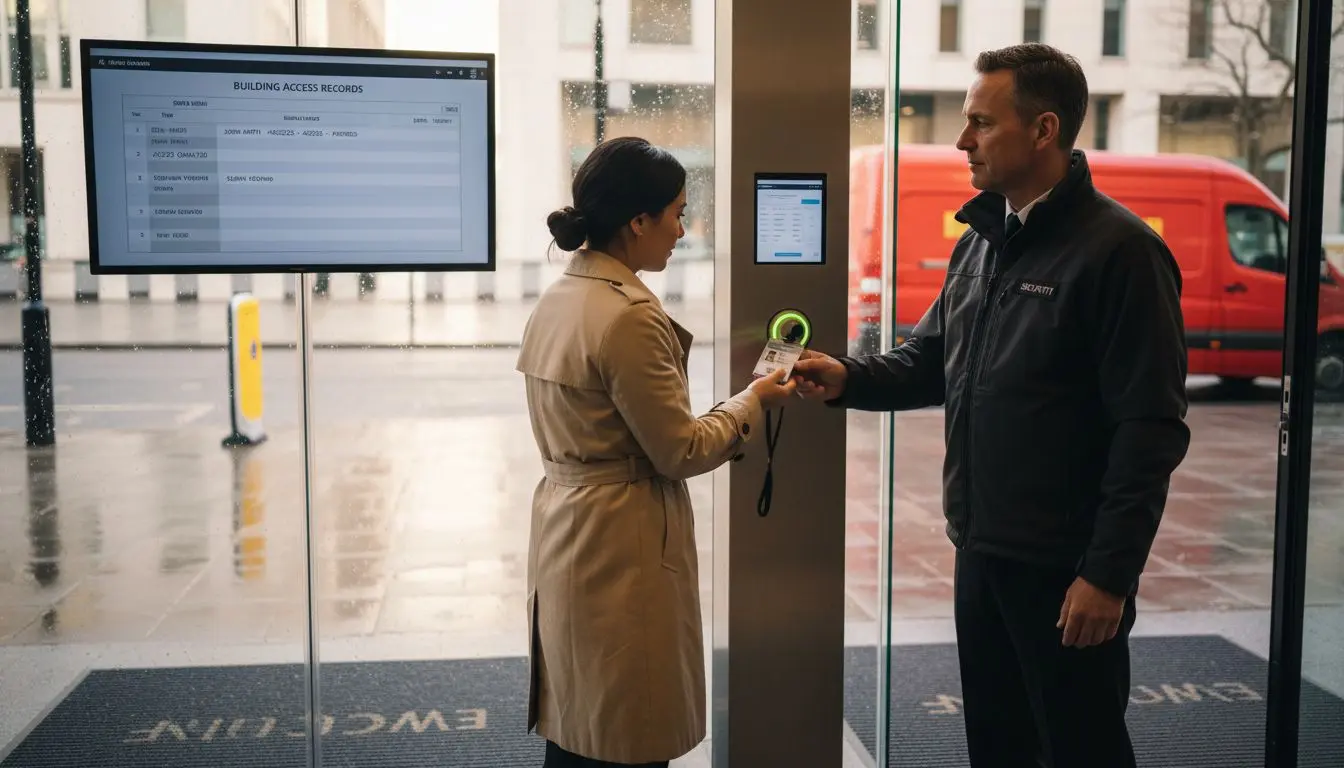
Over eighty percent of British organisations have updated their security protocols to include advanced access control systems. With increasing threats targeting both physical and digital assets, the need for robust protection has never been higher. Understanding how access control works, why it matters for legal compliance, and the most effective strategies gives every British business a powerful advantage in safeguarding sensitive information and maintaining a secure, trustworthy environment.
Table of Contents
- Defining Access Control In Security
- Major Types Of Access Control Systems
- How Access Control Technology Works
- Legal Responsibilities For Uk Employers
- Risks, Common Mistakes, And Best Practice
Key Takeaways
| Point | Details |
|---|---|
| Understanding Access Control | Access control is essential for safeguarding organisational assets, balancing security with the need for effective information access. |
| Types of Access Control Systems | Different systems such as Discretionary, Mandatory, and Role-Based Access Control each serve unique security needs and should be chosen based on specific organisational requirements. |
| Legal Compliance | Employers must adhere to regulations like the Data Protection Act 2018, ensuring proper management of access rights to protect sensitive information and reduce legal risks. |
| Best Practices | Developing a robust access control strategy requires regular audits, training, and the use of advanced technologies like multi-factor authentication to mitigate vulnerabilities. |
Defining Access Control in Security
Access control represents the strategic foundation of modern workplace security, serving as the critical mechanism by which organisations protect their most valuable digital and physical assets. At its core, access control is a systematic approach designed to manage and regulate who can enter specific spaces, interact with particular systems, and view sensitive information.
The UK Government Security Group defines access control as a comprehensive process involving understanding, documenting, and managing network and information system access. This definition highlights three crucial elements: verification, authentication, and authorisation. In practical terms, this means implementing robust mechanisms that confirm an individual’s identity, validate their permissions, and restrict their interactions based on predetermined security protocols.
Moreover, the Information Commissioner’s Office (ICO) emphasises that access control goes beyond mere technological implementation. It represents a dynamic framework for protecting personal data by limiting information access to strictly authorised personnel. Key components of an effective access control strategy include:
- Identity Verification: Confirming users are who they claim to be
- Permission Management: Defining specific access levels for different roles
- Regular Access Reviews: Continuously auditing and updating user permissions
- Monitoring and Logging: Tracking system interactions and potential security breaches
Understanding access control requires recognising it as more than a technical solution—it’s a comprehensive risk management approach. By implementing intelligent, adaptable access control systems, organisations can significantly reduce potential security vulnerabilities while maintaining operational efficiency and regulatory compliance.
Major Types of Access Control Systems
Access control systems have evolved to address diverse security challenges across different organisational environments, offering sophisticated methods for managing physical and digital entry points. The International Organization for Standardization (ISO) identifies several fundamental types of access control systems, each designed to meet specific security requirements and operational contexts.

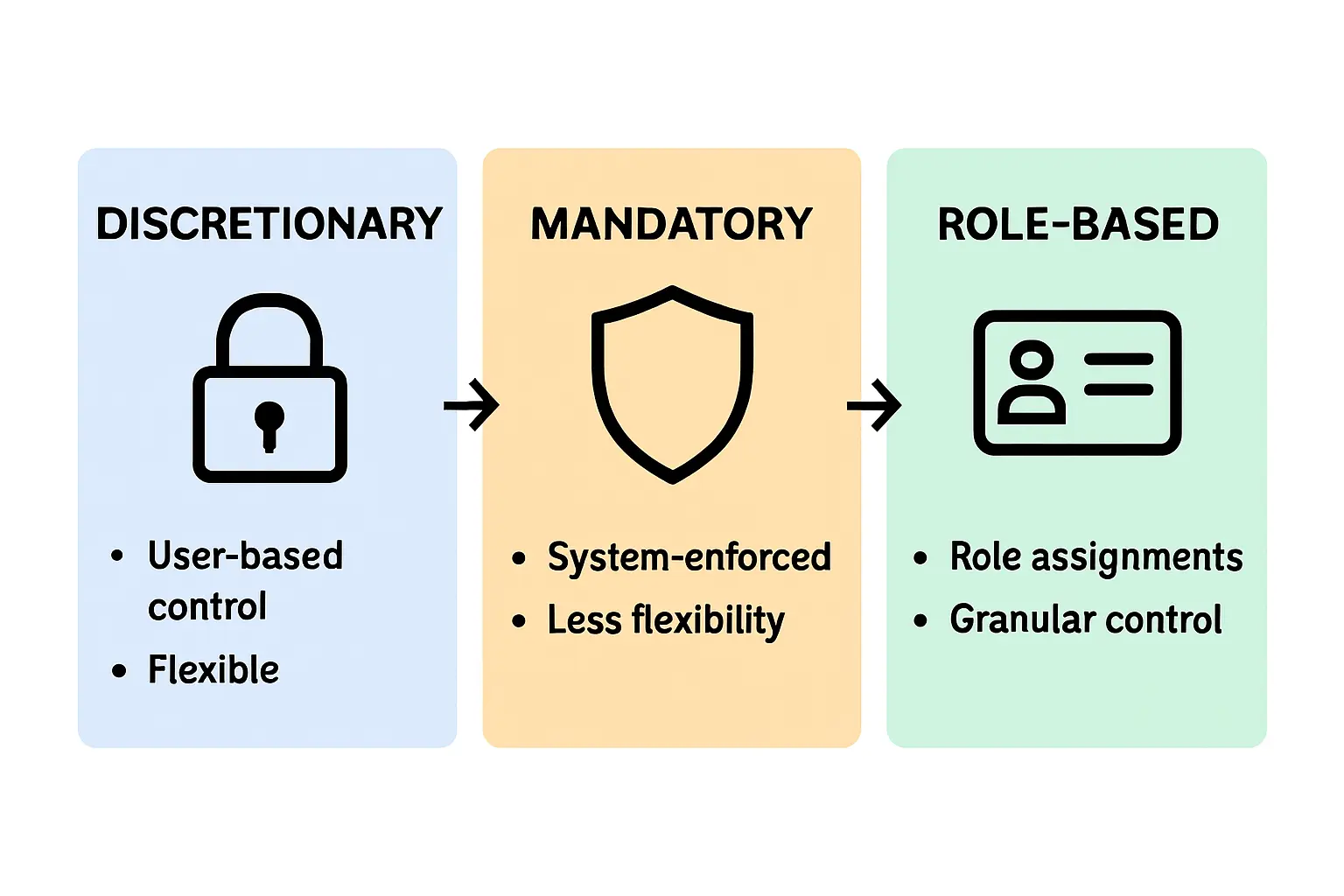
Three primary types of digital access control systems dominate modern security strategies: Discretionary Access Control (DAC), Mandatory Access Control (MAC), and Role-Based Access Control (RBAC). In DAC, system owners determine access permissions, offering maximum flexibility but potentially introducing higher security risks. MAC represents a more rigid approach where a central authority establishes strict access hierarchies, commonly used in government and military settings. RBAC, perhaps the most versatile model, assigns access rights based on predefined organisational roles, ensuring users can only access resources directly relevant to their professional responsibilities.
CDVI UK highlights the importance of distinguishing between physical access control system configurations, categorising them into two primary models: standalone and online systems. Standalone systems work perfectly for smaller premises, offering simple, localised access management with minimal infrastructure requirements. Online systems, conversely, provide comprehensive, network-connected solutions ideal for large organisations requiring complex, centrally managed access permissions.
Beyond these primary classifications, modern access control systems incorporate advanced technologies to enhance security and operational efficiency:
- Biometric Systems: Utilising unique physical characteristics like fingerprints or retinal scans
- Proximity Card Systems: Enabling quick, contactless entry through specialised identification cards
- Multifactor Authentication: Combining multiple verification methods for enhanced security
- Cloud-Based Access Control: Offering remote management and real-time monitoring capabilities
Choosing the right access control system demands careful consideration of an organisation’s specific security needs, technological infrastructure, and operational complexity. By understanding these different approaches, security professionals can design robust, adaptive access management strategies that protect critical assets while maintaining operational flexibility.
How Access Control Technology Works
Access control technology represents a sophisticated electronic security ecosystem designed to manage and regulate entry into physical and digital spaces. According to CDVI UK, the fundamental operation involves users presenting specific credentials that are subsequently verified and authenticated by integrated security systems, determining whether access should be granted or denied.
The technological infrastructure behind access control systems comprises several critical components working in seamless synchronisation. An IP access controller serves as the central nervous system, connecting directly to network infrastructure and managing complex inputs and outputs. These sophisticated devices control electronic readers, monitor door inputs, and regulate locking mechanisms, creating a comprehensive security network that can operate across multiple entry points simultaneously.
Modern access control technologies typically involve a multi-stage verification process that combines multiple authentication factors:
- Credential Presentation: Users submit identification through various methods
- Physical access cards
- Proximity tags
- Biometric scanners
- PIN code entry
- Signal Transmission: Credentials are electronically communicated to central system
- Verification Process: System cross-references credentials against authorised user database
- Access Decision: Immediate determination of entry permission
These intelligent systems go beyond simple yes-or-no entry decisions. They generate comprehensive audit trails, track user movements, and provide real-time monitoring capabilities that enable organisations to maintain robust security protocols while maintaining operational flexibility. By integrating advanced encryption, machine learning algorithms, and adaptive authentication techniques, contemporary access control technologies offer unprecedented levels of security and insights into organisational access patterns.
Legal Responsibilities for UK Employers
Legal compliance forms the cornerstone of organisational access control strategies, requiring employers to navigate a complex landscape of regulatory requirements. Protect UK highlights the critical legislations governing access control systems, including the Equality Act 2010, Human Rights Act 1998, Health and Safety at Work Act 1974, and Data Protection Act 2018, which collectively mandate a delicate balance between robust security measures and individual rights.
The Information Commissioner’s Office (ICO) provides comprehensive guidance on developing robust access control policies, emphasising the importance of formal procedures for access management. Employers must establish clear protocols that specify:
- Authentication Information Management: Defining how user credentials are created, stored, and managed
- Access Rights Assignment: Implementing structured processes for granting and modifying user permissions
- Regular Access Reviews: Conducting periodic audits of existing access privileges
- Documentation and Transparency: Maintaining comprehensive records of access control decisions
Moreover, insights from the UK’s security screening guide underscore the importance of maintaining a nuanced approach to access control that respects individual privacy while ensuring organisational security. Employers must carefully craft access control systems that:
- Protect sensitive organisational information
- Prevent unauthorised system access
- Comply with data protection regulations
- Maintain fair and non-discriminatory practices
Failing to meet these legal responsibilities can result in significant financial penalties, reputational damage, and potential legal action. Proactive employers invest in comprehensive access control strategies that not only meet legislative requirements but also demonstrate a commitment to protecting both organisational assets and individual rights.
Risks, Common Mistakes, and Best Practice
Access control vulnerabilities represent significant organisational risks that demand proactive management and strategic planning. ProtectUK highlights critical system compatibility challenges, emphasising that ineffective access control implementations can create substantial security gaps that compromise both physical and digital infrastructure.
The Information Commissioner’s Office provides comprehensive guidance on mitigating access control risks, identifying several key areas where organisations frequently encounter challenges:
- Inadequate User Permission Management
- Failing to revoke access for departed employees
- Granting excessive privileges beyond job requirements
- Not conducting regular access rights reviews
- Technical Compatibility Issues
- Incompatible security system integrations
- Poor synchronisation between different security platforms
- Limited scalability of existing access control infrastructure
Common mistakes organisations make in access control implementation include:
- Neglecting comprehensive staff training on security protocols
- Implementing generic, one-size-fits-all access strategies
- Underestimating the importance of multi-factor authentication
- Relying solely on outdated technological solutions
Best practices demand a holistic approach that combines technological sophistication with rigorous procedural oversight. Security screening insights suggest that successful access control strategies integrate continuous monitoring, regular system audits, and adaptive authentication mechanisms that evolve with emerging technological and regulatory landscapes.
Strengthen Your Security Workforce to Support Advanced Access Control
Effective access control systems rely not only on technology but also on skilled security professionals who understand the complexities of verification, authorisation, and ongoing permission management. Organisations facing challenges such as system compatibility, user permission errors, and regulatory compliance need trusted security talent who can design, operate, and audit robust access control solutions.

Explore tailored security roles on The Security Jobs Board to find experienced candidates or career opportunities that match your need for expertise in biometric authentication, multi-factor verification, and risk management. Act now to build a workforce capable of safeguarding your organisation’s most valuable assets with precision and regulatory confidence. Visit The Security Jobs Board today and connect with security professionals committed to excellence in access control.
Frequently Asked Questions
What is access control in security?
Access control is a systematic approach to managing and regulating who can enter specific spaces, interact with particular systems, and view sensitive information, aimed at protecting an organisation’s digital and physical assets.
What are the main types of access control systems?
The main types of access control systems include Discretionary Access Control (DAC), Mandatory Access Control (MAC), and Role-Based Access Control (RBAC), each designed to meet different security requirements and operational contexts.
How does access control technology function?
Access control technology operates by requiring users to present specific credentials that are verified and authenticated by security systems, which then determine whether access should be granted or denied. This may involve multiple verification methods and results in detailed audit trails.
What legal responsibilities do employers have regarding access control?
Employers must comply with various regulations governing access control, including establishing clear protocols for managing user credentials, conducting regular access rights reviews, and maintaining transparency to protect individual rights while ensuring organisational security.
Recommended
- Physical Security Explained: Complete UK Industry Guide|BM
- What Is Perimeter Security? Complete Overview UK | Brainiac Media
- Why Choose Security Jobs: Complete Guide UK | Brainiac Media
- Why Work In Security Sector: Complete UK Guide | Brainiac Media
- Website Security Basics: Protecting Your Business Online - seo analytic


