Employment law in security: 2026 compliance guide for UK firms

Hiring security staff without understanding employment law exposes your business to serious legal and financial risks. Many security employers mistakenly believe an SIA licence alone guarantees compliance, overlooking crucial employment law requirements around contracts, background screening, and ongoing workforce management. The intersection of licensing regulations and employment law creates a complex framework that every security firm must navigate correctly. This guide clarifies the legal obligations affecting recruitment, compliance, and daily operations in the UK security sector.
Table of Contents
- Key takeaways
- Safety and compliance basics: understanding SIA licensing and criminal checks
- Employment law essentials for hiring and managing security staff
- Navigating recruitment challenges: criminality, suitability and ongoing compliance
- Future outlook and practical applications in security workforce management
- Discover security jobs and career resources
- Frequently asked questions
Key Takeaways
| Point | Details |
|---|---|
| SIA licensing mandatory | The Private Security Industry Act 2001 requires SIA licences for specific licensable activities and non compliance carries penalties. |
| Employment law duties | Written contracts must be issued within two months of starting, detailing title, duties, pay, hours, holiday, notice and location. |
| Background checks standard | BS7858 is the industry standard for background screening of security staff and is used by the Approved Contractor Scheme. |
| Licence is baseline | The SIA licence confirms minimum legal standards but must be supported by contracts, policies and ongoing compliance practices. |
Safety and compliance basics: understanding SIA licensing and criminal checks
The Private Security Industry Act 2001 establishes SIA licensing as the legal foundation for security work in the UK. This mandatory requirement applies to specific licensable activities including manned guarding, door supervision, close protection, public space surveillance, cash and valuables transit, and key holding. Without a valid licence, individuals cannot legally perform these roles, and employers face substantial penalties for hiring unlicensed staff.
Every security worker must meet strict criteria to obtain and maintain their licence. Applicants must be at least 18 years old, verify their identity, undergo criminal record checks, and demonstrate their right to work in the UK. From December 2025, enhanced criminality and fitness tests expand the range of relevant offences considered during assessment. These changes reflect the security industry’s elevated responsibility in protecting people and property.
Pro Tip: Verify every candidate’s SIA licence status before making job offers. The SIA maintains a public register where you can confirm licence validity and avoid costly hiring mistakes.
The legal consequences of non-compliance extend beyond financial penalties. Employers who knowingly hire unlicensed workers risk prosecution, reputational damage, and contract termination by clients who demand fully licensed teams. Understanding how to get your SIA licence helps you guide candidates through the process and maintain workforce compliance.
The SIA licence serves as your baseline employment prerequisite, not your complete compliance solution. It confirms an individual meets minimum legal standards for security work but doesn’t replace thorough employment law procedures. Employers must layer additional checks, contracts, and policies onto this foundation to build a legally sound workforce. Treating the licence as a tick-box exercise rather than the starting point of comprehensive due diligence creates vulnerability.
Understanding what is SIA badge UK requirements helps you communicate expectations clearly to both new recruits and existing staff facing renewal deadlines.
Employment law essentials for hiring and managing security staff
Employment law creates obligations that extend far beyond licensing requirements. Every security worker you hire must receive a written contract of employment within two months of starting work. These contracts must specify essential terms including job title, duties, pay, hours, holiday entitlement, notice periods, and workplace location. Vague or incomplete contracts expose you to tribunal claims and make it harder to enforce standards or manage poor performance.
Clear employee policies form the backbone of legally compliant security operations. Your business needs documented procedures covering conduct expectations, health and safety protocols, data protection requirements, disciplinary processes, and grievance handling. These policies protect both workers and employers by establishing transparent standards everyone understands.
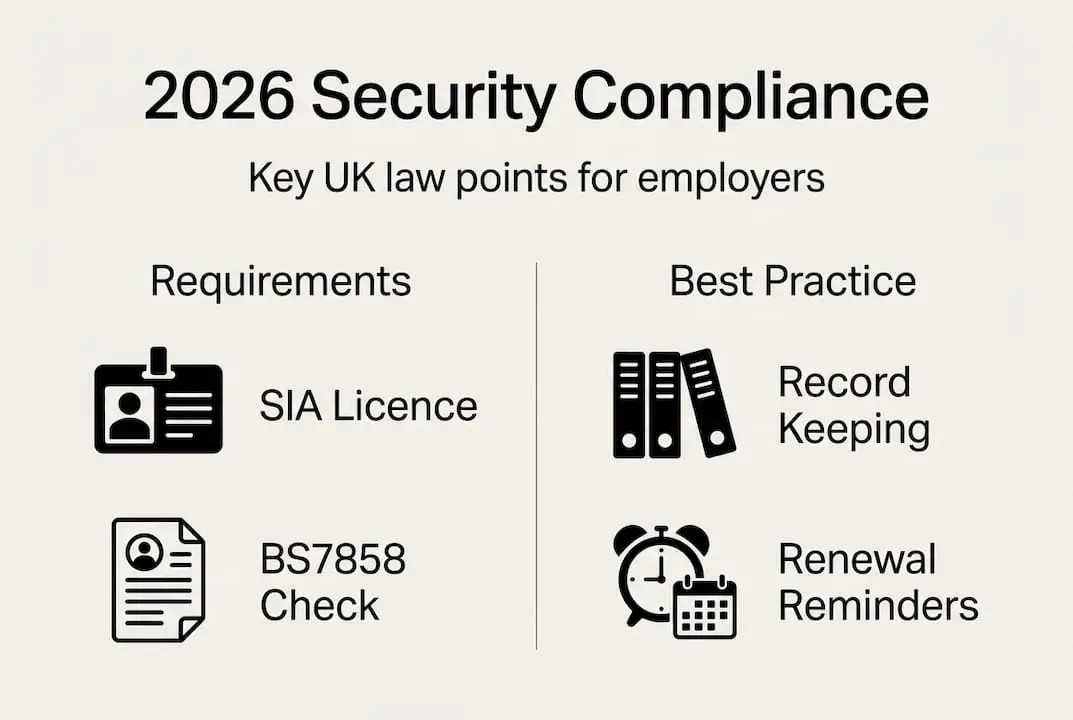
The BS7858 screening standard represents industry best practice for background checks in security roles. The SIA’s Approved Contractor Scheme uses BS7858 to verify that contractors meet rigorous vetting standards. This comprehensive approach includes identity verification, employment history checks covering five years, criminal record disclosure, and credit reference checks where relevant. Implementing BS7858 screening demonstrates your commitment to hiring trustworthy staff.

Pro Tip: Document every stage of your pre-employment checking process. Detailed records prove compliance if disputes arise and help you identify gaps in your screening procedures.
Your security screening UK security sector approach should balance thoroughness with efficiency. Candidates expect professional, timely recruitment processes, but cutting corners on checks creates unacceptable risks. The step by step hiring process security firms follow typically includes application review, initial screening, competency assessment, reference checks, criminal record verification, right to work confirmation, and medical assessment where roles demand it.
Proposed licensing expansions for CCTV operators and security contractors may reshape hiring requirements from 2026 onwards. The SIA has outlined plans to extend mandatory licensing to roles currently outside regulatory scope. Forward-thinking employers should monitor these developments and prepare systems to accommodate broader licensing obligations.
Employment law governs how you handle dismissals, disciplinary actions, and employee grievances. Unfair dismissal claims cost businesses thousands in tribunal awards and legal fees. Following proper procedures, documenting performance issues, and giving workers opportunities to improve protects your business whilst treating staff fairly. Understanding the qualities employers seek in security staff helps you set clear performance standards from day one.
Navigating recruitment challenges: criminality, suitability and ongoing compliance
Criminal records significantly impact licence eligibility and employment decisions in security. Certain offences create automatic barriers to licensing, whilst others require careful assessment of rehabilitation and risk. The balance between giving people second chances and maintaining security standards demands nuanced judgement grounded in legal frameworks.
The December 2025 updates introduced tightened criminality and fit and proper tests that expand relevant offences and raise suitability standards. These changes reflect lessons from security failures and public inquiries into industry oversight. Employers must understand how new criteria affect both recruitment and existing workforce compliance.
| Aspect | Previous standards | Current standards (from Dec 2025) |
|---|---|---|
| Relevant offences | Limited to specific categories | Expanded range including additional violent and dishonesty offences |
| Assessment period | Fixed timeframes for different offence types | More nuanced consideration of offence severity and rehabilitation |
| Disclosure requirements | Standard criminal record checks | Enhanced checks with broader scope |
| Ongoing monitoring | Periodic licence renewals | Continuous duty to report relevant changes |
Assessing candidate suitability requires a structured approach that respects both legal requirements and business needs:
- Review the candidate’s disclosure certificate thoroughly, noting any convictions, cautions, or warnings.
- Compare disclosed information against SIA licensing criteria and your company’s risk assessment framework.
- Consider the nature, severity, and relevance of any offences to the specific security role.
- Evaluate the time elapsed since offences and evidence of rehabilitation or changed circumstances.
- Conduct a face-to-face discussion with the candidate to understand context and assess current suitability.
- Document your decision-making process, including factors considered and rationale for the outcome.
- Seek legal advice for complex cases involving serious offences or ambiguous circumstances.
Pro Tip: Create a written suitability assessment template that guides consistent, defensible hiring decisions. Documenting your reasoning protects against discrimination claims and helps you refine criteria over time.
Ongoing compliance extends beyond initial hiring. Security workers must renew licences every three years, and employers should track renewal dates to prevent lapses. Some roles require periodic rechecks of criminal records or right to work status. Building these requirements into your HR systems prevents compliance gaps that emerge as staff tenure increases.
Employment law’s rehabilitation principles recognise that past offences shouldn’t automatically exclude people from work. The Rehabilitation of Offenders Act 1974 allows certain convictions to become spent after specified periods. However, security roles typically require enhanced disclosure that reveals spent convictions, creating tension between rehabilitation ideals and sector-specific safety needs. Understanding the role of professional bodies UK security helps you navigate these ethical and legal complexities.
Managing licence renewal UK security jobs proactively prevents workforce disruption and maintains continuous compliance across your team.
Future outlook and practical applications in security workforce management
The UK currently lacks mandatory company licensing for security businesses, a gap highlighted by the Manchester Arena Inquiry and subsequent reviews. Whilst individual workers need licences, companies can operate without equivalent oversight. This situation may change as the SIA considers proposals to introduce business licensing alongside expanded individual licensing requirements.
| Proposed licensing area | Expected timeline | Potential impact on employers |
|---|---|---|
| CCTV operators | Implementation expected 2026 | New licensing costs and compliance processes for monitoring roles |
| Security contractors | Under consultation for 2026 | Company-level licensing requirements and enhanced due diligence |
| Additional security roles | Future phases post-2026 | Broader workforce coverage requiring systematic compliance upgrades |
Practical workforce management in this evolving landscape demands proactive systems and continuous attention:
- Establish centralised licence tracking that alerts you to upcoming renewals and expired credentials.
- Build relationships with training providers who can upskill your team as requirements change.
- Create clear internal policies that translate legal obligations into operational procedures.
- Invest in HR systems that automate compliance monitoring and reduce administrative burden.
- Schedule regular legal updates to ensure your policies reflect current legislation and case law.
Pro Tip: Start preparing now for proposed licensing expansions by auditing which roles might fall under new requirements. Early preparation gives you competitive advantage and prevents rushed compliance efforts when regulations take effect.
Continuous training keeps your workforce informed about their legal obligations and your business expectations. Regular briefings on conduct standards, data protection, health and safety, and customer service reinforce compliance whilst improving service quality. Documentation of training activities demonstrates your commitment to professional standards if disputes or audits occur.
Monitoring regulatory developments requires dedicated attention. Subscribe to SIA updates, join industry associations, and participate in consultation processes that shape future rules. Your step by step recruitment process security UK should include flexibility to adapt as legal requirements evolve.
Effective job posting workflow UK security employers integrate compliance requirements from the outset, ensuring every vacancy attracts suitable candidates who meet both licensing and employment law standards. Clear job descriptions that specify legal requirements filter applications efficiently and set proper expectations.
The intersection of employment law and security regulation creates complexity, but systematic approaches transform legal obligations into competitive advantages. Businesses that excel at compliance attract better clients, reduce staff turnover, and avoid costly legal problems. Your investment in understanding these frameworks pays dividends through smoother operations and stronger reputation.
Discover security jobs and career resources
Navigating employment law and licensing requirements becomes easier when you connect with the right opportunities and information. The Security Jobs Board UK provides comprehensive listings covering every region and specialisation within the security sector. Whether you’re seeking door supervisors in London, CCTV operators in Manchester, or close protection officers across the country, the platform connects employers with qualified candidates efficiently.

Beyond job listings, our security job career advice section offers practical guidance on licensing, professional development, and industry trends. Regional opportunities like security jobs in Northern Ireland demonstrate the platform’s UK-wide coverage. Leverage these resources to build compliant, skilled teams whilst advancing your understanding of the legal landscape shaping security employment.
Frequently asked questions
What are the key legal requirements for security staff in the UK?
Security staff must hold a valid SIA licence for licensable activities and comply with employment law including written contracts and right to work verification. Ongoing compliance with criminality and suitability tests remains mandatory throughout employment. Employers bear responsibility for verifying credentials and maintaining proper documentation.
How does employment law protect security employees and employers?
Employment law safeguards employee rights regarding contracts, fair dismissal procedures, and workplace conduct standards. It requires employers to follow fair recruitment practices, maintain safe working environments, and handle grievances through proper procedures. These protections create balanced relationships that benefit both parties when applied correctly.
What changes are expected in security industry licensing?
Company licensing isn’t currently mandatory, but proposals for contractor and CCTV licensing are expected in 2026. Security employers should monitor these developments closely to adapt their compliance approaches proactively. Early preparation for expanded licensing requirements provides competitive advantage and smoother transitions when regulations take effect.
How do criminal records affect security employment decisions?
Criminal records undergo careful assessment against SIA licensing criteria and employer risk frameworks. Certain serious offences create automatic barriers, whilst others require evaluation of rehabilitation evidence and time elapsed. Employers must balance legal rehabilitation principles with sector-specific safety requirements, documenting their assessment processes to ensure fairness and consistency.
What is the BS7858 screening standard and why does it matter?
BS7858 represents the industry benchmark for pre-employment screening in security roles. It encompasses identity verification, five-year employment history checks, criminal record disclosure, and credit references where appropriate. The SIA’s Approved Contractor Scheme mandates BS7858 compliance, making it essential for businesses seeking quality accreditation and client confidence.
Recommended
- What is compliance monitoring: a guide for UK security professionals|SJB
- Understanding compliance auditing for UK security 2026|SJB
- What is physical security recruitment: a UK hiring guide 2026|SJB
- The Complete Guide to Online Job Posting for UK Businesses
- Security Services Explained: Essential Guide 2025 | Re-Solution


