Role of Professional Bodies in UK Security Careers

More than 80 percent of british security professionals now rely on professional bodies to validate their skills and boost career prospects. In a highly competitive sector, joining the right organisation can mean the difference between stagnation and advancement. Understand how british professional bodies set rigorous standards, create specialised career pathways, and offer essential credibility for those serious about rising in the UK security field.
Table of Contents
- Defining Professional Bodies In UK Security
- Types Of Professional Bodies And Their Functions
- Sia Licensing And Qualification Requirements
- Legal Responsibilities And Regulatory Framework
- Career Benefits For Security Professionals
- Common Pitfalls And Compliance Mistakes
Key Takeaways
| Point | Details |
|---|---|
| Importance of Professional Bodies | Professional bodies in the UK security sector set standards, provide accreditation, and support career development for practitioners. |
| Types of Professional Bodies | The UK security landscape includes industry associations, certification bodies, and membership organisations, each fulfilling distinct roles in advancing professional standards. |
| SIA Licensing | The Security Industry Authority regulates licensing requirements, ensuring security professionals meet legal and ethical standards. |
| Career Advancement Opportunities | Membership in professional bodies offers pathways for enhanced recognition, networking, and continuous professional development. |
Defining professional bodies in UK security
Professional bodies play a critical role in establishing standards, providing credibility, and advancing careers within the UK security sector. These organisations serve as authoritative institutions that validate professional competence, set ethical guidelines, and support ongoing professional development for security practitioners across various specialisms.
In the UK, professional bodies like the International Professional Security Association represent a diverse range of security professionals including electronic, fire, and cyber security experts. These organisations function beyond simple membership networks - they actively advocate for industry standards, promote ethical conduct, and create structured pathways for career progression. They assess professional capabilities, offer recognised qualifications, and help maintain the overall integrity of the security profession.
Specialised professional bodies focus on specific security domains, such as the UK Cyber Security Council, which accredits professionals in areas like cyber security governance, risk management, and incident response. These bodies evaluate professional competence through rigorous assessment processes, ensuring that practitioners meet stringent technical and ethical requirements. By maintaining high professional standards, these organisations help protect organisations, enhance industry reputation, and provide clear career development frameworks for security professionals.
Pro tip: Research and join a professional body aligned with your specific security specialism to accelerate your career growth and access valuable networking opportunities.
Types of professional bodies and their functions
The UK security sector encompasses several distinct types of professional bodies, each serving unique and critical roles in maintaining industry standards, professional development, and sector representation. These organisations range from broad industry associations to specialised accreditation bodies, providing comprehensive support for security professionals across various domains.
British professional bodies typically fall into three primary categories. First, industry associations like the British Security Industry Association (BSIA) represent sector-wide interests, advocating for members at governmental levels and promoting collective professional standards. Second, certification and inspection bodies such as the National Security Inspectorate (NSI) and Security Systems and Alarms Inspection Board (SSAIB) focus on rigorous company and individual accreditation, ensuring technical competence and ethical practice. Third, membership organisations like IPSA provide direct support through training, mentoring, and career development resources.
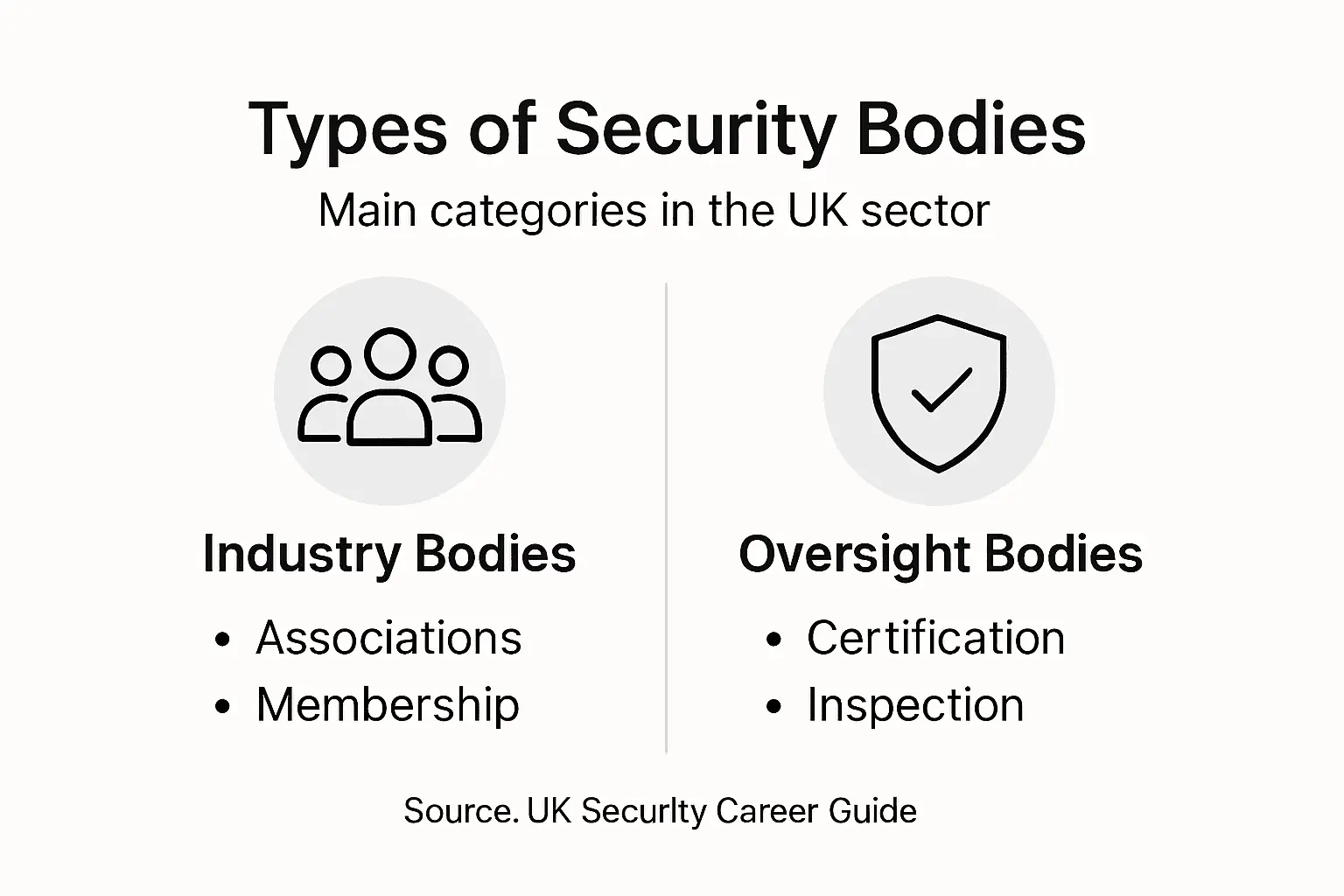
These professional bodies play multifaceted roles beyond simple membership. They develop industry guidelines, create training frameworks, offer professional qualifications, conduct research, and represent security professionals’ interests. By setting stringent entry requirements, maintaining ethical standards, and providing continuous professional development opportunities, these organisations help elevate the security sector’s overall professionalism and credibility.
Below is a comparison of major types of UK security professional bodies and their primary functions:
| Type of Body | Main Purpose | Typical Activities |
|---|---|---|
| Industry Associations | Represent sector-wide interests | Advocacy, policy engagement, standard setting |
| Certification/Inspection | Accredit companies and individuals | Auditing, qualification, compliance checks |
| Membership Organisations | Support practitioner growth | Training, mentoring, career resources |
Pro tip: Carefully research different professional bodies in your specific security specialism to identify those offering the most relevant qualifications, networking opportunities, and career advancement support.
SIA licensing and qualification requirements
Security Industry Authority (SIA) licensing represents a critical regulatory framework for professionals working in private security roles across the United Kingdom. Mandatory licensing processes cover multiple security occupations including door supervisors, security guards, close protection officers, and CCTV operators, ensuring that only qualified individuals can undertake sensitive security responsibilities.
The licensing procedure involves comprehensive eligibility assessments that go beyond simple paperwork. Candidates must satisfy several key requirements: demonstrate legal right to work in the UK, pass criminal record background checks, and complete role-specific training programmes. These training courses are designed to equip professionals with essential legal knowledge, practical skills, and customer service competencies that are crucial for effective security work.

As a government regulatory body, the SIA maintains stringent standards to protect public safety and professional integrity. Regulatory oversight involves a structured governance model with non-executive directors who continuously review and update licensing policies. This ensures that security professionals are not only technically competent but also adhere to high ethical standards that maintain public trust in the private security sector.
Pro tip: Always verify your specific security role’s exact SIA licensing requirements and keep your qualifications current to maintain legal compliance and professional credibility.
Legal responsibilities and regulatory framework
Security professionals in the United Kingdom operate within a complex legal landscape that demands strict adherence to multiple regulatory standards. Government regulatory oversight ensures that security practitioners maintain high levels of professional conduct, public safety, and legal compliance across various security roles and responsibilities.
Two primary regulatory bodies play crucial roles in defining legal frameworks for security professionals. The Security Industry Authority (SIA) governs licensing and professional standards, while the Information Commissioner’s Office (ICO) provides critical oversight for data protection and privacy. Data protection compliance represents a particularly important legal responsibility, requiring security professionals to understand and implement strict protocols for handling personal and sensitive information in accordance with GDPR regulations.
Legal responsibilities extend beyond simple licensing requirements. Security professionals must navigate complex legal terrain including human rights legislation, criminal law, health and safety regulations, and specific industry-specific legal frameworks. This requires ongoing professional development, regular training updates, and a commitment to understanding the evolving legal landscape that governs security work in the United Kingdom.
This reference table highlights key UK security regulatory bodies and their oversight areas:
| Regulatory Body | Area of Oversight | Typical Responsibilities |
|---|---|---|
| Security Industry Authority (SIA) | Licensing and standards | Issue licences, enforce conduct codes |
| Information Commissioner’s Office | Data protection and privacy | GDPR compliance, data handling rules |
| National Security Inspectorate | Company and service accreditation | Audit security firms, technical checks |
| British Security Industry Assoc. | Industry advocacy | Represent member interests, lobbying |
Pro tip: Maintain a comprehensive professional portfolio documenting your legal training, certifications, and compliance records to demonstrate your commitment to professional standards.
Career benefits for security professionals
Membership in professional bodies presents substantial career advancement opportunities for security professionals in the United Kingdom. Professional registration initiatives offer pathways to enhanced recognition, specialised training, and structured career development that can significantly elevate an individual’s professional trajectory within the security sector.
These organisations provide multiple tangible benefits beyond basic membership. Security professionals can access comprehensive career frameworks, networking platforms, continuous professional development programmes, and opportunities for specialised certifications. Career support frameworks enable individuals to systematically progress through different career stages, with clear progression routes and skill-enhancement opportunities across various security specialisms.
Professional bodies also play a crucial role in advocacy and professional representation. They negotiate improved working conditions, champion fair compensation standards, and provide platforms for individual professionals to gain visibility and credibility within the industry. By offering mentoring programmes, post-nominals, and recognition schemes, these organisations help security professionals differentiate themselves and build robust, respected careers.
Pro tip: Actively engage with your chosen professional body’s resources, attend networking events, and leverage their career development programmes to maximize your professional growth opportunities.
Common pitfalls and compliance mistakes
Security professionals must navigate a complex landscape of regulatory requirements, with potential compliance challenges presenting significant risks to their professional credentials. Failing to meet specific eligibility criteria, neglecting mandatory training, or overlooking critical documentation can result in immediate license refusal or subsequent revocation.
The most frequent compliance mistakes stem from inadequate understanding of industry-specific regulations. Security professionals often encounter difficulties with criminal record disclosures, incorrect licence category applications, and incomplete professional certifications. Industry standard adherence requires meticulous attention to detail, with organisations like the British Security Industry Association (BSIA) maintaining strict oversight of professional credentials.
Beyond individual licensing challenges, organisations face substantial risks when failing to maintain proper certifications. Non-compliance can lead to significant penalties, including loss of business opportunities, legal repercussions, and damage to professional reputation. Security companies must continuously update their knowledge, invest in ongoing training, and ensure all personnel meet the most current regulatory standards to mitigate these substantial risks.
Pro tip: Develop a systematic compliance tracking system that monitors your professional credentials, training requirements, and certification renewals to prevent inadvertent regulatory breaches.
Advance Your UK Security Career with Trusted Job Opportunities
Understanding the vital role of professional bodies like the Security Industry Authority and the British Security Industry Association can be the key to unlocking your full career potential in the UK security sector. Navigating licensing requirements, staying compliant with legal responsibilities, and pursuing continuous professional development are critical challenges for security professionals aiming to thrive and stand out.

At Security Jobs Board, we connect you directly with employers who value these industry standards and recognise professional qualifications. Our platform makes it simple to create your profile, upload your CV, and apply to tailored security vacancies that align with your expertise and licencing status. Take control of your career growth now by exploring our dedicated services designed for UK security professionals. Visit Security Jobs Board and start your journey towards a recognised and rewarding career in security today.
Frequently Asked Questions
What are professional bodies in the UK security sector?
Professional bodies in the UK security sector are authoritative organisations that establish standards, validate competence, and support ongoing professional development for security practitioners across various specialisms.
How do professional bodies help enhance career prospects in security?
Professional bodies provide career frameworks, networking opportunities, continuous professional development programmes, and pathways to specialised certifications, significantly elevating an individual’s professional trajectory in security.
What are the main types of professional bodies in the UK security industry?
The main types of professional bodies include industry associations, certification and inspection bodies, and membership organisations, each serving distinct roles in advocating for industry standards and supporting professional growth.
Why is SIA licensing important for security professionals?
SIA licensing is crucial as it ensures that only qualified individuals can undertake sensitive security responsibilities, protecting public safety and maintaining professional integrity within the private security sector.
Recommended
- Why Choose Security Jobs: Complete Guide UK | Brainiac Media
- Complete Guide to Security Sector Jobs UK | Brainiac Media
- The Essential Guide to Choosing the Security Industry|BM
- Why Work In Security Sector: Complete UK Guide | Brainiac Media
- Duty of Care for Employers: Complete Guide - Unparalleled Global Benefits


