What does a frontline security officer do in the UK?
Frontline physical security officers in the UK protect people, property and premises across four main roles: security guard, door supervisor, CCTV/public space surveillance operator and mobile patrol officer. Every one of these roles falls under the Security Industry Authority (SIA) licensing regime, which means working without the correct licence is a criminal offence. Securityjobsboard connects UK employers and jobseekers across all four roles. The sections below break down exactly what each role involves, which licences apply and how to get started.
- Core tasks: controlling access, patrolling premises, monitoring CCTV, responding to alarms, preserving evidence and guarding cash or valuables
- Regulatory framework: SIA licence requirements under the Private Security Industry Act 2001; compliance guidance from Securityjobsboard
Key takeaways
UK frontline security roles require a valid SIA licence, a recognised qualification and Emergency First Aid at Work certification before any candidate can legally work.
| Point | Details |
|---|---|
| Four frontline roles | Security guard, door supervisor, CCTV/PSS operator and mobile patrol each require a specific SIA licence. |
| Refresher training is now mandatory | Security guard refresher training became mandatory from 1 April 2025; it also enables licence switching. |
| Door Supervisor licence is broader | A Door Supervision licence authorises security guard duties; a Security Guard licence does not cover licensed premises. |
| Employers must verify three documents | Valid SIA licence, satisfactory DBS check and right-to-work evidence are required before a hire starts. |
| Securityjobsboard for UK recruitment | Post vacancies or search licensed roles at Securityjobsboard for sector-specific matches. |
Table of Contents
- What does a security officer actually do each day?
- Which SIA licences do frontline roles require?
- What does SIA training actually cover?
- How to get licensed and start working: a realistic timeline
- What employers look for and how to present your skills
- Where to find security jobs and how to post vacancies
- The gap between what the industry promises and what actually matters
- Securityjobsboard: post a vacancy or find your next role
- Sources
- FAQ
What does a security officer actually do each day?
The day-to-day picture varies significantly by role. Here is how each one breaks down.
Security guard
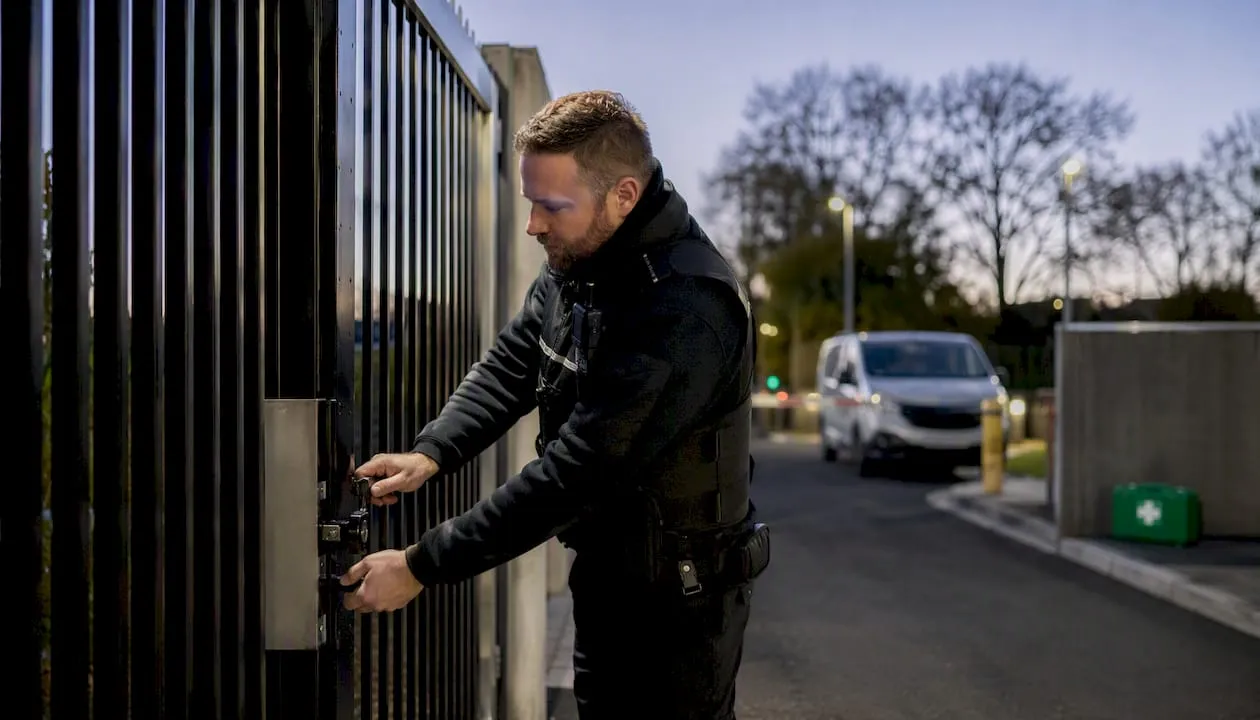
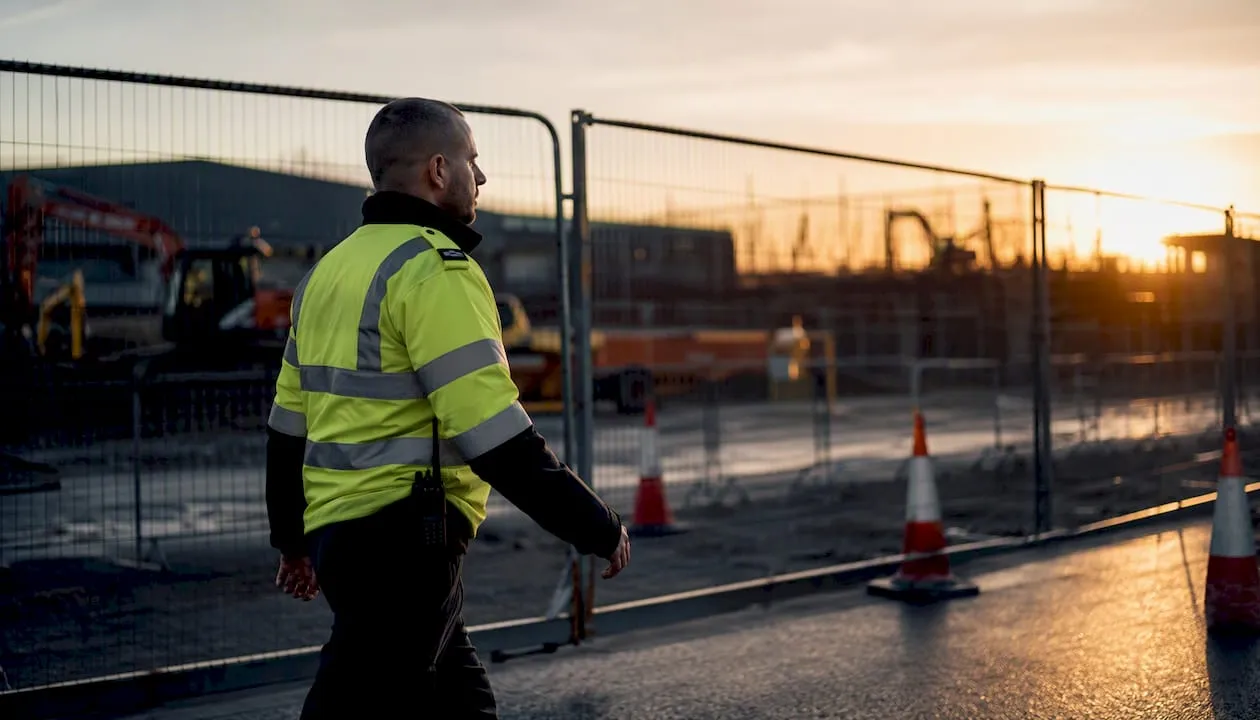
A security guard controls access to offices, retail sites and construction sites, patrols the perimeter, monitors CCTV on private premises and responds to basic incidents. The National Careers Service lists typical tasks as patrolling, securing entrances, checking people in and out, responding to alarms and operating scanning equipment. Using CCTV to guard private premises falls within the security guarding licence, but monitoring cameras in public spaces requires a separate public space surveillance licence.
Door supervisor
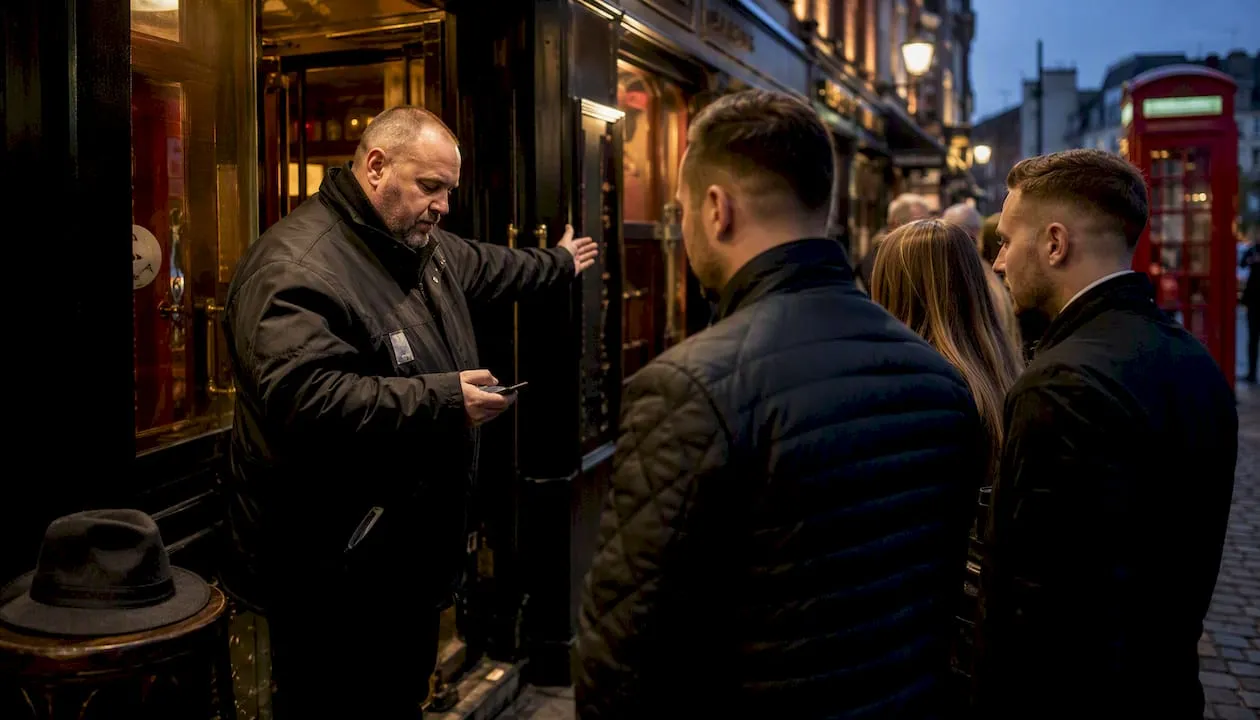
Door supervisors work at pubs, clubs and licensed venues. They manage queues, search and screen entrants, physically intervene when necessary and liaise directly with police, first aiders and venue managers. Under the Private Security Industry Act 2001, a Door Supervision licence is required to guard licensed premises against unauthorised access, disorder or damage. Crucially, a Door Supervision licence also authorises the holder to perform security guard duties, making it the more flexible of the two frontline licences.
CCTV / public space surveillance operator
This role involves monitoring camera networks covering public areas such as town centres, transport hubs and car parks. A public space surveillance licence is required when the operator is employed to watch public spaces. It does not authorise the holder to carry out physical guarding or door supervision duties; it is a standalone licence for camera-based monitoring only.
Mobile patrol officer
Mobile patrol officers cover multiple sites by vehicle, conducting keyholding, alarm response and welfare checks. When an alarm triggers, they are often the first on scene, responsible for preserving evidence and securing the premises before police or the keyholder arrives.
| Role | Best suited for | Key distinction |
|---|---|---|
| Security guard | Static sites, retail, offices | Access control and on-site patrol |
| Door supervisor | Licensed premises, events | Physical intervention and crowd management |
| CCTV operator | Public spaces, transport hubs | Camera monitoring only; no physical guarding |
| Mobile patrol | Multi-site, keyholding | Vehicle-based response across locations |
Pro Tip: If you are hiring for a venue that hosts both public events and a licensed bar, a door supervisor covers both functions. A security guard licence alone does not.
Which SIA licences do frontline roles require?
The Private Security Industry Act 2001 requires a Security Guard licence to guard property against destruction, damage or dishonest taking. The three frontline licences most employers and jobseekers encounter are:
- Security Guard licence: covers manned guarding of premises and property, including CCTV use on private sites
- Door Supervisor licence: required for licensed premises; also authorises security guard work
- Public Space Surveillance (CCTV) licence: required for monitoring cameras in public areas; does not cover physical guarding
To apply for any of these, candidates need a recognised qualification from an SIA-endorsed awarding organisation. Emergency First Aid at Work (EFAW) certification is mandatory for both security guarding and door supervision applicants. Close protection roles require a higher Level 3 First Aid at Work qualification.
Refresher training for security guards was introduced on 1 October 2024 and became mandatory from 1 April 2025. Completing refresher training also opens the option to switch between a door supervision licence and a security guarding licence, provided the appropriate first-aid qualification is held. Employers recruiting now should confirm that candidates’ licences reflect this updated requirement. (SIA: Get Licensed)
Employers must verify three documents before a new hire starts: a valid SIA licence, a satisfactory DBS (Disclosure and Barring Service) check and proof of right to work in the UK. See the employment law compliance guide for the full employer checklist.
What does SIA training actually cover?
The SIA security guarding specification sets out the core learning sessions every candidate must complete before applying for a security guard licence:
- Roles and responsibilities of a security officer
- Access and egress control
- Electronic and physical protection systems
- Personal safety
- Drugs awareness
- Searching techniques
- Patrolling and preservation of evidence
Door supervisor training adds licensing law, crowd and queue management, terrorism awareness, admissions policies and the safe handling of vulnerable people during ejections. Both qualifications are assessed through written and practical components set by the awarding organisation.
Choosing a credible course: not every training provider delivers the same quality. Before booking, confirm:
- The provider uses an SIA-endorsed awarding organisation (e.g. Highfield, HABC, NOCN)
- The syllabus matches the current SIA specification (updated 2021 for security guarding)
- First-aid training is either included or clearly scheduled alongside the main course
- Assessment methods include both written and practical elements
Refresher training counts towards continuing professional development and is the mechanism for licence renewal from April 2025 onwards. It also allows licence switching, which gives employers access to multi-role operatives without requiring a full re-qualification.
Pro Tip: Ask any provider directly: “Is your qualification on the SIA’s current list of accepted awards?” If they cannot answer immediately, look elsewhere. An out-of-date qualification will not support a licence application.
How to get licensed and start working: a realistic timeline
The route from decision to first shift follows a clear sequence, though delays at the SIA application stage are common.
- Choose and book your course — security guarding or door supervision, depending on the role you want
- Complete first-aid training — EFAW is the minimum for both frontline licences
- Pass the qualification — written and practical assessments with your awarding organisation
- Apply for your SIA licence — submit online with qualification certificates and identity documents
- DBS and right-to-work checks — employers run these before or immediately after licence confirmation
- Start work — some employers will place candidates in supervised roles while the licence is processed
SIA licence processing typically takes several weeks from a complete application. Incomplete applications, missing documents or identity verification issues are the most common causes of delay. Build at least eight to ten weeks into your planning from course start to first licensed shift.
Pro Tip: Submit your SIA application the day you receive your qualification certificate. Every day you wait is a day added to your start date. Keep digital copies of every document before you post originals.
The security checks guide covers what employers verify during onboarding in more detail.
What employers look for and how to present your skills
Employers hiring for frontline roles consistently prioritise the same core competencies:
- Clear verbal and written communication (incident reports, handover notes)
- Observation and situational awareness
- Conflict management and de-escalation
- Basic first aid and physical fitness for shift work
- Familiarity with digital incident logging and body-worn cameras
On your CV, name the specific SIA licence you hold, the awarding organisation, your EFAW certificate date and any sector experience (retail, construction, events). Phrases like “managed access control for a 500-person venue” or “completed 12-hour lone-worker patrols across three sites” are far more useful to a hiring manager than generic claims about being “reliable and hardworking.”
Salary ranges vary by region and role type. Security guards typically earn hourly wages on the lower end, while door supervisors command slightly higher pay, reflecting the additional licence and physical intervention responsibilities. Mobile patrol and keyholding roles vary widely depending on the number of sites covered and whether the role includes alarm response call-outs.
Career progression from frontline roles is real. Door supervisors and security guards can move into supervisory positions, contract management or specialist roles such as CCTV-only operative or mobile patrol supervisor. Some progress to agency ownership.
Pro Tip: Include your SIA licence number on your CV. Employers can verify it instantly on the SIA register, and it signals you have nothing to hide.
Where to find security jobs and how to post vacancies
For jobseekers, the most direct routes are specialist job boards, local security agencies, direct employer adverts and training-provider placement services. Specialist boards focused on the security sector surface relevant roles faster than general job sites because listings are already filtered by licence type and location.
For employers, the quality of your advert determines the quality of your applicants. Every vacancy should state:
- The exact SIA licence required (Security Guard, Door Supervisor or PSS/CCTV)
- First-aid requirement (EFAW as minimum)
- Shift pattern and hours
- DBS check expectation (enhanced or standard)
- Pay range, including any unsocial hours uplift
Adverts that include all five of these elements consistently attract better-matched candidates and reduce time-to-hire. Vague adverts that say only “SIA licence required” generate volume but poor fit.
Pro Tip: State the pay range in your advert. Candidates with the right licence have options; if your advert hides the rate, many will simply move on.
The gap between what the industry promises and what actually matters
The security sector has a persistent habit of treating the SIA licence as the finish line rather than the starting point. Candidates get licensed, employers tick the compliance box, and the actual quality of the person on the ground gets little further thought. That is a mistake on both sides.
The mandatory refresher training introduced in April 2025 is the most significant structural change to frontline security in years. It is not just a bureaucratic hurdle; it is an opportunity. Employers who use it to identify multi-role operatives, those who can switch between door supervision and security guarding, will build more flexible teams at lower cost. Candidates who treat it as a chance to add a second licence will find themselves considerably more employable.
The other thing the industry consistently underestimates is the value of digital skills. Body-worn cameras, digital incident logs and remote monitoring platforms are now standard on many contracts. A candidate who can operate these confidently, and document incidents clearly in writing, is worth more than one who simply holds the licence.
Securityjobsboard: post a vacancy or find your next role
Securityjobsboard is the UK’s specialist platform for frontline security recruitment, built specifically for the roles this article covers: security guards, door supervisors, CCTV operators and mobile patrol officers.

Jobseekers can create a free profile, upload their CV and set alerts for roles matching their SIA licence and location. Employers get direct access to a database of licensed candidates, flexible vacancy posting and GDPR-compliant tools that keep the process clean and fast. The platform’s BSIA affiliation means both sides are working within a trusted, sector-specific environment.
If you are looking for security jobs in Northern Ireland or posting vacancies anywhere across the UK, visit Securityjobsboard to get started today.
Sources
- Gov
- Door Supervisor | Regulated Professions Register | GOV.UK
- SIA: Get licensed
- Security officer | National Careers Service
FAQ
What SIA licence does a security guard need in the UK?
A Security Guard licence, required under Section 3 of the Private Security Industry Act 2001, covers guarding property against destruction, damage or theft and monitoring CCTV on private premises.
Can a door supervisor work as a security guard?
Yes. A Door Supervision licence authorises the holder to perform security guard duties, but a Security Guard licence does not permit work on licensed premises.
When did refresher training become mandatory for security guards?
Refresher training for security guards was introduced on 1 October 2024 and became mandatory from 1 April 2025, as set out in the SIA’s Get Licensed guidance.
What documents must employers check before hiring a security officer?
Employers must verify a valid SIA licence, a satisfactory DBS check and proof of right to work in the UK before a new hire begins work.
Where can I find or post frontline security vacancies in the UK?
Securityjobsboard at Securityjobsboard is a specialist UK platform where jobseekers can apply for licensed roles and employers can post vacancies and search a database of SIA-licensed candidates.


