Boost your security career: transferable skills guide

Standing out in the UK security job market takes more than a licence and a uniform. Many of the most successful security professionals arrive from retail, the armed forces, logistics, or even hospitality, and they bring something genuinely valuable with them: a portfolio of skills that translate directly into security work. The challenge is that most candidates do not realise how much of what they already know is relevant. This article walks you through the key transferable skills valued across UK security roles, how to identify them in your own background, and how to present them convincingly to employers.
Table of Contents
- What are transferable skills in security?
- Top examples of transferable skills for security jobs
- How to demonstrate transferable skills on applications and in interviews
- Comparison: Transferable skills across different security roles
- What most candidates miss about transferable skills in security
- Next steps: Find roles that match your transferable skills
- Frequently asked questions
Key Takeaways
| Point | Details |
|---|---|
| Transferable skills explained | Many competencies from other industries are directly valued in UK security roles. |
| Key skills list | Risk assessment, communication, and technical awareness are vital for diverse security jobs. |
| Showcasing skills | Tailor your application with evidence-based examples for maximum impact. |
| Bridging career gaps | Over a quarter of cyber security workers started from outside the sector. |
What are transferable skills in security?
Transferable skills are competencies you have built in one setting that remain useful in a completely different role or industry. In the security sector, this matters enormously. You might have spent years managing difficult customers in retail, coordinating logistics under pressure, or working in a team where communication could mean the difference between a smooth operation and a serious problem. All of that experience has direct value in security.
The UK Government Security Profession Career Framework highlights transferable skills like protective security, risk understanding and mitigation, applied physical security, threat understanding, and legal compliance as core competencies across government and private sector roles. These are not niche technical abilities. They are skills that people develop in many walks of life.
Here are the transferable skills most commonly valued across UK security positions:
- Communication: Clear, calm, and accurate communication is essential in every security role, from writing incident reports to briefing colleagues.
- Risk assessment: Identifying and evaluating potential threats is a skill you can develop in construction, healthcare, or event management.
- Problem-solving: The ability to think quickly and act decisively under pressure is prized across physical and cyber security alike.
- Teamwork: Security rarely works in isolation. Coordinating with colleagues, police, or emergency services requires genuine collaborative ability.
- Initiative: Employers want professionals who act appropriately without needing constant direction.
- Technical awareness: Familiarity with CCTV systems, access control, or basic IT is increasingly expected even in traditional roles.
- Ethical judgement: Knowing when and how to act, and understanding the legal boundaries, is non-negotiable.
Reviewing job descriptions in the security sector jobs guide will quickly show you which of these skills appear most often for the roles you are targeting.
“Employers across the security sector are increasingly prioritising candidates who demonstrate multi-disciplinary competence, not just technical training.”
Pro Tip: Write down five situations from your previous work where you had to assess a risk, handle a conflict, or take initiative. These are your raw material for any security application.
Top examples of transferable skills for security jobs
Knowing the definition is one thing. Seeing how specific skills map to real security roles makes the picture much clearer. Let us look at the most portable skills and where they land.
Risk assessment is perhaps the most universally valued. A warehouse supervisor who managed health and safety checks, a nurse who triaged patients, or a teacher who managed safeguarding concerns all have genuine risk assessment experience. In security, this skill applies whether you are spotting vulnerabilities in a venue or reviewing network access logs as a cyber analyst.
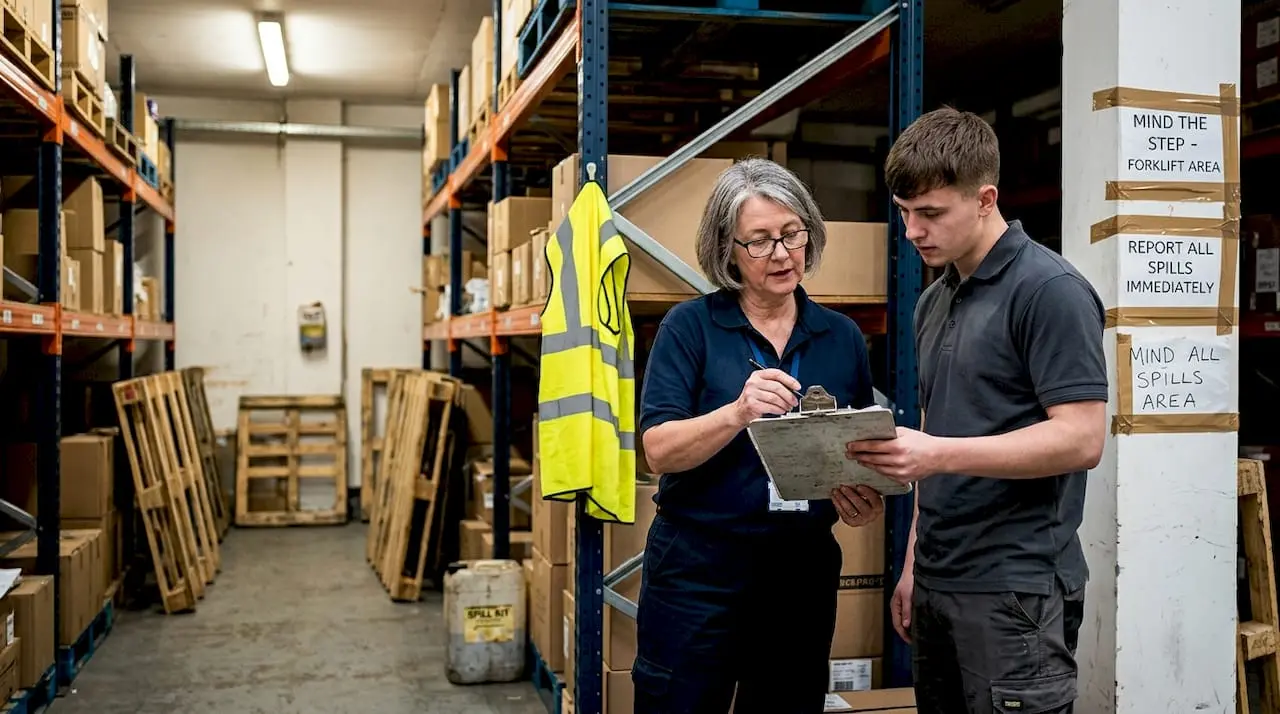
Legal compliance is another skill that travels well. Anyone who has worked in a regulated environment, whether finance, healthcare, or hospitality, understands the importance of following procedures and documenting actions. Security roles require strict adherence to employment and licensing law, and candidates who already think in terms of compliance are immediately more attractive to employers.
Customer service is often underestimated. Public-facing security roles, such as front-of-house security at venues or retail security officers, require genuine interpersonal skill. Handling a confrontational situation calmly and professionally is something experienced retail or hospitality workers do routinely.
The data backs this up. 28% of cyber security professionals in the UK were recruited from non-cyber roles, demonstrating just how transferable skills from other industries really are.
| Transferable skill | Security guard | Cyber analyst | Close protection officer |
|---|---|---|---|
| Risk assessment | High | High | High |
| Communication | High | Medium | High |
| Legal compliance | Medium | High | High |
| Customer service | High | Low | Medium |
| Technical aptitude | Medium | High | Low |
| Analytical thinking | Medium | High | Medium |
Pro Tip: When updating your CV, do not just list job titles. Write one sentence per role that describes a specific skill you used and the outcome it produced.
How to demonstrate transferable skills on applications and in interviews
Identifying your skills is only half the challenge. Making them visible to a hiring manager is where many candidates fall short. Here is a practical approach.
The most effective framework for this is the STAR technique: Situation, Task, Action, Result. It forces you to move beyond vague claims like “good communicator” and into concrete, believable evidence.
Here is how to apply it step by step:
- Identify the skill the job description asks for, such as risk assessment or conflict resolution.
- Choose a real example from any previous role where you used that skill.
- Write your STAR answer: describe the situation briefly, explain what your task was, detail the specific actions you took, and state the measurable result.
- Mirror the language of the job posting. If the employer uses the phrase “threat awareness,” use that phrase in your application.
- Prepare a skills matrix before applying: a simple table matching your past responsibilities to the requirements listed in the role.
The Government Security Profession Career Framework provides clear criteria for skill matching in job transitions, which you can use as a checklist when tailoring your application.
For interview preparation, think about the competency questions most common in security recruitment. You will often be asked how you handled a difficult person, managed a risk, or made a decision under pressure. These are not trick questions. They are invitations to share your transferable experience.
“The candidates who perform best in security interviews are not always the most experienced in security. They are the ones who can articulate their value clearly and connect their past to the role in front of them.”
Useful resources for structuring your search include guides on optimising your job search and a step-by-step job search strategy built specifically for security professionals. You should also familiarise yourself with security screening checks so your application is not delayed by avoidable issues.
Pro Tip: Prepare three STAR stories before every interview. Cover communication, risk, and decision-making. You can adapt these to almost any competency question.
Comparison: Transferable skills across different security roles
Not all security roles need the same skills in the same proportions. Understanding where your strengths fit best helps you target your applications more effectively.
| Skill | Physical security | Cyber security | Security management | Specialist roles |
|---|---|---|---|---|
| Situational awareness | Essential | Useful | Important | Varies |
| Digital fluency | Basic | Essential | Important | Often essential |
| Analytical thinking | Useful | Essential | Essential | Essential |
| Legal awareness | Important | Essential | Essential | Essential |
| Leadership | Useful | Useful | Essential | Varies |
| Communication | Essential | Important | Essential | Important |
Over a quarter of UK cyber security hires come from non-cyber backgrounds, and labour data identifies persistent skills gaps in basic cyber and incident response. This means the door is genuinely open for career changers who can demonstrate analytical thinking and a willingness to learn.
Here are some role-specific pointers:
- Physical security: Prioritise situational awareness, communication, and conflict management. Experience in retail, door supervision, or the military translates directly.
- Cyber security: Digital fluency, analytical thinking, and problem-solving matter most. IT support, software development, or even data administration backgrounds are strong starting points.
- Security management: Leadership, legal awareness, and strategic thinking are key. Operations management or project coordination experience is highly relevant.
- Specialist roles (close protection, surveillance): Adaptability, discretion, and physical fitness combine with strong communication and legal knowledge.
Investing in the right security training can also bridge gaps between your current skill set and the role you want. If you are ready to start applying, a guide to finding security jobs near you is a practical next step.
What most candidates miss about transferable skills in security
Here is something worth saying plainly: most candidates dramatically undervalue their own backgrounds. We see it constantly. Someone with ten years in logistics dismisses their experience as irrelevant, when in reality they have been managing risk, coordinating teams under pressure, and operating within strict compliance frameworks every single day.
The UK security profession does not just need former police officers and ex-military personnel. It needs people who can adapt, communicate, and apply good judgement in unpredictable situations. That description fits a far wider range of backgrounds than most candidates realise.
The UK security industry job market outlook shows sustained demand for professionals who bring multi-disciplinary expertise. Employers are not looking for clones of the last person who held the role. They are looking for people who learn quickly and apply knowledge across contexts.
Stop thinking of your CV as a list of jobs. Start thinking of it as a portfolio of capabilities. Every role you have held has added something. Your job is to make that visible, clearly and confidently, to the people reading your application.
Next steps: Find roles that match your transferable skills
You now have a clear picture of which skills matter, how they map to different security roles, and how to present them effectively. The next step is putting that knowledge to work in your actual job search.

The Security Jobs Board connects you directly with UK employers who are actively hiring across physical security, cyber, management, and specialist roles. Whether you are looking for security jobs in Northern Ireland or searching nationwide, you can create a free profile, upload your CV, and set targeted job alerts in minutes. You can also connect with security employers directly or browse our career advice for security roles to sharpen your applications further. Your transferable skills are an asset. Let us help you find the role that recognises them.
Frequently asked questions
Which transferable skills do UK security employers value most?
Risk assessment, communication, legal compliance, and technical awareness are among the top transferable skills UK employers seek, as highlighted by the Government Career Framework for security roles.
Can I get a security job without previous security experience?
Yes. 28% of cyber security professionals in the UK were recruited from non-cyber roles, and many physical and management security positions actively welcome candidates from customer service, logistics, or technical support backgrounds.
How can I highlight transferable skills on my CV?
Use the STAR method to frame real examples from your work history, and align your language to the specific requirements in the job description, as UK Government frameworks recommend evidence-based skill matching.
Are technical skills necessary for physical security jobs?
Not always, but technical awareness is increasingly valued even in traditional physical roles due to the growing integration of surveillance systems and access control technology, as shown by rising demand data across the sector.
Recommended
- Opening Doors: Supporting Women Transitioning Into Security Careers |SJB
- Top soft skills in security to boost your career in 2026|SJB
- Optimising Security Job Searches for Fast UK Career Moves
- Learn Skills for Security Professionals: Training & Courses
- How to Secure Your Data: Essential Steps for Protection – buy2fix


