Top soft skills in security to boost your career in 2026

The UK security industry in 2026 demands more than technical expertise. Security professionals who master soft skills like communication, conflict management, and emotional intelligence unlock better career prospects and higher salaries. Employers increasingly value interpersonal and professional skills alongside traditional qualifications. This article presents a structured framework to identify, evaluate, and prioritise the soft skills that will accelerate your security career this year.
Table of Contents
- Criteria For Selecting Top Soft Skills In Security
- Top Soft Skills Every Security Professional Needs In 2026
- Comparing Top Soft Skills: How To Prioritise Them For Your Security Role
- Applying Soft Skills To Advance Your Security Career
- Enhance Your Security Career With Tailored Job Resources
- Frequently Asked Questions
Key takeaways
| Point | Details |
|---|---|
| Communication drives success | Clear reporting and public interaction skills separate high performers from average security staff. |
| Conflict management saves lives | De-escalation techniques reduce workplace incidents and enhance team safety outcomes. |
| Emotional intelligence matters | Recognising and responding to emotions improves decision-making in high-pressure situations. |
| Adaptability ensures relevance | Handling evolving threats and procedural changes keeps you valuable in changing security landscapes. |
| Customer service builds reputation | Professional engagement in public-facing roles creates positive experiences and career opportunities. |
Criteria for selecting top soft skills in security
Selecting which soft skills to develop requires a strategic approach. Not every interpersonal skill carries equal weight in security careers. You need a clear framework to evaluate which capabilities will deliver the strongest return on your learning investment.
Consider these five criteria when choosing soft skills to prioritise:
- Relevance to daily duties: Skills you use constantly matter more than theoretical capabilities. Communication and conflict management appear in nearly every shift.
- Career advancement impact: Some skills open leadership pathways. Emotional intelligence and teamwork directly influence promotion decisions.
- Employer demand: Marketplace recognition drives hiring decisions. Employers value interpersonal and professional skills highly when screening candidates.
- Transferability across sectors: Skills that work in retail security, corporate protection, and events management maximise your job options.
- Team performance enhancement: Capabilities that improve collective outcomes create measurable value for employers.
Pro Tip: Track which soft skills appear most frequently in job descriptions for roles you want. This reveals what employers actually prioritise versus what training programmes emphasise.
Applying this framework helps you avoid wasting time on generic soft skills courses. Focus on capabilities that align with multiple criteria simultaneously. Communication, for instance, scores highly across all five dimensions. It affects daily work, supports promotions, attracts employer attention, transfers between security sectors, and strengthens team coordination.
The strongest candidates combine technical certifications with targeted soft skills development. This dual approach positions you as both competent and collaborative, a combination that drives career progression in competitive markets.
Top soft skills every security professional needs in 2026
Six soft skills stand out as essential for UK security professionals pursuing career growth in 2026. Each capability addresses specific workplace challenges whilst supporting broader professional development.
Communication forms the foundation of effective security work. You write incident reports, brief colleagues during handovers, and interact with the public daily. Communication skills prove crucial for security staff in transport and logistics sectors where clear information flow prevents incidents. Poor communication creates confusion, delays emergency responses, and damages client relationships.
Conflict management separates exceptional security professionals from adequate ones. Conflict management improves team safety and security outcomes through proven de-escalation techniques. You encounter tense situations regularly, from shoplifters to aggressive visitors. Knowing how to calm situations without force protects everyone involved and demonstrates professional maturity.
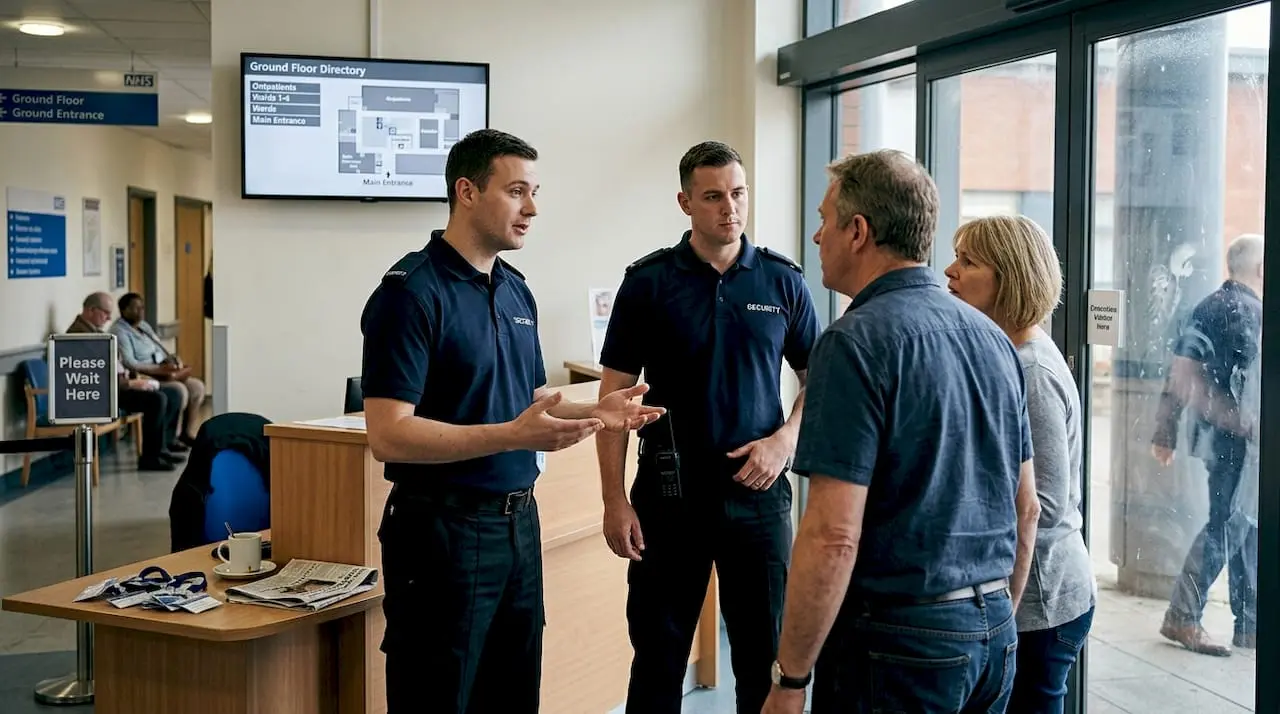
Emotional intelligence enhances your ability to read situations accurately. Recognising when someone feels threatened, anxious, or aggressive allows you to adjust your approach before problems escalate. This skill improves decision-making under pressure and builds stronger relationships with colleagues who appreciate your awareness.
Customer service matters more than many security professionals realise. You often serve as the first point of contact for visitors, clients, and members of the public. Courteous, professional engagement creates positive experiences that reflect well on your employer and open doors to client-facing roles with better pay.
Adaptability keeps you relevant as security threats evolve. New technologies, changing procedures, and emerging risks require continuous adjustment. Professionals who embrace change rather than resist it become valuable assets during transitions.
Teamwork underpins successful security operations. You coordinate with colleagues across shifts, collaborate with emergency services, and work alongside client staff. Strong team players receive better references, more training opportunities, and consideration for supervisory positions.
Pro Tip: Develop these skills simultaneously rather than sequentially. Practising conflict management naturally improves your communication and emotional intelligence.
| Soft Skill | Primary Benefit | Career Impact |
|---|---|---|
| Communication | Clearer reporting and coordination | Essential for supervisory roles |
| Conflict Management | Safer incident resolution | Reduces liability and builds trust |
| Emotional Intelligence | Better situational awareness | Improves leadership potential |
| Customer Service | Positive public interactions | Opens client-facing opportunities |
| Adaptability | Handles change effectively | Increases long-term employability |
| Teamwork | Stronger operational coordination | Required for team leader positions |
Comparing top soft skills: how to prioritise them for your security role
Not every security role demands identical soft skills. A door supervisor needs different capabilities than a control room operator. Understanding these distinctions helps you focus development efforts where they matter most.
This comparison evaluates each skill across three dimensions: workplace impact, frequency of use, and career benefits. Use this framework to identify which skills deserve immediate attention versus longer-term development.
| Skill | Workplace Impact | Frequency of Use | Career Benefits | Best For |
|---|---|---|---|---|
| Communication | High | Daily | Promotions, client roles | All security positions |
| Conflict Management | Very High | Weekly | Specialist roles, training | Public-facing positions |
| Emotional Intelligence | High | Constant | Leadership, mentoring | Supervisory tracks |
| Customer Service | Medium | Daily | Client retention roles | Retail, corporate security |
| Adaptability | Medium | Monthly | Long-term employment | Changing environments |
| Teamwork | High | Daily | Team leadership | Multi-person operations |
Communication delivers universal value regardless of your specific role. Every security position requires clear information exchange. Prioritise this skill if you struggle with report writing or find handovers confusing.
Conflict management becomes critical in public-facing roles where you encounter challenging behaviour regularly. Door supervisors, retail security, and event staff benefit most from advanced de-escalation training. Control room operators need this skill less frequently.
Emotional intelligence supports career progression into leadership. Employers favour professionals who demonstrate strong interpersonal skills along with technical know-how. Develop this capability if you aspire to supervisory or training positions.
Customer service matters most in corporate, retail, and hospitality security where you represent the client’s brand. Less critical for roles with minimal public interaction like CCTV monitoring or perimeter patrols.
Adaptability protects your career longevity. Security threats evolve constantly. Professionals who learn new systems quickly and adjust to procedural changes remain employable across economic cycles.
Teamwork proves essential in any role requiring coordination with colleagues. Solo positions like mobile patrols need this skill less than static team-based operations.
Pro Tip: Combine complementary skills for maximum impact. Strong communication amplifies your conflict management effectiveness. Emotional intelligence enhances both customer service and teamwork.
Your ideal skill development path depends on your current position and career goals. Someone pursuing team leadership should prioritise emotional intelligence and teamwork. A door supervisor advancing their career needs exceptional conflict management and customer service. Match your learning to your ambitions.
Applying soft skills to advance your security career
Knowing which soft skills matter means nothing without deliberate practice. Transform awareness into capability through structured development activities.
-
Set measurable improvement goals: Define specific outcomes like “reduce incident report writing time by 30%” or “receive positive feedback from three supervisors about conflict handling”. Vague goals produce vague results.
-
Attend targeted training programmes: Seek courses addressing your priority skills. Continuous learning and skills development enhance long-term career success for security staff through structured instruction.
-
Request regular feedback: Ask supervisors and colleagues to evaluate your soft skills monthly. Specific feedback reveals blind spots you cannot identify alone. “How could I have handled that situation better?” generates actionable insights.
-
Practise deliberately during shifts: Treat every interaction as skill-building practice. Consciously apply conflict management techniques during tense moments. Experiment with different communication approaches during routine exchanges.
-
Build an industry network: Connect with experienced security professionals who can mentor your development. Attend industry events, join professional associations, and engage with security job career advice resources.
-
Document your progress: Keep a learning journal noting situations where you applied soft skills successfully or struggled. Patterns emerge over time, revealing which capabilities need more work.
-
Seek challenging assignments: Volunteer for roles that stretch your current abilities. Leading a small team or handling difficult clients accelerates skill development faster than comfortable assignments.
Pro Tip: Shadow colleagues who excel at skills you want to develop. Observation reveals techniques that formal training often misses.
Development takes time. Expect three to six months of consistent practice before new soft skills feel natural. Employers recognise genuine improvement, especially when you can demonstrate specific examples of applying these capabilities to solve workplace challenges.
Your investment in soft skills compounds over your career. Communication skills learned today support team leadership tomorrow and senior management eventually. Each capability builds upon others, creating a professional foundation that supports continuous advancement.
Enhance your security career with tailored job resources
Developing soft skills opens doors, but you need the right opportunities to apply them. The Security Jobs Board connects UK security professionals with employers who value both technical expertise and interpersonal capabilities.
Access expert career advice tailored specifically for UK security professionals navigating career transitions and skill development. Our resources address real challenges you face daily, from improving conflict management to positioning yourself for promotions.

Explore current opportunities including security jobs in Northern Ireland and positions across the UK that reward strong soft skills. Employers posting on our platform actively seek professionals who combine technical competence with excellent communication and teamwork.
Utilise our skills training resources to build capabilities employers actually want. The Security Jobs Board serves as your partner in career advancement, connecting learning with opportunity. Create your profile today and discover roles where your developing soft skills create competitive advantage.
Frequently asked questions
What are the most important soft skills for security professionals?
Communication, conflict management, and emotional intelligence rank as the three most valuable soft skills for UK security careers in 2026. These capabilities appear in nearly every job description and directly influence promotion decisions. Customer service, adaptability, and teamwork follow closely, with specific importance varying by role type.
How can I develop these soft skills effectively?
Start with targeted training courses addressing your priority skills, then practise deliberately during every shift. Request regular feedback from supervisors to identify improvement areas. Shadow colleagues who excel at skills you want to develop. Most importantly, treat challenging situations as learning opportunities rather than problems to avoid. Consistent practice over three to six months produces noticeable improvement.
Why do employers value soft skills alongside technical skills?
Technical skills prove you can do the job, but soft skills determine how well you work with others and handle unexpected situations. Employers recognise that security professionals with strong interpersonal and professional skills reduce incidents, improve client satisfaction, and require less supervision. These capabilities directly impact business outcomes and team performance.
Can soft skills improve job performance in specific security roles?
Absolutely. Door supervisors with excellent conflict management reduce violent incidents. Retail security staff with strong customer service skills catch more shoplifters through better rapport building. Control room operators with clear communication prevent misunderstandings during emergencies. Each role benefits from specific soft skills that enhance core responsibilities.
Where can I find training resources to improve my soft skills?
The Security Jobs Board offers comprehensive skills training resources designed for UK security professionals. Industry associations like the BSIA provide courses on communication and conflict management. Many employers offer internal training programmes. Online platforms deliver flexible learning options for busy security professionals working irregular shifts.


