Step by step job search strategy for UK security pros
Finding the right security job in the UK can feel overwhelming. The sector spans physical guarding, close protection, cyber security, and sensitive government roles, each with distinct licensing, clearance, and skill requirements. Many jobseekers struggle to navigate the application processes, stand out in competitive markets, or understand which qualifications truly matter. This guide walks you through a clear, actionable job search strategy tailored to the UK security industry, helping you secure the role that matches your skills and ambitions.
Table of Contents
- Key takeaways
- Understanding licensing and qualifications
- Crafting a tailored CV and application
- Navigating job search platforms and networking
- Preparing for interviews and managing challenges
- Boost your UK security career with targeted job listings and advice
- FAQ
Key Takeaways
| Point | Details |
|---|---|
| Licensing and qualifications | Understand the licences and qualifications required for your security role, including the SIA licence for most physical positions and any required security clearances for sensitive environments. |
| Tailored CV and metrics | Create a focused CV with a concise summary that highlights core strengths and licences, and back it with quantifiable achievements. |
| Entry routes and experience | Target entry level roles such as retail security officer to gain experience before pursuing higher tier positions. |
| Networking and boards | Network actively and use specialised job boards to uncover hidden opportunities beyond standard adverts. |
| Licence renewal and planning | Renew your SIA licence well in advance of expiry to avoid gaps in employment and plan progression by researching required certifications for future roles. |
Understanding licensing and qualifications
Before you apply for any security role, you need to understand the licences and qualifications required. The SIA licence is mandatory for most physical security positions in the UK, including door supervision, security guarding, and close protection. To obtain your licence, you must complete approved training that covers conflict management, physical intervention, and first aid. The entire process typically costs between £200 and £400 and takes two to four weeks, depending on how quickly you submit your application and supporting documents.
Once you hold your SIA licence, you can pursue entry level roles such as retail security officer, event steward, or static site guard. However, many higher paying positions require additional specialisations. For example, close protection operatives need extended training in threat assessment, route planning, and defensive driving. Roles in sensitive environments, such as government sites or defence contractors, often demand security clearance levels like Security Check or Developed Vetting. These clearances involve background checks, financial reviews, and interviews with referees, and can take several months to complete.
Cyber security jobs follow a different pathway entirely. Cyber security roles do not require SIA licences but instead demand certifications such as CompTIA Security+, Certified Ethical Hacker, or CISSP. The UK faces a significant cyber security skill gap, with thousands of vacancies unfilled each year. Entry routes include university degrees in computer science, apprenticeships, or self taught paths supported by industry recognised certifications. Many employers value practical experience and portfolio projects as much as formal qualifications.
Understanding these requirements helps you target roles that match your current credentials and plan your next steps. If you are starting out, focus on obtaining your SIA licence and gaining experience in entry level positions. If you are aiming for higher tier roles, research the specific clearances or certifications needed and begin the application process early, as delays are common.
Pro Tip: Renew your SIA licence at least eight weeks before it expires. Letting your licence lapse, even briefly, can disqualify you from roles and create income gaps. Set calendar reminders and keep your training certificates organised.
Crafting a tailored CV and application
Your CV is your first opportunity to impress potential employers, and in the competitive UK security sector, generic CVs rarely succeed. Start with a focused summary at the top of your CV that highlights your core strengths, relevant licences, and career goals. This summary should be no more than three sentences and immediately communicate your value. For example, “SIA licensed security officer with five years’ experience in retail loss prevention, skilled in conflict de escalation and CCTV monitoring, seeking close protection roles.”

Quantifiable achievements make your CV stand out. Instead of writing “responsible for site security,” state “reduced theft incidents by 30% over 12 months through proactive patrols and liaison with local police.” Numbers demonstrate impact and give hiring managers concrete evidence of your capabilities. Include metrics wherever possible, such as the size of sites you managed, the number of incidents you handled, or the value of assets you protected.
Applicant tracking systems scan CVs for keywords before a human ever sees them. Tailoring CVs with keywords from job descriptions improves your chances of passing these automated filters. If a job advert mentions “access control,” “incident reporting,” or “emergency response,” ensure those exact phrases appear in your CV where truthful and relevant. However, avoid keyword stuffing; your CV must still read naturally.
Exclude personal information that is not required, such as age, marital status, or photograph. UK employers do not expect these details and including them wastes valuable space. Instead, dedicate that space to highlighting your SIA licence number, clearance status, and relevant skills such as first aid, fire safety, or conflict management. List your licences and certifications prominently, ideally in a dedicated section near the top of your CV.
Every role you apply for is different, so your CV should be too. Customise your job application for security roles by emphasising the skills and experiences most relevant to each position. If you are applying for a corporate security role, highlight your experience with access control systems and visitor management. If you are targeting event security, emphasise crowd management and emergency response. This tailored approach shows employers you have read the job description carefully and understand their needs.
Pro Tip: Save each version of your CV with the job title and company name in the filename, such as “YourName_SecurityOfficer_CompanyX.pdf.” This keeps your applications organised and ensures you send the correct version every time.
Navigating job search platforms and networking
Finding security jobs requires a multi channel approach. Large job boards such as Indeed, Reed, and LinkedIn host thousands of security vacancies, but competition is fierce. Specialised platforms like SecurityClearedJobs and ClearedJobs.Net focus exclusively on roles requiring security clearance, offering a more targeted search experience. These niche sites often feature positions that never appear on general job boards, giving you access to hidden opportunities.
Recruitment agencies familiar with the security sector can provide tailored support. Agencies such as Securitas, G4S Recruitment, and niche consultancies understand the industry’s unique requirements and can match you with roles that suit your qualifications and career goals. Building a relationship with a recruiter means they can alert you to new vacancies before they are advertised publicly and provide insider advice on what specific employers value.
Networking unlocks opportunities that job boards cannot. The British Security Industry Association hosts events, conferences, and regional meetings where you can meet employers, learn about industry trends, and hear about vacancies directly from hiring managers. Attending these events demonstrates your commitment to the profession and helps you build a network of contacts who can refer you to roles or provide recommendations. LinkedIn is equally valuable for online networking. Follow security companies, join industry groups, and engage with posts by sharing insights or asking thoughtful questions. When you connect with someone, personalise your message and explain why you are reaching out.
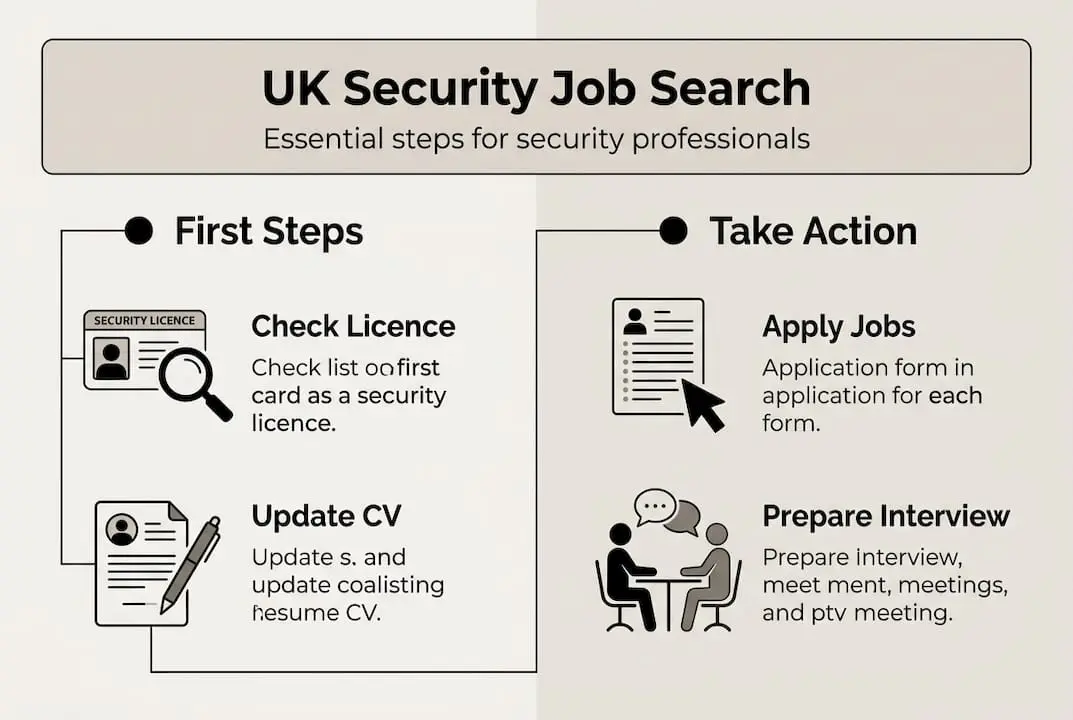
Optimising security job searches requires organisation and consistency. Follow this step by step approach:
- Set up job alerts on multiple platforms using specific keywords such as “SIA security officer London” or “cyber security analyst clearance.”
- Dedicate one hour each day to reviewing new listings, customising applications, and following up on previous submissions.
- Track every application in a spreadsheet, noting the company, role, date applied, and any follow up actions required.
- Schedule weekly networking activities, such as attending a virtual event, connecting with three new people on LinkedIn, or reaching out to a recruiter.
- Review and update your CV and cover letter templates monthly to reflect new skills or experiences.
This structured approach ensures you stay proactive and do not miss opportunities. Using Indeed, Reed, LinkedIn, and BSIA events enhances job search success by combining breadth and depth in your search strategy.
Pro Tip: Set a daily or weekly goal for the number of quality applications you submit, such as five tailored applications per week. Focusing on quality over quantity increases your chances of success and prevents burnout from mass applying to unsuitable roles.
Preparing for interviews and managing challenges
Interview preparation separates successful candidates from the rest. Security interviews often use the STAR method to assess how you handle real world situations. STAR stands for Situation, Task, Action, Result. When asked a behavioural question such as “Tell me about a time you dealt with an aggressive individual,” structure your answer by describing the situation, explaining your task, detailing the actions you took, and sharing the positive result. Practising this format in advance makes your answers clear, concise, and compelling.
Expect situational questions that test your skills in conflict management, emergency response, and professionalism. Common questions include “How would you handle a fire alarm during a busy event?” or “What would you do if you suspected a colleague of misconduct?” Prepare answers that demonstrate your knowledge of procedures, your ability to stay calm under pressure, and your commitment to safety and integrity. Refer to your SIA training and any relevant experience to back up your responses.
Interviewers also assess your understanding of the role and the company. Research the employer before your interview, learn about their clients, values, and any recent news. Prepare thoughtful questions to ask at the end of the interview, such as “What does success look like in this role after six months?” or “What are the biggest security challenges your team currently faces?” These questions show genuine interest and help you evaluate whether the role suits you.
Managing challenges such as clearance delays and licence gaps is part of the UK security job search. Security clearances can take anywhere from six weeks to six months, depending on the level required. During this waiting period, keep your references informed and ensure your financial records are in order, as these are scrutinised during the vetting process. If possible, secure temporary or contract roles that do not require clearance to maintain income and build experience.
“Licence lapses can disqualify you from roles and create income gaps. Always renew your SIA licence at least eight weeks before expiry and keep digital copies of all certificates.”
If you face rejection, ask for feedback and use it to improve your next application or interview. Many employers appreciate candidates who demonstrate a willingness to learn and grow. Keep refining your approach, and remember that persistence is key in a competitive market.
Pro Tip: Conduct mock interviews with a friend, mentor, or career coach. Practising out loud helps you refine your answers, manage nerves, and receive constructive feedback. Record yourself if possible to identify areas for improvement, such as filler words or unclear explanations.
For additional guidance, explore tips for success in security jobs to further enhance your interview performance and career development.
Boost your UK security career with targeted job listings and advice
Navigating the UK security job market becomes easier when you have access to specialised resources designed for the industry. Security Jobs Board connects you with tailored job listings across the UK, from entry level SIA roles to advanced positions requiring clearance. Whether you are searching for opportunities in Northern Ireland security jobs or exploring roles in other regions, the platform offers a streamlined search experience that saves you time and effort.

Beyond job listings, continuous learning and professional development are essential for long term career success. Access expert security job career advice covering CV writing, interview techniques, and industry trends. Staying informed about regulatory changes, emerging threats, and new technologies positions you as a competitive candidate and opens doors to higher tier roles. Leverage Security Jobs Board’s dedicated platform to stay ahead in your career and connect with employers who value your expertise.
FAQ
What licences are required for UK security jobs?
The SIA licence is mandatory for most physical security roles, including door supervision, security guarding, and close protection. Roles in sensitive environments may also require security clearances such as Security Check or Developed Vetting. Cyber security positions do not require an SIA licence but demand certifications like CompTIA Security+ or CISSP.
How can I improve my chances of getting security jobs in the UK?
Tailor your CV and cover letter for each role, highlighting relevant skills and quantifiable achievements. Attend BSIA events and use specialised job boards to access hidden opportunities. Continuously update your skills through training and certifications to stay competitive in a rapidly evolving industry.
What should I expect during security job interviews?
Interviews often include behavioural questions using the STAR method, focusing on conflict resolution, emergency response, and professionalism. You may also face situational questions that test your knowledge of procedures and your ability to think critically under pressure. Researching the employer and preparing thoughtful questions demonstrates genuine interest.
How long does it take to get security clearance in the UK?
Security clearance processing times vary depending on the level required. Basic Security Check clearances can take six to eight weeks, while Developed Vetting may take four to six months. Keep your references informed and ensure your financial and personal records are accurate to avoid delays.
Can I work in security without an SIA licence?
Some roles, such as CCTV operators in certain settings or cyber security analysts, do not require an SIA licence. However, the majority of physical security positions, including guarding and door supervision, legally require a valid SIA licence. Always check the job description for specific licensing requirements before applying.


