Optimising Security Job Searches for Fast UK Career Moves

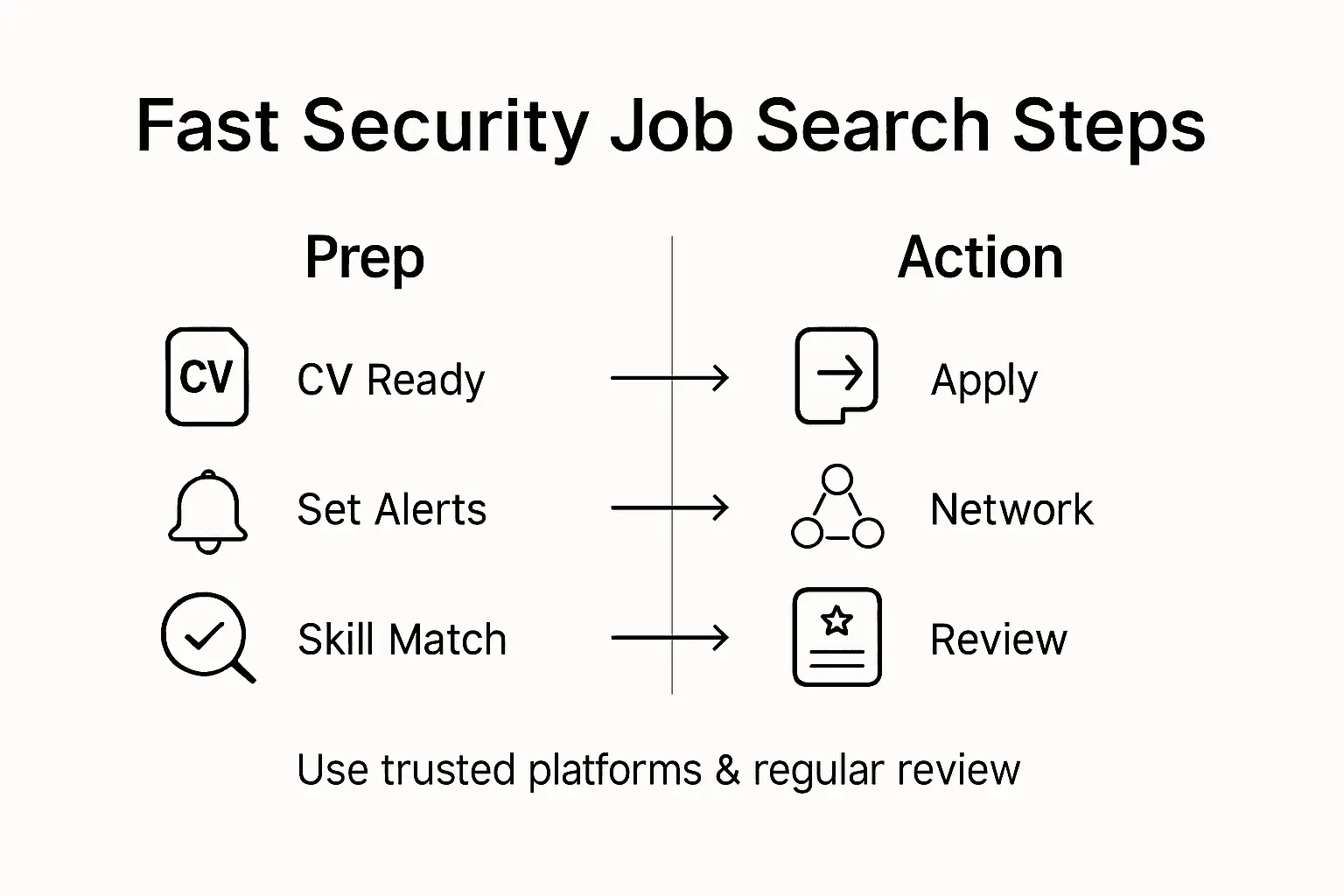
Nearly half of British security professionals report feeling overwhelmed by the sheer volume of job listings and application requirements in today’s market. For anyone in the United Kingdom looking to advance their career or switch roles, standing out demands more than a generic approach. This guide reveals clear, actionable steps used by successful candidates, drawing on proven British industry standards to help you streamline your job search for high quality results.
Table of Contents
- Step 1: Prepare Your Tailored Security CV And Profile
- Step 2: Set Up Targeted Job Alerts For UK Security Roles
- Step 3: Apply Strategically To High-Quality Vacancies
- Step 4: Engage With Employers And Leverage BSIA Credibility
- Step 5: Review Interview Responses And Refine Your Approach
Quick Summary
| Key Point | Explanation |
|---|---|
| 1. Tailor Your Security CV Effectively | Align your CV with industry standards, emphasise security skills, and customise for each role. |
| 2. Set Targeted Job Alerts for Efficiency | Create customised job alerts based on your specific security interests to optimise your job search. |
| 3. Apply with a Strategic Approach | Align applications closely with job requirements, focusing on quality rather than quantity. |
| 4. Engage with Industry Professionals | Network through the British Security Industry Association to enhance visibility and credibility. |
| 5. Reflect and Improve Interview Skills | Use structured feedback after interviews to identify strengths and weaknesses for continuous improvement. |
Step 1: Prepare your tailored security CV and profile
Preparing a standout security CV requires strategic thinking and precise execution. Your goal is to create a professional document that highlights your unique security skills and experiences while matching the specific requirements of your target roles.
Start by thoroughly reviewing your existing CV and aligning it with industry standards. Key sections for a robust security CV can be found in the National Careers Service guidance, which recommends creating clear compartments for contact details, work history, education, and a compelling professional introduction. Focus on showcasing your security expertise by emphasising relevant qualifications, professional certifications, and specific achievements in previous security roles.
When crafting your CV, prioritise targeted content that demonstrates your capabilities. Pay close attention to the job description and mirror the language and requirements used by potential employers. Drawing insights from Civil Service recruitment practices, consider including voluntary work, relevant projects, and specific security training that underscore your professional capabilities. Remember that anonymised information can help ensure fair evaluation of your application.
Professional recommendation: Invest time in creating multiple tailored CV versions for different security role types, allowing you to quickly adapt your application to specific job requirements.
Here’s a quick reference summarising valuable security industry certifications and their impact:
| Certification | Area of Specialisation | Career Impact |
|---|---|---|
| SIA Licence | Physical security, guarding | Required for UK security roles |
| CISSP | Cybersecurity management | Opens high-level IT security jobs |
| Security+ | Foundational cybersecurity | Entry and junior IT security positions |
| BSIA Membership | Industry standards | Enhances employer trust and credibility |
Step 2: Set up targeted job alerts for UK security roles
Setting up precise job alerts is a strategic approach to streamline your security career search across the United Kingdom. Your objective is to create customised notifications that match your specific professional interests and expertise.

Security job platforms like Prospects offer comprehensive search capabilities that enable you to filter vacancies by region, specialisation, and professional level. Start by identifying your preferred security sectors such as corporate security, cybersecurity, physical security, or risk management. Use these parameters to configure your job alert settings, ensuring you receive notifications that genuinely match your career aspirations.
Utilise reputable industry platforms like the British Security Industry Association job board to refine your search strategy. Create a detailed profile that highlights your specific skills, certifications, and desired role characteristics. This approach allows you to receive targeted alerts that reflect your exact professional requirements, minimising time spent sifting through irrelevant job postings.
Professional recommendation: Configure job alerts across multiple platforms and review your settings monthly to maintain optimal job matching precision.
Below is a comparison of UK security job search platforms and their distinct advantages:
| Platform | Main Focus | Distinctive Benefit |
|---|---|---|
| Prospects | Graduate and sector roles | Advanced filtering for job alerts |
| BSIA Job Board | Security industry jobs | Direct networking with top employers |
| National Careers Service | Career guidance | Comprehensive sector careers advice |
Step 3: Apply strategically to high-quality vacancies
Successfully applying to high-quality security roles requires a methodical and strategic approach that goes beyond simply submitting your CV. Your primary objective is to position yourself as an exceptional candidate who precisely matches the role requirements.
The National Careers Service provides essential guidance for security job applications, emphasising the importance of thoroughly understanding specific job requirements and professional credentials. Begin by carefully reviewing each vacancy, paying particular attention to the essential qualifications such as Security Industry Authority (SIA) licensing, specific skill sets, and professional competencies. Meticulously align your application with these criteria, highlighting relevant experiences and demonstrating how your professional background directly addresses the employer’s needs.
Prioritise quality over quantity in your application strategy. UK Government Security recommends candidates explore comprehensive career frameworks that outline progression pathways and sector-specific opportunities. Research potential employers, understand their organisational culture, and craft tailored application materials that showcase not just your technical skills but also your understanding of their specific security challenges and requirements.
Professional recommendation: Create a master document with standardised professional achievements that can be quickly customised for different security role applications.
Step 4: Engage with employers and leverage BSIA credibility
Building meaningful connections within the security industry requires strategic networking and demonstrating professional credibility. Your goal is to position yourself as a knowledgeable and reliable candidate who understands industry standards and best practices.
The British Security Industry Association provides critical opportunities for professional engagement that can significantly enhance your career prospects. Start by exploring their member directories, attending industry events, and participating in professional development initiatives. These platforms offer invaluable networking opportunities, allowing you to connect directly with potential employers and showcase your commitment to industry excellence.
Communicate your understanding of sector challenges and professional standards by referencing BSIA schemes and current industry initiatives. Security Journal UK highlights the importance of demonstrating knowledge about contemporary security projects, which can set you apart from other candidates. Research recent BSIA partnerships, highlight relevant achievements that align with their professional standards, and demonstrate how your skills contribute to broader industry objectives.
Professional recommendation: Develop a concise professional narrative that connects your personal experience with the broader mission and values of the security industry.
Step 5: Review interview responses and refine your approach
Successfully navigating security job interviews requires continuous self reflection and strategic improvement. Your primary goal is to transform each interview experience into a learning opportunity that enhances your professional presentation and communication skills.
The National Careers Service recommends structured approaches to interview performance analysis, emphasising the importance of using recognised frameworks like STAR for deconstructing your interview responses. Immediately after each interview, document your experience by recording the questions asked, your answers, and areas where you felt confident or struggled. Critically assess your performance focusing on communication clarity, technical knowledge demonstration, and professional demeanour.
Prepare a systematic review process that goes beyond surface level reflection. Prospects provides comprehensive guidance on interview technique refinement, suggesting comprehensive analysis of both verbal and non verbal communication. Create a personal feedback log that tracks your progress, identifies recurring challenges, and develops targeted strategies for improvement. Practice your responses with trusted professionals or mentors who can provide objective insights into your interview technique.
Professional recommendation: Schedule a structured self review within 24 hours of each interview to capture detailed observations and insights while your memory remains fresh.
Accelerate Your UK Security Career with Expert Tools and Trusted Connections
Navigating the complexities of security job searches requires precision and tailored support as highlighted by the challenges in crafting tailored CVs, setting targeted alerts, and engaging with credible employers. If you are ready to overcome obstacles like aligning your application with SIA licensing or staying updated on high-quality vacancies, the Security Jobs Board offers a focused solution designed exactly for your needs. Benefit from features such as creating customised profiles, uploading tailored CVs, and receiving job alerts that match your unique security specialisation.

Do not let your career momentum slow down. Join now to quickly connect with employers that recognise your BSIA-affiliated credentials and access relevant UK security roles in physical security, cybersecurity, and beyond. Start applying strategically with confidence by visiting the Security Jobs Board homepage and discover how expert guidance and fast match technology can make a real difference to your job search journey. Your next security role awaits with just a few clicks.
Frequently Asked Questions
How do I tailor my security CV for specific job applications?
To tailor your security CV effectively, review the job description closely and align your experience with the required qualifications and skills. Focus on emphasising relevant certifications and achievements, ensuring to use the language from the job listing to enhance your candidature.
What should I include in my job alerts for security roles?
When setting up job alerts for security roles, specify your preferred sectors, such as corporate security or cybersecurity, and include key qualifications like Security Industry Authority (SIA) licensing. This ensures you receive notifications that closely match your professional interests and expertise.
How can I ensure my job applications stand out?
To make your job applications stand out, prioritise quality over quantity by meticulously aligning your CV and cover letter with the specific requirements of each role. Highlight relevant experiences and articulate how your skills address the employer’s needs effectively.
What networking strategies should I use to engage with security employers?
To engage with security employers, actively participate in industry events and make connections through professional associations. Develop a concise professional narrative that showcases your understanding of industry challenges and standards, which can demonstrate your credibility as a candidate.
How can I improve my performance in security job interviews?
To improve your performance in security job interviews, practice using structured response techniques like STAR to articulate your experiences clearly. After each interview, conduct a self-review to identify strengths and areas for improvement, allowing you to refine your approach for future opportunities.


