Explore UK security guard training options for your career
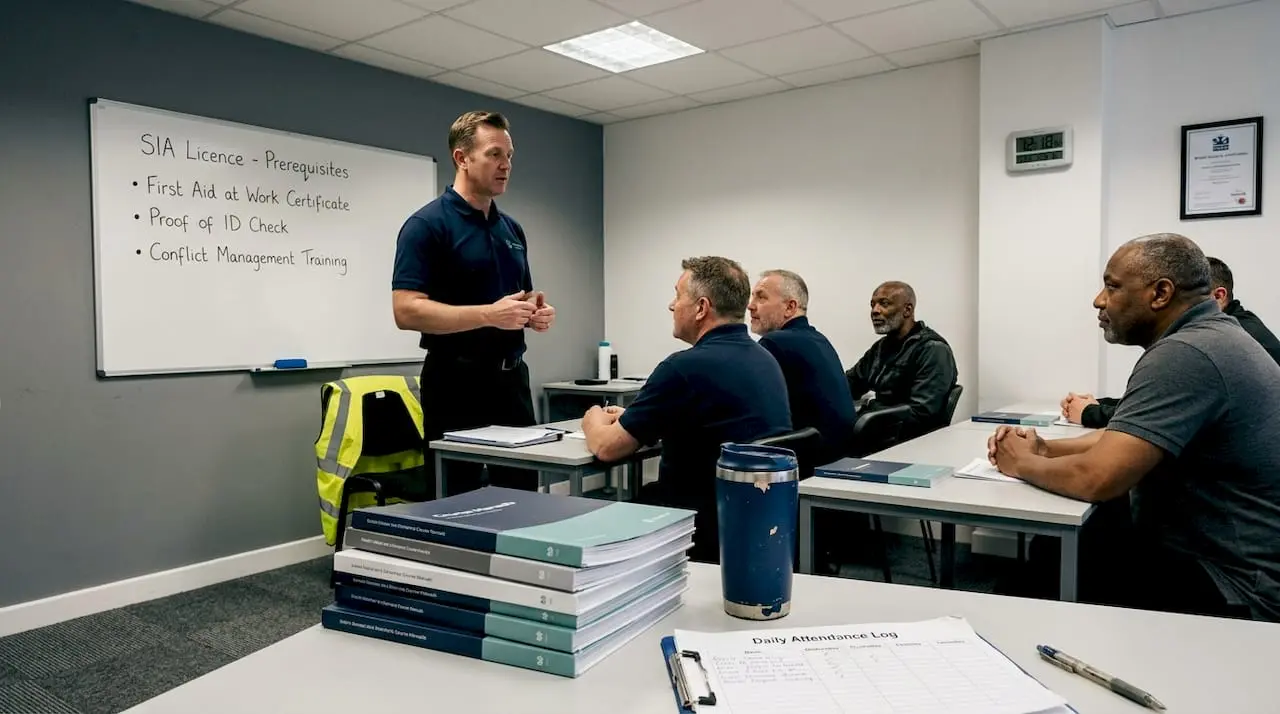
TL;DR:
- Proper preparation of prerequisites like age, right to work, and first aid is crucial before training.
- The choice of training route depends on career goals, with multiple licencing options and delivery formats available.
- Investing in quality courses, employer connections, and ongoing professional development enhances long-term security career prospects.
Choosing the wrong training course can cost you months of time, hundreds of pounds, and potentially leave you with a qualification that employers overlook. The UK security industry is regulated and credential-driven, which means the training path you select directly shapes your licence eligibility, your starting wage, and where your career can go next. With dozens of providers, multiple course formats, and different specialisations on offer, making sense of the landscape requires more than a quick Google search. This guide breaks down every key element so you can choose with confidence.
Table of Contents
- Understanding entry requirements for UK security guard training
- Overview of core security guard training options
- Comparing key security guard training providers
- Picking the best training option for your security career
- What most new security professionals get wrong about training
- Your next steps: finding the right security job after training
- Frequently asked questions
Key Takeaways
| Point | Details |
|---|---|
| Confirm eligibility first | Meet legal age, work rights, first aid, and DBS check before starting training. |
| Compare training options | Choose between SIA-accredited, specialised, and flexible formats to match your goals. |
| Provider credibility matters | Select SIA-approved providers with strong track records for best results. |
| Link training to employment | Use your training as a springboard to land relevant UK security jobs. |
Understanding entry requirements for UK security guard training
Before you spend a penny on any course, you need to confirm you meet the baseline requirements. Skipping this step is one of the most common and frustrating mistakes new candidates make. Many people enrol, pay upfront, and then discover mid-way through that they are missing a document or fail an eligibility check.
Here is what you need to have in place before starting:
- Age: You must be at least 18 years old.
- Right to work: You must hold the legal right to work in the UK, evidenced by a valid passport, biometric residence permit, or equivalent document.
- First aid certificate: A valid Emergency First Aid at Work (EFAW) certificate is required, and it must remain valid for at least 12 months from the start date of your training course.
- DBS check: You must pass a Disclosure and Barring Service (DBS) criminal records check. Certain convictions can disqualify you from obtaining an SIA licence even after completing your training.
The SIA’s own guidance confirms that candidates must meet these prerequisites, including an EFAW certificate valid for at least 12 months, before their course begins. Understanding your DBS check requirements early prevents nasty surprises, and getting across security vetting essentials will help you understand which convictions are relevant.
“Failing to hold a valid EFAW certificate at the point of course enrolment is one of the most avoidable causes of training delays in the sector.”
Pro Tip: Book your EFAW course several weeks before your security training start date. First aid courses are widely available and typically last one day, but popular providers can be booked up at short notice, especially in major cities.
The timing of your DBS application also matters. Standard DBS checks typically take one to two weeks, but in busy periods they can take longer. Submit your application at least three to four weeks before your intended course start date to avoid disrupting your enrolment.
Overview of core security guard training options
Once you have the necessary prerequisites in place, it is time to evaluate which training paths align with your goals. The UK offers a structured but varied range of qualifications and courses, and not all of them lead to the same job opportunities.
The primary SIA-approved qualifications include:
- Door Supervisor licence course: Covers physical intervention, conflict management, first aid, and licensing law. This is one of the most demanding and most valued qualifications in the sector.
- Security Guarding licence course: Focuses on patrolling, access control, reporting, and emergency procedures. Ideal for those targeting retail, commercial, or industrial roles.
- CCTV Operator licence course: Designed for those working in control rooms or surveillance environments, covering data protection, camera operation, and incident response.
- Close Protection course: A specialist route requiring additional licensing, often taken by professionals with prior security or military backgrounds.
Beyond the headline qualifications, why security training matters extends into sector-specific areas. Events security, transport security, and retail security roles each carry their own skill requirements, and providers offering tailored modules for these environments will give you a meaningful edge. For example, transport and logistics security involves protecting cargo in transit, and understanding cargo protection basics can support your readiness for roles in that niche.
Course delivery formats vary considerably across providers:
- Classroom-based: Traditional in-person learning with direct trainer access. Typically runs over five to ten days depending on the qualification.
- Blended learning: Combines online theory modules with in-person practical sessions and assessments. Increasingly popular post-pandemic.
- Fully online (theory only): Available for some units, but practical and assessment components always require in-person attendance to meet SIA standards.
Browsing training course examples gives you a clearer picture of what leading programmes actually cover day to day, and can help you assess whether a provider’s curriculum matches the roles you are targeting.
Pro Tip: Verify that any course you consider is delivered through an SIA-approved awarding organisation such as Highfield, SQA, or NCFE CACHE. An unapproved qualification will not allow you to apply for an SIA licence, regardless of how thorough the training feels.
Comparing key security guard training providers
With a sense of the available training options, comparing leading providers side by side helps clarify the strengths and trade-offs. Not every SIA-approved provider is equal. Differences in price, support, delivery quality, and job placement assistance can significantly affect your experience and outcomes.
| Provider type | Format | Typical cost | Duration | Job support | Accreditation |
|---|---|---|---|---|---|
| National training centre | In-person | £800 to £1,400 | 6 to 10 days | Often included | SIA approved |
| Local college | In-person or blended | £500 to £900 | 5 to 8 days | Limited | SIA approved |
| Online specialist | Blended | £600 to £1,100 | Flexible | Variable | SIA approved |
| Private training company | In-person | £700 to £1,200 | 5 to 10 days | Sometimes included | SIA approved |
The EFAW training requirement applies universally across all provider types, so that cost sits on top of whichever course fee you pay. Budget accordingly.
What separates a strong provider from a mediocre one comes down to a few key factors. First, look at pass rates. Reputable providers publish their first-attempt pass rates for SIA licence applications, and anything consistently above 80 per cent is a healthy benchmark. Second, examine what post-course support looks like. Some providers offer mock SIA interviews, CV workshops, or direct links to hiring employers. These extras are often worth more than a slightly lower course fee.

The SIA overview explains how the authority assesses and approves training providers, which helps you understand what the accreditation label actually guarantees. Reviewing an essential training checklist before comparing providers will also ensure you are assessing each option against the same criteria.
Beware of suspiciously low-cost courses. While competition keeps prices reasonable, a course priced significantly below the market average sometimes cuts corners on contact hours, trainer qualifications, or assessment rigour. If the deal looks too good, ask how many guided learning hours are included and whether those hours meet the SIA’s minimum requirements.
Picking the best training option for your security career
Having compared the differences, the next challenge is choosing the best training for your unique situation. This is where many candidates get stuck because there is no single right answer. The best option depends on your background, your schedule, your budget, and the type of security role you are aiming for.
Use this decision table to narrow down your options:
| Your situation | Recommended training type |
|---|---|
| Working full-time, flexible evenings | Blended online and in-person course |
| Seeking door supervision work in nightlife | Door Supervisor licence course |
| Targeting retail or shopping centre roles | Security Guarding course with retail module |
| Career changers with no security background | Security Guarding course as entry point |
| Ex-military or law enforcement | Door Supervisor or Close Protection route |
| Interested in surveillance and control rooms | CCTV Operator licence course |
Follow this step-by-step process to make your decision and enrol:
- Confirm your prerequisites are in place: age, right to work, valid EFAW certificate, and DBS check application submitted.
- Define your target role by researching current job listings and identifying which licences employers most frequently request.
- Shortlist three providers based on accreditation status, delivery format, price, and location or online availability.
- Request a course prospectus and verify guided learning hours, assessment structure, and what is included in the fee.
- Check provider reviews on independent platforms and, where possible, speak to previous students about their experience.
- Enrol and book your SIA licence application in parallel so there is no gap between completing training and beginning work.
Budget is a real factor, but finding security jobs quickly after qualifying often depends on having the right licence for employer demand in your area. Investing in a Door Supervisor qualification in a major city, for instance, tends to yield faster employment than a basic Security Guarding certificate in a market flooded with candidates.
The SIA’s prerequisite requirements are non-negotiable regardless of which route you choose, so factor the cost and timing of your EFAW and DBS into your overall budget from the outset.
Pro Tip: Before finalising your choice, search active job boards for security roles in your target area and note which licences appear most frequently in job adverts. That data is far more useful than any generic career advice because it reflects real employer demand right now.
What most new security professionals get wrong about training
Here is a perspective worth sitting with: the majority of people who struggle to break into well-paid security work do not fail because of a lack of ability. They fail because they made a training decision based on price or proximity rather than career strategy.
Choosing the cheapest available course is understandable when you are self-funding your training. But the savings are rarely as significant as they appear. A course that costs £200 less but offers no employer links, weak pass rates, or a provider with a poor reputation in the industry can set you back six months or more in your job search. That lost time costs far more than the initial saving.
The job market rewards SIA accreditation as a baseline, but it actively favours candidates with sector-specific expertise. A Door Supervisor with additional conflict management modules, venue security experience, or first aid at a higher level than EFAW will consistently outcompete a candidate with only the minimum qualification, even if both hold the same SIA licence. Employers notice this distinction quickly during shortlisting.
Ongoing learning also matters far more than most new entrants realise. The security industry is not static. Threat profiles, legal frameworks, and technology change regularly. Professionals who invest in continuing professional development (CPD) after their initial licence are the ones who move into supervisory and management roles, not those who qualify and then stop. Niche specialisms such as counter-terrorism awareness, cybersecurity awareness for physical security teams, and hostile vehicle mitigation are increasingly requested by high-end employers.
The honest truth is that your training choices in year one set the trajectory for the next five years of your career. A career planning strategy built around employer demand, meaningful specialisation, and continuous improvement will take you further than simply ticking the licensing box and hoping for the best. Train with intention, not just with urgency.
Your next steps: finding the right security job after training
Once your training is complete and your certificates are in hand, moving forward with your security career becomes the priority.

The Security Jobs Board is the UK’s dedicated platform for security industry professionals, connecting qualified candidates directly with employers across every region. Once you hold your SIA licence and have your training documents ready, you can create a free candidate profile, upload your CV, and set job alerts tailored to your licence type and preferred location. Employers on the platform are actively hiring, and the BSIA affiliation means you are engaging with credible, vetted organisations. Whether you are targeting roles in London, Manchester, or looking at security jobs in Northern Ireland, the platform surfaces relevant opportunities quickly so your training investment starts paying off without delay.
Frequently asked questions
What is the minimum age for security guard training in the UK?
You must be at least 18 years old to undertake security guard training in the UK, as stipulated by SIA licensing prerequisites.
Is first aid certification necessary for security guard training?
Yes, a valid EFAW certificate is required before you begin your security guard training, and it must stay valid for at least 12 months from your course start date.
Do you need a DBS check before enrolling in a course?
Yes, a clear DBS criminal records check is required, and it is wise to submit your application several weeks before your intended start date to avoid delays.
Which training route is best for someone who wants to work in retail security?
A Security Guarding course with a retail or customer-facing module is the strongest match, as it focuses on the specific scenarios, legislation, and skills most relevant to retail environments.
Can online courses replace classroom-based security guard training?
Some approved theoretical units can be completed online, but practical elements and formal assessments require in-person attendance to satisfy SIA standards and gain a valid licence.


