Which companies hire physical security staff in the UK?
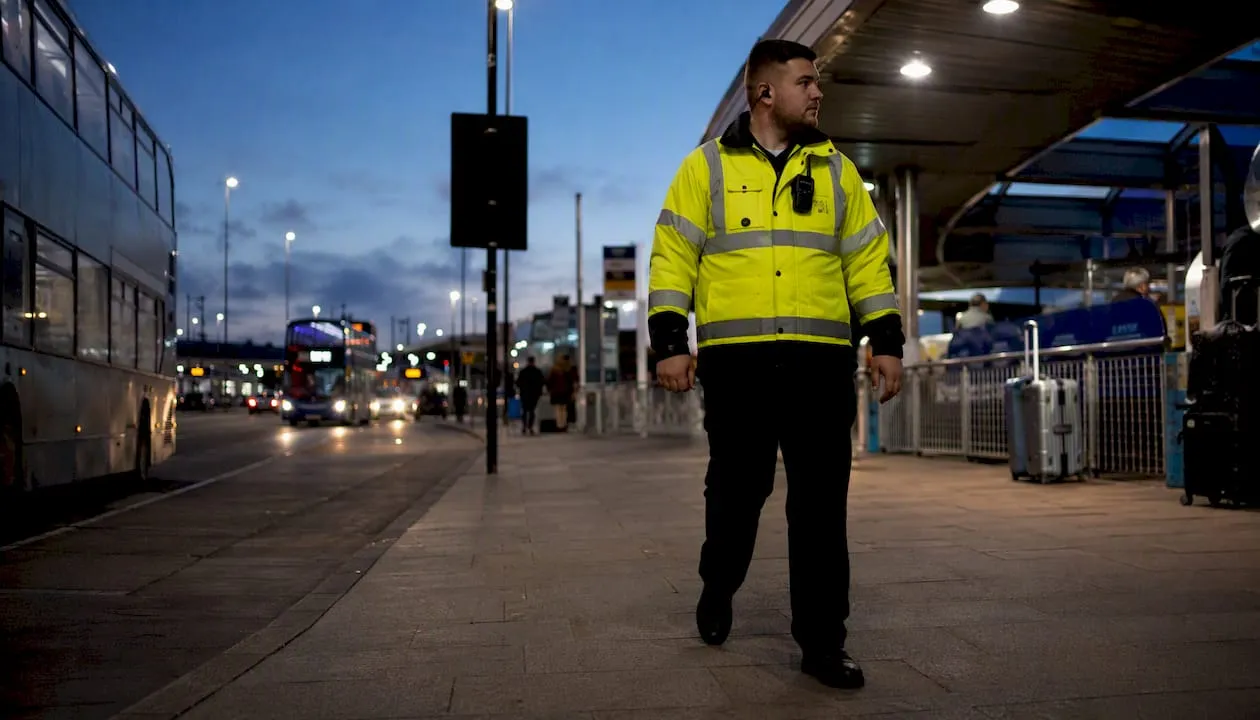
Most UK employers that hire physical security staff fall into one of these categories: retail, hospitality and leisure, events and stadia, transport, healthcare, education, logistics and warehousing, construction, banking and cash-in-transit, local government, residential property management, and private security contractors. Many roles require a Security Industry Authority (SIA) licence and a recognised licence-linked qualification before you can start.
The main sectors at a glance:
- Retail — loss prevention officers, store detectives, uniformed guards
- Hospitality and leisure — door supervisors, venue security, hotel security officers
- Events and stadia — crowd management, access control, event stewards with SIA licences
- Transport — station security, airport ground security, rail patrol officers
- Healthcare — hospital security officers, ward security, NHS site teams
- Education — campus security, university gatehouse officers
- Logistics and warehousing — site security, gatehouse and perimeter patrol
- Construction — site security officers, mobile patrol
- Banking and cash-in-transit (CVT) — cash escorts, ATM replenishment teams
- Local government and social housing — council estate security, CCTV control room operators
- Residential property management — concierge security, gated community officers
- Private security firms — contract guarding across all of the above
Pro Tip: Check your SIA licence requirements on Gov before applying, then search current vacancies at Securityjobsboard.
Key takeaways
The UK physical security sector spans twelve employer types and is backed by a market the BSIA valued at £4.1 billion in 2021, with most front-line roles requiring an SIA licence before you can start.
| Point | Details |
|---|---|
| Target employer types | Retail, hospitality, events, transport, healthcare, education, logistics, construction, banking/CVT, local government, residential management and private security firms. |
| SIA licence is the gatekeeper | Most front-line roles require a valid SIA licence and a Level 2 licence-linked qualification from an accepted awarding organisation. |
| Vetting is mandatory | Employers check right to work, DBS, SIA licence status, BS 7858 employment history and original qualification certificates. |
| Career progression is real | Front-line roles lead to supervisor, area manager, operations manager and specialist positions; keep a CPD log from day one. |
| Securityjobsboard | The BSIA-affiliated specialist platform for UK physical security jobs; free for candidates, targeted for employers at https://www.securityjobsboard.co.uk. |
Table of Contents
- What does security work actually look like across different sectors?
- In-house security teams versus contract security companies: what is the difference?
- What SIA licences and qualifications do you need before applying?
- How do employers recruit security staff, and what do they check?
- How to apply and stand out as a security candidate
- Where do these jobs lead? Career progression in UK security
- Where to find security jobs and post vacancies in the UK
- A note from Securityjobsboard
- Securityjobsboard: find your next role or hire your next officer
- Sources
- FAQ
What does security work actually look like across different sectors?
Retail security centres on loss prevention: uniformed officers deter theft, respond to incidents and sometimes work plain-clothes as store detectives. Shifts are typically daytime and early evening, with peaks around Christmas and school holidays.
Hospitality and leisure leans heavily on door supervision. Door supervisors must hold an SIA Door Supervision licence and manage entry, ID checks and ejections. Night-time and weekend shifts dominate, with seasonal surges at festival venues and holiday parks.
Events and stadia work is often contract-based and short-term. Crowd management, access control and emergency response are the core duties. Contracts can be single-day or run for an entire festival season, so income can be variable.
Transport security covers a wide range. Station security officers on the rail network work rotating shifts around the clock. Airport security roles are often directly employed by the operator and carry their own vetting requirements on top of SIA licensing.

Healthcare security is growing. NHS trusts employ security officers to manage challenging behaviour on wards, protect staff and control access to sensitive areas. These roles often require conflict management training beyond the standard SIA qualification.
Construction and logistics sites need overnight and weekend cover when contractors are absent. Night-shift guarding at logistics parks is one of the less-advertised but consistently available niches in the sector, often offering premium unsocial-hours pay.
Pro Tip: Logistics and distribution centre night shifts are frequently understaffed. If you hold a valid SIA licence and are flexible on hours, these roles are worth targeting directly with facilities managers rather than waiting for adverts.
In-house security teams versus contract security companies: what is the difference?
The UK security market contains two distinct hiring models, and the difference matters for candidates and hirers alike.
In-house (direct employment): The organisation employs security staff directly on its own payroll. The employer holds full responsibility for vetting, training and managing rotas. GOV.UK guidance confirms that many in-house roles do not require an SIA licence, depending on the specific duties performed.
Contract/private security companies: A security firm supplies staff under a contract for services. The contractor holds SIA Approved Contractor Scheme (ACS) status, manages vetting to BS 7858 standards and carries employer liability. Staff working under this model almost always need a front-line SIA licence.
| Factor | In-house employer | Contract security company |
|---|---|---|
| Who employs the officer | The client organisation | The security contractor |
| Who manages vetting | Client’s HR team | Contractor (BS 7858) |
| SIA licence required | Often not (depends on duties) | Almost always yes |
| Training support | Varies widely | Usually structured |
| Career continuity | High if role is permanent | Can vary by contract |
Questions candidates should ask before accepting a role:
- Will I be employed directly or through a contractor?
- Does this role require an SIA licence, and will you support the cost?
- What vetting process applies and how long will it take?
- What shift pattern and contract type is on offer?
- Is there a probationary period and what does progression look like?
What SIA licences and qualifications do you need before applying?
The SIA issues front-line licences for six licensable activities: security guarding, door supervision, public space surveillance (CCTV), cash and valuables in transit, close protection, and vehicle immobilisation (Northern Ireland only). Most employers in the sectors above require at least one of these.
Before applying for a licence, you must hold a recognised Level 2 licence-linked qualification. GOV.UK lists the accepted awarding organisations, which currently include BIIAB, Highfield, Laser Learning Awards, NOCN, Pearson, QNUK, SFJ Awards, and SCQF-accredited bodies for Scottish candidates.
Steps to apply for an SIA licence:
- Complete the relevant Level 2 licence-linked qualification with an accepted awarding organisation.
- Confirm your right to work in the UK (you will need to provide evidence).
- Obtain a Basic or Enhanced DBS certificate as required for your licence type.
- Gather identity documents (passport, proof of address, National Insurance number).
- Apply online via GOV.UK and pay the licence fee. Some employers will pay this on your behalf or apply for the licence themselves.
- Monitor your application using the SIA’s online tracker.
The SIA’s Get Licensed guidance sets out the exact criteria the SIA uses when making licensing decisions, including character and identity checks.
Key fact: The BSIA reports that the UK security officer services market reached £4.1 billion in 2021, with projected growth to £4.9 billion by 2026, reflecting sustained demand for licensed security professionals across all the sectors above.
Pro Tip: Ask at interview whether the employer will cover your SIA licence fee or apply on your behalf. Many contract security firms do this for candidates who have passed their Level 2 qualification.
How do employers recruit security staff, and what do they check?
Employers across all sectors run broadly the same set of checks before offering a security role:
- Right to work — mandatory; employers must see original documents
- SIA licence verification — checked via the SIA’s public register
- DBS check — Enhanced DBS for roles involving vulnerable people; Basic for standard guarding
- BS 7858 vetting — standard for contract roles; covers five-year employment history, references and financial checks
- Identity documents — passport, driving licence or biometric residence permit
- Qualification certificates — original or certified copies of Level 2 award
Pay patterns vary by sector and contract type. Retail and logistics guarding typically runs on hourly rates, with unsocial-hours premiums for nights and weekends. CVT roles tend to attract higher base rates reflecting the risk profile. Zero-hours contracts appear in events work; permanent contracts are more common in healthcare and transport. The UK security industry job market outlook covers current pay benchmarks across these sectors in more detail.
Employer hiring checklist:
- State the licence type required clearly in the advert
- Specify shift pattern, contract type and pay range
- Outline the vetting process and expected timeline
- Confirm whether you will support licence costs
- Include the right-to-work check requirement
How to apply and stand out as a security candidate
A strong application in this sector is less about a polished CV and more about evidence. Recruiters want to see your SIA licence number, your qualification certificates and a clear employment history with no unexplained gaps.
Application checklist:
- List your SIA licence number and expiry date prominently at the top of your CV
- Name your Level 2 qualification, awarding organisation and date of completion
- Include a five-year employment history (gaps will be asked about at vetting)
- Add two professional references, ideally from previous security employers
- Attach a copy of your right-to-work document
Common interview questions and brief pointers:
- “Describe a time you dealt with an aggressive person.” Focus on de-escalation, not confrontation.
- “What would you do if you spotted a suspicious package?” Walk through your site’s procedure calmly.
- “Why do you want to work in security?” Be specific about the sector or employer, not generic.
- “How do you stay alert on a long night shift?” Practical answers (routine checks, communication with colleagues) beat vague ones.
Pro Tip: Create a profile on Securityjobsboard, upload your CV and set a job alert for your preferred role type and region. Employers searching the CV database can contact you directly, which shortens the application cycle considerably.
Where do these jobs lead? Career progression in UK security
Front-line roles are the entry point, not the ceiling. The National Careers Service security officer profile confirms that progression into specialist and management roles is well established.
A typical route looks like this:
- Security officer — front-line guarding, CCTV operation, door supervision
- Senior officer / team leader — site lead, shift supervisor
- Area supervisor — multi-site oversight, staff scheduling
- Operations or contract manager — P&L responsibility, client liaison
- Specialist roles — CCTV analyst, close protection officer, security consultant
- Head-office functions — HR, training, compliance, business development
The BSIA emphasises that operational experience is the most common gateway to senior roles; many sector leaders started as door supervisors or security officers. BSIA-affiliated employers and larger contractors often fund CPD and management qualifications for high-performing staff.
Pro Tip: Keep a CPD log from day one. Record every training course, incident debrief and site induction. When you apply for supervisor or manager roles, that log is concrete evidence of professional development that most candidates cannot produce. See the career progression guide on Securityjobsboard for a structured development framework.
Where to find security jobs and post vacancies in the UK
For jobseekers:
- NHS Jobs and local government vacancy pages for in-house healthcare and council roles
- Direct approaches to facilities managers at logistics parks, construction sites and retail chains for unadvertised in-house positions
- The 7 key security job trends resource on Securityjobsboard for current hiring signals by sector
For employers:
- Post vacancies on Securityjobsboard with clear licence requirements, shift patterns and pay range stated upfront
- Browse the CV database to contact SIA-licensed candidates directly
- Use the platform’s job alert system to notify registered candidates matching your criteria immediately
Adverts that specify the exact licence type required, the vetting timeline and whether the employer supports licence costs attract significantly better-quality applications. Vague adverts generate volume; specific adverts generate the right candidates.
A note from Securityjobsboard
Securityjobsboard is affiliated with the British Security Industry Association (BSIA), which means the platform operates within the professional standards the sector expects. Candidates can create a free profile, upload a CV, set targeted job alerts and apply quickly to relevant vacancies. Employers get access to a CV database of SIA-licensed candidates, flexible posting plans and a GDPR-compliant, mobile-responsive platform with human support when you need it. The platform is built specifically for the UK physical security sector, so every vacancy and every candidate profile is relevant to the roles described in this guide. Visit Securityjobsboard to get started.
Securityjobsboard: find your next role or hire your next officer
Securityjobsboard connects SIA-licensed candidates with UK employers faster than a general job board can. Candidates get a free profile, instant job alerts and a one-click apply function. Employers get a targeted CV database, flexible vacancy posting and a sector-specific audience that already holds the licences you need.

Whether you are a door supervisor looking for your next contract, a CCTV operative seeking a permanent role, or a security manager needing to fill a site team quickly, the platform is built for exactly this. Security vacancies in Northern Ireland and across the rest of the UK are listed now. Post a vacancy or search roles at Securityjobsboard today.
Sources
FAQ
Which sectors hire the most physical security staff in the UK?
Retail, hospitality, events and healthcare employ the largest numbers of physical security staff. Private security contractors supply staff across all sectors under contract.
Do all security jobs in the UK require an SIA licence?
Not all. Many in-house roles do not require one, depending on duties. Any role supplied under a contract for services almost always requires a front-line SIA licence.
What qualifications do I need before applying for an SIA licence?
You need a Level 2 licence-linked qualification from a GOV.UK-accepted awarding organisation such as BIIAB, Highfield, Pearson, NOCN, QNUK or SFJ Awards, before submitting your SIA licence application.
Will my employer pay for my SIA licence?
Some employers, particularly contract security firms, will pay the licence fee or apply on your behalf. Ask about this at interview or before accepting an offer.
Where is the best place to find SIA-licensed security jobs in the UK?
Securityjobsboard is the specialist platform for UK physical security roles. It is free for candidates and lists vacancies requiring SIA licences across all sectors and regions.


