
Around 400,000 people work in the UK’s private security industry, making it one of the fastest-growing employment sectors in the country. From protecting buildings and events to fighting digital threats, security companies touch nearly every corner of daily life. Whether you are job hunting or looking to understand these organisations, a clear grasp of their roles, specialities, and standards opens doors to new opportunities and safer communities.
Table of Contents
- Defining Security Companies In The UK
- Types Of Security Firms And Services Offered
- Key Security Job Roles And Career Paths
- Industry Standards, Licences, And Compliance
- How To Apply: Cvs, Interviews, And Job Portals
- Common Pitfalls When Seeking Security Jobs
Key Takeaways
| Point | Details |
|---|---|
| Diverse Security Landscape | The UK security industry features varied firms specializing in manned guarding, cyber security, electronic security, and key holding services. |
| Career Opportunities | The sector offers extensive career paths from entry-level roles in physical security to advanced positions in cyber security. |
| Regulatory Compliance | Adhering to regulations such as SIA licensing and ongoing professional development is crucial for success in the security field. |
| Strategic Job Application | Jobseekers should tailor their CVs and interview preparations to reflect specific security skills and certifications relevant to the roles they pursue. |
Defining Security Companies in the UK
Security companies in the United Kingdom represent a diverse and critical sector responsible for protecting people, property, and digital infrastructure. According to the Security Industry Authority, these organisations provide essential services ranging from physical protection to cyber defence.
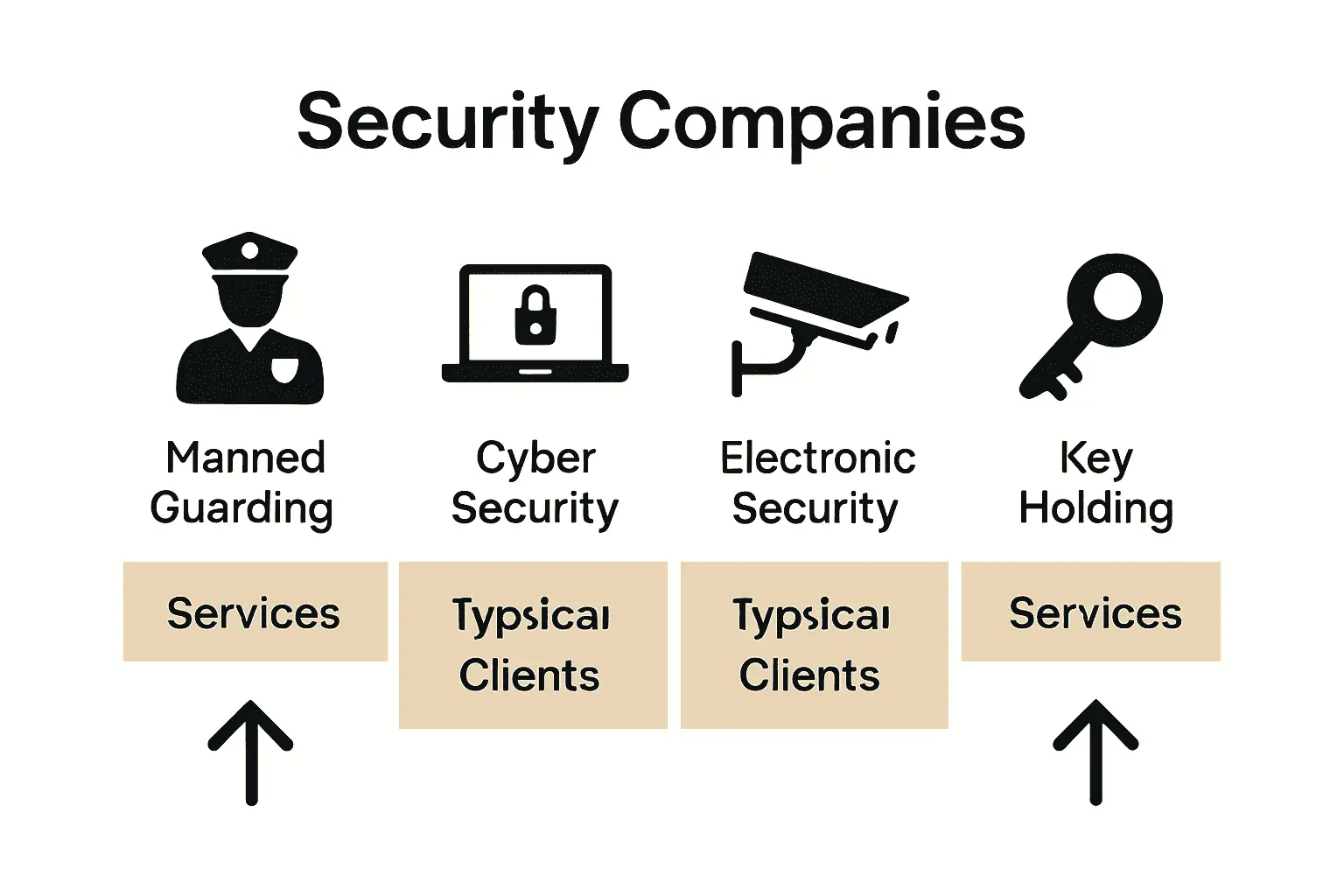
The landscape of security companies encompasses several key categories:
Here’s a comparison of major types of security firms and their core services in the UK:
| Security Firm Type | Example Services | Typical Clients |
|---|---|---|
| Manned Guarding Companies | On-site security Event protection High-risk location patrol |
Offices Events Public spaces |
| Cyber Security Providers | Threat detection Incident response Risk assessment |
Private companies Government bodies |
| Electronic Security Systems | CCTV installation Alarm systems Access control |
Retailers Banks Residential homes |
| Key Holding and Response | Emergency response Property checks Secure key storage |
Businesses Homeowners |
- Manned Guarding Companies: Firms providing trained personnel for physical security at premises, events, and high-risk locations
- Cyber Security Providers: Organisations specialising in digital threat protection and network security
- Electronic Security Systems: Companies designing and implementing advanced surveillance and alarm technologies
- Key Holding and Response Services: Specialists managing emergency response and property access protocols
From a regulatory perspective, the UK government recognises security companies through specific frameworks. The Security Industry Authority’s Approved Contractor Scheme defines these entities as private organisations offering critical services like manned guarding, key holding, and vehicle immobilisation. Additionally, the cyber security sector comprises firms dedicated to protecting systems, networks, and data from sophisticated digital threats.
Understanding these definitions helps jobseekers and employers navigate the complex security industry landscape. By recognising the breadth of services and specialisations, professionals can better align their skills with the right opportunities in this dynamic sector.
Types of Security Firms and Services Offered
The United Kingdom’s security industry encompasses a wide range of specialised firms delivering critical protective services across multiple domains. Government guidance highlights several core categories of security services that form the backbone of the sector.
Physical Security Services include:
- Manned Guarding: Professional security personnel protecting premises, events, and high-risk locations
- Key Holding: Secure management and emergency response for business and residential properties
- Door Supervision: Crowd management and access control for venues and events
- Vehicle Immobilisation: Specialist services for managing parking and vehicle-related security incidents
Cyber Security Services represent another critical segment. UK Government publications outline comprehensive cyber defence offerings such as:
- Threat intelligence gathering
- Risk assessment and management
- Incident response and mitigation
- Network and system vulnerability testing
- Security software development
These diverse services underscore the complexity and sophistication of modern security firms.
 Professionals entering this field can specialise in physical protection, digital defence, or develop cross-disciplinary expertise that bridges both traditional and emerging security challenges.
Key Security Job Roles and Career Paths
The security industry offers a diverse range of career opportunities for professionals with varying skills and interests. Government publications highlight the dynamic nature of career progression within this critical sector.
Physical Security Career Paths include:
- Security Guard: Entry-level role protecting premises and ensuring public safety
- Door Supervisor: Managing access and maintaining order at venues
- Close Protection Officer: Providing personal security for high-profile individuals
- Security Team Leader: Supervising and coordinating security personnel
- Security Operations Manager: Overseeing complex security strategies and teams
Cyber Security Professional Roles feature:
- Security Analyst: Monitoring and investigating digital threats
- Penetration Tester: Identifying system vulnerabilities
- Cyber Security Consultant: Advising organisations on digital protection strategies
- Security Engineer: Designing and implementing robust cybersecurity infrastructure
- Chief Information Security Officer: Leading organisational cyber defence strategies
According to UK Government guidance, the security sector provides clear progression pathways from entry-level positions to senior management roles. Professionals can explore career paths in security that offer continuous learning, specialisation opportunities, and the potential for significant professional growth across physical and digital security domains.
Industry Standards, Licences, and Compliance
Regulatory compliance is the cornerstone of professional security operations in the United Kingdom. The Security Industry Authority plays a pivotal role in establishing and maintaining industry standards through its Approved Contractor Scheme, which ensures private security companies meet rigorous professional requirements.
Key Licensing Requirements include:
- Security Operative Licence: Mandatory for individuals working in specific security roles
- Company Certification: Validation of organisational competence and professional standards
- Background Checks: Comprehensive screening for all security personnel
- Ongoing Training: Continuous professional development requirements
For cyber security professionals, additional compliance standards are critical. Government cyber security publications emphasise the importance of certifications such as:
- Cyber Essentials: Demonstrating baseline cyber security competence
- ISO 27001: Information security management system certification
- GDPR Compliance: Ensuring data protection and privacy standards
- NCSC Certification: National Cyber Security Centre approved frameworks
Navigating these complex regulatory landscapes requires commitment to continuous learning and professional development. Security professionals must remain proactive in maintaining their qualifications, staying updated with evolving industry standards, and demonstrating ongoing competence to protect both physical and digital assets effectively.
How to Apply: CVs, Interviews, and Job Portals
Government guidance emphasises the importance of a strategic approach when applying for security roles. Success begins with crafting a targeted CV that showcases your specific skills and professional capabilities.
CV Preparation Strategies:
- Highlight Relevant Certifications: Showcase SIA licences and industry-specific qualifications
- Demonstrate Security Experience: Detail previous roles, responsibilities, and key achievements
- Emphasise Soft Skills: Communication, situational awareness, and problem-solving abilities
- Include Physical and Digital Security Skills: Reflect the diverse nature of modern security roles
Key Interview Preparation Tips:
- Research the specific security company and role
- Prepare examples demonstrating professional competence
- Understand current industry challenges and trends
- Practice answering scenario-based questions
- Demonstrate your understanding of compliance and safety protocols
Cyber security sector publications recommend utilizing specialised job portals for security roles that cater specifically to the security industry. These platforms allow candidates to showcase their unique skills, connect with potential employers, and find roles that match their professional expertise across physical and digital security domains.
Common Pitfalls When Seeking Security Jobs
Government guidance highlights critical errors that can derail security job applications before they even begin. Navigating the complex landscape of security recruitment requires awareness and strategic preparation.
Licensing and Qualification Mistakes:
- Overlooking SIA Licensing: Applying without required professional certifications
- Incomplete Qualifications: Failing to obtain necessary industry-specific credentials
- Outdated Certifications: Not maintaining current professional development requirements
- Misunderstanding Role Requirements: Applying for positions without matching precise skill sets
Cyber Security Career Challenges: Sector publications emphasise that professionals frequently stumble by:
- Neglecting continuous skill updates
- Underestimating the pace of technological change
- Failing to demonstrate practical experience alongside theoretical knowledge
- Overlooking emerging specialisation areas
To avoid these common pitfalls, jobseekers should understand security job adverts comprehensively, invest in ongoing professional development, and maintain a proactive approach to skill enhancement. Success in the security industry demands adaptability, continuous learning, and a strategic approach to career progression.
Find Your Perfect Security Job with Ease Today
Navigating the complex landscape of top security companies hiring in the UK can feel overwhelming, especially with the varied roles and strict licensing requirements outlined in the guide. If you are looking to secure a role in manned guarding, cyber security, or another specialised area within the security sector, you need a platform tailored to your unique needs and career goals. The challenges of aligning your qualifications with employer expectations and staying compliant with industry standards demand a focused and efficient job search experience.

Take control of your career now by using the Security Jobs Board, a dedicated portal designed specifically for UK security jobseekers. With tools to upload your CV, set job alerts, and apply directly to verified employers, you can confidently step into the roles that match your skills. Don’t let licensing or qualification issues hold you back any longer. Visit Security Jobs Board to explore detailed job listings and career advice, and start connecting with the best security employers actively hiring right now.
Frequently Asked Questions
What types of services do UK security companies offer?
UK security companies provide various services including manned guarding, cyber security, electronic security systems, and key holding and response services to protect people, properties, and digital assets.
How do I prepare my CV for a security job application?
To prepare your CV for a security job, highlight relevant certifications, demonstrate previous security experience, emphasise essential soft skills such as communication and situational awareness, and include both physical and digital security skills.
What are the key roles available in the security industry?
Key roles in the security industry include Security Guard, Door Supervisor, Close Protection Officer, Security Analyst, Penetration Tester, and Chief Information Security Officer, catering to both physical and cyber security sectors.
What are the licensing requirements for working in security?
Licensing requirements include obtaining a Security Operative Licence for specific roles, passing background checks, and completing ongoing training to ensure compliance with industry standards.


