Retail security job examples: UK career guide 2026
TL;DR:
- Retail security jobs in the UK span roles from entry-level officers to senior loss prevention specialists, requiring SIA licenses and vetting. Success depends on strong customer service, de-escalation skills, and proactive compliance awareness, especially with upcoming regulations like Martyn’s Law. Career progression involves skill development in risk management, investigation, and emergency coordination to advance within the sector.
Retail security jobs are defined roles focused on protecting people, property, and assets within stores, combining active deterrence with customer-facing responsibilities. The sector spans several distinct positions, from entry-level security officers patrolling shop floors to loss prevention specialists analysing shrinkage data across entire store networks. Understanding the full range of retail security job examples helps you target the right role, prepare for the right licence, and plan a realistic career path in one of the UK’s most consistently hiring sectors.
Top retail security job examples and their responsibilities

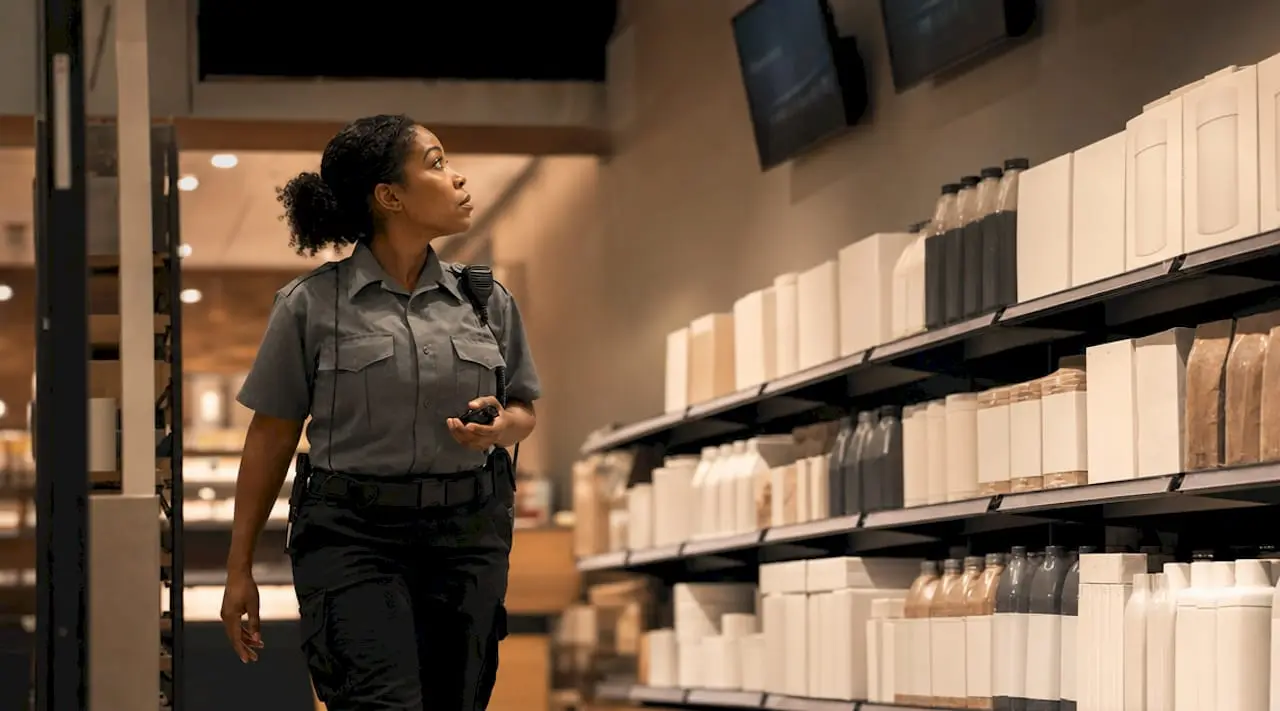
The most common retail security positions in the UK share a core set of duties but differ significantly in seniority, setting, and specialism. Core retail security duties include visible presence, store patrols, CCTV monitoring, incident reporting, and customer service. That combination means no two shifts are identical, which suits candidates who want variety alongside structure.
Here are the primary retail security job examples you will encounter on the UK market:
-
Retail security officer. The most common entry-level security job in the sector. Duties include patrolling the sales floor, monitoring CCTV, greeting customers, and reporting incidents. Employers such as Mitie deploy retail security officers across major supermarkets and fashion retailers on flexible shift patterns, including 4-on-4-off rotations, with pay around £14.50 to £14.60 per hour. This is the standard starting point for most people entering the profession.
-
Relief retail security officer. A variant of the standard officer role, covering absences and additional demand across multiple store locations. Relief officers need strong adaptability because they work across different sites, teams, and store layouts at short notice. This role suits candidates who want broader exposure early in their careers.
-
Security supervisor. A step up from frontline guarding, the supervisor oversees a team of officers, manages rotas, conducts briefings, and liaises directly with store management. This role requires demonstrable experience in the officer role and often a first-line management qualification such as an Award in Security Supervision.
-
Store loss prevention officer. Focused specifically on reducing theft and shrinkage rather than general security. Loss prevention officers use CCTV analysis, plain-clothes observation, and data review to identify patterns of theft. This is one of the more specialised retail loss prevention jobs and typically requires additional training beyond the standard SIA licence.
-
Corporate security specialist (retail). A senior position found in large retail chains, responsible for site-wide security strategy, risk assessments, and compliance with legislation. This role sits closer to management than frontline guarding and requires several years of experience across multiple security functions.
-
Security concierge or greeter. Found in premium retail environments such as department stores and luxury boutiques, this role blends front-of-house customer service with security awareness. The emphasis is on brand presentation and discreet vigilance rather than overt deterrence.
Each of these security officer job examples requires an SIA licence for licensable activities, and most employers expect a clean five-year vetting history under BS7858 standards.
What qualifications and licences do UK retail security jobs require?
Licensing is not optional in UK retail security. An SIA licence is legally required for anyone performing licensable security activities in a retail setting, regardless of whether they are employed directly by the retailer or through a security contractor. The activity determines the licence requirement, not the employment arrangement. This catches many candidates off guard who assume in-house roles are exempt.
The two most relevant licences for retail security positions are:
-
SIA Security Guard licence. Required for static guarding, CCTV operation in a public space, and most retail floor security duties. This is the standard licence for the majority of retail security officer roles. You can find a full walkthrough of the process in Securityjobsboard’s guide on obtaining your SIA licence.
-
SIA Door Supervisor licence. Required if your role involves controlling access, searching individuals, or working on licensed premises. Some larger retail environments with event spaces or licensed restaurants on site will specify this licence.
-
BS7858 vetting clearance. Not a licence but a background screening standard. BS7858 vetting requires a continuous five-year checkable history covering employment, education, and any gaps. Gaps in that history can delay your hiring or result in a job offer being withdrawn entirely. Most applicants underestimate how strictly this is applied.
-
First aid at work certificate. Not mandatory but strongly preferred by most retail employers. A three-day First Aid at Work qualification from providers such as St John Ambulance or the British Red Cross adds genuine value to your application.
-
Conflict management training. Embedded within the SIA licence training but worth refreshing independently. Employers increasingly ask for evidence of de-escalation competency at interview stage.
Pro Tip: Before you apply for any retail security role, check your five-year employment history for gaps. Even a few weeks unaccounted for can stall your BS7858 clearance. Gather reference contact details and documentation for every period before you start the process.
How retail security staff balance security and customer service
The shift in how retail employers define the security role is one of the most significant changes in the sector over the past five years. Retail security staff are increasingly brand ambassadors, and successful candidates focus less on physical security and more on customer service and de-escalation. That is not a soft skill add-on. It is the primary competency most hiring managers now screen for at interview.
“De-escalating tense situations with communication rather than physical intervention is the preferred approach in retail security. Employers prioritise minimising risk over aggressive responses to incidents.”
In practice, this means retail security staff are expected to:
- Greet customers at store entrances and provide directions or assistance
- Identify and approach individuals displaying suspicious behaviour using calm, professional dialogue
- Manage queue control and crowd flow during busy trading periods
- Liaise with store managers and police when incidents escalate beyond verbal resolution
- Use body-worn cameras to document interactions accurately for incident reporting purposes
The body-worn camera point is worth expanding. Footage from these devices protects both the officer and the retailer in the event of a complaint or legal challenge. Officers who understand how to activate, manage, and preserve that footage are considerably more valuable to employers than those who treat the camera as an afterthought.
Building relationships with store staff is equally underrated. A retail security officer who is trusted by the shop floor team receives better intelligence about suspicious activity, responds faster to incidents, and contributes to a safer environment overall. Security staff roles that prioritise relationship-building consistently outperform those that operate in isolation from the wider team.
Career progression paths in retail security
Retail security offers a more structured career ladder than many candidates realise when they first apply for entry-level security jobs. The typical progression moves from frontline officer to supervisor, then into specialist or management roles depending on your interests and the size of the organisation.
| Career stage | Typical role | Key requirements |
|---|---|---|
| Entry level | Retail security officer | SIA licence, BS7858 clearance |
| Mid level | Security supervisor | 2 to 3 years’ experience, supervisory training |
| Specialist | Loss prevention officer | Investigative skills, data analysis experience |
| Senior | Corporate security specialist | Several years across multiple functions, risk management knowledge |
| Management | Retail loss prevention manager | Degree or equivalent, full P&L awareness |
Career progression can lead to roles like Corporate Security Specialist and Retail Loss Prevention Manager, but these positions require more than time served. They require deliberate skill development in areas such as risk assessment, compliance, and emergency coordination.
The most significant external factor shaping career development right now is Martyn’s Law. Martyn’s Law enforcement is expected in 2027 and will create new regulatory standards focusing retail security on counter-terrorism protection and police liaison. Retail security professionals who develop compliance and emergency coordination skills now will be considerably better positioned when those requirements become mandatory. The UK security recruitment market is already reflecting this shift, with employers placing greater value on candidates who understand regulatory frameworks alongside traditional guarding skills.
Pro Tip: If you are aiming for a loss prevention or supervisory role within two years, ask your current employer about funded training in conflict management or CCTV operations. Many large retail security contractors will cover the cost of additional qualifications for staff who demonstrate commitment.
Key takeaways
Retail security careers in the UK require an SIA licence, BS7858 vetting clearance, and strong customer service skills to succeed across all role levels.
| Point | Details |
|---|---|
| Licence is non-negotiable | An SIA Security Guard or Door Supervisor licence is legally required for all licensable retail security activities. |
| BS7858 vetting matters | A continuous five-year checkable history is mandatory; gaps delay or block hiring. |
| Customer service is core | De-escalation and communication skills are now primary competencies, not secondary ones. |
| Career ladder is real | Progression from officer to loss prevention manager is achievable with deliberate skill development. |
| Martyn’s Law changes the game | Counter-terrorism compliance and emergency coordination skills will be mandatory requirements by 2027. |
What I have learned about succeeding in retail security
The candidates who struggle most in retail security interviews are not the ones who lack physical presence or guarding experience. They are the ones who cannot give a concrete example of de-escalating a difficult situation. Every hiring manager I have spoken with over the years says the same thing: they can train someone on patrol routes and CCTV systems, but they cannot train emotional intelligence.
The licensing and vetting process also trips up more people than it should. The BS7858 five-year history requirement is not a bureaucratic formality. It is a genuine barrier for candidates who have not kept records of their employment and education history. Start building that paper trail now, even if you are not applying for roles yet.
What I find genuinely encouraging about the sector in 2026 is the direction of travel. Martyn’s Law is pushing retail security away from reactive guarding and towards proactive compliance and emergency planning. That is a more intellectually demanding role, and it will attract better pay and greater professional recognition over time. The candidates who invest in understanding the SIA regulatory framework now will have a significant advantage when those requirements land.
My honest advice: treat your SIA licence as the floor, not the ceiling. The officers who progress fastest are those who treat every shift as an opportunity to develop their customer service skills, build relationships with store staff, and document incidents with precision. That combination is what separates a long-term career from a short-term job.
— Rob
Find your next retail security role with Securityjobsboard
Whether you are searching for your first entry-level security job or looking to move into a loss prevention specialist position, Securityjobsboard connects UK candidates directly with verified retail security employers.

The platform lists retail security positions across the UK, from supermarket security officers to corporate loss prevention roles, with job alerts you can set up in minutes. You can also access career advice and licensing guidance covering everything from SIA licence applications to interview preparation. Create a free profile, upload your CV, and apply directly to roles that match your experience and location. Securityjobsboard is affiliated with the BSIA, so every listing meets industry standards. Start your search at Securityjobsboard today.
FAQ
What is the most common retail security job in the UK?
The retail security officer role is the most common entry-level position, involving store patrols, CCTV monitoring, and customer interaction. Most roles require a valid SIA Security Guard licence and BS7858 vetting clearance.
Do retail security staff need an SIA licence?
Yes. An SIA licence is legally required for anyone performing licensable security activities in a retail setting, whether employed directly by the retailer or through a contractor. The licence requirement is based on the activity, not the employer type.
What does BS7858 vetting involve?
BS7858 vetting requires a continuous five-year checkable history covering employment, education, and any gaps. Unexplained gaps can delay or prevent hiring, so candidates should prepare documentation in advance.
How do retail security jobs differ from loss prevention roles?
A retail security officer focuses on visible deterrence, patrols, and customer service, while a loss prevention officer specialises in identifying theft patterns through CCTV analysis and plain-clothes observation. Loss prevention roles typically require additional experience and investigative skills beyond the standard SIA licence.
How will Martyn’s Law affect retail security careers?
Martyn’s Law, expected to be enforced in 2027, will introduce new counter-terrorism compliance duties for retail venues. Security professionals who develop emergency coordination and police liaison skills now will be better positioned for the regulatory changes ahead.


