Latest security roles in UK: advance your career in 2025

You might think the UK security job market is saturated and shrinking, but the reality tells a different story. The cybersecurity workforce grew 5% last year, reaching approximately 143,000 professionals, whilst persistent skills gaps create opportunities for those with the right expertise. New technologies like AI and cloud computing are reshaping the industry, demanding fresh skills and creating emerging roles that didn’t exist just a few years ago. This guide explores the key security roles shaping 2025, identifies critical skills gaps, and provides practical strategies to advance your career in this dynamic landscape.
Table of Contents
- Key takeaways
- Overview of the UK security job market in 2025
- Emerging security roles and skill gaps shaping 2025 careers
- Diversity, outsourcing, and future trends influencing security careers
- How to advance your security career with emerging roles and skills
- Explore the latest security jobs and career advice
- Frequently asked questions
Key Takeaways
| Point | Details |
|---|---|
| Workforce growth persists | The UK security workforce grew five per cent to about 143,000 last year, while the skills gap remains, creating opportunities for those with the right expertise. |
| Specialist skills in demand | AI and cloud security expertise are increasingly in demand as organisations adopt new technologies, creating new roles and opportunities. |
| Targeted training pays off | Targeted certifications and specialist training help professionals advance by addressing specific gaps and niche roles. |
| Outsourcing reshapes the market | Rising outsourcing means organisations increasingly rely on external providers, creating consultancy and managed services opportunities alongside permanent roles. |
Overview of the UK security job market in 2025
The UK security landscape presents a paradox that confounds many professionals. Whilst the cybersecurity workforce totals 143,000 individuals, up 5% from the previous year, with a stabilised gap of 3,800 professionals, job postings have actually declined. This apparent contradiction reveals a deeper truth about the market: it’s not about quantity, it’s about quality and specialisation.
The stabilised workforce gap of approximately 3,800 professionals masks significant variations across sectors and skill levels. Some areas face acute shortages whilst others experience oversupply of generalist candidates. Understanding these nuances helps you position yourself strategically in UK security recruitment trends that favour specialists over generalists.
Current market dynamics include:
- Decline in overall job postings despite workforce growth
- Persistent quality issues in candidate pools
- Rising outsourcing as organisations manage cost pressures
- Increased demand for niche technical expertise
- Geographic variations in opportunity concentration
The decline in job postings doesn’t signal market contraction. Rather, it reflects employers becoming more selective and strategic about hiring. They’re seeking professionals who can immediately address specific challenges rather than filling seats with warm bodies. This shift advantages those who invest in targeted skill development.
Outsourcing has emerged as a significant trend reshaping the employment landscape. Organisations facing budget constraints increasingly turn to external providers for security functions, creating opportunities in consultancy and managed services whilst potentially reducing permanent positions. This evolution requires professionals to adapt their career strategies, considering contract work and consultancy alongside traditional employment.
| Metric | 2024 figure | Change |
|---|---|---|
| Total workforce | 143,000 | +5% |
| Workforce gap | 3,800 | Stable |
| Job postings | Declining | -8% |
| Outsourcing adoption | Rising | +12% |
The UK cybersecurity workforce report highlights that whilst the overall numbers look healthy, the devil lives in the details. Specific sectors struggle to find qualified candidates whilst others have surplus applicants, creating pockets of opportunity for those willing to specialise.
Emerging security roles and skill gaps shaping 2025 careers
The security profession is fragmenting into increasingly specialised roles that demand distinct skill sets. Traditional positions like security analyst or network administrator are evolving, whilst entirely new roles emerge to address contemporary threats and technologies. Understanding these shifts helps you identify where to focus your professional development efforts.
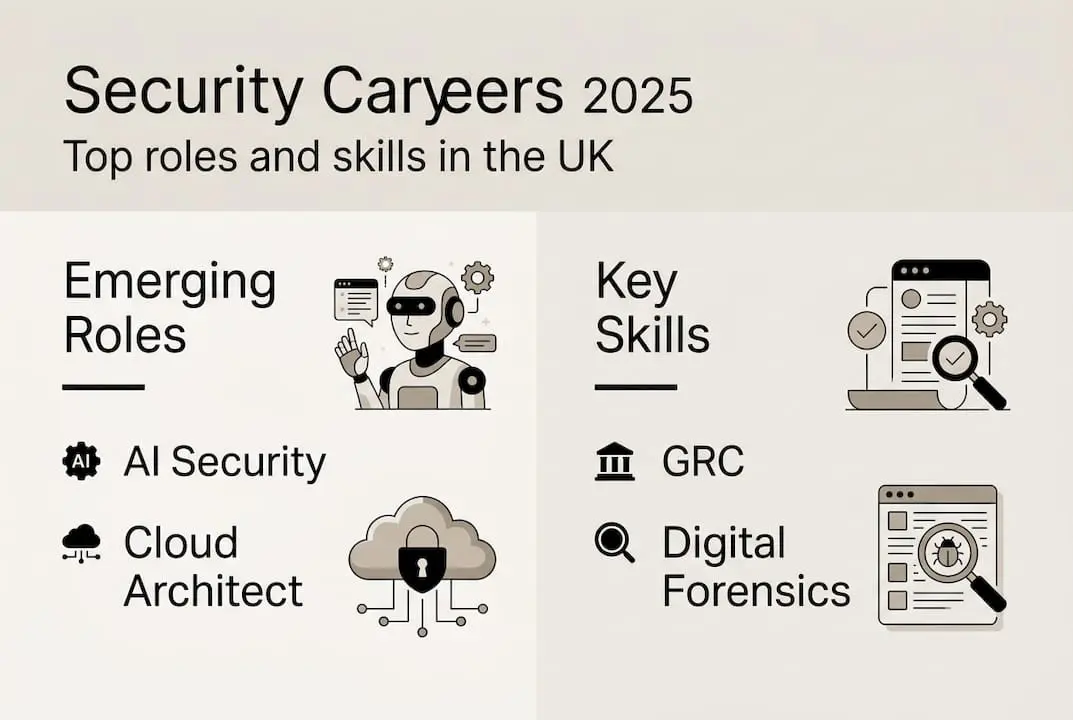
AI security specialists have become critical as organisations integrate artificial intelligence into their operations. These professionals assess AI systems for vulnerabilities, develop governance frameworks, and ensure machine learning models resist adversarial attacks. The role demands both security expertise and understanding of AI architectures, creating opportunities for those willing to bridge these domains.

Cloud security architects design and implement protection strategies for cloud-based infrastructure. As organisations migrate workloads to AWS, Azure, and Google Cloud, they need professionals who understand shared responsibility models, cloud-native security tools, and compliance requirements. This specialisation offers substantial career progression potential.
Governance, risk, and compliance (GRC) analysts occupy the intersection of security, business, and regulation. They ensure organisations meet legal requirements, assess risk exposure, and develop policies that balance security with operational needs. The role suits professionals who combine technical knowledge with business acumen and communication skills.
Critical skill shortages include:
- Digital forensics and incident response capabilities
- Penetration testing and ethical hacking expertise
- Security auditing and compliance assessment
- Cryptography and encryption implementation
- AI governance and machine learning security
The skills gap data reveals that 49% of businesses lack basic technical skills like firewalls, whilst 30% lack advanced skills such as penetration testing, with sector gaps in auditing, forensics, and cryptography. These shortages create leverage for professionals who develop expertise in these areas.
| Role category | Key skills required | Typical salary range |
|---|---|---|
| AI security specialist | ML security, AI governance, threat modelling | £60,000-£95,000 |
| Cloud security architect | AWS/Azure/GCP, IAM, encryption | £65,000-£100,000 |
| GRC analyst | Compliance frameworks, risk assessment, policy development | £45,000-£75,000 |
| Digital forensics investigator | Evidence collection, malware analysis, legal procedures | £50,000-£85,000 |
Pro Tip: Prioritise certifications like CISSP and CISM for career progression. These credentials signal expertise to employers and often serve as gatekeepers for senior positions, particularly in regulated industries where compliance requirements mandate certified professionals.
The evolution of top security job titles reflects broader industry trends. Titles increasingly specify technical domains rather than generic security functions, signalling the profession’s maturation and specialisation. This shift rewards deep expertise over broad generalist knowledge.
Diversity, outsourcing, and future trends influencing security careers
The security profession faces significant demographic challenges that shape both current opportunities and future evolution. Women comprise only 17% of the UK security workforce and 12% of senior roles, whilst neurodivergent representation is growing. These statistics reveal both problems and opportunities as organisations increasingly prioritise diversity initiatives.
The low representation of women creates targeted opportunities through diversity programmes, mentorship schemes, and inclusive hiring practices. Many organisations now set diversity targets and actively recruit underrepresented groups, potentially advantaging qualified female candidates. However, the industry must address underlying cultural issues that contribute to poor retention.
Neurodivergent professionals bring valuable perspectives to security work, particularly in areas requiring pattern recognition, attention to detail, and systematic thinking. Growing awareness of neurodiversity’s value is creating more inclusive workplaces, though challenges remain in recruitment processes that may inadvertently screen out talented individuals.
Systemic challenges affecting the market:
- Pay levels failing to match skills demand in many sectors
- Quality concerns about candidate preparation and training
- Geographic concentration of opportunities in London and Southeast
- Retention issues as professionals burn out or seek better compensation
- Cultural barriers deterring diverse candidates from entering the field
The notion that the skills shortage may be a pay problem in disguise gains traction as analysis reveals organisations struggling to fill positions whilst offering below-market compensation. Outsourcing is rising due to costs despite job postings decline, suggesting companies prefer external providers to building internal capabilities.
Outsourcing trends reshape career trajectories in complex ways. Whilst reducing some permanent positions, outsourcing creates opportunities in managed security service providers (MSSPs) and consultancies. Professionals must adapt by developing consulting skills, embracing contract work, and building portable expertise that transfers across organisations.
“The security skills shortage reflects not just a lack of qualified professionals, but a mismatch between what employers offer and what the market demands. Addressing compensation, working conditions, and career development is as critical as training more practitioners.”
Future trends point towards continued AI integration across security functions. Automation will handle routine tasks, freeing professionals to focus on strategic challenges and complex investigations. This evolution favours those who develop skills that complement rather than compete with automation, such as critical thinking, communication, and business strategy.
The importance of UK security roles continues growing as cyber threats evolve and digital transformation accelerates. Organisations recognise security as business-critical rather than purely technical, elevating the profession’s status and creating opportunities for those who understand both domains.
How to advance your security career with emerging roles and skills
Positioning yourself for success in 2025’s security landscape requires strategic planning and focused skill development. The days of generic security knowledge opening doors are fading, replaced by demand for demonstrable expertise in specific domains. Your career advancement depends on identifying high-value skills and systematically acquiring them.
Steps to position yourself for emerging roles:
- Assess current market demand against your existing skills to identify gaps
- Research specific roles that align with your interests and aptitudes
- Develop a targeted learning plan focusing on high-demand technical areas
- Pursue relevant certifications that validate your expertise to employers
- Build practical experience through labs, projects, and real-world applications
- Network strategically with professionals in your target specialisation
- Document your learning and projects to demonstrate capability
Certifications remain powerful career accelerators despite debates about their practical value. For career advancement, target mid-senior roles in AI security, cloud, GRC and upskill with certifications such as CISSP and CISM. These credentials signal commitment and baseline competence, often serving as initial screening criteria for competitive positions.
Beyond certifications, address gaps through specialist training in forensics and AI governance through hands-on learning. Employers value practical skills over theoretical knowledge, so build labs, contribute to open-source security projects, or volunteer for security work in non-profit organisations. This experience provides portfolio material and demonstrates genuine capability.
Specialist training closes skills gaps more effectively than broad courses. If digital forensics interests you, focus exclusively on that domain rather than spreading effort across multiple areas. Deep expertise in one area typically offers better career prospects than superficial knowledge across many.
Pro Tip: Network strategically to learn about AI security opportunities before they’re publicly advertised. Many positions fill through referrals and internal networks, particularly senior roles requiring niche expertise. Attend industry events, contribute to online communities, and build relationships with professionals in your target domain.
The security career advice resources available through specialist platforms provide valuable guidance for navigating career transitions. Understanding security job hunting tips for 2025 helps you position yourself effectively in a competitive market where presentation and targeting matter as much as skills.
Continuous learning separates thriving professionals from those who stagnate. The security field evolves rapidly, with new threats, technologies, and techniques emerging constantly. Dedicate time weekly to reading security publications, experimenting with new tools, and expanding your knowledge. This investment compounds over time, building expertise that sets you apart.
Consider the business context of security work, not just technical aspects. Understanding how security decisions affect business operations, costs, and risk makes you more valuable to employers. Develop communication skills to explain technical issues to non-technical stakeholders, bridging the gap between security and business leadership.
Explore the latest security jobs and career advice
Now that you understand the emerging roles and skills shaping UK security careers in 2025, it’s time to explore opportunities that match your expertise and aspirations. The Security Jobs Board specialises in connecting UK security professionals with employers seeking exactly the skills we’ve discussed throughout this guide.

Whether you’re targeting AI security specialist positions, cloud security architect roles, or GRC analyst opportunities, you’ll find current listings from organisations across the UK. The platform’s focus on the security sector means every position relates directly to your professional development, without wading through irrelevant listings.
Beyond job listings, explore comprehensive career advice covering everything from CV optimisation to interview preparation. These resources help you present your skills effectively and navigate the application process confidently. For those interested in regional opportunities, specialised listings like security jobs in Northern Ireland ensure you don’t miss relevant positions outside major metropolitan areas.
Frequently asked questions
What are the latest security roles emerging in 2025?
AI security specialists, cloud security architects, and GRC analysts represent the fastest-growing positions. Digital forensics investigators and cryptography specialists also see expanding opportunities as organisations address sophisticated threats. These roles demand specialised technical skills rather than general security knowledge.
How can I close skills gaps to improve my security career prospects?
Pursue certifications like CISSP and CISM to demonstrate foundational expertise, then develop deep technical skills in high-demand areas. Focus specialist training on digital forensics, AI governance, penetration testing, or cloud security depending on your interests. Practical experience through labs and projects matters as much as formal credentials.
What impact do diversity and outsourcing have on security roles?
Low female representation at 17% of the workforce creates opportunities through diversity initiatives, whilst growing neurodivergent inclusion brings fresh perspectives. Rising outsourcing reshapes employment patterns, reducing some permanent positions whilst creating opportunities in consultancy and managed services. Professionals must adapt by developing flexibility and portable expertise.
Are security job opportunities declining in the UK?
No, despite fewer job postings, the workforce grew 5% to 143,000 professionals with persistent skills gaps. The decline in postings reflects employers becoming more selective rather than reduced demand. Opportunities concentrate in specialist areas like AI security, cloud architecture, and compliance rather than generalist positions.
Which certifications offer the best return on investment for career advancement?
CISSP and CISM provide strong foundations for mid-senior progression, particularly in regulated industries. Cloud-specific certifications like AWS Certified Security or Azure Security Engineer prove valuable for cloud roles. Specialist credentials in forensics, penetration testing, or GRC align with specific career paths and command premium compensation.


