Incident Reporting: Safeguarding UK Security Workplaces

Security teams in the United Kingdom face unpredictable challenges every day, from suspicious access attempts to unexpected safety events. Without a structured approach to incident reporting, critical information slips through the cracks and real risks persist. Understanding how to document and communicate breaches, near misses, and accidents is vital for both compliance and improved workplace protection. This guide offers clear insight into procedures that help you spot patterns, fulfil legal duties, and build safer environments across your organisation.
Table of Contents
- Defining Incident Reporting In Security
- Why Incident Reporting Matters In UK Security
- Types Of Incidents And Reporting Triggers
- Reportable Incidents Under RIDDOR
- Security-Specific Incident Types
- When Uncertainty Exists
- Key Steps In The Reporting Process
- Legal And Regulatory Duties In The UK
- RIDDOR: Your Legal Foundation
- What RIDDOR Requires
- Beyond RIDDOR: Additional Legal Duties
- Duty Holders And Responsibility
- Common Pitfalls And How To Avoid Them
Key Takeaways
| Point | Details |
|---|---|
| Importance of Incident Reporting | Structured incident reporting is essential for identifying security failures and enhancing workplace safety. It enables organisations to learn from incidents and improve their security measures. |
| Legal Obligations Under RIDDOR | Reporting of Injuries, Diseases and Dangerous Occurrences Regulations (RIDDOR) imposes legal requirements on UK organisations to report certain incidents or face penalties. |
| Distinction Between Reporting Types | Understanding the differences between incident reporting, data breach notifications, and threat sharing helps security professionals know their reporting responsibilities and default actions. |
| Proactive Documentation | Prompt and accurate documentation of incidents, including all relevant details, is critical for effective investigation and prevention of recurrence. |
Defining Incident Reporting in Security
Incident reporting in security is the systematic process of communicating detailed information about security breaches, attacks, and safety-related events that have occurred in the workplace. In the UK security sector, this goes beyond simple notification—it’s about capturing comprehensive data that helps organisations understand what happened, why it happened, and how to prevent recurrence.
The process serves a dual purpose. First, incident reporting focuses on cybersecurity events like data breaches and system compromises, detailing attack vectors and attacker behaviours. Second, it encompasses workplace safety incidents, near misses, and accidents that could impact your team’s wellbeing.
Think of it this way: incident reporting is your organisation’s early warning system. When something goes wrong—a failed access control, a suspicious login attempt, or a physical security breach—reporting creates a documented record that security teams and management can analyse.
Why Incident Reporting Matters in UK Security
For UK security professionals, incident reporting isn’t optional compliance theatre. It’s fundamental to workplace protection. Timely notification, accurate documentation, and proportionate investigation form the backbone of effective safety management.
Without incident reporting, your organisation operates blind. You can’t identify patterns in attacks, you can’t learn from near misses, and you can’t improve your security posture. Each unreported incident is a missed opportunity to strengthen defences.
Key benefits of structured incident reporting include:
- Identifying root causes of security failures and safety events
- Spotting patterns and trends in attack methods or workplace hazards
- Prioritising response efforts based on incident severity and impact
- Building a comprehensive understanding of your threat landscape
- Meeting regulatory requirements and industry standards
- Enabling continuous improvement across your security programme
The Distinction Matters
Incident reporting differs from data breach notification and cyber threat information sharing, though they’re related. Incident reporting captures what happened internally and focuses on learning. Breach notification communicates to affected parties and regulators. Threat sharing helps the broader security community.
For security professionals in the UK, understanding this distinction helps you know what to report, when, and to whom.
Effective incident reporting creates institutional memory—organisations that report properly learn faster and adapt their security strategies more intelligently than those that don’t.
Pro tip: Start documenting incidents immediately after they occur, capturing details whilst they’re fresh. The longer you wait, the more context you lose, and investigation becomes significantly harder.
Types of Incidents and Reporting Triggers
Not every workplace event requires formal incident reporting. Understanding what counts as a reportable incident is crucial for UK security professionals. Your reporting threshold determines whether minor hiccups get documented or escalated to management and authorities.
Security incidents fall into distinct categories. Accidents, illnesses, crimes, conflicts, near misses, and dangerous occurrences represent the main types you’ll encounter in UK security roles. Each category has different severity levels and reporting obligations.
The key to effective reporting is understanding your triggers. A trigger is the threshold that makes an incident reportable rather than simply documented in daily logs.
Reportable Incidents Under RIDDOR
In the UK, the Reporting of Injuries, Diseases and Dangerous Occurrences Regulations (RIDDOR) sets strict standards for what must be reported. This isn’t optional—it’s legal requirement.
Reportable incidents include work-related fatalities, major injuries, over-seven-day incapacitation, and certain dangerous occurrences. Triggers based on severity and nature determine reporting obligations, such as fatal accidents and hazardous near-misses.
Common reportable categories for security personnel include:
Here’s a quick reference to help distinguish between the main types of security incidents and their usual reporting obligations in the UK:
| Incident Type | Typical Severity | Legal Reporting Required? | Example Trigger |
|---|---|---|---|
| Fatality | Critical | RIDDOR/HSE notification | Workplace death |
| Major Injury | Major | RIDDOR/HSE notification | Fractures, serious burns |
| Minor Incident | Minor | Internal documentation | Equipment malfunction |
| Near Miss | Variable | Often internal, best practice | Slip with no injury |
| Security Breach | Major to Critical | Internal and sometimes external | Unauthorised access |
| Occupational Disease | Major | RIDDOR/HSE notification | Asbestos-related illness |
| Dangerous Occurrence | Major to Critical | RIDDOR/HSE notification | Gas leak, fire alarm failure |
- Fatal injuries or fatalities at work
- Major injuries (fractures, loss of consciousness, serious burns)
- Incapacity lasting more than seven days
- Occupational diseases (exposure-related illnesses)
- Dangerous occurrences that could have caused harm
Security-Specific Incident Types
Beyond RIDDOR, security roles involve incidents unique to the sector. These include access control breaches, failed security systems, suspicious activities, and physical threats.
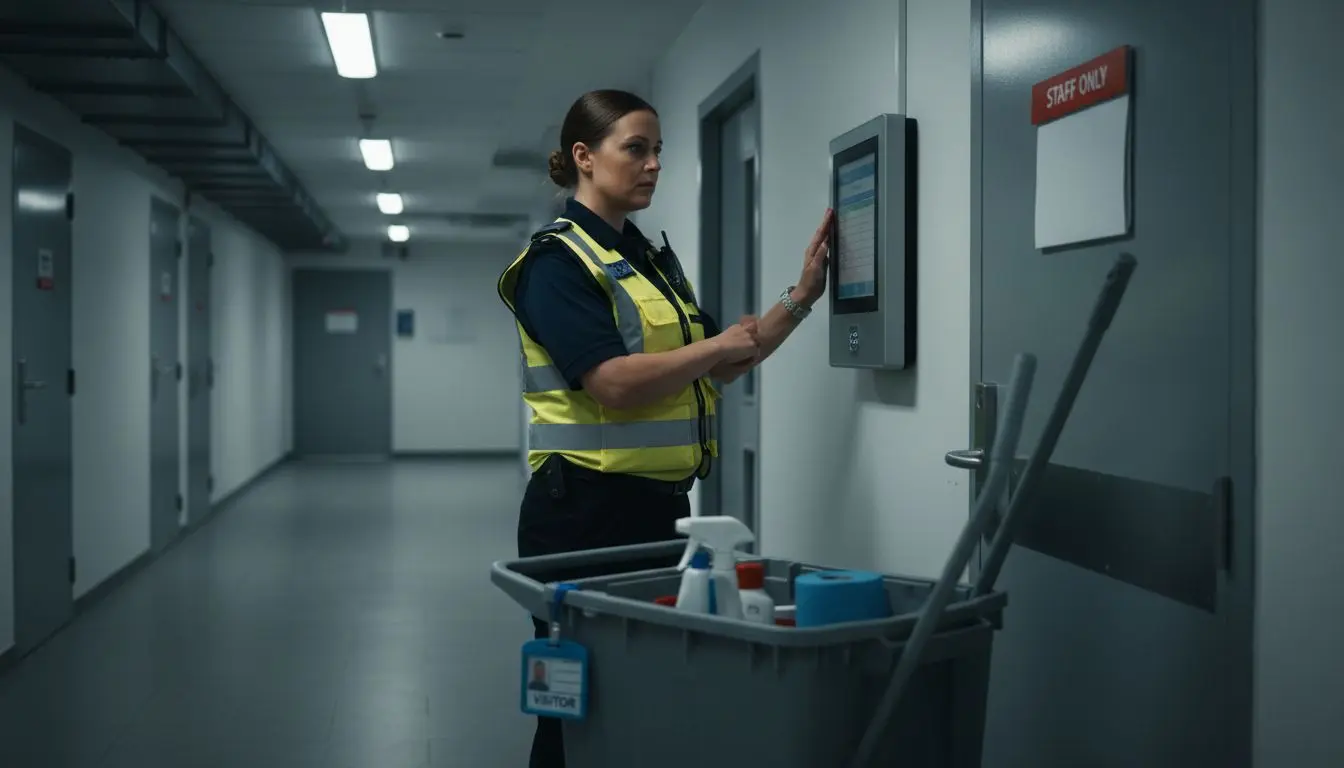
Your organisation’s security policy typically defines additional reporting triggers beyond legal minimums. A failed alarm system might require immediate reporting. An unauthorised access attempt definitely does.
Your reporting framework should clarify severity levels:
- Critical incidents – immediate escalation, potential emergency response
- Major incidents – serious impact on operations or safety
- Minor incidents – logged but lower priority for investigation
- Near misses – no injury or damage, but revealed vulnerability
When Uncertainty Exists
If you’re unsure whether something needs reporting, err on the side of caution. Report it. Your manager or safety officer can determine whether formal documentation is required.
Unreported incidents create blind spots. That “minor” access card glitch today could indicate a systemic weakness tomorrow.
When in doubt, report it. Under-reporting costs organisations far more than over-reporting ever could.
Pro tip: Create a simple incident checklist for your team listing reportable triggers specific to your workplace—this removes guesswork and ensures consistent reporting across all staff members.
Key Steps in the Reporting Process
Effective incident reporting follows a structured sequence. When something happens, the steps you take in the first hours determine whether your organisation learns from the event or misses critical insights.
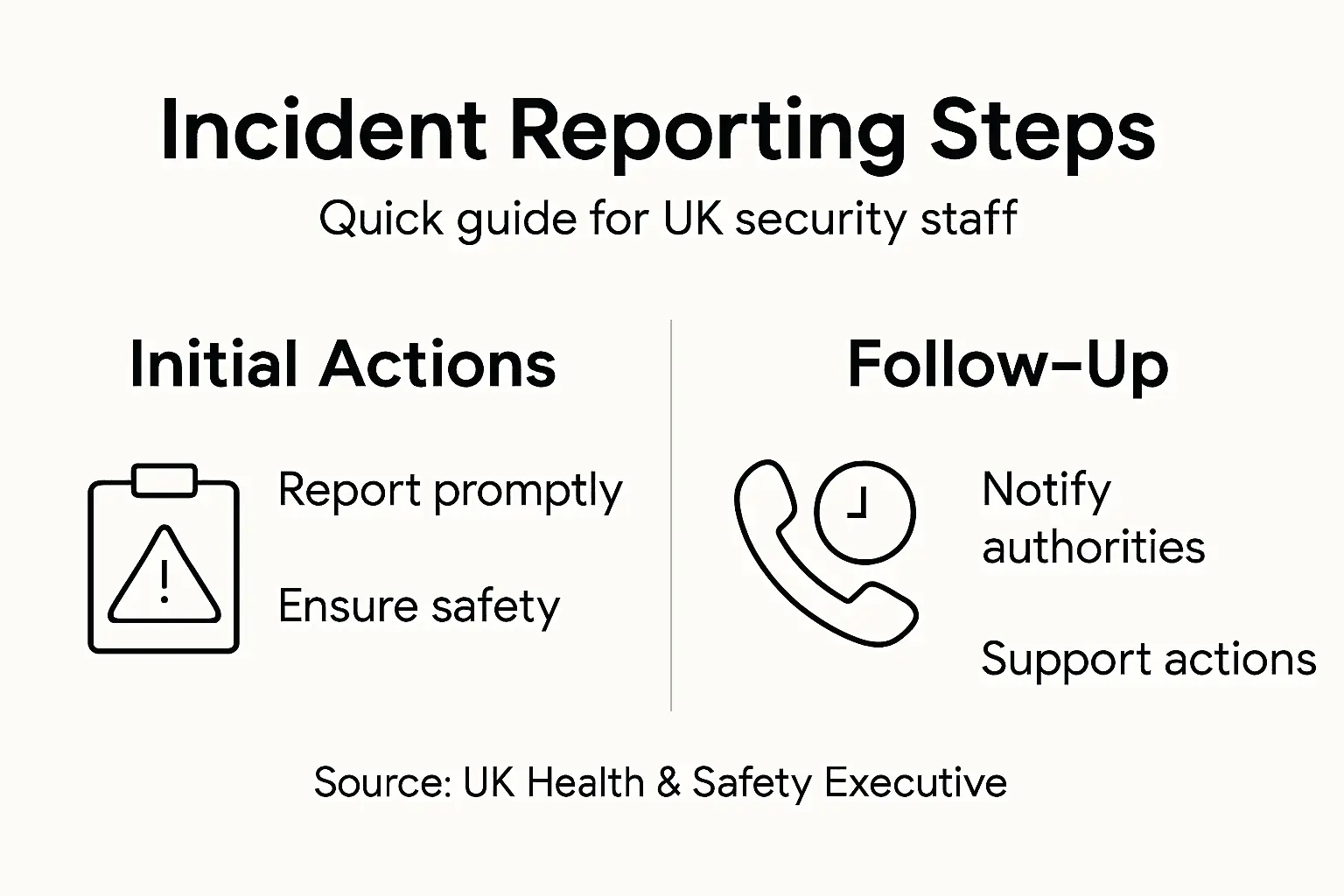
The reporting process isn’t complicated, but it does require discipline. Getting it right means capturing accurate information, involving the right people, and creating a clear record for investigation.
Step 1: Report Promptly
Speed matters. Report incidents as soon as safely possible after they occur. The fresher the details, the more accurate your account will be.
If you’re injured or in immediate danger, prioritise safety first. Once you’re safe, report. Don’t wait for end of shift or the next morning. Each hour that passes degrades memory and allows evidence to be disturbed.
Prompt reporting also triggers immediate response procedures. Critical incidents need immediate escalation to management and emergency services if required.
Step 2: Document Accurately
Write down what happened. Include specific details: times, locations, people involved, equipment used, and what you observed. Vague accounts help no one.
Recording incident details accurately creates the foundation for investigation. Include:
- Date, time, and location of incident
- Names and roles of people involved
- Witnesses and their contact details
- Environmental conditions (weather, lighting, visibility)
- Sequence of events leading to the incident
- Actions taken immediately after
- Any injuries, damage, or security breaches
- Photographs or video evidence if available
Step 3: Notify Relevant Authorities
Report through your organisation’s formal channels. This typically means your line manager, safety officer, or security team. Don’t assume someone else will report it.
For serious incidents, defined roles and responsibilities ensure proper escalation. Know your organisation’s notification procedure and follow it precisely.
Some incidents require external reporting to the Health and Safety Executive (HSE) or police. Your manager determines this, but alert them immediately if the incident seems serious.
Step 4: Participate in Investigation
Your role doesn’t end with reporting. Investigations require your input. Be honest about what happened and what you could have done differently.
Investigations identify immediate causes (what directly caused the incident) and underlying causes (system failures that allowed it). Both matter for preventing recurrence.
Step 5: Support Corrective Actions
Once investigation concludes, changes follow. Perhaps new procedures, additional training, or equipment upgrades. Support these changes—they protect you and your colleagues.
Monitoring trends informs ongoing policy updates and prevents repeated incidents.
Speed, accuracy, and honesty in reporting create the conditions for real safety improvements across your workplace.
Pro tip: Use your organisation’s incident reporting form immediately after an incident occurs—don’t rely on memory later. Forms guide you through essential details and ensure nothing important gets missed.
Legal and Regulatory Duties in the UK
In the UK, incident reporting isn’t a suggestion—it’s a legal obligation. Failing to report required incidents can result in fines, prosecution, and reputational damage to your organisation.
The primary framework governing incident reporting is the Reporting of Injuries, Diseases and Dangerous Occurrences Regulations (RIDDOR). This legislation applies to virtually all UK workplaces, including security operations.
RIDDOR: Your Legal Foundation
RIDDOR establishes what must be reported and when. Employers and persons in control of workplaces have a duty to comply. There’s no discretion here—if an incident meets RIDDOR criteria, you must report it.
Reports must be made within specified timeframes depending on incident type. Fatalities require immediate reporting. Most injuries and diseases require notification within ten to fifteen days.
Reporting goes to the Health and Safety Executive (HSE) or your local authority’s environmental health department. Your organisation’s safety officer typically handles this, but everyone needs to understand the deadlines.
What RIDDOR Requires
You must report work-related incidents involving:
- Death or fatal injuries
- Serious injuries (fractures, amputations, loss of consciousness)
- Incapacity lasting more than seven consecutive days
- Occupational diseases and conditions
- Dangerous occurrences with potential for serious harm
Non-compliance carries serious penalties. The HSE actively prosecutes organisations that fail to report. Fines start at thousands of pounds and escalate with organisational size and culpability.
Beyond RIDDOR: Additional Legal Duties
RIDDOR isn’t your only obligation. Organisations must undertake timely notification, maintain records, and conduct investigations under broader health and safety legislation.
Your organisation must also consider data protection obligations. If incidents involve personal data, GDPR compliance for UK security applies—especially if breach investigations capture personal information.
Security-specific roles like door supervisors have additional legal duties regarding incident documentation and reporting timelines.
Duty Holders and Responsibility
Who’s responsible? Employers bear primary liability. However, directors, managers, and supervisors can face personal liability for failures to report or investigate incidents properly.
For security staff, your duty is to report incidents to your line manager or safety officer immediately. Your employer then carries responsibility for formal reporting to authorities.
Non-compliance with RIDDOR isn’t a minor administrative oversight—it’s a criminal offence that exposes your organisation and individuals to prosecution.
Pro tip: Keep a copy of your organisation’s reporting procedure and deadlines in an accessible location—don’t rely on memory when incident pressure is high.
Common Pitfalls and How to Avoid Them
Most organisations don’t intentionally fail at incident reporting. They stumble because they don’t anticipate common mistakes. Knowing what goes wrong helps you navigate around these traps.
Incident reporting failures rarely come from one error—they result from systemic weaknesses. Understanding these pitfalls protects your organisation and keeps your team safer.
The table below summarises common pitfalls in incident reporting and the impact of each, helping teams in the UK avoid costly mistakes:
| Pitfall | Typical Cause | Consequence | Prevention Tip |
|---|---|---|---|
| No clear response plan | Lack of process documentation | Confusion, missed reporting | Create a detailed action workflow |
| Unclear roles | Vague job descriptions | Delays, blame games | Assign and document responsibilities |
| Siloed communication | Isolated teams | Gaps in information | Encourage cross-team discussions |
| Fear-based culture | Blame, lack of trust | Under-reporting incidents | Foster open, learning culture |
| Incomplete information capture | Inadequate training | Poor investigations | Provide structured forms/training |
| Ignoring near misses | Focus on damage only | Hidden risks persist | Treat near misses as learning ops |
Pitfall 1: No Clear Incident Response Plan
You can’t report effectively without knowing how. Many organisations lack documented procedures for incident response. Staff don’t know who to contact, what to report, or when.
Establish a clear and documented incident response plan defining every step. Your plan should specify roles, reporting channels, timeframes, and escalation procedures.
Without this roadmap, incidents get lost, important details go missing, and responsibilities fall through the cracks.
Pitfall 2: Unclear Roles and Responsibilities
When everyone’s responsible, nobody’s responsible. Vague role definitions cause delays and confusion during incidents.
Define exactly who reports to whom. Who investigates? Who notifies external authorities? Who updates affected parties? Write this down and train staff on it annually.
Pitfall 3: Siloed Communication
Teams working in isolation miss critical information. Siloed communication among teams creates gaps where incidents aren’t properly escalated or investigated.
Security teams, management, and safety officers must communicate openly. Cross-team meetings about incidents ensure nothing falls through the gaps.
Pitfall 4: Fear-Based Reporting Culture
If staff fear blame, they won’t report. A lack of psychologically safe environment for reporting undermines the entire system. Near misses go unreported. Incidents get hidden.
Foster openness. Make it clear that reporting is encouraged and that the focus is learning, not punishment. Staff need psychological safety to report honestly.
Pitfall 5: Incomplete Information Capture
Vague incident reports limit investigation. Staff rush through documentation, omitting crucial details.
Use structured reporting forms with specific fields. Don’t rely on memory—capture details immediately. Train staff on what information matters:
- When exactly did it happen?
- What was the weather, lighting, visibility?
- Who witnessed it?
- What equipment was involved?
- What happened before the incident?
Pitfall 6: Ignoring Near Misses
Near misses reveal vulnerabilities before someone gets hurt. Failure to capture complete information and underreporting of near misses means you miss early warning signs.
Treat near misses as learning opportunities. Report them. Investigate them. They’re your safety system’s gift—a chance to fix things before real harm occurs.
The organisations that learn fastest are those that capture and analyse near misses before they become actual incidents.
Pro tip: Conduct quarterly incident report audits—review random submissions to check completeness, identify training gaps, and spot patterns in reporting quality across your team.
Strengthen Your Security Career by Mastering Incident Reporting Challenges
Incident reporting is crucial for safeguarding UK security workplaces but it comes with real challenges like ensuring prompt, accurate documentation and meeting strict legal duties. If you want to join a team that values these critical skills or you are an employer seeking candidates who understand the nuances of reporting under RIDDOR and beyond, the right job connection can make all the difference.

Take control of your career by accessing specialised opportunities at The Security Jobs Board. This platform connects you with employers who prioritise clear reporting processes and compliance. Discover roles where your knowledge of incident reporting, from near misses to critical breaches, is not only valued but essential. Visit The Security Jobs Board homepage now and start applying to positions that match your expertise and career goals. Don’t wait because the security sector needs skilled professionals like you who can help prevent incidents and protect organisations across the UK.
Frequently Asked Questions
What is incident reporting in security?
Incident reporting in security is the systematic process of communicating detailed information about security breaches, attacks, and safety-related events that have occurred in the workplace. It helps organisations understand what happened, why it happened, and how to prevent recurrence.
Why is incident reporting important?
Incident reporting is fundamental to workplace protection as it helps identify patterns in attacks, learn from near misses, and improve security postures. Timely notification and accurate documentation allow for effective safety management and continuous improvement of security programmes.
What types of incidents should be reported?
Reportable incidents include work-related fatalities, major injuries, occupational diseases, security breaches, and certain dangerous occurrences. The Reporting of Injuries, Diseases and Dangerous Occurrences Regulations (RIDDOR) outlines the specific categories and their severity levels.
What steps should be followed in the incident reporting process?
The incident reporting process is structured and includes: reporting promptly, documenting accurately, notifying relevant authorities, participating in the investigation, and supporting corrective actions. Each step is essential for capturing accurate information and facilitating effective responses.
Recommended
- Emergency Response: Why it Matters for UK Security
- Why Work In Security Sector: Complete UK Guide | Security Jobs Board
- Security Screening: Crucial Checks for UK Security Roles
- Alarm Response Explained: Protecting UK Security Careers
- 7 passi per la checklist sicurezza industriale 2026
- Infrastructure Automation & DevSecOps – IronByte Consulting and Training
- Utmaningar med IT-säkerhet – Sårbarhet för företag


