Why Choose Security Jobs: Complete Guide UK

Across the british workforce, security roles shape the safety of workplaces, public spaces, and some of the nation’s busiest venues. More than 330,000 professionals are registered to protect people and assets in the United Kingdom, yet many overlook the demands and diversity within this industry. Exploring what security jobs involve helps reveal the practical skills, real challenges, and rewarding paths available to those considering this essential career.
Table of Contents
- What Security Jobs Involve In The UK
- Types Of Security Roles Available
- Key Skills And Qualifications Needed
- Career Benefits And Progression Opportunities
- Legal Requirements And Industry Risks
Key Takeaways
| Point | Details |
|---|---|
| Diverse Security Roles | The UK security sector features a wide range of roles, from physical guarding to cybersecurity specialists. Opportunities exist across various industries for individuals with different skill sets. |
| Essential Skills and Qualifications | Key attributes include strong observational skills, professionalism, and physical fitness, with the SIA licence being mandatory for many positions. Continuous learning and certifications enhance job prospects. |
| Career Advancement Opportunities | Security professionals can progress from entry-level positions to managerial roles, with specialisations available in areas like cybersecurity and risk management. Continuous training paves the way for career growth. |
| Legal Compliance and Industry Challenges | Professionals must adhere to legal requirements, including obtaining an SIA licence, and navigate industry risks such as handling volatile situations and maintaining personal safety. |
What Security Jobs Involve in the UK
Security jobs in the United Kingdom encompass a wide range of critical responsibilities focused on protecting people, property, and assets. Security officers play a pivotal role in maintaining safety across various environments, from corporate offices to public spaces. Understanding the role of security guards reveals a multifaceted profession that demands vigilance, quick thinking, and exceptional interpersonal skills.
Typical duties for security professionals include patrolling premises, monitoring surveillance systems, and controlling access points. According to government career resources, security officers are tasked with checking staff and visitors in and out of buildings, operating scanning equipment, and responding rapidly to potential security breaches. These professionals must remain alert and prepared to handle various scenarios, from managing routine entry protocols to addressing potential criminal activities.
The scope of security work varies significantly across different sectors. Some security roles focus on static guarding at fixed locations, while others involve mobile patrols, event security, or specialised protection services. Key responsibilities often include:
- Conducting regular security checks and inspections
- Monitoring CCTV and alarm systems
- Reporting suspicious activities
- Maintaining detailed incident logs
- Implementing emergency response procedures
- Protecting valuable assets and preventing unauthorised access
Successful security professionals combine physical readiness with sharp analytical skills, communication abilities, and a commitment to maintaining public safety. Job descriptions for security roles highlight the importance of adaptability, attention to detail, and the capacity to remain calm under pressure. Whether working in retail, corporate environments, public venues, or specialised security contexts, these professionals serve as critical guardians of safety and order in modern British society.
Types of Security Roles Available
The United Kingdom’s security sector offers a diverse and dynamic range of professional opportunities for individuals seeking challenging and meaningful careers. Understanding security job classifications reveals the complexity and depth of potential roles across various specialisations. From protecting physical spaces to safeguarding digital infrastructures, security professionals play critical roles in maintaining safety and resilience.
Government career resources highlight several key security roles within professional environments. Security job classifications typically encompass specialised positions such as:
- Business Continuity Managers: Developing strategies to maintain organisational operations during potential disruptions
- Cyber Operations Staff: Protecting digital networks and information systems
- Physical Security Designers: Creating comprehensive security infrastructure and protocols
- Security Architects: Designing robust security frameworks for complex environments
- Vetting Officers: Conducting detailed background checks and security clearance assessments
Beyond these specialised roles, the security sector includes numerous practical positions that require different skill sets and expertise. Event security personnel, corporate security officers, retail loss prevention specialists, and transportation security professionals each contribute uniquely to maintaining public safety. Examples of security roles for UK jobseekers demonstrate the sector’s remarkable diversity, offering opportunities for individuals with varied backgrounds, interests, and professional capabilities.
Successful security professionals must possess a combination of technical knowledge, physical readiness, and strong interpersonal skills. Whether protecting high-profile corporate environments, managing crowd control at public events, or monitoring critical infrastructure, these roles demand adaptability, attention to detail, and a commitment to maintaining public safety. The security industry offers not just employment, but a meaningful career path for those dedicated to protecting people, assets, and communities across the United Kingdom.

Key Skills and Qualifications Needed
Pursuing a career in security requires a unique combination of personal attributes, technical skills, and professional qualifications. Cybersecurity career options highlight the importance of developing a comprehensive skill set that goes beyond traditional expectations. Successful security professionals must demonstrate exceptional personal qualities and technical competencies that enable them to protect people, property, and information effectively.
According to national career resources, security officers must possess strong observational abilities and effective communication skills. Key personal attributes include:
- Maturity and Responsibility: Demonstrating sound judgement and professional conduct
- Confidentiality: Handling sensitive information with discretion
- Decision-Making: Ability to make quick, rational choices under pressure
- Physical Fitness: Maintaining the stamina required for active security roles
- Emotional Intelligence: Managing challenging interpersonal situations
Professional qualifications form another critical aspect of security career development. The Security Industry Authority (SIA) licence is a fundamental requirement for most security positions in the United Kingdom. While formal academic qualifications are not always mandatory, specific training programmes and certifications can significantly enhance career prospects. Advanced qualifications in areas such as cybersecurity, risk management, and emergency response can provide competitive advantages in the job market.
Technical skills are increasingly important in modern security roles. Proficiency in digital surveillance systems, understanding of access control technologies, and basic IT skills are becoming essential competencies. Practical tips for security job seekers suggest continuous learning and professional development as key strategies for career advancement. Whether working in corporate environments, event security, or specialised protection services, security professionals must remain adaptable, committed to ongoing skill enhancement, and dedicated to maintaining the highest standards of safety and protection.
Career Benefits and Progression Opportunities
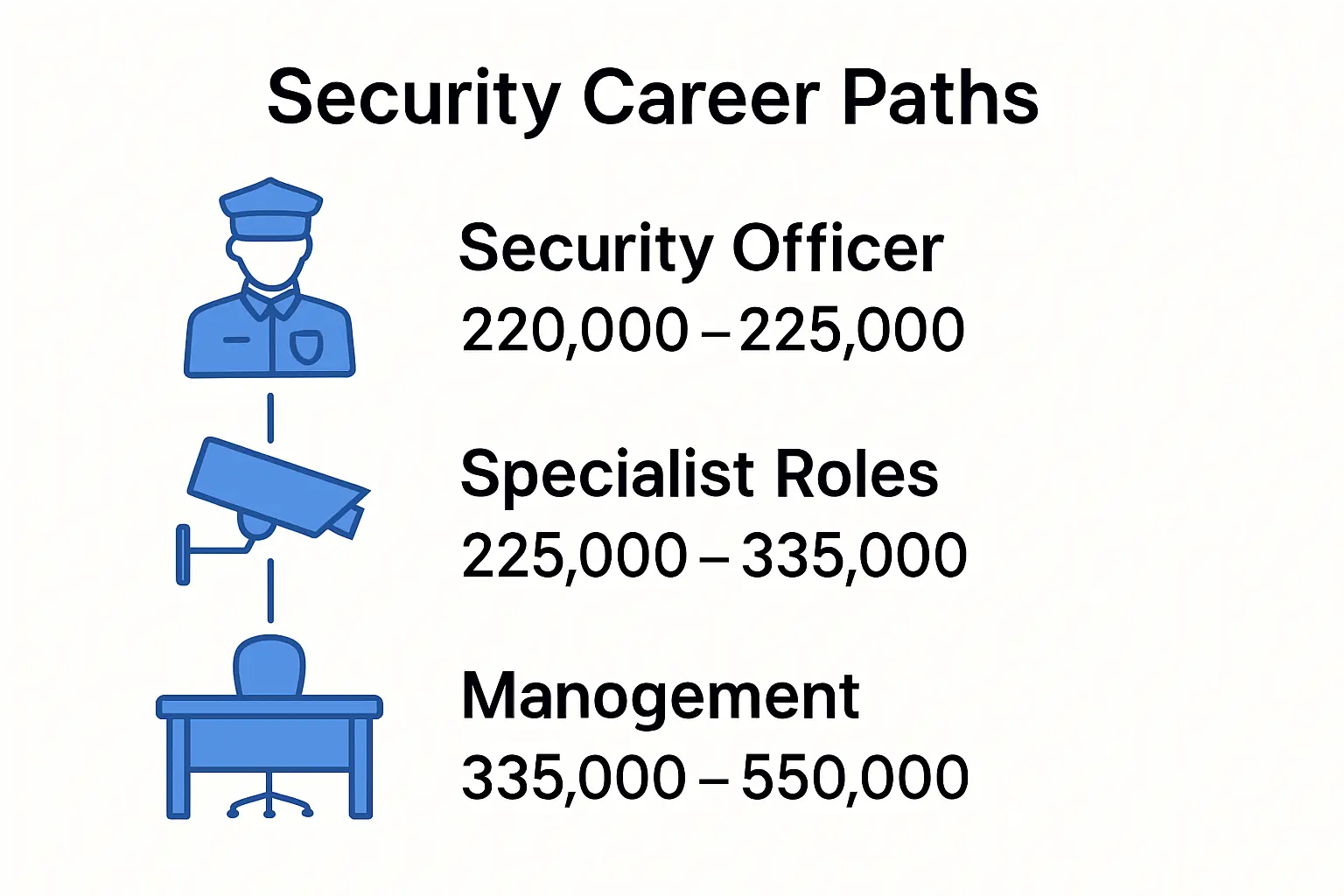
The security sector offers remarkable career prospects with diverse opportunities for professional growth and advancement. Career paths in security demonstrate the dynamic nature of this professional landscape, where dedicated individuals can transform initial entry-level positions into sophisticated leadership roles. Security professionals are not confined to a single career trajectory but can explore multiple specialisations and progression routes.
National career resources highlight that security officers can advance to supervisory and managerial positions through consistent performance and ongoing professional development. Typical progression pathways include:
- Junior Security Officer: Entry-level position with fundamental responsibilities
- Senior Security Officer: Enhanced responsibilities and team leadership
- Security Supervisor: Managing teams and operational protocols
- Security Manager: Overseeing entire security departments
- Specialized Roles: Close protection, risk assessment, cybersecurity specialists
Professional development in the security sector extends beyond traditional hierarchical promotions. Individuals can expand their expertise through targeted training, professional certifications, and cross-sector experience. Specialisations like cybersecurity, risk management, and corporate security offer lucrative opportunities for those willing to invest in continuous learning. The ability to adapt, acquire new skills, and demonstrate strategic thinking distinguishes exceptional security professionals.
Financial rewards in the security sector are competitive and reflect the critical nature of the work. Entry-level positions provide stable incomes, while advanced roles in specialized security domains can offer significant earning potential. Learning security skills becomes a strategic investment in long-term career success. Whether protecting physical infrastructure, managing digital security, or providing executive protection, security professionals play an indispensable role in maintaining safety across various sectors, making this career path both professionally fulfilling and economically promising.
Legal Requirements and Industry Risks
Navigating the security profession requires a comprehensive understanding of legal obligations and potential workplace challenges. What is security risk in the United Kingdom involves more than physical protection techniques, encompassing complex regulatory frameworks and professional responsibilities. Security professionals must remain vigilant about both legal compliance and personal safety in an increasingly complex professional environment.
To work legally as a security professional, obtaining a front-line Security Industry Authority (SIA) licence is mandatory. This critical certification ensures that individuals meet stringent professional standards and demonstrates their commitment to ethical practice. Key legal requirements include:
- Mandatory SIA licensing for front-line security roles
- Background criminal record checks
- Completion of approved training programmes
- Regular professional recertification
- Adherence to data protection and privacy regulations
- Compliance with health and safety legislation
Industry risks represent another significant aspect of security work that professionals must carefully manage. Security officers are frequently exposed to potentially volatile situations requiring exceptional judgement and emotional control. Potential risks include physical confrontations, managing aggressive individuals, responding to emergency scenarios, and maintaining personal safety while protecting others. These challenges demand not only physical preparedness but also advanced communication and de-escalation skills.
Professional indemnity and personal safety become paramount considerations in this dynamic field. Security professionals must develop comprehensive risk assessment strategies, maintain detailed incident reports, and continuously update their legal and procedural knowledge. Understanding the nuanced legal landscape ensures that security personnel can perform their duties effectively while protecting themselves and the organisations they serve, making this profession both challenging and intellectually demanding.
Take Control of Your Security Career Journey Today
Choosing a career in security means embracing responsibility, vigilance, and a commitment to public safety. The article highlights key challenges such as obtaining the necessary qualifications, navigating legal requirements like the SIA licence, and developing critical skills to succeed. Whether you aspire to start as a security officer or explore specialised roles in cybersecurity or risk management, staying informed and proactive is essential. The Security Jobs Board understands these hurdles and offers tailored solutions to empower your career progression.

Discover how our user-friendly platform lets you create a professional profile, upload your CV, and set up job alerts all for free. Connect directly with UK employers looking for skilled security professionals and access practical tips for security jobseekers that help you stand out. Don’t let legal or qualification complexities hold you back. Visit Security Jobs Board now and take the next step in your security career with confidence.
Frequently Asked Questions
What are the main responsibilities of security officers?
Security officers are tasked with patrolling premises, monitoring surveillance systems, controlling access points, checking individuals in and out of buildings, responding to potential security breaches, and maintaining detailed incident logs.
What skills are necessary for a career in security?
Key skills for security professionals include strong observational abilities, effective communication skills, maturity, decision-making ability, physical fitness, and emotional intelligence to handle various situations effectively.
What qualifications do I need to work in security?
To work in most security roles, obtaining a front-line Security Industry Authority (SIA) licence is mandatory. While formal academic qualifications may not always be required, specific training programmes and certifications can enhance career prospects.
Are there opportunities for career progression in the security sector?
Yes, the security sector offers numerous career progression opportunities, from entry-level positions such as junior security officer to advanced roles such as security manager or specialised roles in areas like cybersecurity and risk assessment.


