Job Descriptions: Comprehensive Guide for Security Jobs

Every security team relies on clear guidance for success, yet only a fraction have fully detailed job descriptions in place. In a sector where the UK government recognizes more than 40 specialized security roles, defining each position’s responsibilities and required skills is essential for effective operations. Understanding what sets each security job apart not only supports stronger recruitment and performance, it also helps organizations meet strict legal standards and attract top professionals in a fast-changing field.
Table of Contents
- Defining Job Descriptions In Security Roles
- Types Of Job Descriptions And Key Differences
- Legal Standards And Compliance In The UK
- Best Practices For Writing Effective Descriptions
- Impact On Recruitment, Performance, And Retention
Key Takeaways
| Point | Details |
|---|---|
| Purpose of Job Descriptions | Job descriptions in security roles clarify responsibilities, required qualifications, and performance standards, aiding both employers and candidates. |
| Variety of Security Roles | Job descriptions differ across entry-level, mid-management, and executive positions, highlighting the need for specific skill sets and responsibilities. |
| Legal Compliance Importance | Security professionals must understand and comply with evolving legal standards, encompassing data protection and operational legal requirements. |
| Impact on Talent Management | Well-defined job descriptions enhance recruitment effectiveness, improve performance management, and foster employee retention by clearly outlining expectations and growth opportunities. |
Defining Job Descriptions in Security Roles
A job description in the security sector represents a comprehensive blueprint that outlines the essential responsibilities, required skills, and performance expectations for specific security roles. According to the Government Security Profession, the UK government has established a structured framework encompassing 46 distinct security roles, demonstrating the complexity and specialization within this professional domain.
These job descriptions serve multiple critical purposes for both employers and potential candidates. They provide clear expectations about job responsibilities, required qualifications, and performance standards. For instance, a security officer’s job description might detail key duties such as:
- Conducting regular facility patrols
- Monitoring surveillance equipment
- Responding to potential security incidents
- Maintaining detailed incident reports
- Ensuring compliance with organizational safety protocols
The nidirect resource highlights that effective job descriptions in security roles must go beyond basic task listings. They should articulate the nuanced skills required, such as situational awareness, strong communication abilities, physical fitness, and the capacity to remain calm under pressure. By providing a comprehensive overview, these descriptions help potential candidates understand the full scope of the role and enable employers to attract candidates with the right professional profile.
Ultimately, a well-crafted job description acts as a strategic document that bridges the gap between organizational security needs and individual professional capabilities. It serves as a critical tool for recruitment, performance management, and career development within the dynamic and evolving security industry.
Types of Job Descriptions and Key Differences
Security job descriptions vary significantly across different roles and specializations, reflecting the diverse nature of the security industry. Entry-level positions, mid-management roles, and executive security positions each demand unique skill sets and responsibilities. According to Careerpilot, security managers play a critical role in supervising teams and coordinating incident responses, representing a distinct job description category with advanced leadership requirements.
The key types of security job descriptions can be broadly categorized into:
-
Operational Security Roles
- Security Officers
- Patrol Guards
- Surveillance Technicians
-
Technical Security Positions
- Cybersecurity Specialists
- Security Systems Analysts
- Network Security Engineers
-
Strategic Security Management
- Security Managers
- Chief Security Officers
- Risk Assessment Specialists
From a technical perspective, DDAT Capability Framework emphasizes that specialized roles like security architects require advanced technical skills. These professionals are responsible for designing secure systems, maintaining comprehensive security documentation, and providing strategic advice on security controls. The nuanced requirements distinguish technical security descriptions from more generalized operational roles.
Understanding these differences is crucial for job seekers and employers alike. Each job description represents a unique combination of skills, responsibilities, and expectations, tailored to specific security environments and organizational needs. Professionals must carefully match their capabilities with the precise requirements outlined in these specialized job descriptions to ensure successful career progression and effective security management.

Legal Standards and Compliance in the UK
In the security industry, legal standards and compliance represent a critical framework that governs professional conduct, operational practices, and organizational responsibilities. According to the UK Government, professionals must be well-versed in complex regulatory requirements that continually evolve to address emerging security challenges.
Key legal compliance areas for security professionals include:
-
Data Protection Regulations
- General Data Protection Regulation (GDPR)
- Data Protection Act 2018
- Privacy and Electronic Communications Regulations
-
Industry-Specific Compliance
- Security Industry Authority (SIA) licensing
- Workplace safety regulations
- Confidentiality and information security protocols
-
Operational Legal Requirements
- Use of surveillance equipment
- Personal information handling
- Incident reporting standards
The UK Government Security guidance emphasizes the critical importance of clearly defining security roles and responsibilities to maintain legal compliance. This involves understanding precise legal boundaries, documenting responsibilities, and ensuring that all security personnel are aware of their legal obligations and potential liabilities.
Navigating the complex landscape of legal standards requires continuous professional development and a proactive approach to understanding regulatory changes. Security professionals must not only comply with existing regulations but also anticipate and prepare for emerging legal frameworks that will shape the future of security practices in the United Kingdom.
Best Practices for Writing Effective Descriptions
Crafting an exceptional job description in the security sector requires a strategic approach that balances precision, clarity, and comprehensive information. According to UCL’s Career Framework, effective job descriptions must provide a clear roadmap of responsibilities, skill requirements, and potential career development pathways.
Key components of an outstanding job description include:
-
Structural Elements
- Clear job title
- Concise department/team context
- Reporting structure
- Location and employment type
-
Responsibility Sections
- Primary job duties
- Key performance indicators
- Expected outcomes
- Technical and soft skill requirements
-
Professional Development Details
- Potential career progression
- Training opportunities
- Performance evaluation criteria
The Skills England occupational profile emphasizes the importance of detailing not just job responsibilities, but also the core competencies and technical skills specific to security roles. This means going beyond generic descriptions to provide a nuanced understanding of the role’s technical and interpersonal demands.
Ultimately, an exceptional job description serves as a mutual commitment between employer and potential employee. It should transparently communicate expectations, provide insight into the role’s challenges and opportunities, and serve as a foundational document for recruitment, performance management, and professional growth in the dynamic security industry.
Impact on Recruitment, Performance, and Retention
The strategic design of job descriptions plays a pivotal role in transforming recruitment, performance management, and talent retention within the security sector. According to the UK Government’s Cyber Security Skills Report, well-defined job descriptions directly influence an organization’s ability to attract and retain top security talent in an increasingly competitive landscape.
The multifaceted impact of comprehensive job descriptions can be broken down into three critical areas:
-
Recruitment Effectiveness
- Attracts precisely skilled candidates
- Reduces time-to-hire
- Minimizes candidate misalignment
- Provides clear expectations upfront
-
Performance Management
- Establishes measurable performance indicators
- Creates transparent evaluation frameworks
- Aligns individual goals with organizational objectives
- Enables objective performance assessments
-
Employee Retention
- Demonstrates clear career progression paths
- Reduces role ambiguity
- Increases job satisfaction
- Builds psychological commitment to the organization
The UK Government Security guidance emphasizes that clearly defined roles and responsibilities are fundamental to creating a workplace environment that supports professional growth and reduces unnecessary turnover. By providing crystal-clear expectations and development opportunities, organizations can transform job descriptions from mere administrative documents into powerful tools for talent management.
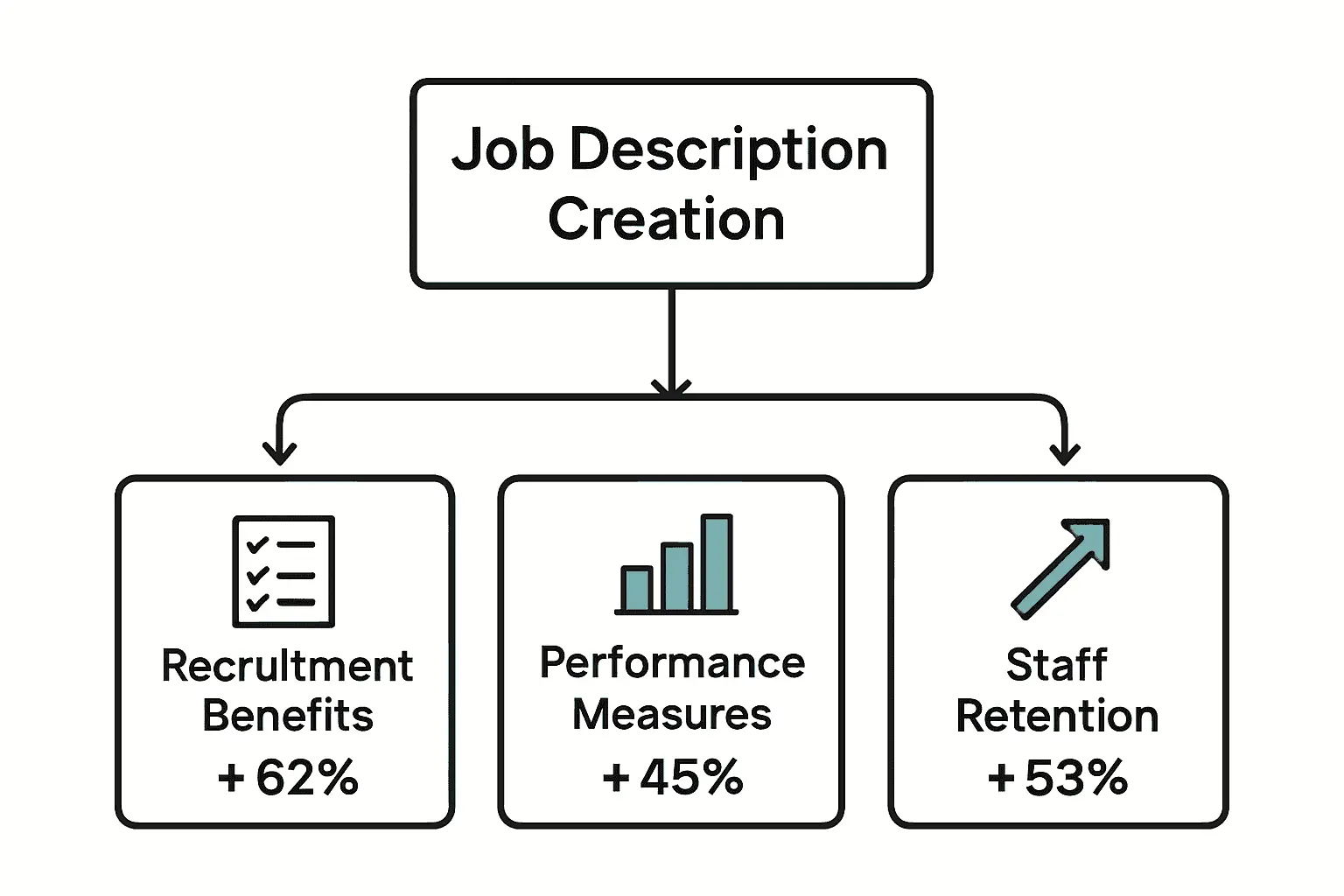
Ultimately, a meticulously crafted job description serves as a strategic asset. It acts as a psychological contract between employer and employee, setting the foundation for mutual understanding, professional development, and long-term organizational success in the complex and dynamic security industry.
Find the Perfect Security Role with Clear Job Descriptions
Navigating the complex landscape of security job descriptions can be challenging. Detailed roles, legal requirements, and the need for precise skills mean you need a platform that understands these nuances. Whether you are a jobseeker aiming to match your unique skill set to the right opportunity, or an employer striving to attract candidates who meet strict criteria, clarity and precision are vital for success.

Take control of your security career or recruitment process today. Visit The Security Jobs Board to explore tailored job listings and create a profile that highlights your qualifications in the context of industry standards discussed in the article. Employers can post detailed vacancy descriptions that reflect legal compliance and role expectations, ensuring you find the best fit quickly. Don’t let unclear job outlines hold you back – act now to connect with precise security roles and candidates that meet the highest standards.
Frequently Asked Questions
What is the purpose of a job description in security roles?
Job descriptions in security roles serve as comprehensive blueprints that outline responsibilities, required skills, and performance expectations, aiding both employers and potential candidates in understanding job requirements.
What are the key components of an effective security job description?
An effective security job description includes a clear job title, detailed responsibilities, necessary skills (both technical and soft skills), and professional development opportunities, ensuring mutual understanding between employer and employee.
How do different security roles impact job descriptions?
Different security roles such as operational, technical, and strategic management require unique skill sets and responsibilities, reflecting the diverse nature of the security industry and necessitating tailored job descriptions for effective recruitment and performance management.
Why are legal standards important in security job descriptions?
Legal standards are crucial in security job descriptions as they ensure compliance with regulations such as data protection laws and industry-specific licensing requirements, helping organizations maintain operational integrity and avoid legal issues.


