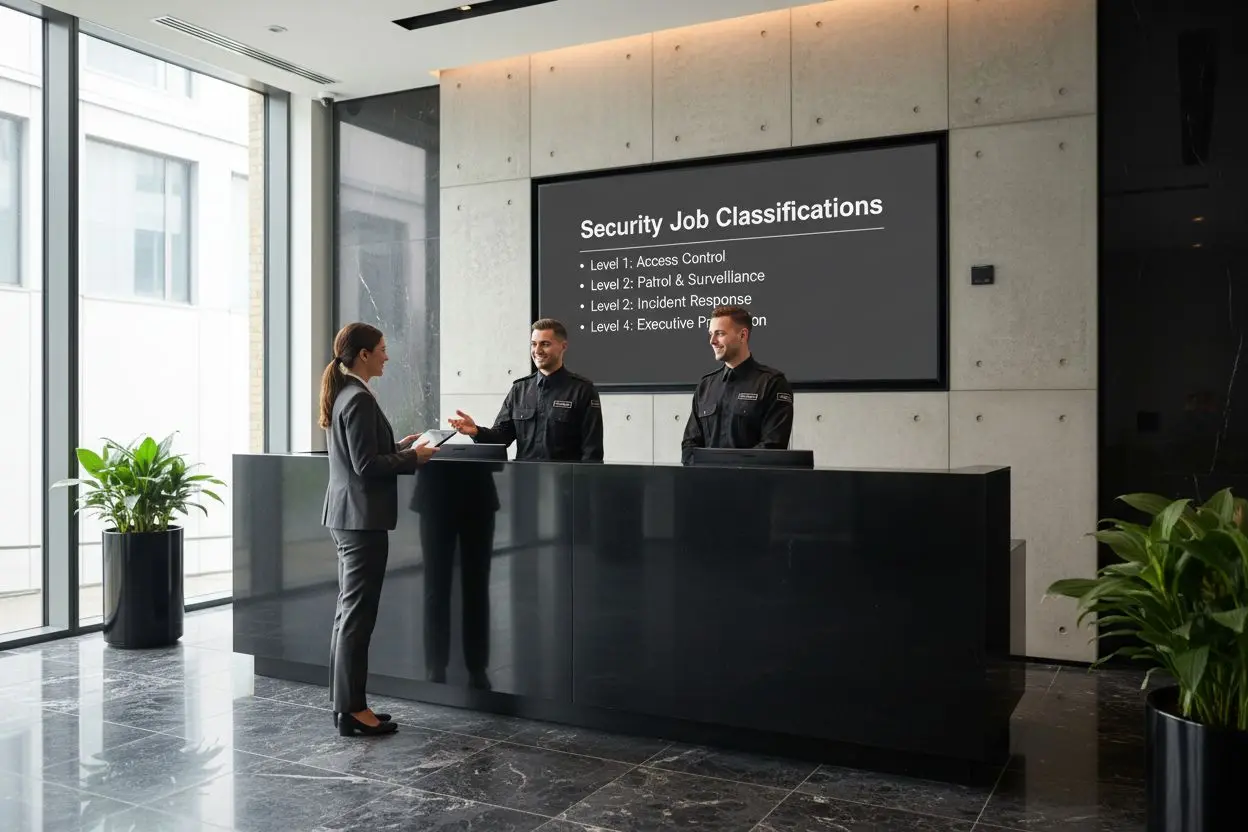
Security job titles in the UK are more than fancy names. They form a strict system where every role from CCTV operator to door supervisor comes with precise qualifications and duties. It might seem like admin on paper, but there is a powerful reason why this classification matters. Every security officer must hold a Security Industry Authority licence to legally work, and the SIA has licensed over 400,000 individuals. That is not just order for the sake of it. This rigorous structure is what quietly shapes safer cities and opens clear career ladders for anyone eyeing a future in security.
Table of Contents
- What Are Security Job Classifications?
- The Importance Of Security Job Classifications
- How Security Job Classifications Function
- Key Concepts Within Security Job Classifications
Quick Summary
| Takeaway | Explanation |
|---|---|
| Understand security job roles | Become familiar with roles like Security Officers, Door Supervisors, and CCTV Operators to identify career paths. |
| Obtain necessary SIA licence | Most security positions require an SIA licence, which involves completing training and background checks. |
| Follow professionalism standards | Adhering to job classifications promotes public safety and ensures competency in security professionals. |
| Engage in continuous development | Ongoing training and skills assessments are essential for maintaining professional standards in the security field. |
| Utilise clear career pathways | Security job classifications provide structured routes for career advancement tailored to individual skills and qualifications. |
What Are Security Job Classifications?
Security job classifications in the UK represent a structured framework categorising professional roles within the security industry. These classifications define specific professional categories, responsibilities, and skill requirements for individuals working in security sectors. Understanding these classifications is crucial for jobseekers, employers, and professionals seeking career progression.
Professional Categories in Security
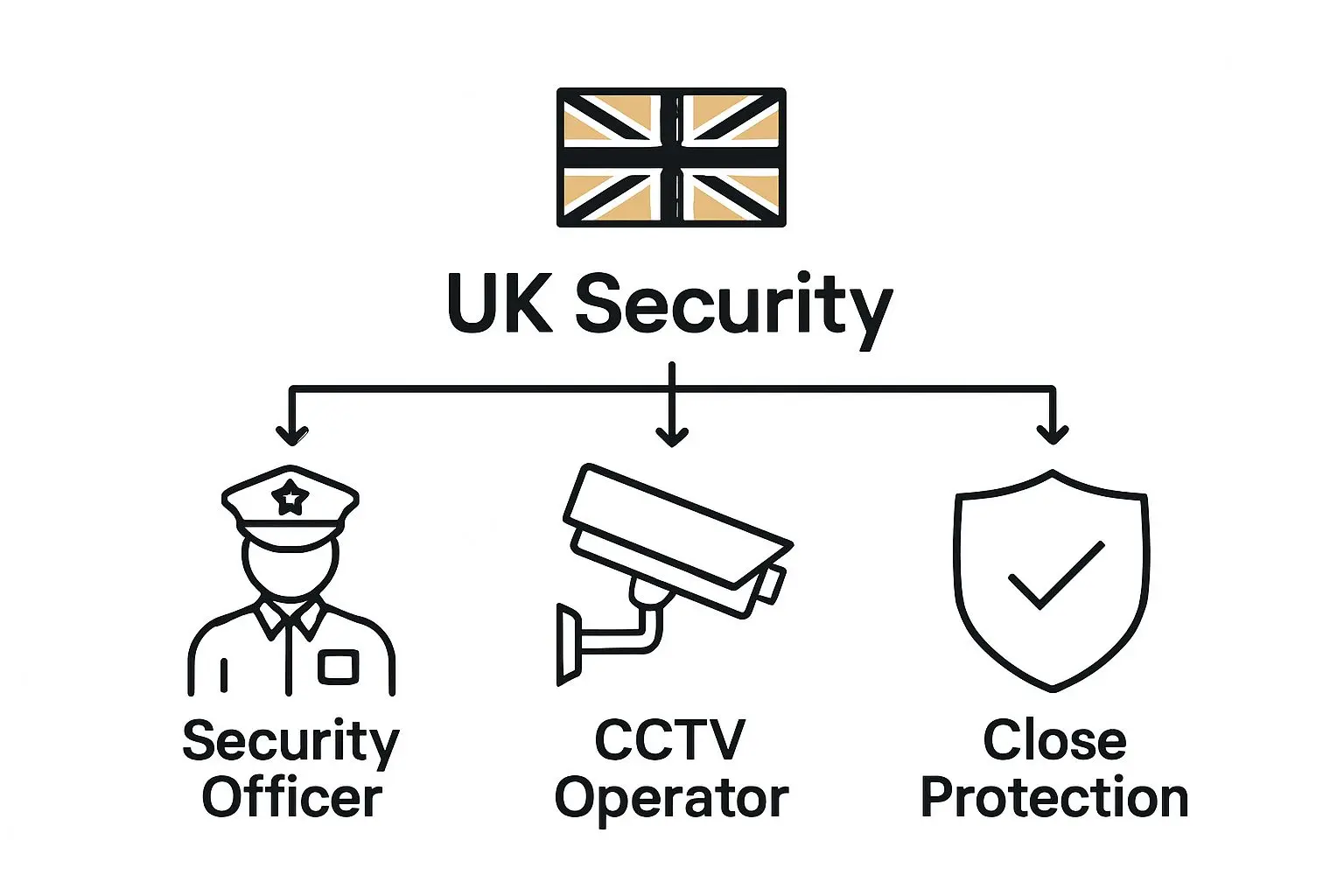
The security industry encompasses diverse professional roles, each with unique responsibilities and required competencies. Key classifications include:
- Security Officers: Responsible for monitoring premises, conducting patrols, and maintaining safety protocols
- Door Supervisors: Managing entry points, controlling crowd behaviour, and ensuring venue security
- CCTV Operators: Monitoring surveillance systems and reporting potential security breaches
- Close Protection Personnel: Providing personal security for high-profile individuals
- Security Managers: Overseeing comprehensive security strategies and team operations
Each classification requires specific skills, training, and often mandatory licensing through the Security Industry Authority, which regulates professional standards across these roles.
Licensing and Professional Requirements
Professional security job classifications in the UK are tightly regulated to ensure public safety and maintain high industry standards. Most roles require individuals to obtain a Security Industry Authority (SIA) licence, which involves:
- Completing relevant training programmes
- Passing background checks
- Demonstrating specific skills related to their classification
- Maintaining ongoing professional development
These requirements ensure that security professionals are competent, trustworthy, and equipped to handle various security challenges.
For those interested in exploring career opportunities, our career advice section provides comprehensive guidance on navigating these professional pathways.
Understanding security job classifications helps professionals identify their potential career trajectories and employers find candidates with precise skill sets matching their specific security needs.
The following table compares the main security job classifications in the UK, summarising their primary responsibilities and the essential qualifications required for each role.
| Security Role | Primary Responsibilities | Essential Qualifications / Requirements |
|---|---|---|
| Security Officer | Monitor premises, conduct patrols, maintain safety protocols | SIA licence, relevant training, background check |
| Door Supervisor | Manage entry points, control crowds, ensure venue security | SIA licence (Door Supervision), training |
| CCTV Operator | Monitor surveillance systems, report security breaches | SIA licence (Public Space Surveillance), training |
| Close Protection Personnel | Provide personal security to high-profile individuals | SIA licence (Close Protection), advanced training |
| Security Manager | Oversee security strategies, manage team operations | Experience, SIA licence (if operational), leadership skills |
The Importance of Security Job Classifications
Security job classifications serve as a critical framework that goes far beyond simple administrative categorisation. They play a fundamental role in maintaining professional standards, ensuring public safety, and providing clear career pathways for security industry professionals across the United Kingdom.
Establishing Professional Standards and Credibility
Classifications create a standardised approach to defining professional competencies and expectations within the security sector. By establishing clear parameters for each role, they help employers and clients understand the specific skills and responsibilities associated with different security positions. Learn Security Skills provides additional insights into developing these essential professional capabilities.
The rigorous classification system enables several critical outcomes:
- Ensuring consistent quality of service across different security roles
- Providing clear benchmarks for training and professional development
- Creating transparent expectations for employers and security personnel
- Facilitating more accurate recruitment and candidate matching
Risk Management and Legal Compliance
Security job classifications are not merely administrative tools but crucial risk management mechanisms. According to research from the Security Industry Authority, well-defined job classifications directly contribute to:
- Reducing potential security vulnerabilities
- Establishing clear accountability frameworks
- Ensuring that personnel are appropriately trained for specific operational contexts
- Supporting legal and regulatory compliance across different security environments
By creating distinct professional categories, the industry can more effectively match individuals with roles that align with their specific skills, experience, and organisational requirements. This approach minimises potential risks and enhances overall security infrastructure effectiveness.
Ultimately, security job classifications represent a sophisticated system designed to protect both security professionals and the organisations they serve, creating a structured pathway for career development and maintaining the highest standards of professional practice in an increasingly complex security landscape.
How Security Job Classifications Function
Security job classifications operate as a sophisticated system that strategically organises professional roles within the security industry, creating a structured approach to defining, regulating, and managing security workforce capabilities.
Skill Mapping and Role Definition
At the core of security job classifications is a comprehensive skill mapping process that precisely defines the competencies, qualifications, and responsibilities associated with each professional role. This intricate framework ensures that security professionals are matched with positions that align perfectly with their expertise. For employers seeking detailed candidate matching, understanding these nuanced classifications becomes crucial.
The classification mechanism involves several critical components:
- Detailed competency profiling
- Specific qualification requirements
- Performance standards for each role
- Clear progression pathways
Regulatory and Licensing Mechanisms
According to research from the Security Industry Authority, the functioning of security job classifications relies heavily on robust regulatory frameworks. These mechanisms ensure that professionals meet stringent professional standards through:
- Mandatory licensing procedures
- Comprehensive background checks
- Regular skills assessments
- Continuous professional development requirements
These regulatory processes transform job classifications from mere administrative categories into dynamic systems that maintain high professional standards and adapt to evolving security challenges.
The operational complexity of security job classifications demonstrates that they are far more than simple job descriptions. They represent a sophisticated ecosystem designed to protect public safety, maintain professional integrity, and create clear career development pathways for security professionals across various specialised domains.
Key Concepts Within Security Job Classifications
Security job classifications encompass a complex network of interconnected concepts that define professional standards, roles, and capabilities within the security industry. Understanding these fundamental principles provides insight into how the security workforce is structured and managed.
Professional Competency Frameworks
At the heart of security job classifications lie professional competency frameworks which systematically define the skills, knowledge, and behavioural attributes required for different security roles. These frameworks create a standardised approach to assessing and developing professional capabilities. Learn more about developing security skills can help professionals understand these intricate competency requirements.
Key elements of competency frameworks include:
This table outlines the key components of professional competency frameworks within security job classifications, clarifying the focus of assessment and development in the sector.
| Framework Component | Description |
|---|---|
| Technical Skill Requirements | Role-specific technical abilities and operational skills |
| Behavioural Competencies | Interpersonal skills, professionalism, and conduct |
| Industry-specific Knowledge | Awareness of security law, practices, and procedures |
| Performance Standards | Benchmarks for quality and effectiveness of work |
| Continuous Development | Ongoing skills enhancement and adaptability expectations |
- Technical skill requirements
- Behavioural and interpersonal competencies
- Industry-specific knowledge domains
- Adaptability and continuous learning expectations
Licensing and Accreditation Standards
According to research from the Security Industry Authority, licensing represents a critical concept within security job classifications. These standards ensure that professionals meet rigorous entry and maintenance requirements for their specific roles.
Licensing and accreditation principles encompass:
- Mandatory training certifications
- Regular professional assessments
- Background verification processes
- Ongoing professional development requirements
These standards serve as gatekeeping mechanisms, ensuring only qualified and trustworthy individuals can operate within specific security roles. By maintaining high entry and performance standards, the industry protects public safety and maintains professional integrity across various security domains.

Find Your Perfect Security Role or Candidate with Confidence
Struggling to navigate the complex landscape of security job classifications and licensing? Whether you are aiming for career progression as a security officer, CCTV operator, or seek to recruit professionals with the right qualifications and SIA licensing, connecting with the right opportunity or talent can feel daunting. Many jobseekers and employers grapple with matching specific professional skill sets and role requirements laid out in the security sector’s competency frameworks. This is where the Security Jobs Board bridges the gap, ensuring you make informed decisions that align with your goals.

Why wait to take control of your security career or recruitment process? On Security Jobs Board, you can quickly discover roles that match your professional classification or find candidates verified against industry standards. If you are seeking career advice or want to learn about essential security skills, our platform delivers expert resources and practical support. Both jobseekers and employers benefit from secure, compliant tools, fast access to opportunities, and a network trusted by the industry. Start building your future in the security sector now by joining Security Jobs Board today.
Frequently Asked Questions
What are the different security job classifications?
The key security job classifications include Security Officers, Door Supervisors, CCTV Operators, Close Protection Personnel, and Security Managers, each having distinct responsibilities and skills.
Why is licensing important in security job classifications?
Licensing ensures that security professionals meet specific training, background checks, and competency standards, maintaining high professional integrity and public safety.
How can I find the right career path within security job classifications?
Professionals can identify their career trajectory by understanding the skill requirements, responsibilities, and progression pathways associated with each classification in the security industry.
What skills are necessary for security job classifications?
Essential skills vary by role but generally include technical abilities, interpersonal competencies, industry-specific knowledge, adaptability, and a commitment to continuous professional development.


