7 Key Examples of Security Roles Explained for Jobseekers
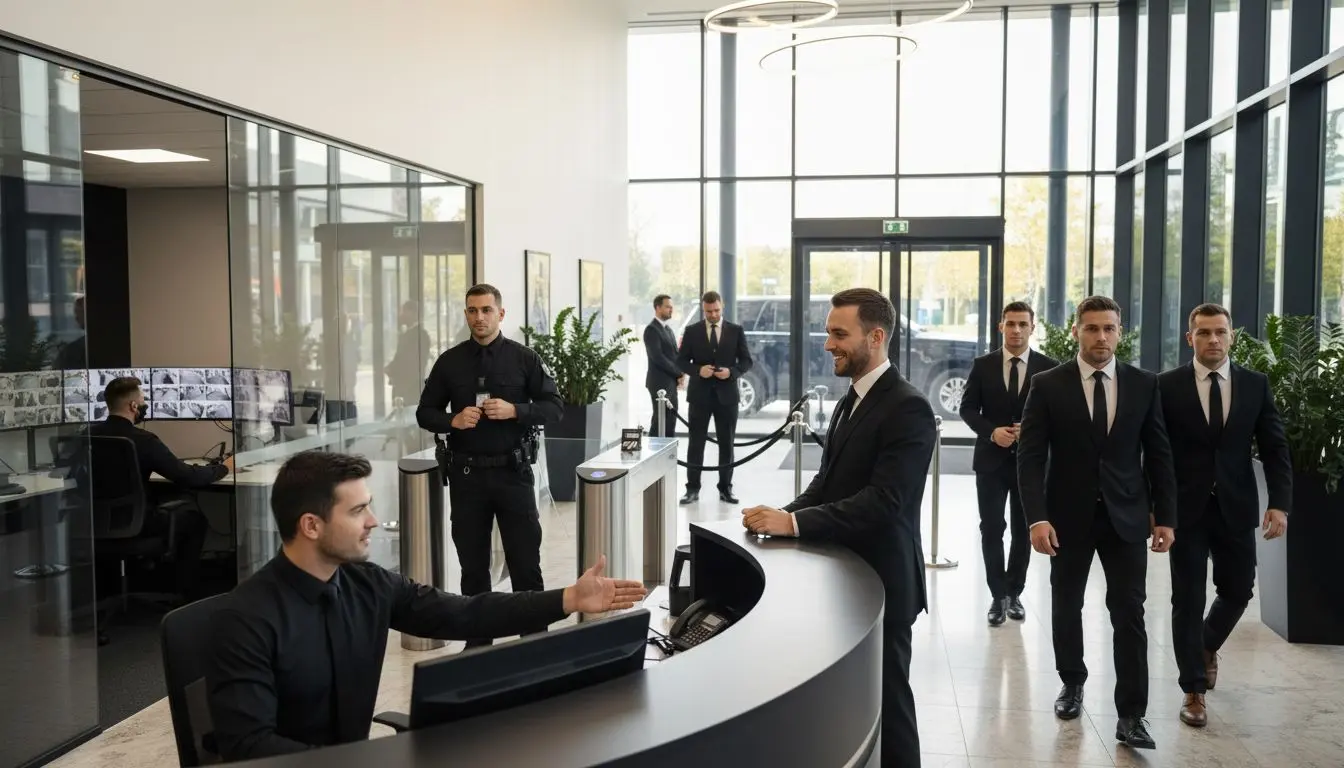
More than 340,000 people across the british security industry work behind the scenes to safeguard businesses, events, and public spaces. Every role, from CCTV operator to close protection officer, demands a unique mix of alertness, training, and communication skills. Understanding these career options empowers jobseekers to identify roles that match their strengths while addressing growing demand for trusted professionals in a rapidly changing world.
Table of Contents
- 1. Security Officer: Frontline Property Protection
- 2. Door Supervisor: Managing Entry and Crowd Control
- 3. CCTV Operator: Monitoring for Safety and Evidence
- 4. Close Protection Officer: Personal Security Services
- 5. Security Manager: Leading Security Teams
- 6. Event Security Staff: Ensuring Public Safety at Venues
- 7. Mobile Patrol Officer: Rapid Response Duties
Quick Summary
| Takeaway | Explanation |
|---|---|
| 1. Security officers ensure safety across various environments. | They act as the first line of defence for organisations, monitoring premises and safeguarding individuals. |
| 2. Door supervisors require strong interpersonal skills. | They manage entry points, prevent unauthorized access, and maintain calm in potentially volatile situations. |
| 3. CCTV operators must have sharp observational skills. | Continuous monitoring and quick decision-making are essential to identify potential threats effectively. |
| 4. Close protection officers conduct threat assessments. | They plan secure travel and manage real-time security risks for high-profile individuals. |
| 5. Mobile patrol officers combine vigilance and rapid response. | They conduct patrols across multiple sites, responding quickly to incidents and securing areas effectively. |
1. Security Officer: Frontline Property Protection
Security officers are the critical guardians protecting physical spaces and ensuring safety across various environments. These professionals serve as the first line of defence for organisations, businesses, and public spaces, maintaining security through vigilant monitoring and strategic intervention.
In their role, security officers perform a multifaceted set of responsibilities that go far beyond simple surveillance. According to National Careers Service, they are responsible for patrolling premises, monitoring surveillance equipment, and safeguarding both property and individuals. Their duties often include checking staff and visitors in and out of buildings, protecting valuables, and operating sophisticated scanning equipment.
Key Responsibilities Include:
- Conducting regular physical patrols of designated areas
- Monitoring CCTV and security systems
- Checking identification and managing visitor access
- Responding to potential security breaches
- Reporting incidents and maintaining detailed logs
As demonstrated by MI5, security officers play a pivotal role in protecting critical infrastructures. Their work involves not just passive observation but active engagement in maintaining safety protocols. They must remain alert, communicate effectively, and make quick decisions in potentially challenging situations.
For jobseekers interested in this career, developing strong observational skills, physical fitness, and the ability to remain calm under pressure are essential. Professional certifications and training in security procedures can significantly enhance employability in this dynamic field.
2. Door Supervisor: Managing Entry and Crowd Control
Door supervisors represent a critical role in security management that requires exceptional interpersonal skills, situational awareness, and the ability to maintain calm in potentially volatile environments. These professionals serve as the first point of contact at venues ranging from nightclubs and bars to corporate events and entertainment facilities.
Core Responsibilities of Door Supervisors:
- Checking identification and age verification
- Managing entry points and access control
- Preventing unauthorized entry
- Defusing potential conflicts
- Ensuring patron safety
Successful door supervisors combine physical presence with diplomatic communication skills. Their primary objective is prevention rather than confrontation. They must assess potential risks quickly, make informed decisions, and communicate effectively with patrons and colleagues.
To excel in this role, individuals need specific qualifications. A valid Security Industry Authority (SIA) licence is mandatory for working as a door supervisor in the United Kingdom. Additional training in conflict resolution, first aid, and physical intervention techniques can significantly enhance employability.
For jobseekers considering this career path, developing strong observational skills, maintaining physical fitness, and cultivating emotional intelligence are key. Understanding security job classifications can provide valuable insights into the professional landscape and potential career progression within the security industry.
While the job can be challenging, door supervisors play an essential role in maintaining public safety and creating secure environments for entertainment and business venues across the UK.
3. CCTV Operator: Monitoring for Safety and Evidence
CCTV operators are the watchful eyes of modern security infrastructure, providing critical surveillance and monitoring services across various environments. These professionals play a pivotal role in maintaining safety, preventing incidents, and gathering essential evidence when needed.
Key Responsibilities of CCTV Operators:
- Continuously monitoring multiple video screens
- Identifying and responding to potential security threats
- Recording and documenting suspicious activities
- Coordinating with security personnel and law enforcement
- Maintaining detailed log records of observations
The role requires exceptional concentration, technological proficiency, and the ability to remain calm and focused during extended observation periods. CCTV operators must possess sharp observational skills, quick decision making capabilities, and excellent communication skills to effectively relay critical information.
To excel in this career, individuals need specific technical and personal qualities. Proficiency with digital monitoring systems, understanding of camera technologies, and knowledge of security protocols are essential. Many employers prefer candidates with professional certifications such as the Security Industry Authority (SIA) licence.
Understanding security job classifications can provide valuable insights into the broader security landscape and help jobseekers understand how CCTV operators fit into comprehensive security strategies.
While technology continues to evolve, the human element remains crucial in interpreting visual information and making split second judgments that can prevent potential security breaches or criminal activities.
4. Close Protection Officer: Personal Security Services
Close protection officers represent the elite tier of personal security professionals, providing comprehensive safety services for high profile individuals, executives, celebrities, and those facing potential security risks. These highly trained specialists do far more than simply accompany their clients they create dynamic safety strategies and anticipate potential threats before they materialise.
Core Responsibilities of Close Protection Officers:
- Conducting comprehensive threat assessments
- Planning secure travel routes and transportation
- Maintaining constant situational awareness
- Managing potential security risks in real time
- Developing and implementing personal security protocols
The role demands an exceptional combination of physical fitness, strategic thinking, and interpersonal skills. Close protection officers must remain continuously alert while appearing calm and professional. They require advanced training in conflict resolution, emergency response, first aid, and defensive techniques.
To become a successful close protection officer, individuals must obtain specific qualifications. A Security Industry Authority (SIA) licence is mandatory, and additional certifications in advanced security techniques can significantly enhance career prospects. Physical fitness, excellent communication skills, and the ability to make rapid decisions under pressure are essential attributes.
Physical security principles form the foundation of effective close protection work, providing jobseekers with crucial insights into the strategic approaches used in personal security services.
While often portrayed glamorously in media, close protection work is a serious professional discipline requiring constant vigilance, discretion, and an unwavering commitment to client safety.
5. Security Manager: Leading Security Teams
Security managers are the strategic architects of organisational safety, responsible for designing comprehensive protection frameworks and leading multidisciplinary security teams. These professionals blend technical expertise with leadership skills to safeguard an organisation’s most critical assets.
Key Responsibilities of Security Managers:
- Developing comprehensive security policies
- Conducting risk assessments and threat analyses
- Managing and training security personnel
- Implementing advanced security technologies
- Ensuring regulatory compliance and reporting
According to the Government Security Profession Career Framework, security managers play a pivotal role in protecting organisational infrastructure and personnel. They must possess a unique combination of strategic thinking, technical knowledge, and interpersonal leadership skills.
Successful security managers typically progress through operational roles, gaining practical experience in various security disciplines. Advanced qualifications such as professional certifications in cybersecurity, risk management, and security leadership can significantly enhance career prospects.
Security career paths demonstrate the potential for professional growth within this dynamic field, offering jobseekers insights into the strategic progression of security management careers.
The role demands continuous learning, adaptability, and the ability to anticipate emerging security challenges in an increasingly complex global environment. Effective security managers must balance technological solutions with human intelligence, creating holistic security strategies that protect organisations comprehensively.
6. Event Security Staff: Ensuring Public Safety at Venues
Event security staff represent the critical frontline personnel responsible for maintaining safety and order at large public gatherings, concerts, sporting events, festivals, and corporate functions. These professionals play a crucial role in managing crowd dynamics, preventing potential incidents, and ensuring a secure environment for attendees.
Core Responsibilities of Event Security Staff:
- Conducting thorough entry point screenings
- Monitoring crowd behaviour and potential risks
- Managing crowd flow and preventing overcrowding
- Responding quickly to emergencies or security breaches
- Collaborating with local law enforcement when required
Successful event security professionals must possess a unique combination of communication skills, physical fitness, and emotional intelligence. They need to remain calm under pressure, make rapid decisions, and interact diplomatically with diverse crowds while maintaining a vigilant security posture.
To work professionally in this field, individuals must obtain specific qualifications. A valid Security Industry Authority (SIA) licence is mandatory, and additional training in crowd management, first aid, and conflict resolution can significantly enhance employability and effectiveness.
Understanding event security principles provides jobseekers with essential insights into the strategic approaches and professional requirements of this dynamic security role.
While often challenging, event security work offers an exciting career path for individuals who thrive in dynamic environments and are passionate about public safety and protection.
7. Mobile Patrol Officer: Rapid Response Duties
Mobile patrol officers represent a dynamic and essential security role that combines mobility, vigilance, and rapid response capabilities. These professionals protect multiple sites and properties by conducting systematic and unpredictable security patrols, ensuring comprehensive coverage and deterring potential criminal activities.
Key Responsibilities of Mobile Patrol Officers:
- Conducting regular security checks across multiple locations
- Responding quickly to alarm activations and potential incidents
- Documenting observations and maintaining detailed reports
- Monitoring premises using vehicle mounted technology
- Interacting with local law enforcement when necessary
The role demands exceptional situational awareness, physical fitness, and the ability to make swift decisions. Mobile patrol officers must remain consistently alert while covering diverse geographical areas, often working during evening and night shifts when security risks can be more pronounced.
To excel in this profession, individuals need specific qualifications. A valid Security Industry Authority (SIA) licence is mandatory, and additional certifications in emergency response, first aid, and defensive tactics can significantly enhance professional credibility.
Understanding security job classifications provides valuable insights into the strategic importance of mobile patrol roles within the broader security ecosystem.
For jobseekers seeking a security career that combines independence, physical activity, and critical protective services, mobile patrol offers an engaging and challenging professional pathway.
Below is a comprehensive table summarising the roles, core responsibilities, and key considerations of various security professionals discussed throughout the article.
| Role | Core Responsibilities | Key Considerations |
|---|---|---|
| Security Officer | Patrolling premises, monitoring CCTV, checking IDs. | Vigilance, effective communication, rapid decision-making. |
| Door Supervisor | Managing entry points, conducting ID checks, defusing conflicts. | SIA licence required, interpersonal skills, emotional intelligence. |
| CCTV Operator | Monitoring video feeds, identifying threats, recording activities. | Technological proficiency, keen observational skills, focus. |
| Close Protection Officer | Conducting threat assessments, planning secure routes, managing risks. | Advanced training, SIA licence, physical fitness. |
| Security Manager | Developing security policies, managing teams, ensuring compliance. | Strategic thinking, leadership skills, continuous learning. |
| Event Security Staff | Screening entries, managing crowds, emergency response. | SIA licence, crowd management skills, calmness under pressure. |
| Mobile Patrol Officer | Conducting security checks, responding to alarms, documenting reports. | Mobility, situational awareness, flexible work hours. |
Unlock Your Future in Security with the Right Role and Tools
Exploring various security roles like Security Officer, Door Supervisor, CCTV Operator, and Close Protection Officer reveals how diverse and demanding the security industry can be. You might be feeling overwhelmed deciding which path aligns with your skills and ambitions especially when qualifications like the SIA licence and physical fitness are essential. Finding the right job that fits your goals while understanding job classifications and career progression is key to success.

Take control of your security career today by visiting Security Jobs Board your dedicated platform for UK security jobs. Whether you are looking for entry-level positions or advanced roles like Security Manager or Mobile Patrol Officer this site offers you powerful tools to create profiles upload CVs and receive job alerts tailored just for you. Start applying with confidence and discover fast matches backed by human support and GDPR compliance. Don’t wait any longer to turn your security ambitions into reality explore 7 Career Paths in Security and optimise your career journey now.
Frequently Asked Questions
What qualifications do I need to become a security officer?
To become a security officer, you typically need to obtain a Security Industry Authority (SIA) licence and complete relevant training courses. Start by researching local training providers that offer SIA licence courses and aim to complete your training within a few weeks.
How do I choose the right security role for my skills and interests?
Assess your skills and interests, then match them to the responsibilities of various security roles like security officer, door supervisor, or CCTV operator. Consider completing personality assessments or skills evaluations to gain more insight before applying.
What are the key responsibilities of a door supervisor?
Door supervisors primarily manage entry points, check identification, and ensure patron safety at venues. If you’re interested in this role, consider enhancing your skills in conflict resolution and communication to improve your employability.
How can I prepare for a career as a CCTV operator?
To prepare for a career as a CCTV operator, focus on developing your observational skills, technological proficiency, and understanding of security protocols. You can also seek internship opportunities to gain practical experience within a few months.
What should I expect as an event security staff member?
As an event security staff member, you will monitor crowds, conduct screenings, and respond to emergencies. Familiarise yourself with crowd management strategies and enhance your physical fitness to thrive in a dynamic event environment.
How can I advance my career in security management?
To advance your career in security management, consider obtaining advanced qualifications and certifications in risk management and cybersecurity. Set a goal to pursue these additional credentials within the next year to enhance your leadership opportunities.
Recommended
- Job Descriptions: Comprehensive Guide for Security Jobs|BM
- Understanding Security Job Adverts: A Comprehensive Guide|BM
- Understanding Security Job Classifications in the UK|BM
- 7 Types of Security Roles You Need to Know | Brainiac Media
- Network Security: Everything You Need to Know - TECHTRON
- Understanding User Access Management for Businesses - TECHTRON


