
Nearly one in three UK businesses faced a cyber-attack last year, highlighting the growing importance of security expertise across every sector. The security industry now protects far more than doors and cameras, shaping national safety and driving technological progress. With roles spanning digital defense, intelligence, and physical protection, this field offers unique career opportunities and plays a vital part in keeping people, data, and infrastructure safe.
Key Takeaways
| Point | Details |
|---|---|
| Industry Growth | The UK security sector, particularly cybersecurity, generates approximately £13.2 billion in revenue and shows significant employment growth, indicating strong economic potential. |
| Diverse Career Opportunities | The security industry encompasses various roles, including cybersecurity, physical security, and risk management, necessitating a mix of technical and soft skills. |
| Professional Certification | Certifications such as Certified Information Systems Security Professional (CISSP) enhance career advancement and recognition in the cybersecurity field. |
| Resilience and Adaptability | Security professionals face high-stress environments and rapidly evolving threats, requiring continuous learning and strategic problem-solving capabilities. |
Table of Contents
- Understanding The Security Industry In The UK
- Job Roles And Sectors Within Security
- Key Skills And Qualifications Required
- Benefits Of A Career In Security
- Challenges, Risks, And Career Comparisons
Understanding the Security Industry in the UK
The UK security industry represents a dynamic and critical sector that extends far beyond traditional perceptions of guards and surveillance. Security professionals play an increasingly sophisticated role in protecting businesses, infrastructure, and digital ecosystems across multiple domains. Read more about why security jobs matter in the UK.
According to government research, the cyber security sector alone demonstrates remarkable economic significance. The sector generated approximately £13.2 billion in revenue and employed around 67,300 full-time professionals, with substantial workforce growth occurring in regions outside London and the South East. These figures underscore the industry’s substantial contribution to national economic resilience and technological innovation.
The modern security landscape encompasses diverse specialisations:
- Cybersecurity protecting digital infrastructure
- Physical security monitoring premises and assets
- Risk management identifying potential vulnerabilities
- Information security safeguarding sensitive data
Professionals in this field require a combination of technical expertise, analytical thinking, and adaptive problem-solving skills. The industry offers compelling career pathways for individuals passionate about protection, technology, and maintaining societal safety, making it an attractive option for those seeking meaningful and dynamic professional opportunities.
Job Roles and Sectors Within Security
The security industry offers a diverse range of professional opportunities that extend far beyond traditional perceptions. Discover the various security job classifications in the UK, each requiring unique skills and specialized training. These roles encompass multiple sectors, from physical protection to advanced technological security management.
According to professional licensing standards, specialized roles like door supervisors demand rigorous professional preparation. In the UK, door supervisors must obtain a specific licence from the Security Industry Authority, which involves an intensive 52-hour training programme.
 This comprehensive training covers critical skills including:
- Conflict de-escalation techniques
- First aid protocols
- Legal understanding
- Monitoring system operations
- Customer care principles
For professionals seeking advanced career progression, the Chartered Security Professional (CSyP) represents a prestigious recognition of strategic and operational excellence. Awarded by the Worshipful Company of Security Professionals, this certification is overseen by the Security Institute and CSPRA, signifying high-level competency and expertise in the security domain.
The security sector encompasses various critical roles including cybersecurity specialists, risk management experts, physical security personnel, corporate security consultants, and intelligence analysts. Each role requires a unique blend of technical knowledge, analytical skills, and the ability to adapt to rapidly evolving security challenges.
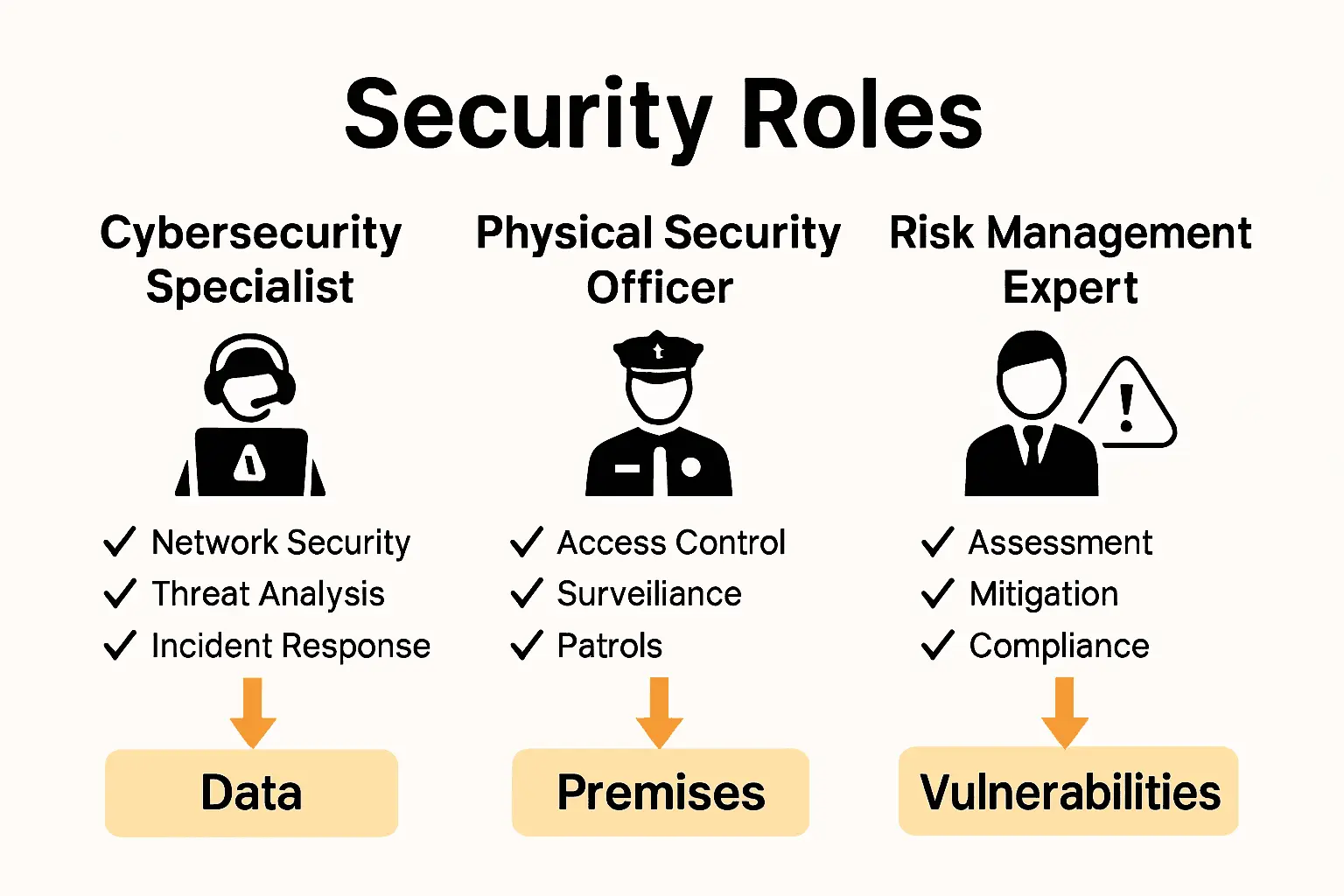 Aspiring security professionals can choose pathways aligned with their interests, whether in technology, physical protection, or strategic risk management.
Here’s a summary of the main security roles and their core skill requirements:
| Role | Core Technical Skills | Key Soft Skills |
|---|---|---|
| Cybersecurity Specialist | Network security System analysis |
Problem-solving Adaptability |
| Physical Security Officer | Surveillance systems | Calm under pressure Communication |
| Risk Management Expert | Risk assessment Compliance laws |
Analytical thinking Situational awareness |
| Intelligence Analyst | Data analysis Threat identification |
Critical thinking Attention to detail |
| Corporate Security Consultant | Policy development Incident response |
Interpersonal skills Professional judgement |
Key Skills and Qualifications Required
Successful security professionals require a sophisticated blend of technical knowledge, interpersonal skills, and continuous learning. Learn essential security skills that can set you apart in this competitive and dynamic industry. The most sought-after candidates demonstrate adaptability, critical thinking, and a commitment to professional development.
In the realm of cybersecurity, certain professional certifications stand out as critical career accelerators. The Certified Information Systems Security Professional (CISSP) is particularly noteworthy. According to professional standards, this certification is recognised in the UK as a Level 7 qualification, equivalent to a master’s degree. This prestigious credential enables professionals to access advanced roles and potentially earn higher education credits in cybersecurity.
Key skills across security sectors typically include:
- Technical proficiency in digital systems and networks
- Advanced analytical problem-solving
- Strong communication and interpersonal skills
- Risk assessment and management
- Adaptability to emerging technologies
Beyond technical qualifications, employers seek candidates with a holistic skill set. Soft skills like emotional intelligence, situational awareness, and the ability to remain calm under pressure are equally crucial. Continuous learning through professional development courses, workshops, and staying updated with the latest security technologies demonstrates a proactive approach that employers highly value.
Benefits of a Career in Security
The security industry offers an exciting and dynamic career path with numerous professional opportunities. Explore 7 promising career paths in security that can transform your professional trajectory and provide meaningful impact across various sectors. The landscape of security careers is rapidly evolving, presenting professionals with diverse and engaging options.
According to recent government research, the UK cyber security sector demonstrates exceptional growth potential. The sector generated £13.2 billion in revenue and added 6,600 new jobs in just one year, signaling robust employment prospects and significant economic opportunity for security professionals. This rapid expansion indicates not just job availability, but also potential for competitive compensation and career advancement.
Key benefits of pursuing a career in security include:
- Competitive salaries across multiple specialisations
- Continuous learning and technological skill development
- Global career opportunities
- High job security in an increasingly digital world
- Meaningful work protecting critical infrastructure and people
Beyond financial rewards, security professionals enjoy the intrinsic satisfaction of making a tangible difference. Whether protecting digital networks, managing physical security, or developing strategic risk management solutions, these roles offer intellectual challenge and the opportunity to be at the forefront of protecting businesses, individuals, and critical societal systems. The security sector isn’t just a job—it’s a calling for those passionate about safeguarding our increasingly complex technological landscape.
Challenges, Risks, and Career Comparisons
The security profession, while rewarding, comes with significant professional challenges that require resilience, adaptability, and strategic thinking. Understand the complexities of security job roles to better prepare for the demanding landscape of this critical industry.
According to recent research, cybersecurity professionals face heightened stress and potential burnout. Current data reveals that UK cybersecurity workers are experiencing elevated operational pressures, complicated by intricate regulatory environments such as NIS2 and DORA. A critical challenge is the difficulty in translating cyber-risks into business terms, which frequently impedes obtaining crucial board-level support and resources.
The threat landscape presents multiple professional risks:
- High-stress work environments
- Constant technological evolution
- Complex regulatory compliance
- Rapidly changing cyber threat mechanisms
- Potential for professional burnout
Statistics underscore the challenging environment: over 27 percent of UK businesses experienced cyber-attacks in the past year, with 73 percent anticipating potential future disruptions. The emergence of AI-enabled threats and outdated system infrastructures further complicate the security professional’s role. While these challenges might seem daunting, they also represent opportunities for skilled professionals to demonstrate strategic problem-solving, technological expertise, and critical risk management capabilities.
Ready to Take Charge of Your Security Career?
If you have finished reading about the diverse roles, challenges and high demand within the UK security sector in our Essential Guide, you may be wondering how to channel your ambition into real career progress. Many jobseekers struggle to find roles that match their unique skills and experience, especially as security jobs now demand advanced technical abilities, regulatory awareness and adaptability. Whether it is obtaining the right qualifications, standing out to employers, or keeping up with sector changes, finding the ideal opportunity can feel overwhelming on your own. Visit The Security Jobs Board to transform those insights into action with tailored security job listings and career tools designed just for this sector.

You deserve a platform built for your industry. Create your free profile, upload your CV, and set personalised job alerts to access roles that reflect your expertise. With our BSIA affiliation, human support and speedy application process, it has never been easier to connect with top employers and take the next step in your security career. Start now at The Security Jobs Board and see where your skills can take you. Explore current openings and discover essential security skills that keep you ahead of the curve.
Frequently Asked Questions
What are the main types of roles in the security industry?
The security industry includes various roles such as cybersecurity specialists, physical security officers, risk management experts, intelligence analysts, and corporate security consultants, each requiring unique skills and training.
What qualifications are necessary to work in the security industry?
Qualifications vary by role, but many positions require specialized training, certifications like the Certified Information Systems Security Professional (CISSP), and licensure for certain jobs such as door supervisors.
What key skills are required for a successful career in security?
Essential skills include technical proficiency in digital systems, analytical problem-solving, strong communication abilities, risk assessment capabilities, and adaptability to emerging technologies.
What are the benefits of pursuing a career in security?
Benefits include competitive salaries, opportunities for continuous learning, global career prospects, high job security, and the fulfillment of making a meaningful impact on protecting people and infrastructure.


