Match UK security roles to workplaces, licence needs and next steps

Security work in the UK covers front-line guarding, door supervision, CCTV and public space surveillance, close protection, cash and valuables in transit, retail loss prevention, mobile patrol, event security, control-room operation and supervisory or specialist technical roles. Most front-line roles need a valid SIA licence, which means licence-linked training and basic background checks before you start. The sections below cover duties, workplaces, training routes and pay.
TL;DR:
- Most front-line security roles require an SIA license, with specific training and background checks, while supervisory positions do not always need licensure.
- Pay varies based on the role, risk level, hours worked, and employer, with close protection and cash-in-transit roles typically offering higher wages.
- Entering the industry usually involves starting with guarding or door supervision and progressing to supervisory, specialist, or technical roles over time.
- Training progression includes Level 2 apprenticeships for operational security and Level 3 certifications for advanced or supervisory duties.
- Job seekers should create profiles and set alerts on security-specific platforms to find current vacancies and streamline applications.
Table of Contents
- 1. Common types of security jobs and what they involve
- 2. How to get an SIA licence and what training you need
- 3. Where these roles work and which ones pay more
- 4. Career pathways, apprenticeships and moving up
- 5. How Security Jobs Board supports your next move
- 6. Choosing a role that fits your life and goals
- 7. Search live vacancies and set alerts with Security Jobs Board
- 8. Where to check licence rules, training and pay data
- Sources
- FAQ
1. Common types of security jobs and what they involve
The security sector splits into distinct job families, each with its own daily rhythm, environment and licensing status.
Security officer or security guard roles form the backbone of the industry. Duties typically include patrolling premises, controlling access points, checking IDs and writing incident reports. You will find these roles at retail parks, warehouses, office blocks and construction sites across the UK. Static guarding and mobile guarding are both classed as front-line licensable activities under SIA guidance, so a licence is normally required.
Door supervisors work at pubs, clubs, licensed premises and some private events. The job leans heavily on conflict management and calm, confident entry control rather than physical confrontation. This differs from general event stewarding, which does not always require a licence. Door supervisors also need first-aid training as part of their licence-linked qualification, and refresher courses keep those skills current.
CCTV and public space surveillance operators monitor camera feeds, flag suspicious behaviour and capture evidence for police or internal investigations. The role demands sharp attention and comfort with monitoring software rather than physical intervention, but it still falls under a licensable activity when used for public space surveillance.
Close protection operatives provide personal security for individuals facing elevated risk. This is one of the more demanding specialisms, requiring advanced training, a Level 3 first-aid qualification and often a background in the military or police. Pay tends to reflect the higher stakes and the extra qualification burden.
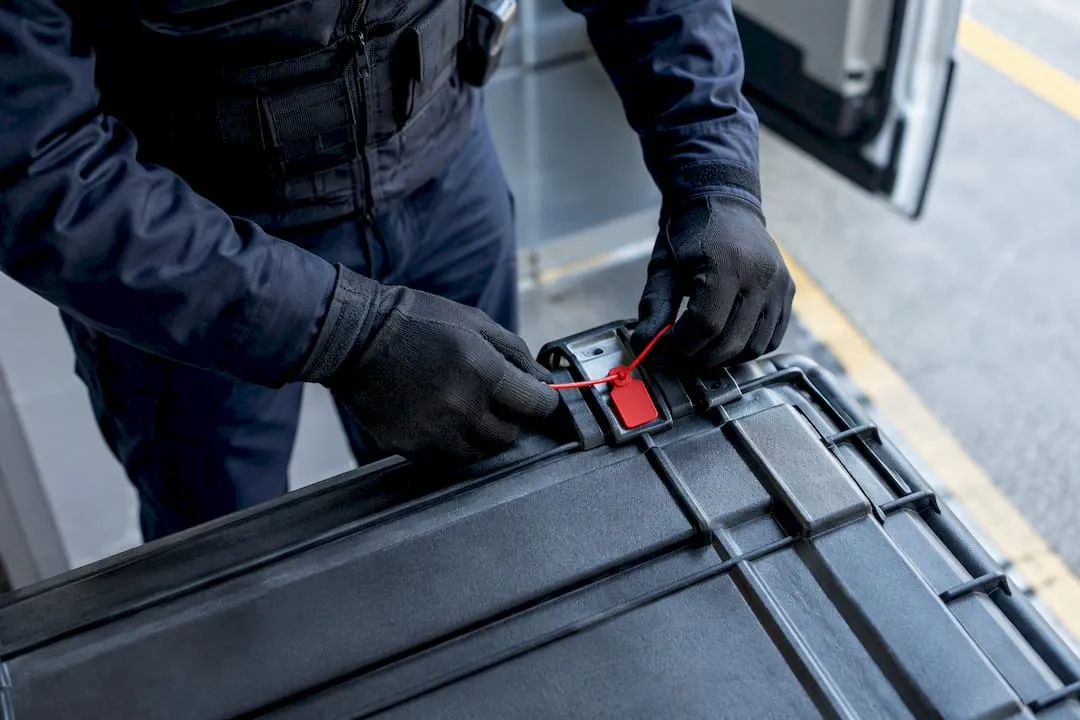
Cash and valuables in transit (CViT) officers move money and goods securely between sites. The work involves strict procedural discipline, vehicle-based routines and its own licence-linked training units separate from standard guarding.
Retail and store detectives work covertly, often in plain clothes, gathering evidence of theft and coordinating with a store’s loss-prevention team. The job suits people who are observant and comfortable working independently without a uniform.
Event and crowd security staff manage entry, exits and crowd flow at concerts, festivals and sports fixtures. Some roles overlap with door supervision, but many event stewarding positions sit outside SIA licensing, so it is worth checking the specific role before applying.
Mobile patrol and keyholding officers drive between multiple sites, respond to triggered alarms and carry out spot checks. Fast response times matter here, and the job suits people comfortable working alone at night.
Control room and monitoring operators handle alarm signals, oversee multiple site systems simultaneously and escalate incidents to police or on-site teams. It is a desk-based role that still demands quick decision-making under pressure.
Security supervisors and managers oversee rostering, client liaison and contract performance rather than patrolling themselves. Supervisory posts do not always require a front-line licence, though many supervisors hold one from earlier in their career; a detailed guide to supervisor duties covers how the role differs from door supervision and general guarding.
Beyond these, the sector includes specialist and emerging roles: technical installers who fit alarms and access systems, consultants who assess risk for clients, and cyber-adjacent roles that increasingly sit alongside physical security teams as businesses converge their defences.
- Front-line guarding, door supervision, CCTV and CViT are typically SIA licensable.
- Event stewarding and in-house supervisory work are not always licensable, depending on the specific duties involved.
2. How to get an SIA licence and what training you need
Getting licensed follows a fairly consistent process, whichever front-line role you are aiming for.
- Confirm the activity is licensable. GOV.UK guidance lists security guarding, door supervision, CCTV, close protection and CViT as front-line licensable activities.
- Meet basic eligibility. You must be 18 or over, provide proof of identity, pass a criminal record check and demonstrate your right to work in the UK.
- Complete licence-linked training. Each activity has its own qualification, and the training must have been achieved within three years of your licence application.
- Complete first-aid training appropriate to the role. Most front-line roles require Emergency First Aid at Work, while close protection work requires the more advanced Level 3 First Aid at Work.
- Apply to the SIA and keep your licence current. Refresher training and monitoring of any specification changes help keep your credentials valid over time.
The SIA published proposed changes to licence-linked qualifications in 2026, so it is worth checking current specifications before booking a course. Our step-by-step licence path guide breaks the process down further.
Pro Tip: Book your first-aid course alongside your licence-linked training so both certificates land at the same time, ready for job applications.
3. Where these roles work and which ones pay more
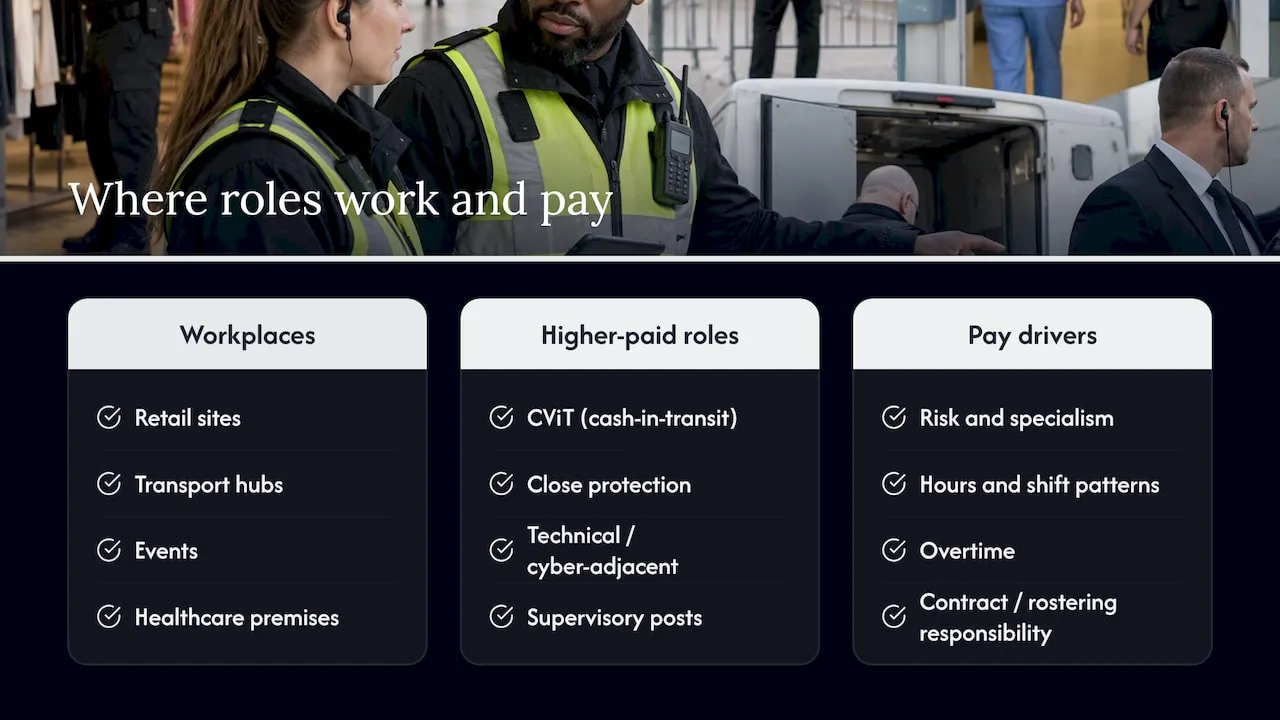
Retail sites, transport hubs, events, healthcare premises, corporate offices and cash-in-transit routes each demand a different mix of skills, and pay tends to track the risk and specialism involved. CViT, close protection and technical or cyber-adjacent roles typically carry premiums over standard guarding, as do supervisory posts with contract or rostering responsibility.
Pay for security roles varies by role, hours and employer, and shift patterns and overtime affect take-home earnings more than headline rates alone. ONS labour-market data shows pay variation across occupations, and gender pay-gap context is a reminder that averages can mask real differences between individuals doing similar work. Anyone comparing job adverts should treat quoted rates as a starting point, not a guarantee, and check whether night shifts or weekend work are included.
4. Career pathways, apprenticeships and moving up
Most people enter the industry through front-line guarding or door supervision, then build towards supervision, specialism or training roles.
- The Professional Security Operative Level 2 apprenticeship offers structured entry routes into operational security, CViT, mobile patrol and control room work.
- Progression often leads to a Security First Line Manager qualification at Level 3, opening supervisory and rostering responsibilities.
- Lateral moves into trainer roles, account management or technical installation are common once you have a few years of front-line experience.
- In-house staff and contractors carry different licensing and employer responsibilities, so check your contract terms before assuming your employer handles renewal.
- Keep your CV updated with licence numbers, expiry dates and first-aid certificates. This is one of the fastest ways to speed up recruiter responses.
5. How Security Jobs Board supports your next move
At Security Jobs Board, jobseekers can create a profile, upload a CV, set job alerts and apply to security-specific vacancies without paying a fee. The platform is affiliated with a UK security industry organization, adding credibility for both candidates and employers browsing listings.
Employers use the site to post jobs, search CVs, and run recruitment campaigns, with features that support GDPR compliance and mobile access. Our blog covers licence types, training paths and supervisor duties in more depth, including a breakdown of SIA licence types and costs for anyone weighing up which licence to pursue first.
6. Choosing a role that fits your life and goals
Pick a role by weighing training time against your circumstances, not just the pay figure. Close protection and CViT roles generally offer higher pay, but the training commitment and shift demands are real. Ask yourself four questions before applying: what skills do I already have, what hours can I actually work, which licence do I hold or need, and does this employer suit how I want to work.
— Rob
7. Search live vacancies and set alerts with Security Jobs Board
Whichever role fits, the fastest way to find it is to search live listings rather than wait for one to land in your inbox. Create a profile, upload your CV and set job alerts at Securityjobsboard so new roles matching your licence and location reach you directly.

Employers looking to fill shifts can post jobs or search CVs at the employer hub, with standard listings, featured ads and campaign packages available for wider reach. Before you apply, have your SIA licence number, expiry date and first-aid certificate ready. It speeds up the process on both sides.
8. Where to check licence rules, training and pay data
For current licence requirements, check the Security Industry Authority directly. The National Careers Service covers role profiles and apprenticeship routes, while ONS earnings publications give broader labour-market pay context.
Sources
FAQ
What are the four main types of security work?
The four broad categories most people encounter are front-line guarding, door supervision, CCTV and public space surveillance, and specialist work such as close protection or cash and valuables in transit. Each has its own licence-linked training and typical workplace, from retail sites to licensed venues.
What are the main types of security jobs available?
Common roles include security officers, door supervisors, CCTV operators, close protection operatives, CViT officers, retail detectives, mobile patrol staff, control room operators and supervisors. Most front-line roles require an SIA licence, while some supervisory and event stewarding roles do not.
What are the seven layers of security?
Definitions vary depending on whether you are discussing physical security or IT security frameworks, and there is no single UK industry standard that names seven layers for front-line security work. It is more useful to think in terms of the licensable activities the SIA defines: guarding, door supervision, CCTV, close protection and CViT.
Which security job role typically pays the most?
Close protection and cash and valuables in transit roles tend to carry higher pay than standard guarding because of the specialist training and risk involved. Supervisory and technical or cyber-adjacent roles can also command premiums, though actual pay depends heavily on shift patterns, location and employer, as ONS data shows across occupations generally.


