Duty of a security supervisor: the 2026 UK guide
TL;DR:
- A security supervisor oversees personnel, enforces site protocols, and is responsible for incident management. They must hold a valid SIA license, complete vetting, and maintain current first aid and security training. Their role also includes ensuring legal compliance with health and safety regulations and documenting incidents accurately.
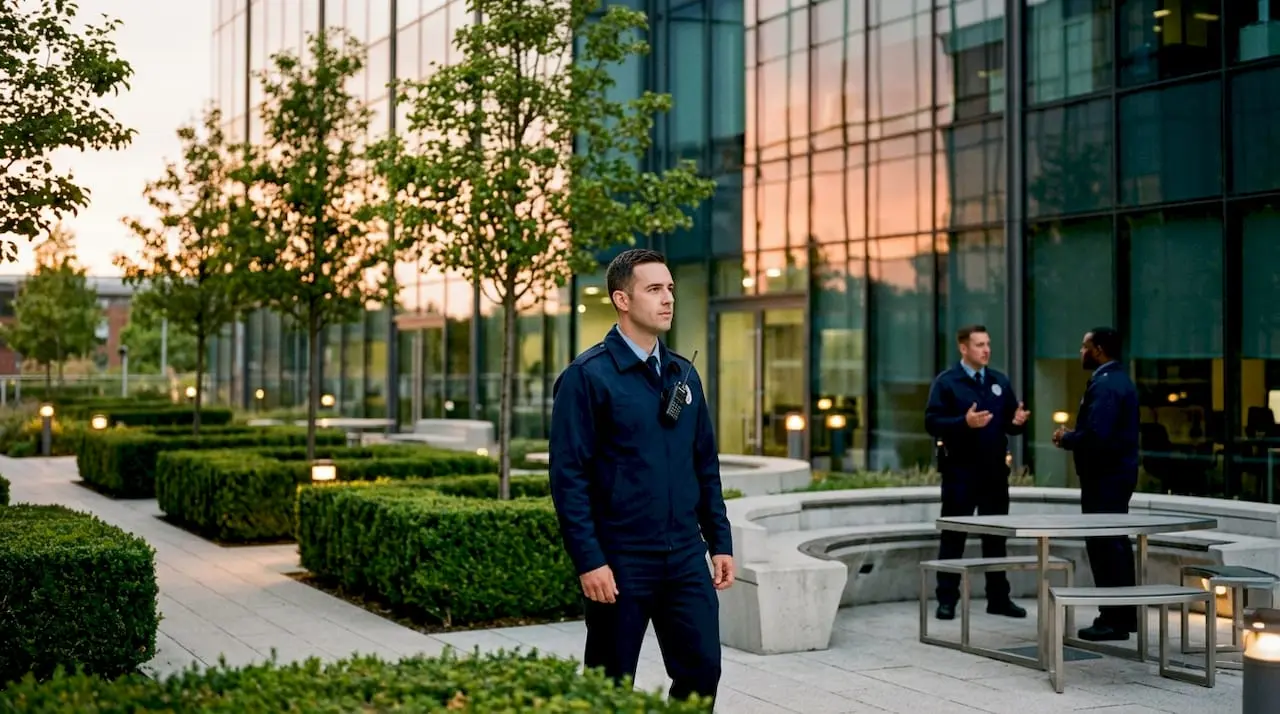
The duty of a security supervisor is defined as the direct oversight of security personnel, enforcement of site-specific protocols, and accountability for all incidents that occur during a shift. This is not a glorified guard role. It is a leadership position governed by SIA licensing requirements, BS7858 vetting standards, and legal obligations under UK health and safety law. Security professionals who understand the full scope of this role, from managing rotas to writing incident reports that satisfy HSE investigations, are the ones who advance quickly and earn the trust of clients and employers alike.
What are the primary responsibilities of a security supervisor?
The core responsibilities of a security supervisor cover both people management and operational control. These two areas are inseparable. A supervisor who manages people well but neglects site protocols creates risk. One who follows procedures rigidly but fails to lead their team creates low morale and poor performance.
The operational duties that define this role include:
- Managing and scheduling security personnel, including shift rotas and cover arrangements. Shift patterns commonly run on a “4 on, 4 off” rotation mixing day and night shifts across 42-hour working weeks.
- Conducting pre-shift briefings to communicate site updates, threat intelligence, and any changes to Assignment Instructions (AIs).
- Overseeing site patrols and access control, verifying that guards follow designated routes and challenge procedures correctly.
- Handling incident response and escalation, including deciding when to involve police, emergency services, or senior management.
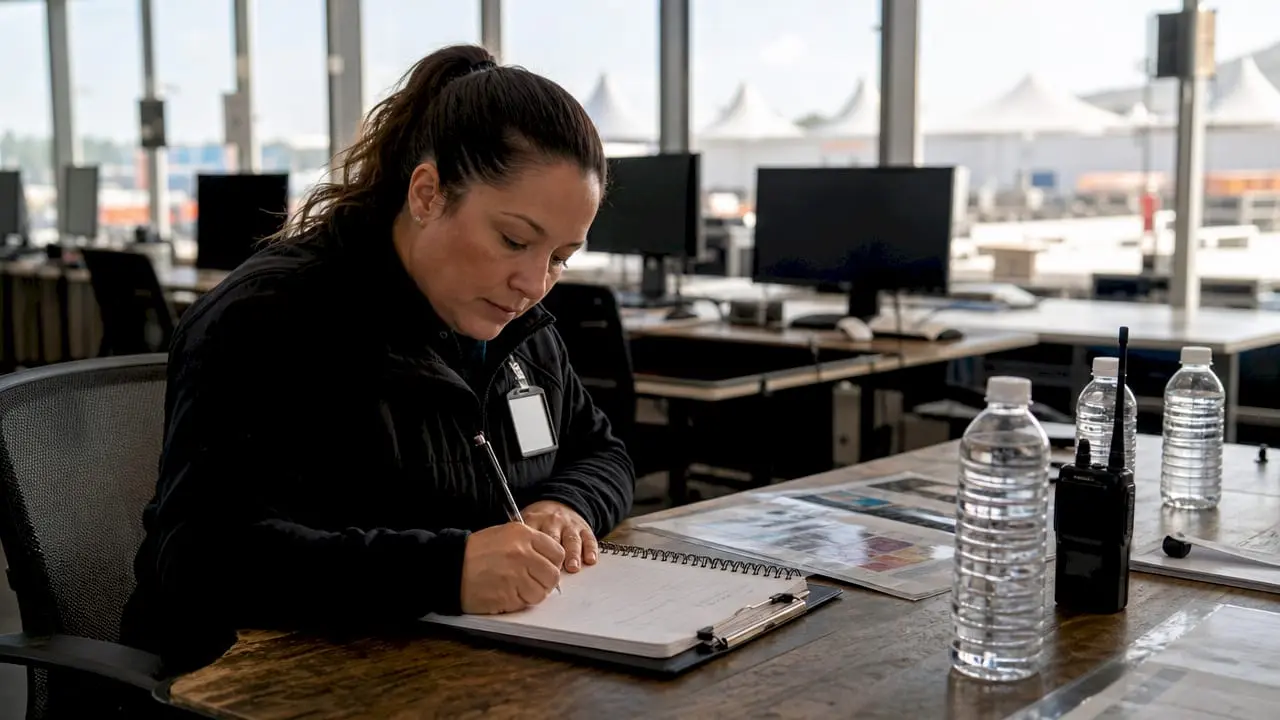
- Maintaining accurate incident logs, written to a standard that satisfies insurers, police, the SIA, and the HSE. Precise incident documentation records evidence that becomes critical in formal investigations.
The duties of a security guard supervisor also extend to client relations. Supervisors act as the primary point of contact between the security team and the client on site. That means communicating professionally, managing expectations, and flagging any operational concerns before they become complaints.
Pro Tip: Keep a personal shift log separate from the official site log. Note observations, near-misses, and team performance points. This record becomes invaluable during appraisals and disciplinary processes.
What licences and qualifications must a security supervisor hold in the UK?
Qualifications for this role are non-negotiable in the UK. The Security Industry Authority (SIA) sets the minimum standard, and employers routinely require more.
-
SIA front-line licence. Every security supervisor must hold a valid SIA licence in Security Guarding or Door Supervision. UK supervisors require 3–5 years of security experience alongside this licence before most employers will consider them for a supervisory post.
-
CCTV (PSS) licence. This is increasingly listed as a requirement rather than a preference. Supervisors overseeing control room operations or mixed-function sites need this additional SIA qualification to operate legally.
-
BS7858 vetting. This is the industry-standard background screening process. It involves a five-year screening process covering address histories, employment records, and references. Candidates who underestimate the detail required cause delays in their own onboarding. Prepare a precise five-year address history before you apply.
-
First aid qualification. The SIA mandates first aid training tied to licence class. Door supervisors require 1.5 to 2.5 days of in-person first aid training. Security guards face a shorter requirement, but refresher training applies to both.
-
Ongoing professional development. The SIA expects licence holders to maintain competence. Many employers also require supervisors to complete essential security training in areas such as conflict management, counter-terrorism awareness (including ACT Awareness), and fire safety.
The roles and responsibilities of a security supervisor demand that qualifications stay current. An expired licence or lapsed first aid certificate creates a legal liability for the employer and removes the supervisor from operational duty immediately.
How does a security supervisor ensure compliance with health and safety obligations?
Health and safety compliance is a legal duty, not an optional standard. Security supervisors carry direct responsibility for their team’s safety and for the safety of the people on their site.
The key compliance duties include:
- Conducting and overseeing risk assessments. Supervisors must identify and report hazards immediately, using common sense and initiative rather than waiting for a formal review cycle.
- Reporting accidents and incidents promptly. RIDDOR (Reporting of Injuries, Diseases and Dangerous Occurrences Regulations) applies to security operations. Supervisors must know when a report is legally required and complete it accurately.
- Enforcing Assignment Instructions. AIs are the contractual and operational backbone of any security post. They define exactly how the site must be managed. Supervisors are accountable for ensuring every team member understands and follows them. The employment law framework governing UK security firms makes this a legal obligation, not just a client preference.
- Cooperating with regulatory bodies. The HSE and SIA both have powers to inspect, investigate, and prosecute. A supervisor who maintains clean records and follows procedures correctly has nothing to fear from either body.
- Managing site-specific legal requirements. Some sites carry additional legal obligations, such as licensed premises legislation for door supervisors or data protection rules for CCTV operators. Supervisors must know which rules apply to their specific post.
The duties of a security officer supervisor in this area are often underestimated by those new to the role. Compliance is not paperwork for its own sake. It is the mechanism that protects the team, the client, and the supervisor personally in the event of an incident.
What skills and qualities distinguish an effective security supervisor?
Technical knowledge gets you the role. Soft skills determine whether you keep it and progress beyond it.
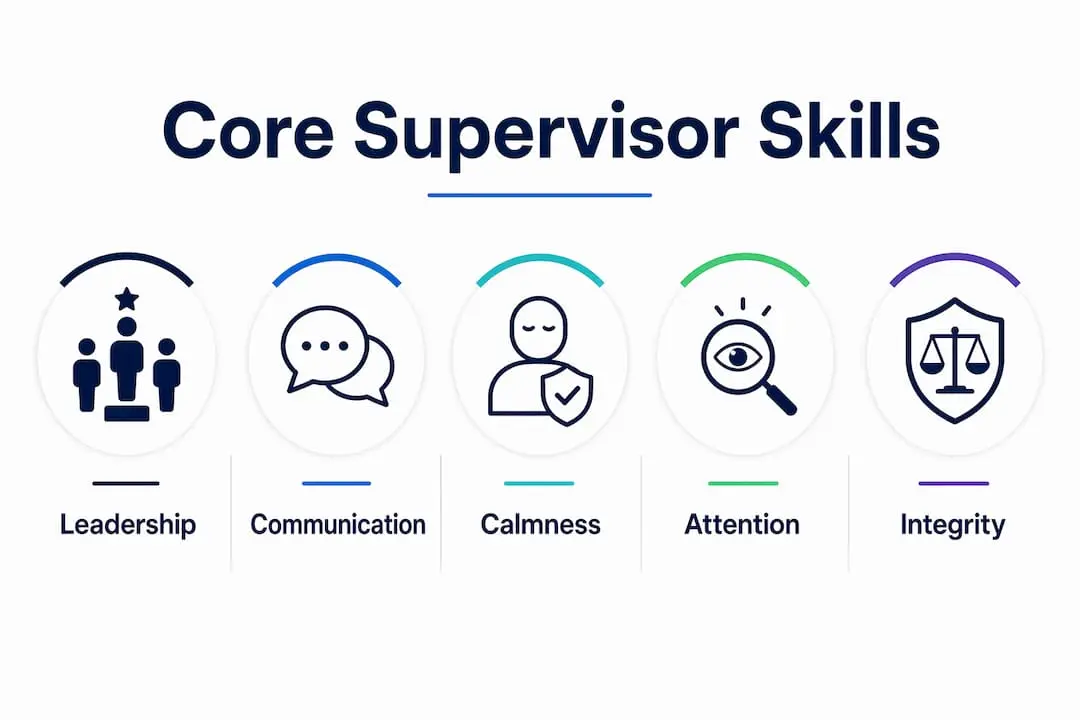
Leadership and team motivation sit at the top of the list. A supervisor sets the tone for the entire shift. Teams that feel supported and clearly directed perform better, report more accurately, and respond faster in emergencies. Effective supervisory leadership is simultaneously hands-on and supportive, promoting accountability without micromanagement.
Communication is the skill that connects everything else. Supervisors communicate upward to clients and management, downward to their team, and outward to emergency services and the public. Each audience requires a different register. A supervisor who cannot adapt their communication style creates confusion at exactly the moments when clarity matters most.
Calm incident handling separates good supervisors from great ones. Calm management combined with precise reporting increases both effectiveness and credibility in the eyes of clients, police, and the SIA. Panic in a supervisor spreads instantly to the team. Composure does the same.
Attention to detail in documentation is a technical skill that many treat as an afterthought. Every log entry, incident report, and risk assessment is a legal document. Vague or incomplete records create problems during investigations and undermine the supervisor’s professional credibility.
Pro Tip: Practice writing incident reports immediately after any event, even minor ones. The habit of writing clearly and quickly under pressure is a skill that takes time to build. Build it before you need it in a high-stakes situation.
Commitment to operational integrity rounds out the profile. The roles of a security supervisor require someone who follows Assignment Instructions precisely, even when shortcuts seem harmless. Clients and employers notice the difference between supervisors who enforce standards consistently and those who apply them selectively.
Key takeaways
The duty of a security supervisor requires mastery of three areas: people management, regulatory compliance, and precise documentation, and all three must operate simultaneously on every shift.
| Point | Details |
|---|---|
| SIA licensing is mandatory | Hold a valid front-line SIA licence in Security Guarding or Door Supervision before applying for supervisory posts. |
| BS7858 vetting demands preparation | Compile a precise five-year address and employment history before the screening process begins to avoid delays. |
| Assignment Instructions are legally binding | Supervisors are accountable for ensuring every team member understands and follows site-specific AIs on every shift. |
| Documentation quality matters legally | Incident logs and reports must meet the standards required by insurers, police, the SIA, and the HSE. |
| Operational integrity precedes management | New supervisors who master compliance and procedures first build the credibility needed for broader leadership responsibilities. |
What I have learned about becoming an effective security supervisor
The biggest mistake I see new supervisors make is trying to act like a manager before they have mastered the operational side of the role. They focus on authority and overlook the detail. Assignment Instructions get treated as suggestions. Incident logs get written quickly rather than accurately. That approach creates problems fast.
The supervisors who progress well do the opposite. They focus on compliance first, treating every AI as a non-negotiable standard and every report as a document that might be read in court. That discipline builds credibility with clients and with their own teams.
BS7858 vetting also catches people off guard. Candidates routinely underestimate how much detail the five-year screening process requires. Gaps in address history or vague employment references slow down onboarding and create a poor first impression. Prepare that history before you apply, not after you receive an offer.
Continuous learning is not optional at this level. The SIA updates its licensing requirements, and the security threat environment changes constantly. Supervisors who treat their initial qualification as the finish line fall behind. Those who keep training stay relevant and employable.
— Rob
Security supervisor roles available now on Securityjobsboard
Securityjobsboard is the UK’s specialist job platform for security professionals, affiliated with the BSIA and built specifically for the security sector. Whether you are ready to step into your first supervisory post or looking to move to a more senior site, the platform connects you directly with employers who understand the role.

Current listings include positions across the UK, including security jobs in Northern Ireland and roles in major cities. You can create a free profile, upload your CV, and set alerts for supervisor vacancies that match your SIA licence and experience level. Employers on the platform can view your profile and reach out directly, which speeds up the hiring process considerably. Visit Securityjobsboard to browse current openings.
FAQ
What is the main duty of a security supervisor?
The primary duty of a security supervisor is to manage security personnel, enforce site-specific Assignment Instructions, and ensure all incidents are handled and documented correctly. The role carries direct accountability for team performance and regulatory compliance.
Does a security supervisor need an SIA licence in the UK?
A valid SIA front-line licence in Security Guarding or Door Supervision is required for all security supervisors operating in the UK. Most employers also require 3–5 years of prior security experience alongside the licence.
What is BS7858 vetting and why does it matter?
BS7858 is the industry-standard background screening process for UK security personnel, covering a five-year history of addresses, employment, and references. Passing this vetting is a condition of employment for most security supervisor roles.
What qualifications improve a security supervisor’s career prospects?
Holding a CCTV (PSS) licence alongside a front-line SIA licence significantly improves employability. First aid certification, conflict management training, and ACT Awareness are also widely valued by employers recruiting for supervisory posts.
How does a security supervisor handle health and safety compliance?
Supervisors conduct and oversee risk assessments, report accidents under RIDDOR where required, and enforce site-specific health and safety procedures. They also cooperate with regulatory bodies including the HSE and SIA during any formal investigation.


