The role of employer references in security jobs

TL;DR:
- Employer references verify job details and conduct, playing a crucial role in security employment vetting. UK law mandates references to be accurate and fair, with legal consequences for misleading or discriminatory information, affecting candidates’ applications. Proactively managing and preparing references can prevent delays and improve chances of securing security roles.
Employer references are official statements from previous employers that confirm your job title, employment dates, and conduct during your time in a role. In the security industry, the role of employer references goes well beyond a formality. Security employers use them to verify candidate claims, support Disclosure and Barring Service checks, and satisfy vetting requirements before any offer becomes unconditional. Understanding how references work, what UK law permits, and how to manage them proactively can be the difference between a job offer and a stalled application.
What does the role of employer references actually involve?
An employer reference serves as an independent verification of the facts on your CV. Most UK employers make job offers conditional on satisfactory references that confirm employment dates, job title, and sometimes specific duties. That conditionality matters enormously in security recruitment, where a single discrepancy between your CV and a reference can trigger a vetting failure.
References fall into two broad categories. A factual reference confirms dates and title only. A fuller reference may also include an assessment of your performance, reliability, and reason for leaving. Security employers generally prefer the fuller version, but many former employers now limit themselves to factual references to reduce their legal exposure.
The information a reference contains directly shapes how a hiring manager reads your application. A reference that confirms five years of door supervision experience at a licensed venue carries far more weight than a one-line letter confirming only that you were employed. Knowing what your referees are likely to say, and preparing accordingly, puts you in a stronger position.
Pro Tip: Contact each referee before you list them. Confirm they are willing to respond promptly and ask what information they plan to include. A slow or vague reference can delay your vetting just as much as a negative one.
The standard components of a security sector reference typically include:
- Employment start and end dates
- Job title and, where agreed, a brief description of duties
- Reason for leaving (optional and often omitted)
- Salary confirmation (only with your written consent)
- An assessment of reliability or conduct (at the referee’s discretion)
How does UK law regulate employer references?
UK employment law places no general obligation on employers to provide references, except in regulated sectors such as financial services. That means your former employer can legally decline to write one. If they do provide a reference, however, the law holds them to strict standards of accuracy and fairness.
The landmark case of Spring v Guardian Assurance [1995] established that employers owe a duty of care when writing references. A negligent or inaccurate reference that causes you financial loss can expose your former employer to legal action. That ruling is the reason most HR departments now treat reference writing with considerable caution.
References that include false or misleading information, or that are influenced by a protected characteristic such as race, disability, or age, breach both the Equality Act 2010 and the duty of care established in Spring v Guardian Assurance. Employers must base any opinion they include on documented, factual evidence.
The legal framework governing references also includes data protection. References are personal data protected under UK GDPR and the Data Protection Act 2018. You have the right to request a copy of your reference, though confidential references carry an exemption that can delay disclosure until after recruitment concludes. The practical implication is that you may not see exactly what a referee has written until after a hiring decision has been made.
The key legal points every security jobseeker should understand are:
- Employers are not legally required to provide a reference, but if they do, it must be accurate and fair.
- Inaccurate references that cause financial harm can lead to a negligence claim under Spring v Guardian Assurance.
- References containing discriminatory content breach the Equality Act 2010.
- References are personal data under UK GDPR; you can request access, subject to confidentiality exemptions.
- You can challenge a reference you believe to be inaccurate, but this is a formal process that takes time.
Understanding your rights under UK data protection law helps you respond calmly if a reference causes a problem during recruitment.
Why are references especially important in security recruitment?
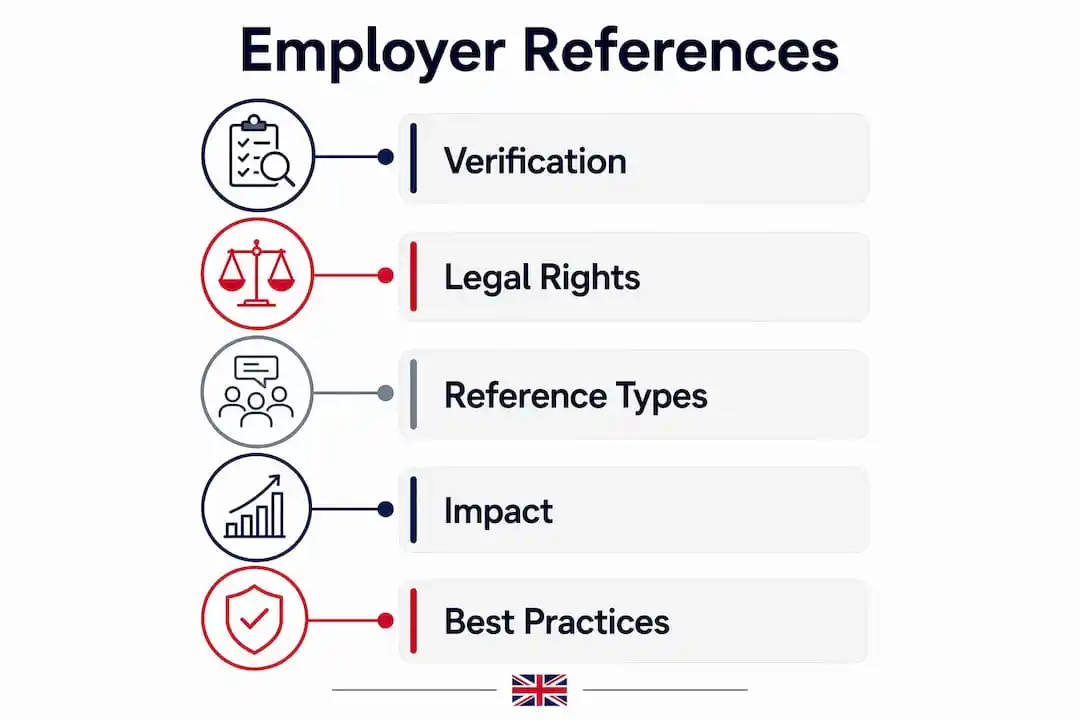
Security roles carry a higher duty of care than most other jobs. A door supervisor, CCTV operator, or close protection officer has access to people, premises, and sensitive information. That responsibility means references cross-check candidate claims against DBS records and employment history with a rigour that most industries simply do not apply.

Vague or absent references in security jobs can delay or halt the vetting process entirely. A missing reference for a gap in your employment history raises questions that a hiring manager must resolve before proceeding. The security vetting process treats discrepancies in dates or job titles as red flags, not minor administrative errors.
| Reference scenario | Likely impact on security application |
|---|---|
| Full, positive reference with confirmed dates | Application proceeds; vetting supported |
| Factual reference (dates and title only) | Acceptable but may prompt follow-up questions |
| Vague or delayed reference | Vetting stalls; offer may be withdrawn |
| No reference provided | Significant red flag; application likely fails |
| Reference with date discrepancy | Triggers investigation; candidate must explain |
The table above reflects the practical reality of security sector hiring. Employers in this industry cannot afford to take risks with unverified candidates, and references are one of the primary tools they use to manage that risk.
Pro Tip: Keep a personal record of your employment history with exact start and end dates for every role. Cross-check this against your National Insurance record annually. Discrepancies between your CV and official records are the most common cause of reference-related vetting failures.
What challenges do jobseekers face with references, and how can they manage them?
The most common challenge is a former employer who refuses to provide anything beyond a bare factual reference. Employers limit references to dates and titles to reduce their legal exposure, particularly where the working relationship ended badly. A “no reference” policy is common and is not automatically a negative signal, but in security recruitment it can still slow things down.
A vague or missing reference is often interpreted negatively by security employers, even when the reason is simply a cautious HR department. You cannot control what your former employer writes, but you can manage the context around it. If you know a reference will be minimal, address it proactively during your interview rather than waiting for a hiring manager to raise concerns.
Jobseekers with inconsistent or unbalanced references should prepare to explain discrepancies during interviews. A calm, factual explanation of why one reference differs from another demonstrates self-awareness and honesty, both of which matter in security roles.
Practical steps to manage your references effectively:
- Identify two or three referees before you begin applying, not after you receive an offer.
- Choose referees who can speak to your reliability, punctuality, and conduct, not just your job title.
- Brief each referee on the role you are applying for so their response is relevant.
- If a formal employer reference is unavailable, a professional reference from a trainer, licensing body contact, or long-term client can substitute in some cases.
- If you are navigating a difficult job search, specialist career guidance can help you frame reference gaps constructively.
- Always ensure the contact details you provide for referees are current. An unanswered reference request is treated the same as a refusal.
References tied to your SIA licence history carry particular weight. If you have held a Door Supervisor or Security Guard licence, your licensing record already provides a partial employment verification trail that can support a weaker reference.
Key takeaways
Strong, accurate employer references are the single most effective way to support your security job application through vetting and into a confirmed offer.
| Point | Details |
|---|---|
| References verify your CV | Security employers cross-check references against DBS records and employment history rigorously. |
| UK law sets clear standards | References must be accurate, fair, and free from discriminatory content under the Equality Act 2010. |
| Factual references are common | Many employers limit references to dates and title; this is legal and not automatically negative. |
| Vague references cause delays | A missing or vague reference can stall security vetting and put a job offer at risk. |
| Proactive management works | Brief your referees, keep your employment dates accurate, and address any gaps before interview. |
What I have learned about references in security recruitment
References are the part of a job application that most candidates treat as an afterthought. In security, that is a costly mistake. I have seen candidates with strong CVs and clean DBS records lose offers because a former employer took three weeks to respond, or because a date on a reference did not match the date on a CV by a single month.
The legal framework around references is genuinely protective for jobseekers, but it also creates a culture of caution that works against you if you are not prepared. Most HR teams will not write anything negative. They will write nothing at all, or write so little that a security vetting officer has no choice but to flag the gap. That silence is the real risk, not a bad reference.
My honest advice is to treat your references as part of your application, not an appendix to it. Maintain professional relationships with former managers even after you leave a role. A quick message every six months costs nothing and means you are not asking a stranger to vouch for you when a job offer depends on it. Understanding your rights under employment law in security also helps you push back constructively if a reference causes an unfair problem.
Transparency is the most underrated tool in this process. If your employment history has gaps, inconsistencies, or a difficult departure, say so early. Security employers respect honesty far more than a polished story that unravels under reference checking.
— Rob
Finding security roles where your references count
Securityjobsboard connects security jobseekers across the UK with employers who understand the vetting process and value verified candidates. When you apply through the platform, you are presenting your profile to employers who already know what a strong reference looks like and how to assess it fairly.

Whether you are an experienced door supervisor, a CCTV operator, or a close protection professional, Securityjobsboard gives you direct access to roles that match your licence and experience. Browse current security jobs in Northern Ireland and across the UK, create a free profile, and apply with confidence knowing your references will be assessed by employers who take the process seriously.
FAQ
Do UK employers have to provide a reference?
UK employers are not legally required to provide a reference, except in regulated sectors. If they do provide one, it must be accurate, fair, and free from discriminatory content.
Can I see what my employer wrote in my reference?
References are personal data under UK GDPR, so you can request access. Confidential references carry an exemption that may delay disclosure until after the recruitment process concludes.
What happens if a reference is inaccurate?
An inaccurate reference that causes you financial loss can give rise to a negligence claim, as established in Spring v Guardian Assurance [1995]. You can also challenge discriminatory content under the Equality Act 2010.
Why do security employers treat references so seriously?
References in security roles are cross-checked against DBS records and employment history as part of the vetting process. Discrepancies in dates or job titles are treated as red flags that can halt an application.
What can I do if a former employer refuses to give a reference?
You can use a professional reference from a trainer, licensing contact, or long-term client as an alternative. Address the absence proactively during your interview rather than leaving a hiring manager to draw their own conclusions.


