How to Research Security Employers for UK Jobseekers

Starting a career in the british security sector is more complex than many realise. With over 421,000 professionals employed in UK security roles, the competition for top positions is fierce. Defining your goals and understanding how to evaluate employers can shape the direction of your entire career. This guide offers practical steps to set clear priorities, select trusted companies, and assess work cultures, empowering you to make informed decisions from your first application.
Table of Contents
- Stage 1: Define Your Security Career Goals And Priorities
- Stage 2: Identify Potential Security Employers And Platforms
- Stage 3: Evaluate Employer Credibility And Industry Reputation
- Stage 4: Analyse Company Culture And Work Environment
- Stage 5: Verify Job Suitability And Benefits
Quick Summary
| Key Point | Explanation |
|---|---|
| 1. Define your career goals clearly | Assess your skills and motivations within the security sector to set specific and achievable career objectives. |
| 2. Research potential employers thoroughly | Use networking platforms and job portals to identify and track companies that align with your career aspirations. |
| 3. Verify employer credibility and reputation | Conduct background checks on potential employers, focusing on their credentials, employee reviews, and industry standing. |
| 4. Analyse company culture and dynamics | Explore digital resources and networking opportunities to understand workplace culture and employee experiences within the prospective company. |
| 5. Assess job benefits and alignment | Evaluate the total compensation package and how well the job aligns with your long-term career goals to ensure suitability. |
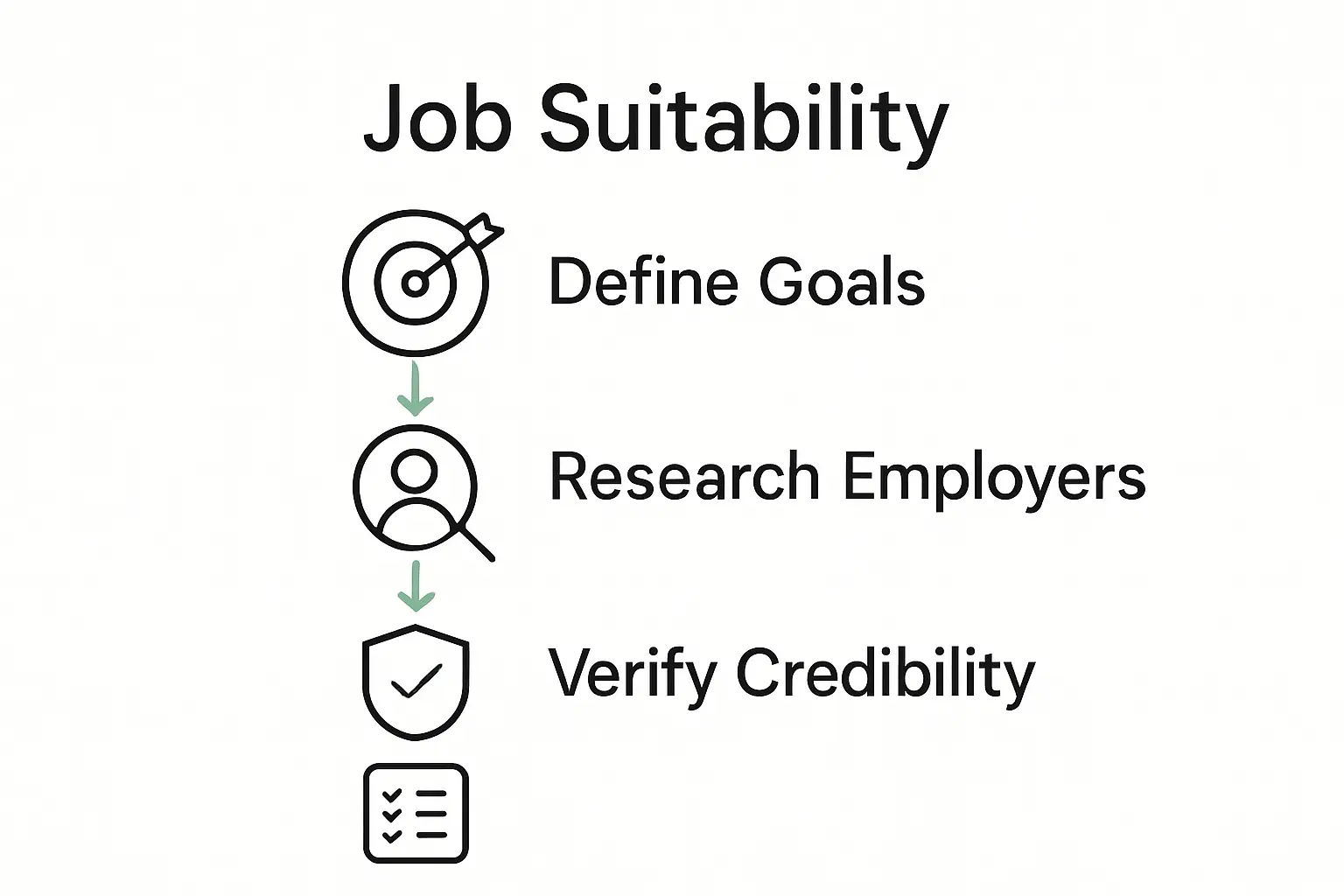
Stage 1: Define your security career goals and priorities
Charting a successful path in the UK security sector begins with clear, strategic career goal setting. According to the Government Security Profession Career Framework, understanding your professional objectives is crucial for targeted career development.
Start by conducting an honest self assessment of your current skills, interests, and long term ambitions. Consider what truly motivates you within the security industry do you prefer technical cybersecurity roles, physical security positions, risk management, or investigative work? The Government Security Profession Career Framework recommends mapping your existing competencies against potential career trajectories to identify skill gaps and development opportunities.
A practical approach involves creating a detailed career roadmap with specific milestones. Break down your ultimate career objective into smaller, achievable steps. For instance, if your goal is becoming a senior security manager, outline the specific qualifications, certifications, and experience required. Research job descriptions in your target roles to understand precise skill requirements and potential progression routes.
Warning: Be realistic but ambitious. Security careers offer multiple specialisations, so remain flexible and open to unexpected opportunities while maintaining a clear strategic vision.
Stage 2: Identify potential security employers and platforms
Discovering the right security employers requires a strategic and multifaceted approach. According to the UK Government, the ‘Find a Job’ service provides an excellent starting point for connecting with potential employers across various sectors, including security.
Expand your search beyond traditional job boards by leveraging professional networking platforms. Prospects recommends using social media, particularly LinkedIn, to identify and research potential security employers. Create a comprehensive professional profile highlighting your security skills and experience. Follow security companies, join industry groups, and engage with content to increase your visibility and network connections.
Develop a systematic approach to employer research. Start by creating a spreadsheet tracking potential employers, including their specialisation areas, recent projects, company culture, and current job openings. Look into specialist security job portals, professional associations like the British Security Industry Association (BSIA), and government security recruitment platforms. Check out our guide on top security job portals to streamline your research process.
Warning: Be thorough but selective. Quality matters more than quantity when researching potential employers. Focus on organisations that align closely with your career goals and professional values.

Stage 3: Evaluate employer credibility and industry reputation
Assessing the credibility of potential security employers requires a methodical and comprehensive approach. NPSA provides critical guidance on recognising legitimate job opportunities and avoiding suspicious recruitment practices.
Start by conducting thorough background research on potential employers. Review their professional credentials, industry certifications, and professional association memberships. Check company reviews on platforms like LinkedIn, Glassdoor, and industry specific forums. Pay special attention to employee testimonials and independent industry ratings. NPSA employment screening guidance suggests understanding how reputable organisations conduct their own screening processes can provide insights into their professional standards.
Look beyond surface level information by investigating the organisation’s track record. Examine their recent projects, client portfolio, financial stability, and professional reputation within the security sector. Check if they are members of recognised bodies like the British Security Industry Association (BSIA) or have received industry awards. Contact professional networks or alumni who might have direct experience with these employers to gain unfiltered perspectives.
Warning: Be cautious of employers who are reluctant to provide transparent information about their operations or have inconsistent communication. Credible security employers will welcome genuine professional inquiries and demonstrate openness about their organisational practices.
Stage 4: Analyse company culture and work environment
Understanding the internal dynamics of a potential security employer goes far beyond reviewing job descriptions. University of Sheffield recommends a comprehensive approach to verifying company culture and ensuring a suitable work environment.
Delve deep into the organisation’s digital footprint by exploring multiple sources. Start with the company’s official website, examining their mission statement, core values, and professional communication style. Review their social media channels to gain insights into team interactions, corporate events, and employee engagement. LinkedIn profiles of current and former employees can reveal valuable perspectives on workplace dynamics, team structure, and professional growth opportunities.
Conduct targeted research by reaching out to professional networks and attending industry events. Consider requesting informational interviews with current employees or alumni who have worked in similar roles. Pay attention to how the organisation communicates about professional development, team collaboration, and workplace support mechanisms. Look for signs of inclusive practices, ongoing training programmes, and opportunities for career progression within the security sector.
Warning: Be discerning when interpreting workplace culture. While online research provides valuable insights, remember that personal experiences can vary significantly between individual employees and teams.
Stage 5: Verify job suitability and benefits
Evaluating the true potential of a security job opportunity requires meticulous scrutiny and careful analysis. UK Government provides comprehensive guidance to help jobseekers understand their rights and assess job suitability effectively.
Conduct a thorough benefits assessment by comparing the total compensation package beyond the base salary. Examine elements such as pension contributions, health insurance, professional development opportunities, flexible working arrangements, and potential career progression paths. Disclosure and Barring Service recommends being vigilant about potential red flags that might indicate an unsuitable or potentially fraudulent job opportunity.
Create a comprehensive checklist of your professional requirements and personal career objectives. Evaluate how closely the potential role aligns with your long term career goals. Consider factors like skills development, training programmes, mentorship opportunities, and the potential for specialisation within the security sector. Request detailed job descriptions, ask probing questions during interview stages, and seek clarity on performance expectations and growth trajectories.
Warning: Do not solely rely on job advertisements. Engage in direct conversations with potential employers and current employees to gain a holistic understanding of the role and organisational culture.
Take Control of Your Security Career Research Today
Navigating the UK security job market can feel overwhelming when you are trying to identify credible employers, evaluate company culture, and verify job suitability. This article highlights the critical steps to avoid common pitfalls such as unclear communication, lack of transparent company information, and job scams. You deserve a streamlined, reliable way to connect directly with reputable security employers who align with your career goals and values.

Start your focused job search now with the Security Jobs Board where you can create a professional profile, upload your CV, and receive tailored job alerts in the security sector. Our platform offers trusted UK security roles supported by affiliation with the BSIA ensuring you connect with employers who meet the highest industry standards. Don’t waste time on scattered searches or uncertain offers. Visit the Security Jobs Board homepage and take the next step towards finding the perfect security employer that matches your skills and ambitions today.
Frequently Asked Questions
How can I identify potential security employers?
To identify potential security employers, start by expanding your search beyond traditional job boards. Use professional networking platforms like LinkedIn to research companies, follow them, and engage with their content to increase your visibility.
What should I consider when evaluating the credibility of a security employer?
When evaluating the credibility of a security employer, examine their professional credentials, industry certifications, and membership in professional associations. Conduct thorough background research, including employee reviews and industry ratings, to ensure they have a strong professional reputation.
How do I assess the company culture of a potential security employer?
To assess a company’s culture, review their official website and social media channels for insights into their mission, values, and employee engagement. Engage with current employees through informational interviews to understand workplace dynamics and opportunities for professional growth.
What factors should I consider in a security job’s total compensation package?
Consider factors such as pension contributions, health insurance, professional development opportunities, and flexible working arrangements when evaluating a job’s total compensation. Create a checklist of your needs and assess how well the role aligns with your long-term career goals.
How can I ensure a security job aligns with my career aspirations?
To ensure a job aligns with your career aspirations, analyse job descriptions for required skills and opportunities for specialisation. Seek clarity during interviews about training programmes, mentorship opportunities, and potential career progression paths within the organisation.
Recommended
- Find Security Jobs Near You: Step-by-Step UK Guide|BM
- Top Security Companies Hiring in the UK: Complete Guide|BM
- Understanding Why Security Jobs in UK Matter | Brainiac Media
- The Essential Guide to Choosing the Security Industry|BM
- 7 Common Security Vulnerabilities Every UK SME Must Know
- How you can protect yourself from being hacked-Cyber Security Guide


