Security guard types: a UK guide to roles and licences
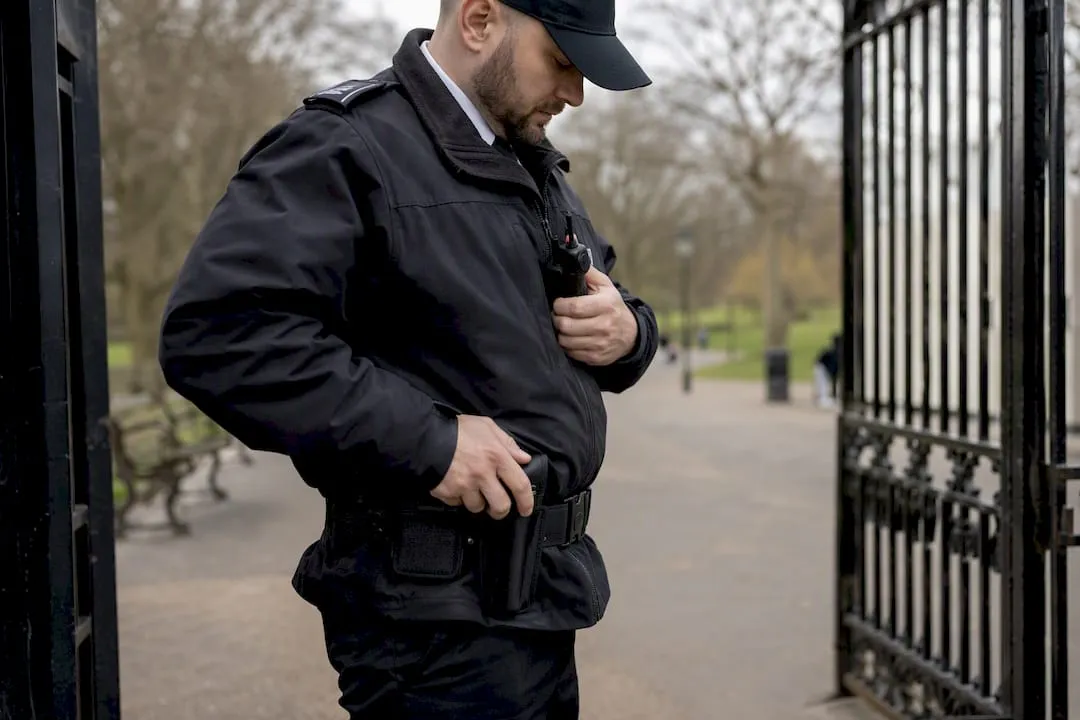
The most common security guard types in the UK are static guards (best for fixed-site access control), mobile patrol officers (best for multi-site or after-hours cover), event and venue stewards (best for crowd management), door supervisors (best for licensed premises), close protection officers (best for high-risk individuals), CCTV or public space surveillance operators (best for evidence-led monitoring), keyholders and CVIT staff (best for high-value asset handling), dog handlers (best for detection and deterrence), and concierge or front-of-house security (best for corporate reception). A smaller number of armed guards operate under separate, heavily restricted arrangements not covered by standard SIA licensing.
Nearly all of these roles sit under the Security Industry Authority’s front-line licence categories, which cover manned guarding, door supervision, close protection, public space surveillance, keyholding and cash and valuables in transit. Pick the wrong type for your site, or hire someone without the right licence, and you’re either overpaying for cover you don’t need or leaving a genuine gap exposed.
- Static guards — fixed sites needing constant access control or reception cover
- Mobile patrols — multiple sites, vacant properties, or after-hours checks
- Event/venue stewards — crowd flow, ticketing, low-risk gatherings
- Door supervisors — pubs, clubs, licensed premises with ejection/search powers
- Close protection officers — individuals facing credible personal threats
- CCTV/public space surveillance operators — remote monitoring and evidence capture
- Keyholders/CVIT staff — alarm response and cash or valuables transport
- Dog handlers — detection work and visible deterrence
- Concierge security — corporate reception blending customer service with access control
Choosing correctly starts with matching the role to your actual risk, not the cheapest hourly rate on offer.
Key Takeaways
Matching the correct SIA-licensed guard type to your site’s actual risk, hours and asset value determines both cost efficiency and genuine protection.
| Point | Details |
|---|---|
| Licence category comes first | Confirm which SIA licence a role legally requires before comparing candidates or suppliers. |
| Static and mobile serve different risks | Static guards suit constant on-site risk; mobile patrols suit multi-site or after-hours cover. |
| Door supervisors need specific powers | Search, refusal and ejection duties require a door supervisor licence, not a general guarding one. |
| Specialist roles command higher training | Close protection, CVIT and public space surveillance sit above standard guarding in scope and pay. |
| Combinations reduce single-point failure | Pairing static guards with CCTV or mobile patrols closes gaps a single role can’t cover alone. |
Table of Contents
- What are the main security guard types and how do they differ?
- How do mobile security patrols work and when do they pay off?
- What is the difference between event stewards and event security?
- What powers do door supervisors have that other guards don’t?
- What does a CCTV operator’s licence actually cover?
- Who needs a close protection officer and what does the role involve?
- What are keyholding and CVIT roles and why are they treated differently?
- Where do dog handlers and armed guards fit into the picture?
- How do you choose the right guard type for your site?
- Why licence categories and training standards matter to employers and candidates
- An editorial view on how the industry talks about guard types
- Sources
- FAQ
What are the main security guard types and how do they differ?
Static security guards are the role most people picture when they think of the profession. They’re posted to one location and stay there for the duration of a shift, controlling who comes in and out, watching for anything unusual, and keeping a written record of it.
Their core duties usually include:
- Checking IDs and passes at entry points
- Monitoring CCTV feeds from a fixed post
- Conducting scheduled internal patrols
- Logging incidents, deliveries and visitor movements
- Managing reception duties on corporate sites
You’ll find static guards on construction sites, in office receptions, at retail premises, warehouses and manufacturing plants. They suit any location where a constant, visible presence matters more than mobility. Retail and office employers tend to choose static cover because the risk (theft, unauthorised access, workplace incidents) is concentrated in one place and needs a permanent set of eyes.
Static guarding falls under the SIA’s manned guarding category, so anyone working a contracted static role needs a valid Security Guard licence if the site is guarded against damage, theft or unauthorised access under the Private Security Industry Act 2001. The licence-linked training specification covers seven core areas, including access control, personal safety and searching procedures. A properly trained static guard should be comfortable with more than just standing at a door.
If you’re hiring, ask to see the licence card itself, not just a claim that “training is in progress.” A guard who can’t produce a physical SIA badge, or whose incident reports read like a shrug rather than a record, is a warning sign worth acting on before day one. For a broader look at what these roles cover day to day, security officer job duties go into more depth.
How do mobile security patrols work and when do they pay off?
Mobile patrols cover ground that a single static guard physically can’t. Instead of one person fixed at one gate, a patrol officer drives (or occasionally cycles or walks) between multiple sites on a set route, checking each one for signs of intrusion, damage or anything out of place.
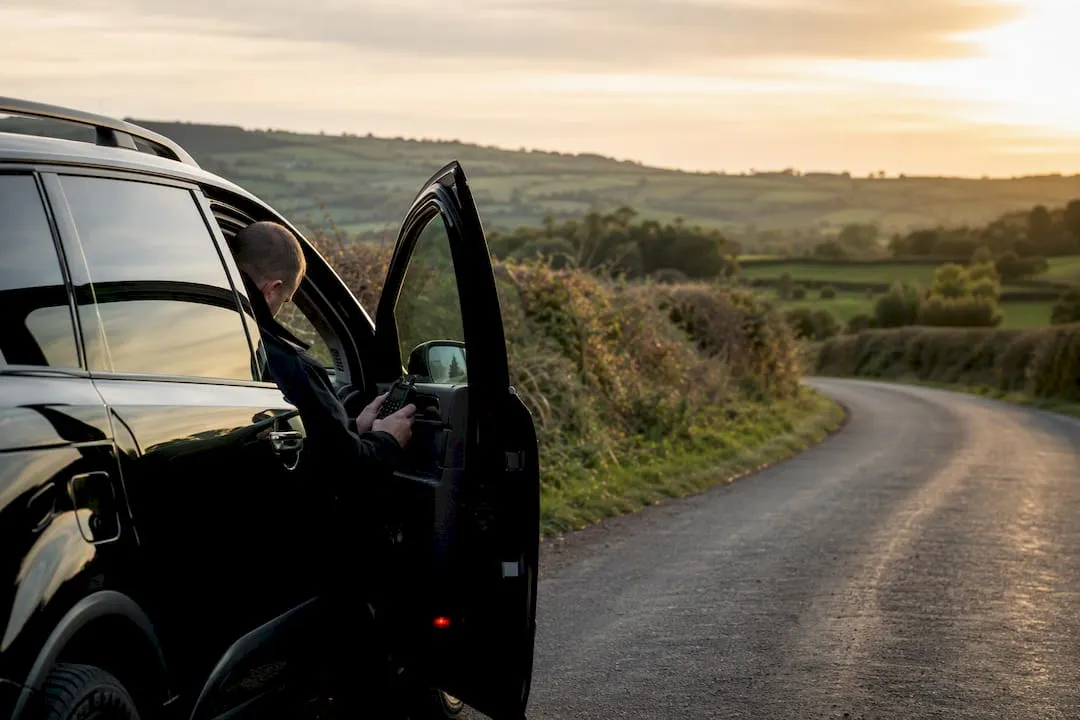
Visits are either scheduled at fixed intervals or randomised deliberately, so anyone watching the site from outside can’t predict when the next check will happen. A vacant commercial unit might get four checks a night; a busy industrial estate with several tenants might get hourly passes. Each visit typically produces a timestamped report, sometimes with photos, that goes straight to the client.
Mobile patrols make the most sense for:
- Multiple sites under one contract (retail parks, construction compounds)
- Vacant or partially occupied properties awaiting sale or redevelopment
- After-hours cover where a full-time static presence isn’t justified
- Alarm response, where the patrol officer attends after a trigger rather than sitting on-site permanently
The trade-off is response time. A static guard reacts instantly because they’re already there; a mobile patrol might be 15 to 40 minutes away depending on the route and traffic. That gap is fine for a low-risk vacant warehouse and a serious problem for a site holding high-value stock.
Pro Tip: When you contract mobile patrols, get the visit frequency and maximum response time written into the service agreement, not just discussed verbally. “Regular checks” means nothing in a dispute; “four checks between 8pm and 6am, response within 30 minutes of an alarm” does.
Cost-wise, mobile patrols run considerably cheaper per site than round-the-clock static guarding, which is exactly why many multi-site retailers and property managers lean on them for out-of-hours cover and reserve static guards for peak trading periods.
What is the difference between event stewards and event security?
Stewarding and security sound interchangeable at a gig or a football match, but they’re legally and functionally distinct. Stewards manage crowd flow, direct people to seating or exits, check tickets and answer questions. Their job is largely about organisation and customer service, not physical intervention.
Security personnel at the same event handle the higher-risk work: searching bags, managing ejections, responding to aggressive behaviour and liaising with police if things escalate. That distinction matters legally, because anyone carrying out licensable “door supervision” activities at a licensed venue or a public event needs an SIA door supervisor licence, even if their job title says “steward.”
- Define the risk level first. A family fun day needs stewards for crowd flow; a late-night music event with alcohol needs licensed door supervisors too.
- Check when the licence kicks in. If staff are searching attendees, checking for prohibited items, or ejecting people, that’s licensable door supervision, not general stewarding.
- Scale numbers to capacity, not just headcount. A 500-person seated event and a 500-person standing gig with a bar need very different security-to-attendee ratios.
- Ask suppliers for event-specific experience. Crowd dynamics at a festival differ hugely from a corporate conference.
- Confirm radio and evacuation procedures before the event, not on the day.
Organisers who skip the licence question often assume “security” on the invoice means everyone is qualified for search and ejection duties. It doesn’t. Always ask the supplier which staff hold door supervisor licences and which are stewards only.
What powers do door supervisors have that other guards don’t?
Door supervisors carry legal powers that a standard static or mobile guard doesn’t have. They can search patrons entering licensed premises (with consent), refuse entry, and physically eject someone who’s become a risk to others, all within the bounds of reasonable force and licensing law.
Their day-to-day work centres on:
- Searching bags and, where policy allows, individuals at entry
- Checking age and ID for licensed premises
- De-escalating conflict before it turns physical
- Ejecting individuals who breach house rules or licensing conditions
- Liaising directly with venue management and, when needed, police
The SIA door supervisor licence is a distinct category from the standard Security Guard licence, and it’s the one venue owners are legally required to check for anyone performing these functions on licensed premises. The training goes further into conflict management and physical intervention than the general security guarding specification, reflecting the higher likelihood of confrontation.
Deciding between a door supervisor and a standard unarmed guard comes down to one question: does the role involve searching, refusing entry, or ejecting people? If yes, you need a door supervisor licence holder, full stop. A static guard on a general SIA licence performing these duties would be operating outside their licensed activity, which is a liability problem for the employer as much as the individual.
What does a CCTV operator’s licence actually cover?
Public space surveillance is its own licensable activity under SIA regulations, distinct from manned guarding. It covers anyone monitoring CCTV systems that observe public or semi-public spaces, whether that’s a town centre control room or a retail security office watching shop floors and car parks.
Operators aren’t just watching screens. Their core responsibilities include:
- Monitoring live feeds for suspicious behaviour or incidents in progress
- Directing static or mobile guards to a location in real time
- Preserving footage as evidence for police or insurance claims
- Logging incidents with accurate timestamps for later review
- Coordinating with control rooms across multiple sites
The value of a good CCTV operation shows up most clearly during an incident. A guard on the ground can only see what’s directly in front of them; an operator watching multiple feeds can spot a shoplifter moving between aisles or a trespasser approaching from an angle the static guard can’t see, then radio ahead before it becomes a confrontation.
Training for this licence category focuses on legal recording requirements, data protection obligations and evidence-handling procedures, since footage mishandled or deleted incorrectly can undermine a prosecution entirely. Employers running any kind of surveillance operation need to confirm operators hold the specific public space surveillance licence rather than assuming a general security qualification covers it.
Who needs a close protection officer and what does the role involve?
Close protection sits at the top of the licensing ladder, and it’s not a role you hire casually. Officers in this category plan routes, assess venues in advance, manage physical proximity to a principal, and handle discreet risk mitigation that’s designed to be invisible to everyone except the client.
The work typically involves:
- Advance reconnaissance of venues, routes and accommodation
- Continuous risk assessment around the client’s movements
- Physical positioning to intercept threats before they reach the principal
- Liaison with venue security, event organisers and, occasionally, police
- Maintaining discretion so protection doesn’t draw attention to the client
Close protection is its own SIA licence category, and it demands considerably more experience than standard manned guarding. Most close protection officers come from a background in the police, military, or several years of frontline security work before specialising, because the training builds on skills that general guarding qualifications don’t cover in depth.
Clients hiring close protection are usually facing a credible, specific threat, not a vague sense of unease. Corporate executives during hostile takeovers, public figures after direct threats, or high-net-worth individuals travelling through unfamiliar territory are the typical triggers.
Pro Tip: If you’re weighing up whether a situation genuinely calls for close protection, ask whether the concern is a specific, identifiable threat or a general feeling of exposure. Close protection is built for the former; better lighting, access control and a static guard usually resolve the latter for a fraction of the cost.
What are keyholding and CVIT roles and why are they treated differently?
Keyholding and cash and valuables in transit (CVIT) are two of the more specialised licensable activities under SIA regulations, and both come with contractual weight that standard guarding contracts don’t carry.
A keyholder is the named, licensed individual who responds to an alarm activation out of hours, attends the site, and makes the call on whether it’s a false alarm or something requiring police. CVIT staff transport cash, jewellery or other high-value goods between locations, often in armoured or specially equipped vehicles.
Both roles carry heightened requirements because the exposure to loss is direct and financial rather than reputational:
- Keyholders need a clear chain of accountability for who holds keys and when
- CVIT operations typically require specific vehicle security standards and insurance
- Both roles demand detailed audit trails: who attended, at what time, and what action was taken
- Employers should confirm the individual’s licence covers the specific activity, since a general Security Guard licence doesn’t automatically extend to keyholding or CVIT work
Insurance is where a lot of employers get caught out. A generic public liability policy on a security contract may not cover cash-in-transit losses at all, and CVIT providers typically carry separate, higher-value cover specifically for goods in transit. Before signing a contract, ask what’s covered if something goes wrong mid-transit, not just what’s covered while the guard is standing on-site.
Where do dog handlers and armed guards fit into the picture?
Dog handling is a specialist branch of security work that adds a layer of detection and deterrence a human guard alone can’t match. Trained dogs are used for explosives and drugs detection at events and transport hubs, for tracking, and simply as a visible deterrent on large sites like scrapyards or vacant industrial land where the sight of a dog and handler discourages intrusion before it starts.
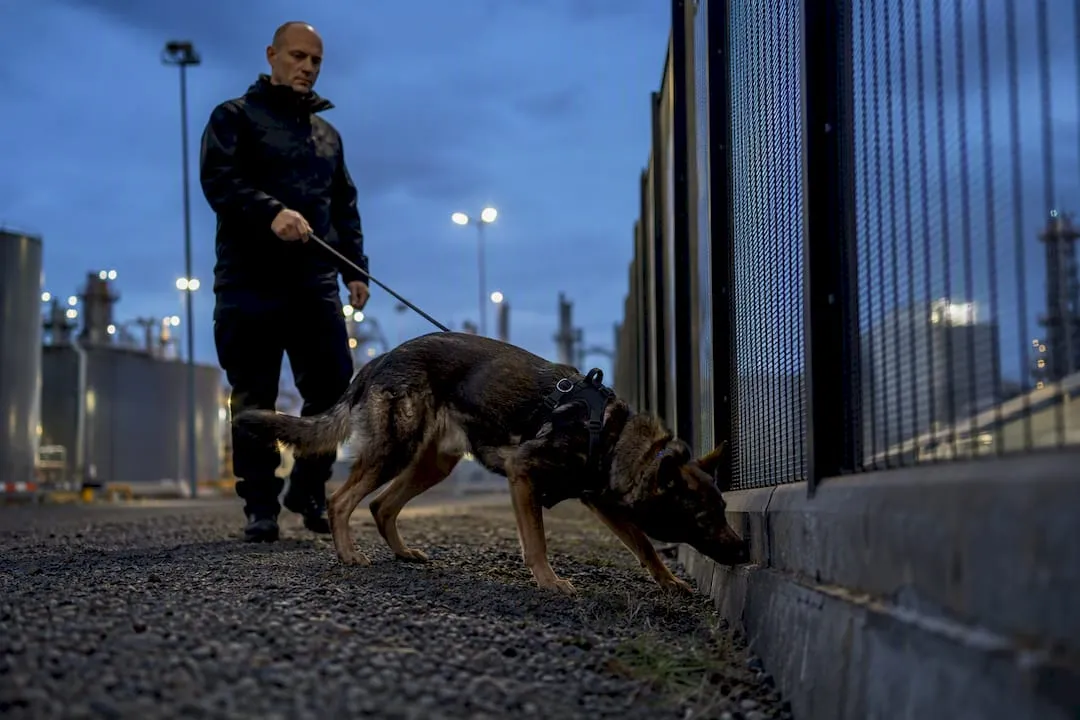
Handlers need specific training beyond standard guarding, covering animal welfare, control in public settings, and how to work the dog safely alongside colleagues and the public. It’s a smaller pool of workers than general guarding, and demand tends to concentrate around large events, ports and specific high-security sites.
Armed guarding, by contrast, is vanishingly rare in the UK’s civilian security sector and operates under separate legal frameworks entirely outside the standard SIA front-line categories most employers will ever need. Firearms licensing for private security work is tightly restricted, and the vast majority of UK security contracts, including cash transit and close protection, are carried out unarmed. Any provider offering armed guarding for a standard commercial contract should be treated with serious scrutiny.
Beyond dogs and armed roles, you’ll find loss-prevention officers working undercover in retail environments and surveillance operatives conducting covert observation for investigations. The frontline security workforce in the UK is substantial, and specialist licences like these tend to sit at the top of the pay scale precisely because so few guards hold them.
How do you choose the right guard type for your site?
Start with risk, not budget. A site with high footfall, valuable stock, or a history of incidents needs a different answer than a quiet office reception, and working that out before you contact a supplier saves you paying for cover you don’t need or, worse, under-resourcing a genuine risk.
- Define the purpose. Are you protecting assets, managing people, or both?
- Map the hours. Does the risk exist 24/7, only after hours, or only during events?
- Value the assets. Cash, stock and equipment on-site should shape whether you need CVIT-level handling or standard static cover.
- Weigh customer interaction. A reception role needs someone comfortable with the public; a vacant warehouse doesn’t.
- Check the legal and licence requirements. Licensed premises need door supervisors; surveillance needs a public space licence.
- Set the budget against risk, not against the cheapest quote.
When you’re interviewing candidates or vetting a supplier, a short list of direct questions cuts through most of the guesswork:
- Can you show me the current SIA licence for this specific activity?
- What insurance do you carry, and does it cover the assets I’m protecting?
- Can you provide references from similar sites or events?
- What does your incident reporting process actually look like?
- How do you handle escalation if something goes wrong on a night shift?
Certain combinations come up again and again because they solve real gaps rather than doubling up on cover. Retail sites often pair a static guard with CCTV monitoring to cover blind spots the guard can’t watch alone. Construction sites frequently combine mobile patrols with a keyholder for out-of-hours alarm response, since a full-time static presence overnight rarely justifies the cost on an active build. Offices tend to lean on concierge-style static guards during the day and mobile patrols overnight. Events almost always need stewards for flow and licensed door supervisors for the higher-risk points, ticket checks, bars, and exits.
Pro Tip: Don’t buy the most expensive option by default. A vacant property doesn’t need a close protection officer, and a high-net-worth client facing a credible threat shouldn’t be relying on a mobile patrol that visits once every four hours.
For a deeper look at how guard duties break down role by role, the duty of a security guard guide is worth reading alongside this framework, and if you’re unsure which roles legally require a licence, which jobs require an SIA licence covers that in more detail.
Why licence categories and training standards matter to employers and candidates
The Security Industry Authority sets out the legal categories that underpin everything covered above: manned guarding, door supervision, close protection, public space surveillance, keyholding and cash and valuables in transit. These aren’t arbitrary labels. They map directly to the Private Security Industry Act regulations, which define exactly which activities fall under each licensable category and the scope of what a licence holder is legally permitted to do.
Whether you need a licence at all depends on the arrangement. GOV.UK guidance confirms that contracted front-line security work generally requires a licence, while some in-house arrangements are treated differently, though high-risk licensable activities still require the correct licence regardless of employment structure.
The training itself isn’t a rubber stamp. The SIA security guarding qualification specification sets out seven core learning sessions covering roles and responsibilities, access control, physical and electronic protection systems, personal safety, drugs awareness, searching and patrolling. A guard who’s been through this properly should be able to explain, not just perform, why they’re checking a bag a certain way or logging an incident in a specific format.
Security Jobs Board exists because this sector runs on precise, checkable credentials, not vague job titles. A platform built specifically for security recruitment, with GDPR-compliant CV handling, employer tools for vetting and posting, and BSIA affiliation for added credibility, gives both sides of the hiring process a faster route to the right match.
Practical takeaways for anyone using this guide:
- Always verify the specific licence category, not just that “a licence exists”
- Match training depth to role risk, general guarding training won’t cover door supervision powers
- Use a platform built for the sector rather than a generic job board when hiring or job-hunting in security
If you’re building a career through the licence categories described here, the physical security career path guide maps out how frontline roles progress into specialist licences over time. Employers ready to hire can post directly through Security Jobs Board, and jobseekers browsing current openings, including roles in Northern Ireland, can search and apply free of charge.
An editorial view on how the industry talks about guard types
Most guides to security guard types read like a glossary, a list of job titles with a sentence each, and stop there. That misses the actual decision employers are wrestling with, which is rarely “what is a door supervisor?” and almost always “do I need one, or am I paying for a licence I don’t require?”
The conventional advice defaults to over-provisioning: hire the most qualified person available, because more licence categories must mean more protection. That’s backwards. A close protection officer standing in a quiet office reception is wasted expertise and wasted money. The better approach starts from risk and works outward to the licence, not the other way round.
What gets underrated is the audit trail. Whether it’s a keyholder’s alarm response log or a CCTV operator’s timestamped footage, the paperwork behind a guard’s actions matters as much as the guard’s presence. Employers who skip that question during hiring usually regret it the first time they need evidence for an insurance claim or a prosecution.
Sources
- SIA strategic plan 2026 to 2029
- The Private Security Industry Act regulations (consolidated) - PDF
- SIA security guarding qualification specification (2021)
- Security guard - Regulated Professions Register
FAQ
What are the four types of security guards?
Definitions vary, but a common framing splits roles into static guards, mobile patrol officers, door supervisors and CCTV or public space surveillance operators, each covering a distinct SIA licensable activity.
What are the four types of security?
Broadly, security work divides into physical guarding (static and mobile), access control and surveillance (CCTV operators), personal protection (close protection officers), and asset handling (keyholding and cash and valuables in transit).
What are the 7 types of human security?
That framework comes from a broader international security studies context rather than UK private security guarding, so it doesn’t map directly onto SIA licence categories covered in this guide.
What are different types of guards?
Beyond static and mobile roles, guard types include door supervisors, close protection officers, CCTV operators, keyholders, CVIT staff, dog handlers and concierge security, each requiring a specific SIA licence category.
Do I need an SIA licence to work as a security guard?
Yes, contracted front-line security work generally requires an SIA licence, though some in-house arrangements are treated differently under GOV.UK guidance.
How do I know which guard type my business needs?
Start by assessing your risk level, operating hours, asset value and customer interaction needs, then match that profile to the licence category the activity legally requires.


