Effective conflict management for UK security teams
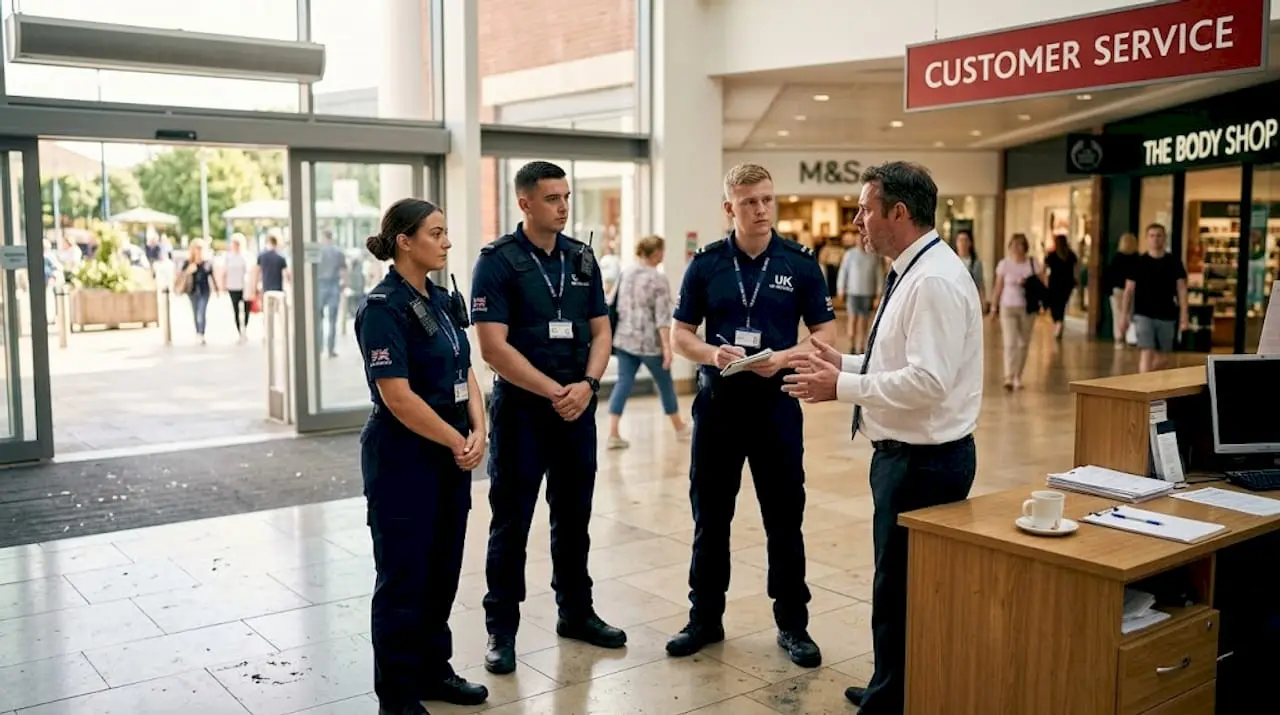
TL;DR:
- Conflict is a daily challenge in UK security work, with significant impacts on mental health.
- Effective conflict management involves proactive prevention and reactive response skills grounded in communication.
- Regular training, reflection, and a team culture that treats conflict as manageable improve safety and resilience.
Conflict is an everyday reality in UK security work, not a rare exception. Whether you are stationed at a retail outlet, managing access at a concert venue, or patrolling a logistics warehouse at night, the probability of facing verbal abuse, physical threats, or staff disputes is remarkably high. Research from Solent University found that 39.3% of UK security operatives show symptoms of PTSD linked directly to frequent verbal abuse and physical threats. That figure should change how we think about conflict. It is not simply an occupational hazard to absorb. It is a professional challenge to manage, and managing it well makes the difference between a resilient team and a burnt-out one.
Table of Contents
- Defining conflict management in the security sector
- The impact of unmanaged conflict on UK security teams
- Core principles and methods for conflict management
- Real-world applications: Success stories and sector lessons
- Best practices, ongoing development, and legal considerations
- Why most security professionals underuse conflict management – and how to change that
- Next steps: Develop your security conflict management skills
- Frequently asked questions
Key Takeaways
| Point | Details |
|---|---|
| Conflict is frequent | UK security professionals regularly encounter conflict and threats, making management critical. |
| Reduces harm and burnout | Strong conflict management lowers risk of PTSD, stress, and high staff turnover. |
| Principles are actionable | Active listening and clear communication can turn conflict into positive outcomes. |
| Ongoing training vital | Continually building conflict skills maintains harmony and team resilience. |
Defining conflict management in the security sector
Before diving into methods and frameworks, it is worth being precise about what conflict management in security roles actually means. This is not simply about staying calm when someone shouts at you. It is a structured set of skills, attitudes, and procedures that help security professionals prevent, respond to, and recover from conflict in all its forms.
In security work, conflict takes many shapes:
- Verbal abuse and threats from members of the public
- Physical altercations requiring immediate intervention
- Disputes between colleagues over shift responsibilities or perceived fairness
- Tensions with management over reporting lines or unsafe working conditions
- Public-facing disagreements at entry points, checkpoints, or during evictions
The key distinction is that conflict management operates on two levels. The preventative level involves reading the environment, spotting tension before it surfaces, and using communication to keep situations calm. The reactive level kicks in once a situation has escalated, requiring composure, assertive communication, and a clear plan of action.
“Effective conflict management in the security sector is not a soft skill. It is a professional capability that directly reduces the risk of harm to operatives, the public, and the organisation itself.”
Research published by MDPI on conflict management confirms that effective conflict management enhances workplace harmony by reducing PTSD and burnout risks, preventing dangerous escalations, and improving team dynamics through trust-building after conflict is resolved. These are measurable outcomes, not vague aspirations.
One practical shift in thinking is to treat conflict resolution as a core professional competency, not an add-on or a personality trait. Employers increasingly recognise this. When reviewing the qualities employers seek in security staff, conflict management consistently ranks alongside technical skills like surveillance and report writing. It is, in short, part of being a professional.
Pro Tip: Start viewing every conflict you manage successfully as evidence of professional competence. Document it. Reflect on what worked. These become powerful examples in job interviews and appraisals.
The impact of unmanaged conflict on UK security teams
Understanding the consequences of poorly managed conflict is not about inducing anxiety. It is about building a compelling, evidence-backed case for investing time and effort into getting this right.
The numbers are striking. The British Retail Consortium reported over 2,000 incidents of violence and abuse in retail environments every single day during 2023 to 2024. Security operatives are on the front line of this. For professionals experiencing this volume of aggression without structured coping or resolution strategies, the psychological toll accumulates fast.
For individual security professionals, the consequences include:
- PTSD symptoms including hypervigilance, sleep disruption, and emotional detachment
- Chronic burnout driven by emotional labour (the effort of managing your emotional responses on the job)
- Reduced job satisfaction, disengagement, and a sense of helplessness
- Increased likelihood of making poor decisions under stress, which raises physical risk
For organisations and teams, the damage is equally real:
- High staff turnover as experienced operatives leave due to poor working conditions
- Reputational damage when conflicts become public incidents or complaints
- Legal liability under the Health and Safety at Work Act 1974 and employer duty of care obligations
- Weakened team cohesion as unresolved disputes create factions and distrust
The table below illustrates the difference between teams with strong conflict management capability versus those without it.
| Outcome metric | High conflict management capability | Low conflict management capability |
|---|---|---|
| Staff turnover (annual) | Below 15% | Above 30% |
| PTSD symptom prevalence | Significantly reduced | Up to 39.3% |
| Reported stress incidents | Fewer, well-documented | Frequent, under-reported |
| Team trust and morale | Consistently high | Variable, often low |
| Escalations to physical incidents | Rare | Notably more common |
If you are currently working in or managing a security team, this table is worth examining honestly. Where does your team sit? The gap between these two profiles is not talent. It is training, culture, and practice. Investing in practical security training is one of the most direct routes from the right column to the left.
Core principles and methods for conflict management
With a clear picture of the stakes involved, the focus now shifts to what actually works. The most effective conflict management approaches in UK security settings share a common foundation: they are learnable, repeatable, and grounded in communication rather than force.
The core principles are:
-
Active listening involves genuinely hearing the other person before responding. This means maintaining eye contact, nodding to acknowledge you are following, and resisting the urge to formulate your reply while they are still speaking. People in conflict often feel unheard. Listening itself can begin to defuse a situation.
-
De-escalation techniques include lowering your own voice to encourage the other person to match your tone, creating physical space to reduce the sense of threat, and using neutral language that does not challenge or demean.
-
Assertive but respectful communication means stating your position clearly without aggression. Phrases like “I understand you are frustrated, and I need you to step back so we can resolve this” establish authority while preserving dignity.
-
Separating the person from the behaviour allows you to address unacceptable conduct without making the person feel personally attacked, which typically reduces defensiveness and aggression.
-
Post-incident reflection ensures that every conflict becomes a learning opportunity rather than simply an event to endure and forget.
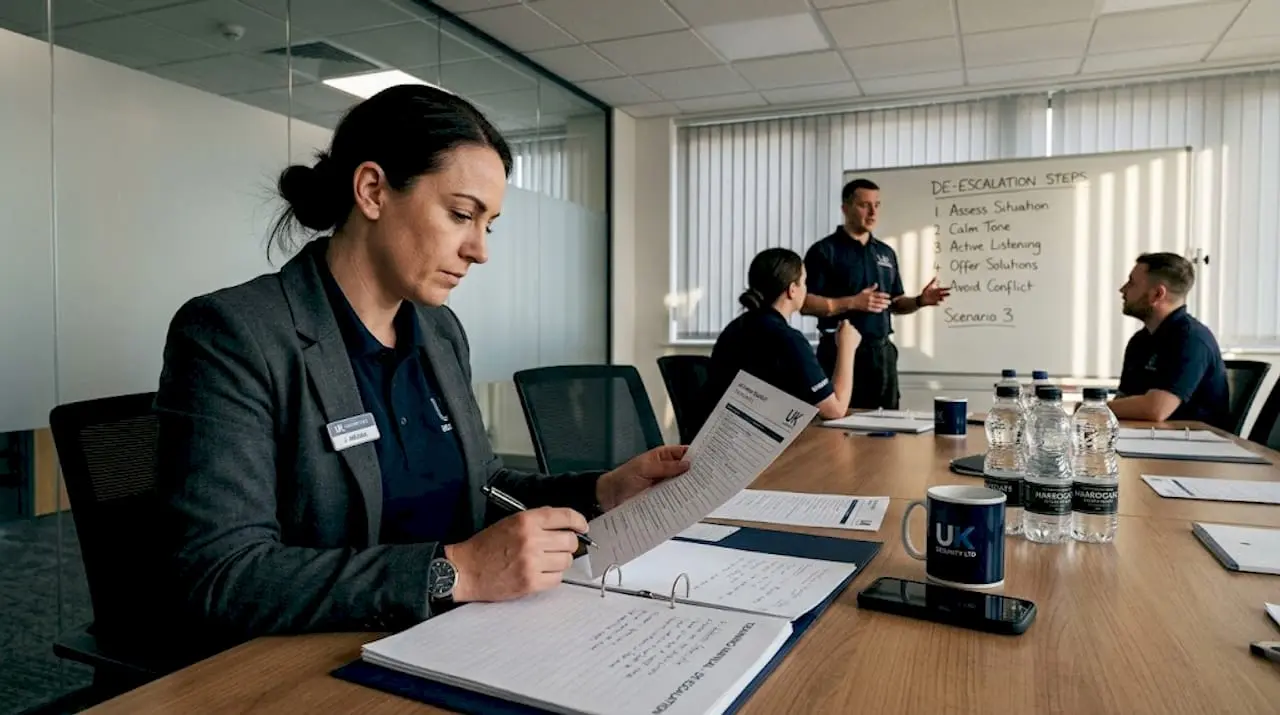
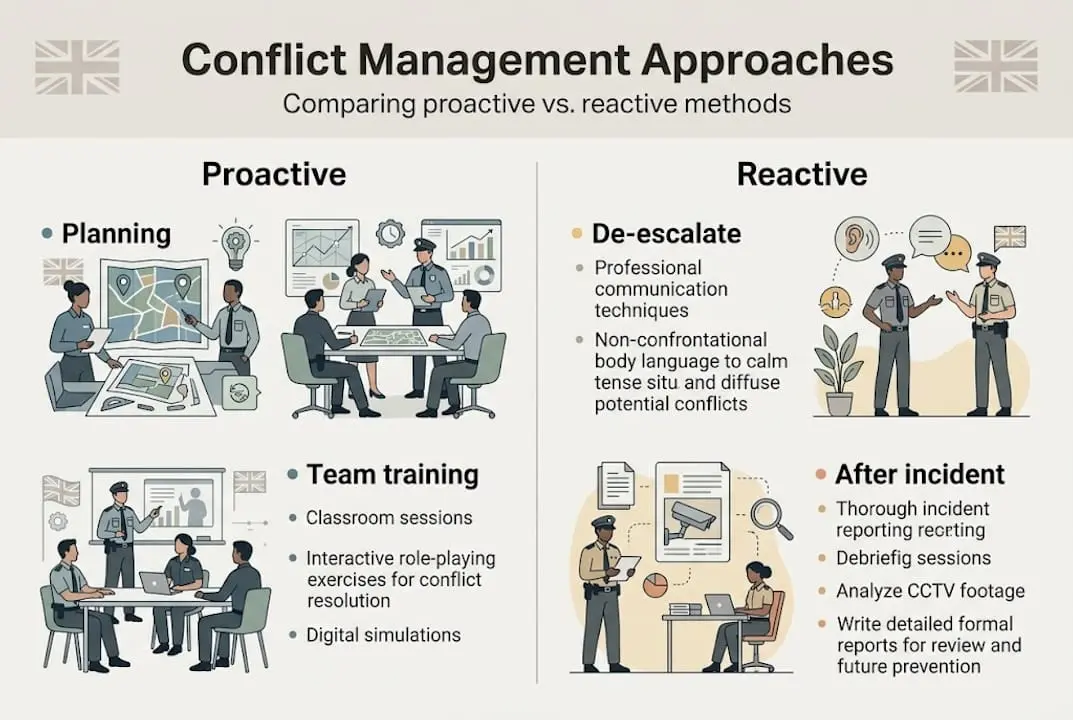
The table below compares reactive versus proactive conflict management, which are two approaches that should work together rather than replace each other.
| Approach | Reactive conflict management | Proactive conflict management |
|---|---|---|
| Timing | After conflict erupts | Before tension escalates |
| Tools used | De-escalation, physical intervention | Environmental design, communication, early warning signals |
| Risk level | Higher | Lower |
| Training focus | Response protocols | Situational awareness, relationship building |
| Outcome | Resolution after harm | Prevention of harm |
Research consistently points to proactive approaches as more effective at reducing long-term stress and improving crowd management outcomes in the UK. However, reactive skills remain essential because no environment is fully predictable. The MDPI research on conflict management reinforces that combining both prevention and resolution skills is what drives the most significant improvements in team wellbeing and operational safety.
Pro Tip: When you feel your own emotional response rising during a conflict, use a deliberate pause. Take a breath, slow your pace, and if possible briefly step back. This “time out” is not a sign of weakness. It resets your composure and improves your decision-making in the moment.
Real-world applications: Success stories and sector lessons
Theory matters, but security professionals operate in high-pressure, real-world environments where abstract principles need to translate into fast, effective action. Here are two sector-specific scenarios that illustrate what good conflict management looks like in practice.
Scenario one: Public transport de-escalation
A security operative on a busy urban rail network encounters two passengers in a heated verbal dispute over seating during peak hours. Rather than stepping in with commands, the operative positions herself at a slight distance, makes eye contact with each person in turn, and asks one clear, calm question: “Can you each tell me what has happened?” She listens without interruption. The act of being heard reduces the temperature significantly. She then suggests a practical solution and thanks both passengers for their cooperation. No physical intervention required. No police called. The situation resolved in under four minutes.
Scenario two: Staff dispute in a logistics centre
Two security officers on a night shift at a large distribution centre are in ongoing conflict over patrol routes, with one believing the other is not pulling their weight. A supervisor notices the tension affecting communication and team coverage. Rather than ignoring it, the supervisor arranges a structured conversation during a quiet period, using a format where each person speaks without interruption and then responds to what was said. Within one session, a miscommunication about responsibilities is clarified, and a revised rota is agreed. Team morale improves noticeably within the following fortnight.
“The teams that perform best under pressure are not those that experience less conflict. They are the ones that have learned to address it early, honestly, and with respect for everyone involved.”
Lessons from across the sector, including examples of UK security roles in retail, logistics, and transport, point to several consistent themes:
- Early intervention matters more than perfect technique
- Consistency in how conflict is handled builds trust within the team
- Psychological safety (meaning the confidence to raise concerns without fear) enables earlier reporting of tension
- Inclusive approaches are essential; supporting women in security careers means ensuring conflict management frameworks account for the specific pressures faced by underrepresented groups
The data on UK security operatives showing a negative correlation between conflict management skills and burnout (r = -0.16) confirms that even incremental improvements in how conflict is handled produce real reductions in stress. Small changes in practice compound over time.
Best practices, ongoing development, and legal considerations
Good conflict management is not a course you complete once and consider done. It is an ongoing professional practice. For UK security operatives and team leaders, this means building it into how teams function week to week, not just during incidents.
Key best practices include:
- Regular training refreshers at least twice annually, ideally with scenario-based exercises that reflect your actual environment
- Clear reporting lines so every operative knows exactly who to inform after a conflict and how to document it properly
- Post-incident debriefs conducted within 24 to 48 hours while details are fresh, focusing on what happened, what worked, and what could be improved
- Accessible mental health support including Employee Assistance Programmes (EAPs) and referrals to counselling for operatives who experience traumatic incidents
- Reflective practice logs where operatives record brief notes on conflicts handled, building a personal development record over time
From a legal standpoint, UK employers have clear obligations. Under the Management of Health and Safety at Work Regulations 1999, employers must assess risks to workers, including the risk of violence and psychological harm from conflict. Failure to provide adequate training or support can constitute a breach of duty of care. A robust lone working policy for security staff is also part of this framework, particularly for operatives working in isolated or high-risk environments where conflict can escalate without backup.
Given that violence and abuse in UK retail alone exceeds 2,000 incidents daily, the legal and moral case for structured conflict management programmes is clear. Employers who invest in this protect both their staff and their organisation.
Pro Tip: Use peer networks and industry events to stay current with evolving conflict management techniques. Applying logistics networking best practices to the security sector can open doors to shared learning across organisations facing similar challenges.
Why most security professionals underuse conflict management – and how to change that
Here is an uncomfortable truth: many experienced security professionals know about conflict management but do not genuinely practise it. Not because they are complacent, but because the culture around them treats conflict as something to endure rather than manage. When an operative sees senior colleagues shrug off verbal abuse as “just part of the job,” they absorb that attitude. It becomes normalised. And normalisation is precisely where the damage accumulates.
The real barrier is not lack of training. It is the belief that applying structured conflict management is somehow unnecessary for those with experience. In reality, the opposite is true. The most effective practitioners are those who have moved beyond instinct and built deliberate, repeatable habits. They are safer, less burnt-out, and more respected by colleagues and the public alike.
Teams that genuinely embed this conflict management guide into their daily practice share one characteristic: they talk about conflict openly, without blame. They debrief. They adapt. They get better. The shift from “conflict is unavoidable” to “conflict is manageable” is not naive optimism. It is the most practical and evidence-backed position available. Make it a team value, embed it in every induction, and revisit it in every appraisal. That is how sustainable change happens.
Next steps: Develop your security conflict management skills
Conflict management skills do not just protect your wellbeing. They make you a more valuable, effective, and sought-after security professional. If this article has prompted you to think more seriously about your development in this area, the next step is finding the right environment to grow.

The UK security job board connects security professionals with employers who genuinely value skilled, resilient operatives. Whether you are looking to advance into a supervisory role where conflict leadership matters most, or exploring new sectors where your skills can transfer, the right opportunity is available. You can also explore security roles in Northern Ireland and across the UK, where demand for trained professionals with strong interpersonal and conflict management capabilities continues to grow. Create a free profile today and set job alerts tailored to your experience.
Frequently asked questions
Why is conflict management crucial for UK security professionals?
It minimises PTSD risks and burnout, and creates safer, more effective teams by preventing situations from escalating into physical or psychological harm.
What are common conflict triggers in security work?
Triggers include verbal abuse, perceived threats, and unclear instructions, with retail violence alone exceeding 2,000 incidents daily in the UK, as well as disputes among team members or with members of the public.
How can teams build conflict management skills?
Teams should implement regular scenario-based training, structured debriefs after incidents, and encourage reflection on past situations, as post-resolution trust-building is proven to improve team dynamics and reduce stress.
Is conflict management included in mandatory UK security training?
Yes, conflict management forms a key component of approved SIA (Security Industry Authority) training for UK security operatives, covering both preventative techniques and reactive response protocols.
What are immediate steps if a conflict escalates in the workplace?
Prioritise the safety of everyone involved, involve a supervisor or colleague as quickly as possible, and document the incident fully and accurately as soon as it is safe to do so.


