One-line CV trick to get UK security jobs with a cyber security certificate
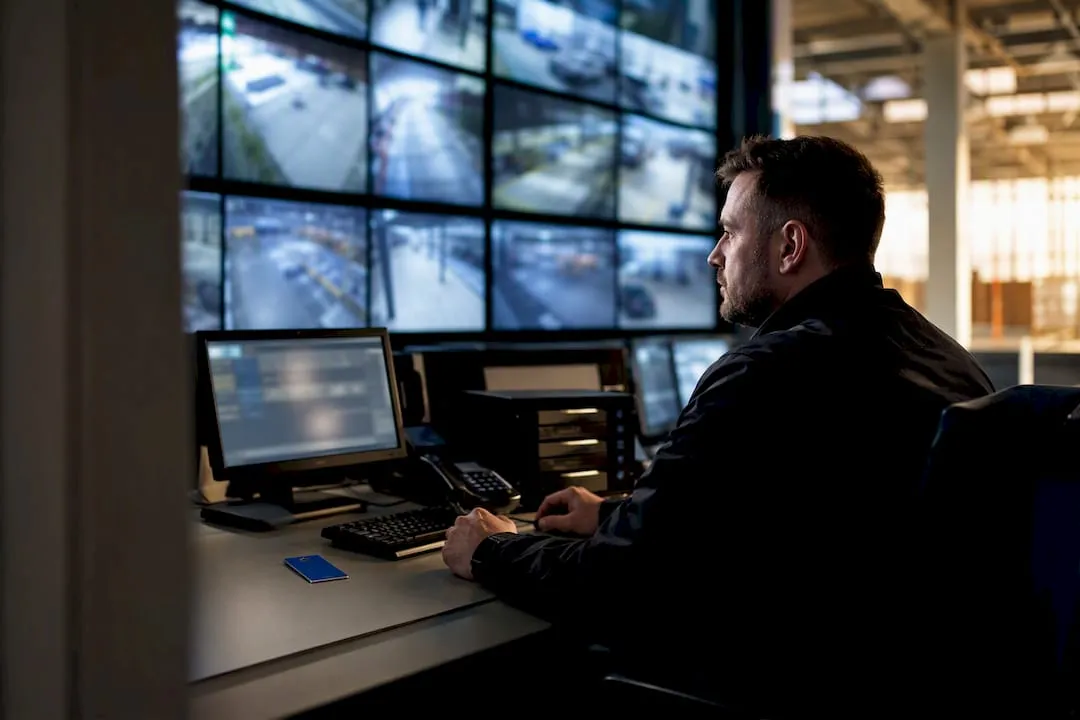
A cyber security certificate strengthens applications for CCTV operator, control room operator, CCTV technician, shift or site supervisor, mobile patrol officer, door supervisor and security manager roles. This article covers physical and private security jobs, not IT or cyber careers. Which of these you can actually work depends heavily on your SIA licence, since a door supervisor badge opens far more doors than a Security Guard licence.
TL;DR:
- A cyber security certificate boosts eligibility mainly for roles involving networked CCTV, digital incident reporting, and remote monitoring, but does not replace an SIA licence.
- CCTV control room operators, technicians, and security managers specifically benefit from digital skills, which improve job performance and employability in increasingly connected roles.
- Your SIA licence type (Door Supervisor vs Security Guard) determines your legal access to certain roles; Door Supervisor allows work at licensed venues, while Security Guard is limited to static, non-licensed sites.
- Including the certificate clearly on your CV with specific system names and matching the job advert language enhances chances during practical screening or interviews.
- The trend toward digital skills in security is rising, making hybrid roles more common, and platforms like Security Jobs Board facilitate matching candidates with digitally competent employers.
Table of Contents
- What jobs can you get with a cyber security certificate in physical security?
- Door supervisor or security guard: which licence actually gets you hired?
- How to put a cyber security certificate to work on your CV or job advert
- Where a cyber security certificate takes your security career next
- Why hybrid skills are reshaping frontline security hiring
- Finding the right hybrid role through Security Jobs Board
- Sources
- FAQ
What jobs can you get with a cyber security certificate in physical security?
The certificate doesn’t replace your SIA licence. It sits alongside it, and employers increasingly treat it as proof you can handle the digital side of a job that used to be purely physical. Here’s how it plays out role by role.
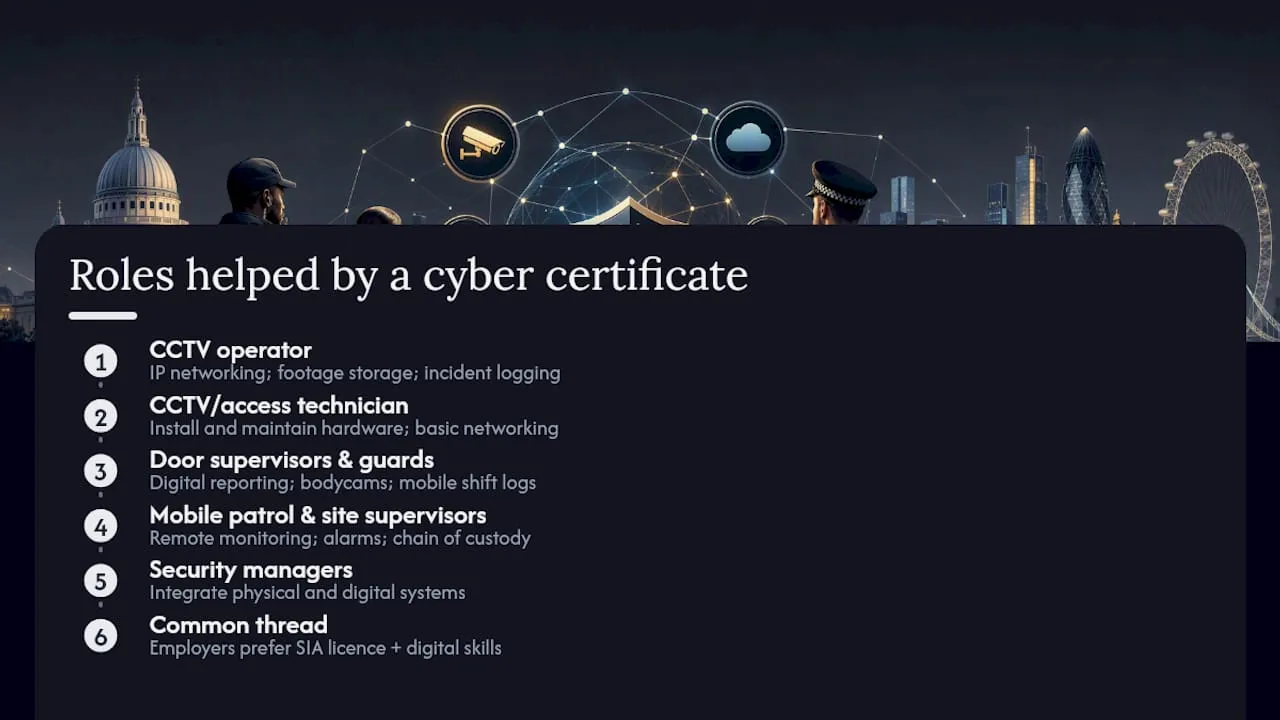
CCTV operator and control room operator roles are the clearest fit. Modern control rooms run on networked camera systems, not analogue tape decks, and operators are expected to understand basic IP networking, how footage gets stored and retrieved, and how to log an incident so the evidence holds up later. A certificate that touches on digital forensics basics or network fundamentals gives you a head start over a candidate who has only ever worked a physical patrol.
CCTV technician and access control technician posts go a step further. These roles involve fitting and maintaining hardware, liaising with vendors, and troubleshooting networked devices when a camera drops offline or an access panel stops talking to the server. Employers here often screen specifically for comfort with basic networking concepts, because a technician who panics at an IP address is a liability.
Door supervisors and security guards benefit in a quieter but still real way. Digital incident reporting has replaced the paper pad in most venues, body-worn cameras are now standard kit on many contracts, and shift logs increasingly run through a mobile app rather than a signature sheet. A certificate that demonstrates comfort with digital systems reassures an employer that you won’t need hand-holding on day one.
Mobile patrol officers and site supervisors rely on remote monitoring platforms, alarm receiving centres, and evidence gathering that has to survive scrutiny. Chain of custody matters here just as much as it does in a control room. Understanding how digital evidence needs to be handled, timestamped and stored can make you the obvious choice when a client asks for a patrol officer who can also manage their monitoring system.
Security managers and site operations leads sit at the top of this list. The job now means integrating physical guarding with digital systems, overseeing suppliers who install and maintain that kit, and reporting risk to clients who expect both worlds covered in one conversation. Employers value candidates who can bridge that gap without needing a separate IT contractor for every query.
The common thread: employers often prefer candidates who can pair an SIA licence with demonstrable digital skills, whether that’s CCTV systems knowledge, access control basics, or general network fundamentals.
Door supervisor or security guard: which licence actually gets you hired?
Your SIA licence type decides which of the jobs above you’re even allowed to apply for, and this trips up more jobseekers than it should.
A Door Supervisor licence covers licensed premises (pubs, clubs, and venues serving alcohol) and also lets you perform most standard security guard duties. A Security Guard licence excludes licensed premises entirely. If you hold only a Security Guard badge, you cannot legally work the door at a bar or nightclub, no matter how strong your CV looks otherwise.
- Door Supervisor licence: covers licensed venues, events, and most non-licensed guarding work.
- Security Guard licence: covers static roles such as retail, office, warehouse and construction site security, but not licensed premises.
- DS training usually runs slightly longer and includes physical intervention, which is why it opens more doors.
- CCTV-specific work sometimes requires additional CCTV training or public space surveillance registration on top of your core licence, so check the job advert before assuming your existing badge covers it.
Industry guidance is fairly consistent on this point: choose Door Supervisor for maximum job flexibility unless you specifically want quieter, non-licensed sites with lower conflict exposure. Many training providers now describe a standalone Security Guard licence as somewhat redundant for anyone chasing the widest possible range of vacancies, since DS licence holders can already cover almost everything a Security Guard licence permits.
That said, Security Guard licences remain the right choice for candidates who genuinely prefer static, structured shifts in retail or corporate environments and have no interest in nightlife or event work. There’s no wrong answer here, only a mismatch if you pick the narrower licence and then wonder why half the CCTV and door roles you’re applying for reject you outright.
How to put a cyber security certificate to work on your CV or job advert
Getting the wording right matters more than most jobseekers realise, and most employers still write adverts that don’t say what they actually want.
- List the certificate by name, awarding body, and date, directly under your SIA licence details. “SIA Door Supervisor Licence (valid to 2028); Cyber Security Fundamentals Certificate, [Awarding Body], 2025” reads far stronger than a vague “IT literate” line buried in your skills section.
- Use specific phrasing employers screen for. Swap “good with technology” for “experienced with networked CCTV systems and digital incident logging” or “familiar with access control hardware and basic network troubleshooting.”
- Mirror the language of the job advert. If the posting mentions body-worn cameras or mobile shift-logging apps, name the exact systems or app types you’ve used, even if it was on a previous contract rather than through formal training.
- Prepare for a practical screening. Employers increasingly run a short CCTV menu task or ask candidates to review a sample incident report during interview, rather than relying on the CV alone.
For employers writing the advert: state the required SIA licence type explicitly (Door Supervisor or Security Guard), and mark the cyber security certificate as desirable rather than essential, explaining briefly why (digital incident reporting, networked camera systems, or remote monitoring platforms). That single line filters in the candidates worth interviewing without excluding good frontline staff who simply haven’t taken the course yet.
Pro Tip: Keep a one-line “systems used” note on your CV, listing the actual CCTV or access control platforms you’ve worked with. Employers searching CV databases often filter by system name, not just certificate title.
For a fuller breakdown of which certificates carry the most weight, see what skills are needed for cyber security roles in UK physical security.
Where a cyber security certificate takes your security career next
The typical route runs operator to supervisor to manager, and the certificate accelerates each step, rather than replacing the experience you build on shift.
- Start as a CCTV or control room operator, then move into shift or site supervisor once you’ve logged enough hands-on incident and evidence-handling experience.
- Specialise sideways into access control or systems maintenance if you enjoy the technical side more than the supervisory one; a partner like EntryWatch shows how specialist visitor and access management works in higher-security environments such as data centres.
- Pair short courses in network fundamentals or access control with an upgrade to a Door Supervisor licence if you’re currently Security Guard only and want to widen your options.
- Log your on-the-job experience alongside each certificate. A certificate with no practical evidence behind it convinces fewer employers than one backed by six months of actual incident logs.
Full pathway detail sits in the cyber security career path certification guide, and the learn skills hub lists current training options worth pairing with your next licence upgrade.
Why hybrid skills are reshaping frontline security hiring
Every quarter, more vacancies on Security Jobs Board mention networked systems, digital reporting, or remote monitoring somewhere in the description, even for roles that were purely physical five years ago. That shift isn’t a trend I expect to reverse. Clients want one person who can walk a site and understand why a camera dropped off the network, rather than a guard and a separate IT callout.
Security Jobs Board is built for that reality: GDPR compliant, BSIA affiliated, and free for jobseekers to create a profile, upload a CV and set alerts. If you’re holding a cyber security certificate alongside your SIA licence, set up a profile and job alerts for CCTV, control room and supervisory roles specifically. That’s where the certificate earns its keep fastest.
— Rob
Finding the right hybrid role through Security Jobs Board
This job board connects you with employers who are hiring for digitally competent security staff, reducing the wait and guesswork compared to general job sites that list security roles among unrelated jobs.
 Insert an image here of a UK security guard, in standard UK security uniform, reviewing a mobile device or CCTV monitor in a professional British setting.
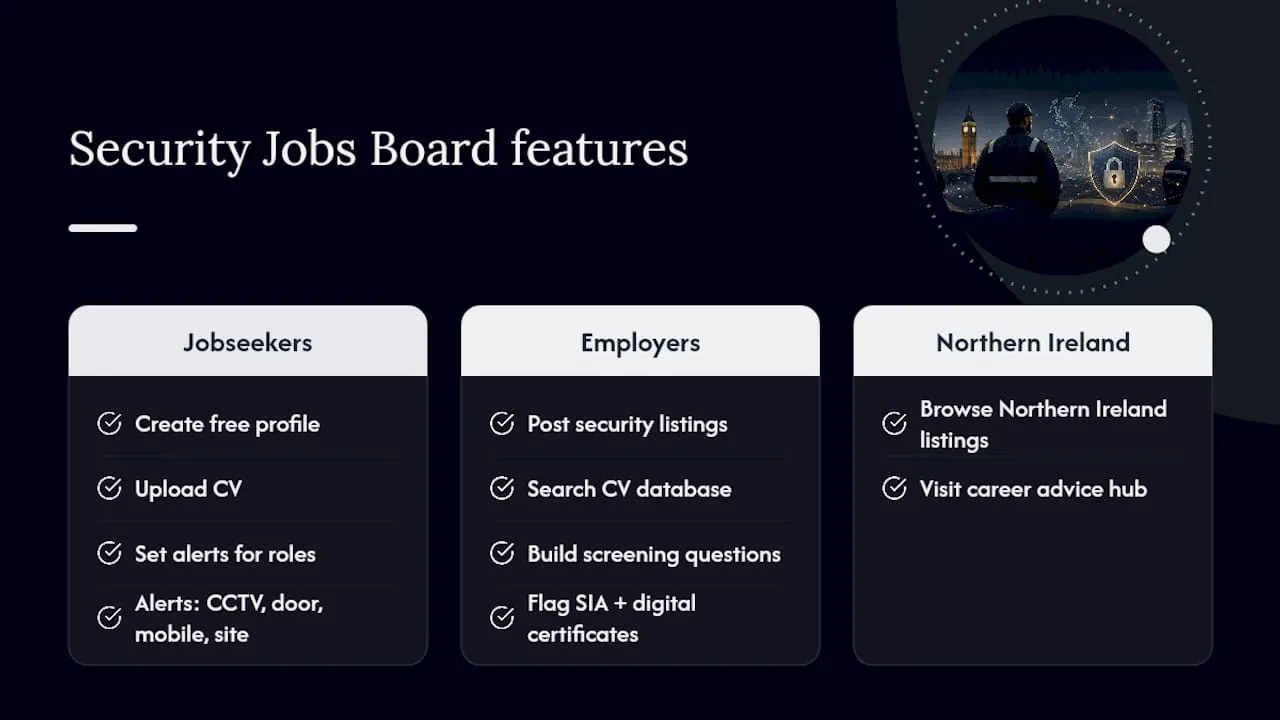
Jobseekers can create a free profile, upload a CV, and set alerts for CCTV operator, door supervisor, mobile patrol and site supervisor vacancies as soon as they’re posted. Employers can post security-specific job listings, search the CV database directly, and build screening questions that flag candidates with both an SIA licence and relevant digital certificates, so you’re not sifting through applicants who only tick one box.
If you’re hiring in Northern Ireland, browse current Northern Ireland security jobs to see how listings are structured, or visit the career advice hub for CV and interview guidance before you apply.
Sources
For the legal specifics on licence coverage, check the comparison of door supervisor and security guard roles, the breakdown of what the security guard licence covers, and current training guidance on choosing between SIA badges. For job-specific skill guidance, see types of jobs in security on Security Jobs Board.
- Door Supervisor vs Security Guard: SIA Role Differences
- SIA Security Guard Licence: What It Covers and What It Doesn’t
- Door Supervisor Vs Security Guard Licence (2026) | Which SIA Badge Do You Need?
FAQ
Can a cyber security certificate get me a job as a security guard?
Yes, it strengthens your application for roles involving digital incident reporting or networked CCTV, but you still need the correct SIA licence for the role.
Do I need a Door Supervisor licence or a Security Guard licence?
Choose Door Supervisor if you want access to licensed venues and the widest range of vacancies; choose Security Guard only if you prefer static, non-licensed sites like retail or warehousing.
Which security jobs value cyber security skills most?
CCTV operator, control room operator, CCTV technician and security manager roles benefit most, since they involve networked systems, digital evidence handling and supplier oversight.
Can I upgrade from a Security Guard licence to a Door Supervisor licence later?
Yes, but you’ll need to complete the DS-linked qualification and submit a full DS licence application; prior training isn’t automatically transferable.
Where can I search for these hybrid physical and digital security roles?
Security Jobs Board lists CCTV, control room, door supervisor and site supervisor vacancies, and lets you set free job alerts filtered by licence type and role.


