What do you need to be a security officer in 2026?

TL;DR:
- Becoming a security officer in the UK requires meeting eligibility criteria, completing approved training, and obtaining the appropriate SIA license. The most common license is the Door Supervisor, covering diverse environments and enhancing employability. The licensing process takes 2 to 6 weeks, and soft skills like observation, communication, and report writing are crucial for career progression.
Becoming a security officer in the UK means meeting a defined set of legal, personal, and professional requirements before you can work in a licensed role. The most critical requirement is holding a valid Security Industry Authority (SIA) licence, which is a legal obligation for anyone working in the private security sector. To qualify, you must be at least 18 years old, have the right to work in the UK, pass a criminal background check, and complete an approved training course. This guide covers every step, from checking your eligibility to finding your first role through platforms like Securityjobsboard.
What do you need to be a security officer: eligibility first
Before you spend money on training, you must confirm you meet the basic eligibility criteria set by the SIA. Getting this wrong is one of the most common and costly mistakes new applicants make.
The core requirements are:
- Age: You must be at least 18 years old at the time of application.
- Right to work: You must hold valid documentation proving your legal right to work in the UK, such as a British passport, biometric residence permit, or share code.
- Criminal record: The SIA assesses criminal history on a case-by-case basis. Not every conviction is disqualifying. The nature, severity, and recency of any offence all factor into the decision.
- Physical and mental fitness: Security officers respond to emergencies, requiring both stamina and sound judgement under pressure.
One point worth highlighting on criminal records: most applicants overestimate how much a minor past offence will affect their application. The SIA assesses background checks case by case, and many people with some history still qualify. The key factors are what the offence was and how long ago it occurred.
Pro Tip: Verify your eligibility with the SIA before booking any training course. Applicants who pay for training before confirming their eligibility risk losing hundreds of pounds if a disqualifying factor surfaces later.
Which SIA licence type do you actually need?
The SIA issues several licence types, and choosing the right one shapes your career options from day one. The three most relevant for aspiring security officers are the Security Guard licence, the Door Supervisor licence, and the CCTV Operator licence.
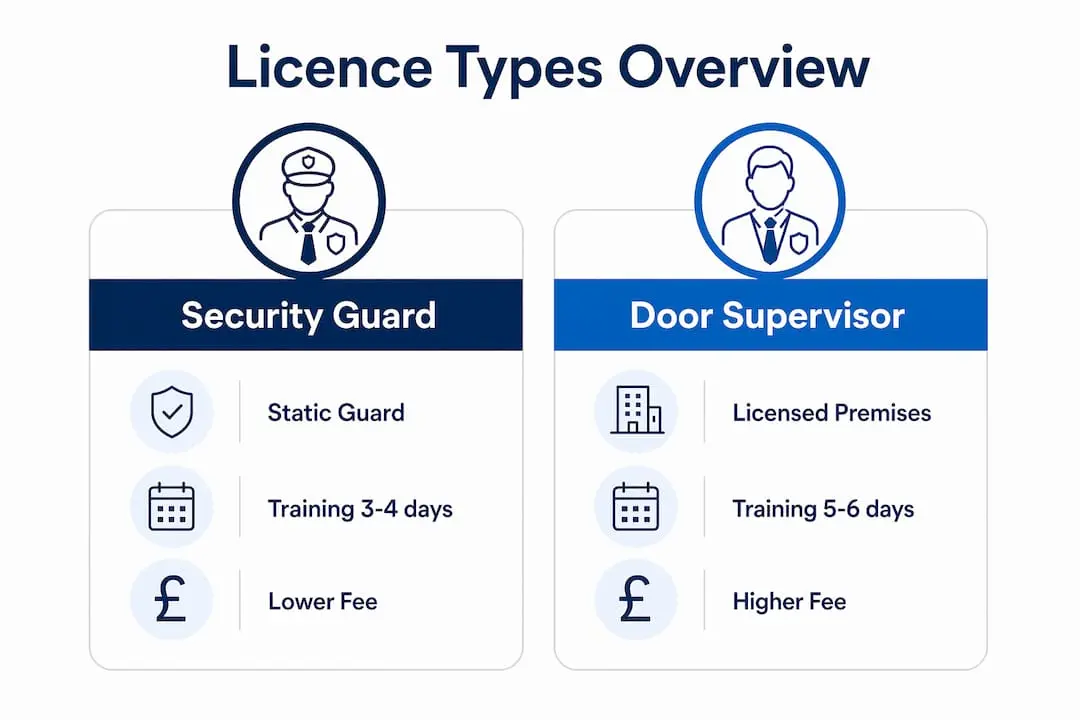
The Door Supervisor licence covers more environments than a standard Security Guard licence, including venues that serve alcohol, nightlife settings, retail, and patrol roles. This broader scope makes it the more versatile choice for long-term employability.
| Licence Type | Roles Covered | Training Duration | SIA Fee (2026) |
|---|---|---|---|
| Security Guard | Static guarding, retail, patrol | 4–6 days | £190 |
| Door Supervisor | Venues, nightlife, retail, patrol | 6–8 days | £190 |
| CCTV Operator | Surveillance, control rooms | 3–4 days | £190 |
Training duration varies by provider and prior experience. Fees are subject to change, and the SIA updates licence fees periodically, so always confirm the current rate on the official SIA website before applying. All licences require renewal, and renewal involves resubmitting documentation and paying the applicable fee again.
If you are unsure which licence fits your goals, consider the work environments you want to access. A Door Supervisor licence costs the same as a Security Guard licence but opens significantly more doors. For those interested in surveillance and technology-focused roles, the CCTV Operator licence is the logical starting point.
How does the security officer licensing process work?
The licensing process follows a clear sequence. Knowing each step in advance prevents delays and avoids common administrative errors.
- Choose an SIA-approved training provider. Only courses from providers on the SIA’s approved list count toward your licence application. Verify approval status before booking.
- Complete the required training modules. All SIA-linked courses cover legal powers, conflict management, emergency procedures, and first aid at work. Door Supervisor courses add physical intervention training.
- Gather your application documents. The licence application requires proof of identity, right to work documentation, your training qualification certificate, your National Insurance number, and the application fee.
- Submit your application online via the SIA portal. The SIA processes applications digitally. Double-check every document before submitting to avoid rejection or delays.
- Await background vetting. The criminal records check typically takes 1–4 weeks. This is the stage most applicants find frustrating, but it cannot be rushed.
- Receive your licence. The full process takes 2–6 weeks from application submission to licence arrival, depending on background check duration and course availability.
That 2–6 week window is worth planning around. If you have a job offer contingent on your licence, communicate the timeline clearly with your prospective employer. Many security firms are familiar with the process and will hold a position for a confirmed applicant.
Pro Tip: Scan and save digital copies of every document before submission. If the SIA requests additional information, having everything ready speeds up your response significantly.
What skills do security officers need beyond a licence?
A valid SIA licence gets you in the door. The skills you bring determine how quickly you progress and how long you stay employed. Employers highly value documented soft skills alongside a valid licence, and these qualities are assessed directly during interviews.
The skills that matter most in security roles include:
- Observation and situational awareness: Spotting unusual behaviour before it escalates is the core function of most security roles. This skill is developed through experience but can be practised deliberately.
- Conflict de-escalation: Communication and conflict resolution are the tools you reach for first. Physical intervention is always the last resort.
- Report writing: Accurate, timely incident reports are a legal requirement in many settings. Poor documentation creates liability for employers and officers alike.
- Customer service: Security officers in retail, hospitality, and corporate environments interact with the public constantly. A professional, approachable manner is not optional.
- Teamwork and reliability: Shift-based security work depends on colleagues trusting you to show up, communicate clearly, and follow procedures consistently.
During interviews, employers often use scenario-based questions to assess these skills. A question like “What would you do if a customer became aggressive?” is testing your de-escalation thinking, not your physical capability. Prepare specific examples from any previous work or life experience that demonstrate calm decision-making under pressure. You can read more about typical day-to-day responsibilities in this security officer duties guide.
Pro Tip: Keep a brief written record of any incident you handle during training placements or early roles. Concrete examples from real situations are far more persuasive in interviews than theoretical answers.
How to find and apply for security officer jobs after licensing
Once your SIA licence arrives, the job search begins in earnest. The security sector in the UK is large and varied, covering everything from retail loss prevention to corporate site security and event stewarding.
A focused approach to your job search saves time and produces better results:
- Target reputable employers. Look for firms that are members of the British Security Industry Association (BSIA). BSIA membership signals a commitment to professional standards and fair employment practices.
- Tailor your CV to security roles. List your SIA licence number, licence type, and expiry date prominently. Include any first aid qualifications, conflict management training, or relevant work history.
- Use specialist job boards. General job sites list security vacancies, but specialist platforms like Securityjobsboard connect you directly with employers who are actively recruiting in the UK security sector. You can follow a structured job application guide to make your applications stand out.
- Set job alerts. Securityjobsboard allows candidates to set alerts for specific roles and locations, so you hear about relevant vacancies as soon as they are posted.
- Prepare for scenario interviews. Most security employers use competency-based questions. Research the company, understand the site or environment you would be working in, and prepare examples that demonstrate your reliability and judgement.
For a more detailed approach to your search, the job search strategy guide on Securityjobsboard covers how to position yourself effectively in the current UK market.
Key takeaways
Becoming a security officer in the UK requires meeting SIA eligibility criteria, completing approved training, obtaining the correct licence, and demonstrating the professional skills employers assess at interview.
| Point | Details |
|---|---|
| Eligibility comes first | Confirm age, right to work, and criminal record status before paying for any training course. |
| Licence type shapes your career | A Door Supervisor licence covers more roles than a Security Guard licence for the same application fee. |
| The process takes 2–6 weeks | Background checks drive the timeline; prepare documents in advance to avoid delays. |
| Soft skills influence hiring decisions | Conflict resolution, report writing, and communication are assessed directly by employers at interview. |
| Specialist job boards accelerate your search | Platforms like Securityjobsboard connect licensed candidates with UK security employers actively recruiting. |
The part most guides get wrong about starting in security
People entering the security industry for the first time tend to focus almost entirely on the licence. Get the card, get the job. That logic is understandable, but it misses what actually determines whether you build a career or just fill a shift.
The candidates I see progress quickly are not always the ones with the most qualifications. They are the ones who show up prepared, communicate clearly, and handle pressure without drama. A Door Supervisor licence from an SIA-approved provider gets you past the application filter. What happens in the first three months of a role is what determines whether you get kept on, recommended to other sites, or quietly not rostered.
One thing I would push back on is the assumption that a criminal record is an automatic barrier. The SIA is more nuanced than most people expect. If you have something in your past, do not assume the worst. Check the SIA’s published guidance on spent and unspent convictions before writing yourself off.
My honest advice for anyone starting out in 2026: choose the Door Supervisor route if you can manage the slightly longer training. The extra scope is worth it. And do not underestimate how much a well-written incident report or a calm response to a difficult situation will do for your reputation with an employer. Licences are table stakes. Professionalism is the differentiator.
— Rob
Start your security career with Securityjobsboard
Once your SIA licence is in hand, the next step is finding the right role. Securityjobsboard is a UK-based platform affiliated with the BSIA, built specifically for security sector job seekers and employers.

You can create a free profile, upload your CV, and set alerts for roles that match your licence type and location. For those based in or willing to relocate, there are active security jobs in Northern Ireland listed right now across a range of environments. Securityjobsboard is free to use for candidates, GDPR-compliant, and mobile-friendly, so you can apply from anywhere. Visit Securityjobsboard to get started today.
FAQ
What qualifications do i need to be a security guard in the UK?
You need a valid SIA licence for the relevant role, which requires completing an approved training course covering legal powers, conflict management, and emergency procedures. You must also meet eligibility criteria including age 18+, right to work in the UK, and a satisfactory criminal background check.
How long does it take to get a security guard licence?
The full licensing process takes 2–6 weeks from application submission, with the background check accounting for most of that time. Having all your documents ready before applying reduces the risk of delays.
Does a criminal record stop you from becoming a security officer?
Not automatically. The SIA assesses each application individually, taking into account the nature, severity, and recency of any offence. Many applicants with minor past convictions still qualify for a licence.
What is the difference between a security guard and a door supervisor licence?
A Door Supervisor licence covers a broader range of environments including licensed premises and nightlife venues, while a Security Guard licence is primarily for static and retail roles. Both carry the same SIA application fee in 2026.
What skills do employers look for when hiring security officers?
Employers assess observation, conflict de-escalation, communication, report writing, and reliability. Soft skills directly influence hiring decisions and are typically tested through scenario-based interview questions.


