Apply within two days: 6 job-site tactics for UK jobseekers

The best approach isn’t picking one job website. It’s combining an aggregator like Indeed for volume, a niche or specialist board for sector-relevant roles, employer career pages for the freshest vacancies, and a government portal for regulated openings. This mix lifts both the number of opportunities you see and how relevant they are to your skills. Set date-filtered alerts today and start following two or three target employers directly.
TL;DR:
- Combining an aggregator like Indeed with niche job boards, employer career pages, and government portals maximizes both the volume and relevance of job opportunities.
- Setting specific, date-filtered alerts and applying early, preferably within the first days of a posting, significantly improves application success rates.
- Prioritizing employer sites with strong candidate content over general boards increases the likelihood of passing through screening and interview stages.
- Focusing on sector-specific platforms like Security Jobs Board offers quicker access to relevant, pre-filtered security roles, especially in competitive regions.
- Maintaining a simple, regular routine and verifying ads before sharing sensitive information prevents burnout and reduces exposure to scams.
Table of Contents
- What are good job websites, and which types should you use?
- How to use each site type without wasting your evenings
- How to evaluate whether a job website is actually worth your time
- What the evidence actually says about which channels produce hires
- How Security Jobs Board helps security-sector candidates
- Staying effective without burning out
- Try Security Jobs Board for a faster, more relevant search
- Sources
- FAQ
What are good job websites, and which types should you use?
“What are good job websites” isn’t really a single-answer question, because no one site does everything well. The honest answer is that good job hunting websites work in combination, each covering a gap the others leave open. Here’s how the main categories break down and what each one is actually for.
Aggregators and generalist boards pull listings from thousands of employers and smaller sites into one place. Indeed and similar large boards give you breadth and speed when you need to see a lot of live vacancies fast, which matters early in a search when you’re still working out what’s realistic. The trade-off is volume over precision: you’ll wade through plenty of postings that don’t fit.
Professional networking sites work differently. Recruiters browse these platforms directly, message candidates about roles that haven’t been publicly advertised yet, and referrals carry real weight here. If you’re mid-career or senior, this channel often surfaces opportunities before they hit any board.
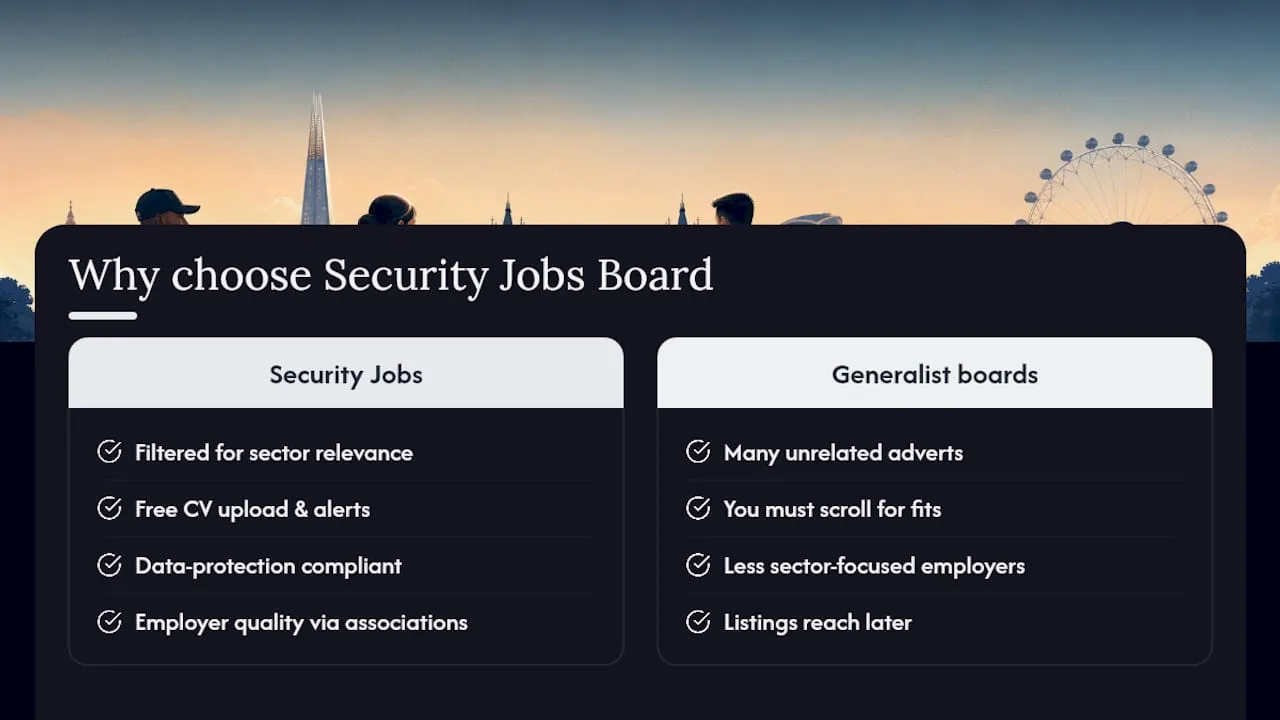
Niche and specialist boards filter for a single sector, so every listing has already cleared a relevance bar the generalist boards can’t apply. For security roles specifically, a platform such as Security Jobs Board exists precisely because generic aggregators bury sector-specific vacancies among thousands of unrelated ones.
Company career pages carry the freshest postings of all, often live before they appear anywhere else. The Eploy UK Candidate Attraction Report 2026 found that employers investing in candidate-centred career content, clear process information, interview hints, honest FAQs, consistently attract stronger applicants than employers with thin, generic career pages.
Government and public-sector portals list regulated vacancies and training-linked roles that rarely appear on commercial boards. The National Careers Service explicitly recommends checking these alongside commercial boards, not instead of them.
Recruitment agencies and CV databases earn their keep for specialised or senior roles, where a recruiter’s existing relationships and industry knowledge can open doors a job board simply can’t.
How to use each site type without wasting your evenings
Knowing the categories only helps if you actually use them well. Here’s a workflow that keeps a job search efficient rather than exhausting.
- Set narrow, high-quality alerts first. Vague alerts flood your inbox with noise; specific job titles and locations filtered by date posted keep you focused on genuinely new postings, not adverts that have been live for three weeks.
- Filter by date posted, always. Research tracking advert cadence found that seven in ten job adverts never reach ten applicants before closing, which tells you plenty of roles fill quietly and quickly. Applying within the first day or two of a posting going live matters more than most jobseekers realise.
- Optimise your CV and site profile for keywords, not just job titles. Recruiters and applicant tracking systems both search by keyword, so a CV that mirrors the language of the job description gets found more often.
- Choose ‘easy apply’ for volume roles, employer sites for ones you actually want. A quick apply button is fine for casting a wide net, but for a role you genuinely want, apply directly through the employer’s own career page, where your application often lands ahead of the board’s queue.
- Track everything in a simple log. A spreadsheet with the role, site, date applied, and follow-up date takes ten minutes to set up and saves you from losing track of forty applications across six platforms.
- Check niche boards before the mainstream ones. Specialist boards often carry vacancies days or weeks before they reach general aggregators, giving you a real head start.
Pro Tip: Follow up seven to ten days after applying if you’ve heard nothing. A short, polite email confirming your interest costs you two minutes and occasionally moves your application back to the top of the pile.
How to evaluate whether a job website is actually worth your time
Not every board that ranks well in search deserves your login details. Before you commit hours to a platform, run it through a short mental checklist.
- Freshness of listings. Postings still live after six weeks with no update are a red flag; a site with genuinely current adverts refreshes its listings regularly.
- Sector relevance. Are the adverts direct employer posts in your field, or recycled listings scraped from elsewhere? Specialist boards tend to score better here than generalist ones.
- Conversion signals, where published. Get Staffed’s Q1 2026 hiring data found that Indeed and Totaljobs generated the highest application volumes in the quarter, but other boards with far lower volume delivered stronger conversion rates from application to confirmed hire. Volume and quality are not the same signal, and the best sites for you might not be the biggest.
- Trust markers. Transparent employer details, a visible privacy policy, and clear GDPR compliance separate a legitimate board from one harvesting CVs for resale.
- Mobile responsiveness and reliable alerts. If a site’s mobile experience is clunky or its alert emails arrive erratically, that’s a sign of under-investment that likely extends to its listings too.
The takeaway from the Get Staffed figures is straightforward: a board that produces the most applications for employers isn’t automatically the one producing the most hires, and that distinction should shape which sites you prioritise, not just which ones you’ve heard of most often.
What the evidence actually says about which channels produce hires
Three sources give a clearer picture than guesswork. The National Careers Service recommends combining job boards with employer websites, recruitment agencies, and local sources rather than relying on any single channel, and it specifically flags signing up for alerts as a practical habit. The Eploy Candidate Attraction Report 2026 found that employer career sites with strong candidate content consistently outperform poorer career pages as a recruitment channel. And the Get Staffed Q1 2026 report quantifies the volume-versus-quality gap directly.
| Source | Key finding | What it means for your search |
|---|---|---|
| National Careers Service | Recommends job boards plus employer sites, agencies, and local sources together | No single site type is sufficient alone |
| Get Staffed (Q1 2026) | Indeed and Totaljobs led on application volume; other boards led on conversion to hire | Big boards for reach, smaller ones for quality |
| Eploy (2026) | Employer sites with strong candidate content outperform generic career pages | Direct employer applications deserve real weight |
How Security Jobs Board helps security-sector candidates
For UK security professionals specifically, a sector-focused platform closes gaps the generalist boards leave open. Security Jobs Board is built around exactly that principle, with editorial input from Rob and a platform designed around the realities of the security industry.
- BSIA affiliation is associated with credibility in the security sector.
- Handles profiles and CV data in compliance with data protection regulations.
- Features a mobile-responsive design suitable for jobseekers on various devices.
- Provides a sector-targeted search focused on relevant security roles.
If you’re job hunting in this sector, set an alert, upload a CV, and follow employers actively posting security vacancies. That combination alone covers most of the fast-moving roles worth chasing.
Staying effective without burning out
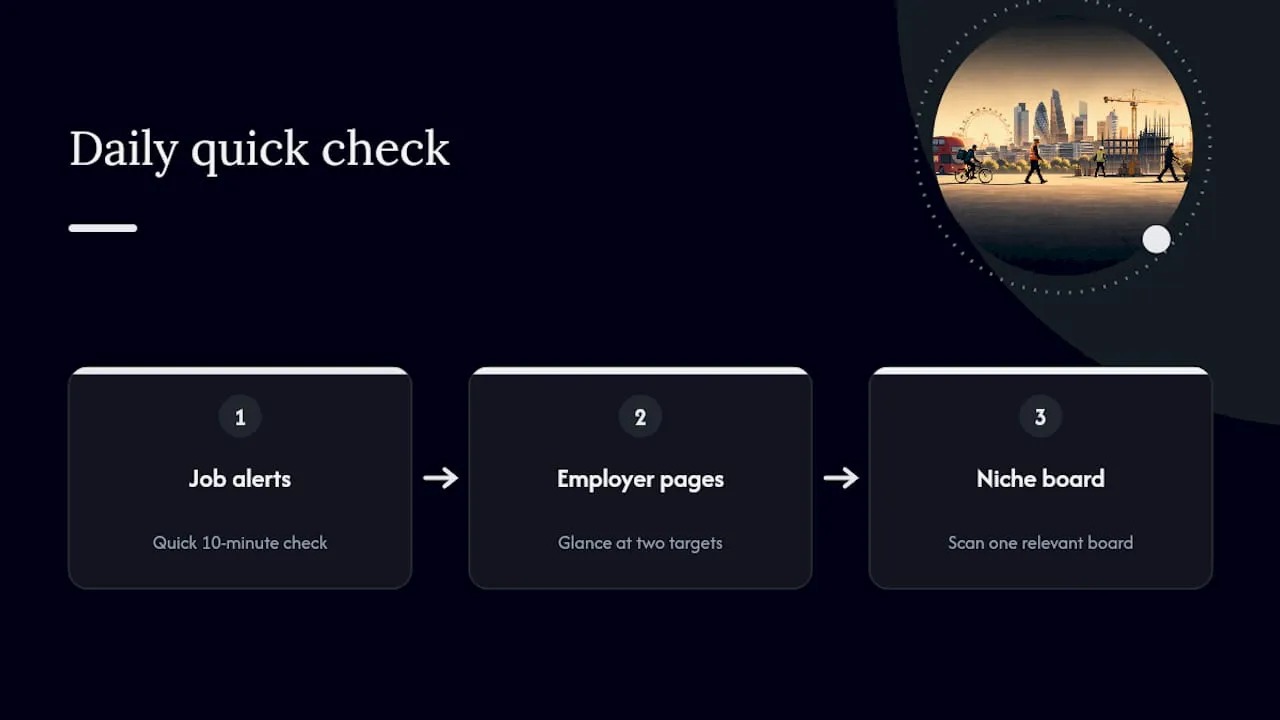
A job search rewards consistency more than intensity. My honest recommendation: run a daily quick check rather than marathon sessions, ten minutes on your alerts, a glance at two target employer career pages, one look at a niche board relevant to your sector. That rhythm keeps you visible to fresh postings without draining an entire evening.
Keep a simple tracker and review it weekly rather than daily. Weekly review shows you patterns, which sites are converting to interviews, which applications have gone cold, that daily obsessing over an inbox never reveals.
One habit gets overlooked constantly: verify an advert before handing over sensitive details. If a “vacancy” asks for bank information or a copy of your passport before any interview has taken place, treat it as a scam, not an oversight.
— Rob
Try Security Jobs Board for a faster, more relevant search
Security Jobs Board gives you what generalist boards can’t: every listing has already been filtered for relevance to your sector, so you’re not scrolling past hundreds of unrelated adverts to find the handful that fit. 
Uploading a CV and setting alerts costs nothing, and the platform handles data in compliance with data protection standards. The platform’s association with sector organizations aims to ensure quality among employers posting here. If you’re actively looking for roles in Northern Ireland, browse current security jobs in Northern Ireland and set an alert for your area today. It takes minutes, and it puts you in front of vacancies before they reach the wider boards.
Sources
For official guidance beyond this article, the National Careers Service covers job boards, employer sites, and local sources in detail. Government career support is also available through Jobhelp and regional portals such as myworldofwork. For data on channel performance, see the Eploy 2026 Candidate Attraction Report and Get Staffed’s Q1 2026 hiring figures.
- Where to find job vacancies | National Careers Service
- Q1 2026 UK Hiring Report: Job Board Stats | Get Staffed
- Eploy publishes UK Candidate Attraction Report 2026 - Eploy ATS
FAQ
What is the best website to find a job?
There isn’t one single best site. A combination, an aggregator for volume, a niche board for sector relevance, and employer career pages for freshness, consistently outperforms relying on any single platform.
What is the most trusted job site?
Trust comes down to transparency, not brand size: GDPR compliance, visible employer details, and clear contact information matter more than a site’s traffic numbers. Sector-affiliated boards, such as those with BSIA links for security roles, add an extra credibility layer.
Why is Gen Z struggling to find jobs?
Younger jobseekers often rely heavily on one or two large aggregators and miss employer career pages and niche boards, where recruiters report stronger candidate content and higher conversion, according to the Eploy 2026 report.
How fast do job adverts fill, and when should I apply?
Many adverts fill within days rather than weeks. Research tracking advert performance found that seven in ten never reach ten applicants before closing, so applying within the first day or two of a posting significantly improves your chances.
Are premium job site subscriptions worth paying for?
It depends on your sector and seniority. For most jobseekers, free tools, alerts, CV upload, and direct applications, cover the essentials; paid tiers tend to add value mainly for senior roles or highly competitive niches where visibility boosts genuinely move the needle.


