What are contractor security roles in the UK: a 2026 guide
TL;DR:
- Contractor security roles involve licensable activities regulated by the SIA, regardless of job title or employer. Most roles require valid licences, especially for tasks like access control, patrols, or CCTV monitoring, and working without a licence is a criminal offense. Pay varies from hourly rates of around £14.50 to £16.50 for frontline roles to higher salaries for supervisors and specialists, with career progression linked to gaining additional licences and experience.
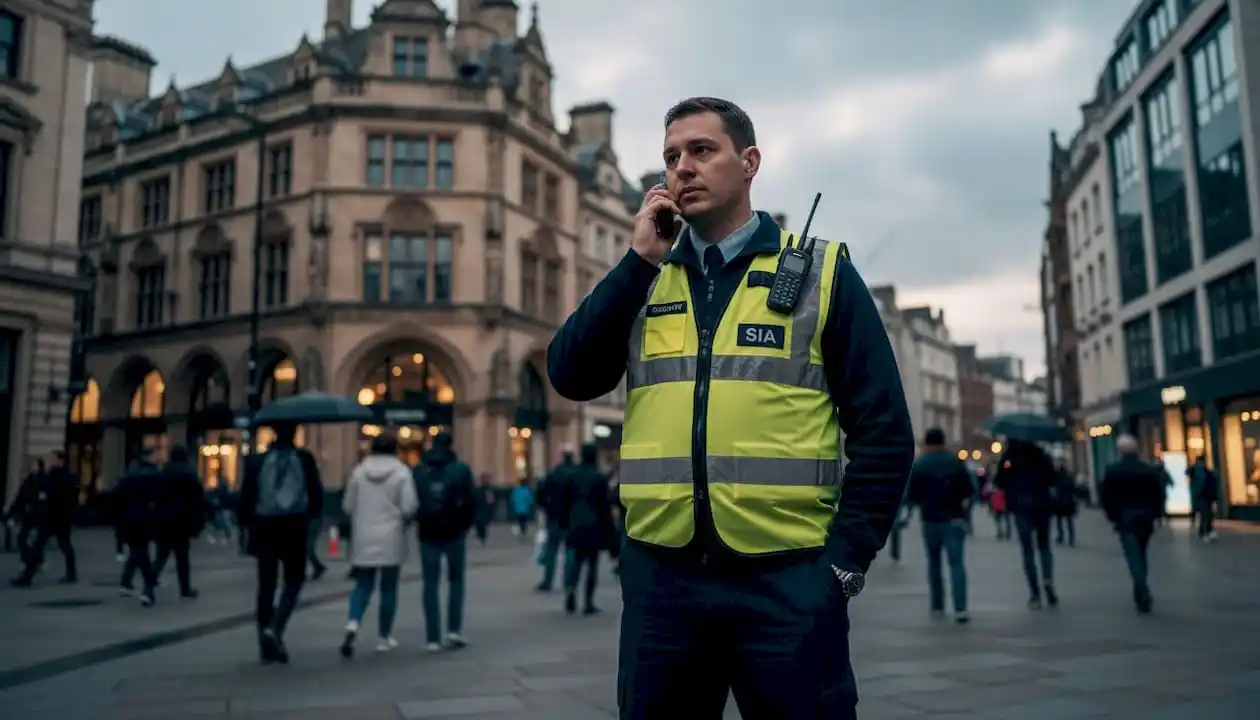
Contractor security roles are positions held by individuals employed through third-party security firms to perform licensable security activities, protecting property, personnel, or assets for client organisations under formal contractual arrangements. The legal foundation for these roles sits in the Private Security Industry Act 2001, which established the Security Industry Authority (SIA) as the regulator. Every person performing a licensable activity must hold a valid SIA licence, regardless of their job title or who employs them. Industries ranging from construction and corporate property to the public sector all engage contracted security staff, making this one of the most varied career paths in the UK.
What are the typical roles and responsibilities of security contractors?
Contractor security roles cover a wide range of functions, and the specific duties depend heavily on the site, client, and contract. The industry term for this group of positions is “contracted security services,” though most job seekers simply search for contractor security job descriptions. Understanding the distinctions between roles is the first step to choosing the right path.
Static site officers
Static site officers are the most common entry point into contracted security. They remain at a fixed post, managing access control, checking credentials, and responding to alarms. Patrol frequency varies by site risk level, from hourly rounds on low-risk sites to every 15 minutes during active hot work or when insurers require it. That variability means no two shifts are identical, even on the same site.
Mobile patrol officers
Mobile patrol officers cover multiple sites in a single shift, driving between locations to conduct checks, respond to incidents, and complete written logs. The role demands strong time management and the ability to assess situations quickly with little backup nearby. Securityjobsboard lists mobile patrol positions across the UK, reflecting consistent demand from clients who need flexible, cost-effective coverage. You can read more about what this work involves in this guide to mobile patrol security.

CCTV monitoring operatives
CCTV operatives work in control rooms, monitoring live feeds from public spaces, car parks, retail environments, and commercial buildings. The role requires concentration over long periods and the ability to identify and report suspicious behaviour accurately. A separate SIA CCTV licence is required for this work, making it a distinct specialism rather than a general guarding role.
Site supervisors and specialist roles
Site supervisors manage teams of officers, liaise directly with clients, and produce operational reports. Supervisory roles typically pay £30,000 to £38,000 annually, compared to hourly rates for frontline staff. Specialist positions include event security, close protection officers, and construction site security, each carrying its own set of contractor security responsibilities and licensing requirements.
How does licensing and legal regulation shape contractor security roles?
The SIA licence is the single most important legal requirement in contracted security. Licensing applies to activities, not job titles. A person working as a concierge or receptionist still requires an SIA licence if their duties include managing access or monitoring CCTV in a public area. This is one of the most misunderstood aspects of the industry, and it catches out both workers and employers.
Contracted security agencies take on the regulatory liability for licensing and compliance, which is why clients outsource to them rather than hiring directly. The agency handles DBS checks, insurance, and licence verification. That shifts the burden away from the client, but it does not remove the individual officer’s personal responsibility to hold a valid licence before starting work.
Working without a licence while performing licensable activities is a criminal offence under the Private Security Industry Act 2001. The consequences fall on both the individual and the provider. Officers risk prosecution, and firms risk losing contracts and SIA approval. The step-by-step process for obtaining your licence is covered in this SIA licence guide.
The Approved Contractor Scheme (ACS) adds another layer of quality assurance. ACS-approved providers carry higher standards, offer structured training, and can bid for government, NHS, and Ministry of Defence contracts. Choosing an ACS employer is not just a career preference. It directly affects the quality and stability of the contracts you will work on.
Pro Tip: Before accepting any contractor security role, ask the employer directly whether they hold ACS approval. Non-ACS firms can still operate legally, but ACS status signals a higher standard of compliance and training, which protects you as well as the client.
Employment status is another area of confusion. Most security ‘contractors’ in the UK are not self-employed. They are PAYE employees of a security agency, placed at client sites under a service contract. Misclassification as self-employed when you are actually a PAYE worker creates tax and employment rights problems. Always clarify your employment status before signing any agreement.
What are the career pathways and pay expectations within contractor security roles?
Pay and progression in contracted security follow a clear structure, though rates vary by sector, location, and employer. Entry-level guarding roles are paid hourly, while supervisory and management positions move to annual salaries.
| Role | Typical pay | Key requirement |
|---|---|---|
| Static security officer | £14.50–£16.50 per hour | SIA Door Supervisor or Security Guard licence |
| Mobile patrol officer | £14.50–£16.50 per hour (plus vehicle allowance) | SIA licence, clean driving licence |
| CCTV operative | £13.00–£15.00 per hour | SIA CCTV Public Space Surveillance licence |
| Site supervisor | £30,000–£38,000 per year | SIA licence, management experience |
| Close protection officer | Above standard guarding rates | SIA Close Protection licence |
Night shifts, high-profile contracts, and specialist environments command pay premiums above the standard range. Construction site security, for example, often pays above the standard guarding rate due to the physical demands and outdoor conditions involved.
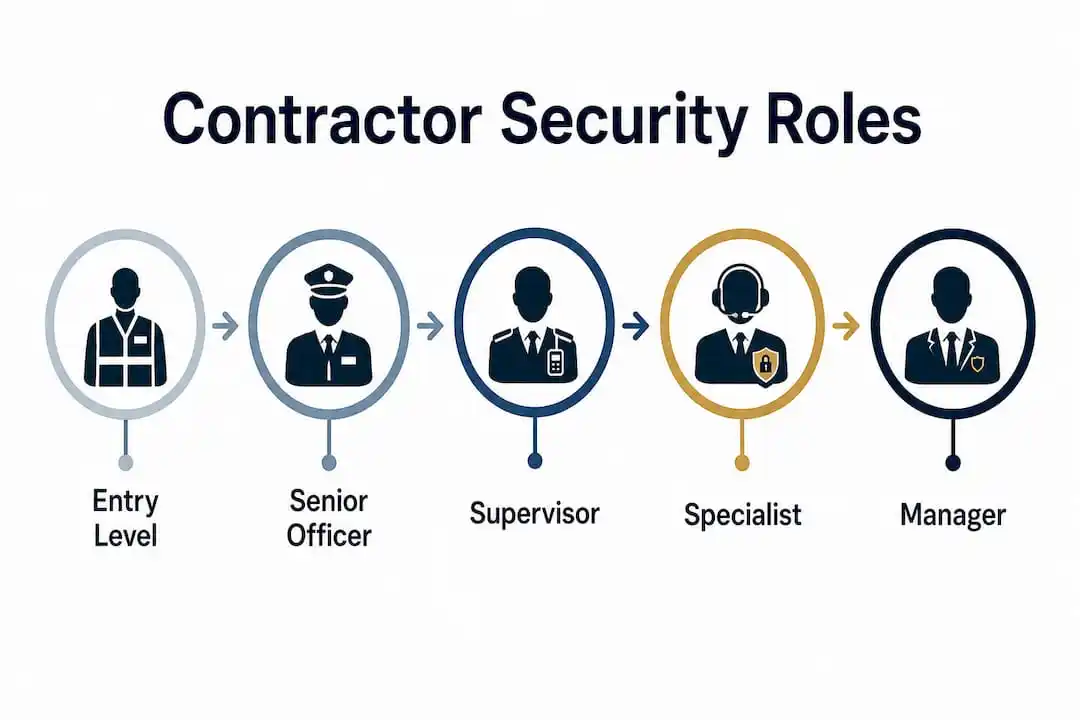
Career progression typically moves from frontline officer to senior officer, then to supervisor, and eventually to contract or operations manager. The fastest route upward involves gaining additional SIA licences, completing first aid qualifications, and building a record of reliable, well-documented incident reporting. Working with an ACS-approved employer accelerates this, as these firms offer structured training programmes and access to larger, more complex contracts. For a fuller picture of career paths in security, Securityjobsboard has a dedicated resource covering the full range of contracted positions.
What are the variations in contractor security roles by industry and site type?
The duties of a contracted security officer change significantly depending on the environment. The core licence requirement stays the same, but the day-to-day work, risk profile, and required skills differ across sectors.
Construction sites require officers to manage gate access, log contractor sign-ins, handle deliveries, conduct patrols, and manage trespassers within the limits of lawful reasonable force. Construction site duties also include CCTV monitoring and alarm response, often overnight when the site is unmanned. The outdoor nature of the work means weather tolerance and physical fitness are non-negotiable.
Corporate and commercial sites focus on visitor management, access control, and alarm response. The environment is more formal, and officers often work alongside reception staff. Communication skills matter more here than physical presence, as the role involves regular interaction with employees, visitors, and management.
Event security is dynamic and unpredictable. Officers manage crowd flow, respond to incidents, and work closely with police and event organisers. The SIA Door Supervisor licence is the standard requirement for this work. Shifts are irregular and often involve evenings and weekends, which suits some candidates and rules out others.
Public sector and infrastructure contracts, including NHS sites and government buildings, require ACS-approved providers and often involve stricter vetting. These roles offer greater stability and more structured working patterns. Security roles in the logistics and transport sector follow a similar model, with officers managing access to warehouses and distribution centres. Roles of this type across Europe, including security contractor responsibilities in logistics settings, share many of the same access control and patrol functions seen in UK contracted security.
What skills and attributes make security contractors effective?
Technical qualifications get you through the door. The skills below determine whether you progress.
- Legal and procedural knowledge. You must understand your powers, your limits, and the site rules you are enforcing. Acting outside your authority creates liability for you and your employer.
- Communication skills. Most security incidents are resolved through clear, calm communication before they escalate. Officers who can de-escalate verbally are far more valuable than those who rely on physical presence alone.
- Accurate reporting. Incident logs, handover notes, and CCTV records are legal documents. Errors or omissions can undermine prosecutions, insurance claims, and your own professional credibility.
- Physical fitness and alertness. Patrol roles require sustained attention and the ability to work outdoors in all weather. Fatigue is a genuine risk on long shifts, particularly nights.
- Technological literacy. Modern sites use integrated alarm systems, access control software, and IP-based CCTV. Officers who can operate these systems confidently are more employable and more effective.
- Reliability and independence. Contracted officers often work alone or in small teams with minimal supervision. Clients expect consistent performance without constant management.
Pro Tip: Keep a personal log of every site you work on, every incident you handle, and every training course you complete. This record becomes your professional portfolio and gives you concrete evidence of competence when applying for supervisory roles or specialist contracts.
For a full breakdown of the requirements to enter the profession, the security officer requirements guide on Securityjobsboard covers the current 2026 standards in detail.
Key takeaways
Contractor security roles are defined by the activities performed, not the job title held, and every licensable activity requires a valid SIA licence under the Private Security Industry Act 2001.
| Point | Details |
|---|---|
| Licensing is activity-based | An SIA licence is required for any licensable task, regardless of job title or employer type. |
| ACS approval matters | Working for an ACS-approved firm improves training quality, contract stability, and access to public sector work. |
| Pay scales are tiered | Frontline officers earn £14.50–£16.50 per hour; supervisors earn £30,000–£38,000 annually. |
| Employment status is often misunderstood | Most security ‘contractors’ are PAYE agency employees, not self-employed, with distinct tax and rights implications. |
| Role duties vary by sector | Construction, corporate, event, and public sector sites each require different skills and carry different risk profiles. |
What I’ve learned about contractor security careers that most guides miss
The biggest mistake I see aspiring security professionals make is treating the SIA licence as the finish line. It is the starting point. The licence tells an employer you are legal. It tells them nothing about whether you are reliable, composed under pressure, or capable of writing an incident report that holds up in court.
The second thing most guides skip is the ACS question. Candidates accept roles without asking whether the employer holds ACS approval, then find themselves on poorly managed contracts with minimal training and no clear progression. ACS status is not a guarantee of a great employer, but it is a meaningful filter. Firms that invest in ACS accreditation are making a deliberate commitment to standards. That commitment usually shows up in how they treat their staff.
The contractor model itself is worth understanding clearly before you sign anything. You are almost certainly going to be a PAYE employee of an agency, not a self-employed contractor in the traditional sense. That distinction matters for your tax position, your holiday entitlement, and your rights if a contract ends. Read your contract carefully and ask questions if the employment status is unclear.
Finally, role versatility is underrated. Officers who hold both a Security Guard licence and a Door Supervisor licence, and who have CCTV experience, are significantly more deployable than those with a single qualification. Employers fill gaps with versatile people. If you want consistent hours and faster progression, build your licence portfolio early.
— Rob
Contractor security jobs available now on Securityjobsboard
Securityjobsboard connects security professionals across the UK with verified contractor roles, from static guarding and mobile patrol to CCTV and supervisory positions. The platform is free to use for candidates, GDPR-compliant, and affiliated with the BSIA, giving you confidence that the listings meet industry standards.

Whether you are just starting out or looking to move into a specialist or supervisory role, Securityjobsboard makes it straightforward to find relevant opportunities without sifting through generic job boards. If you are based in Northern Ireland or open to roles there, browse the current security jobs in Northern Ireland listings for live contractor vacancies. Create your free profile, upload your CV, and set job alerts so the right roles come to you.
FAQ
Do security contractors need an SIA licence?
Yes. Any individual performing licensable security activities in the UK must hold a valid SIA licence, regardless of their job title or whether they work through an agency.
What is the difference between a static officer and a mobile patrol officer?
A static officer remains at a fixed post on a single site, while a mobile patrol officer travels between multiple sites during a shift, conducting checks and responding to incidents at each location.
Are security contractors self-employed?
Most security ‘contractors’ in the UK are PAYE employees of a security agency, not self-employed. Misclassification as self-employed can create serious tax and employment rights problems.
What does ACS approval mean for a security employer?
ACS-approved providers meet higher SIA standards, offer better training, and can bid for government and public sector contracts, making them more stable employers for contracted security staff.
How much do contractor security roles pay in the UK?
Frontline guarding roles typically pay £14.50–£16.50 per hour, with site supervisors earning £30,000–£38,000 annually. Specialist roles and night shifts command higher rates.


