Mobile Patrol Security – Why It Matters in the UK
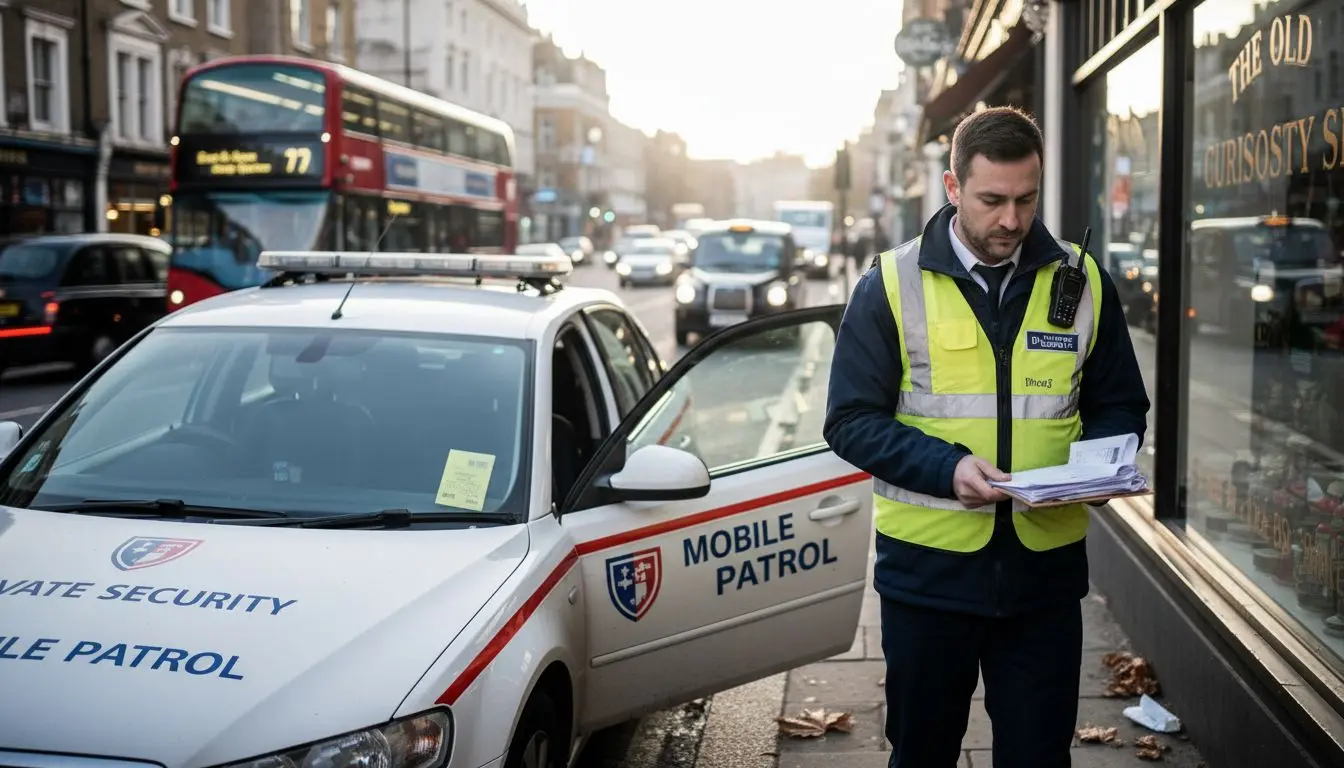
Mobile patrols now protect more than half of all commercial properties across the British security industry. With evolving threats and rising demand for flexible protection, understanding how these patrols operate is crucial for security professionals and those considering a move into this field. This guide breaks down mobile patrol duties, service types, legal requirements, and employer expectations, giving you a practical overview of what makes this role a vital component in modern British security.
Table of Contents
- What Is Mobile Patrol in UK Security?
- Key Types of Mobile Patrol Services
- Mobile Patrol Officer Roles and Duties
- Legal Requirements and SIA Licensing
- Real-World Benefits and Employer Considerations
Key Takeaways
| Point | Details |
|---|---|
| Mobile Patrol Significance | Mobile patrols provide a dynamic security presence, deterring criminal behaviour through proactive monitoring of designated areas. |
| Types of Patrols | Vehicle, foot, and bicycle patrols each serve unique purposes and environments, offering flexibility in security coverage. |
| Officer Responsibilities | Mobile patrol officers engage in surveillance, emergency response, and community interaction, utilising technology for effective operations. |
| Legal Compliance | SIA licensing is crucial for mobile patrol security professionals, ensuring adherence to standards and maintaining public safety. |
What Is Mobile Patrol in UK Security?
Mobile patrol represents a dynamic and proactive security approach within the United Kingdom’s protection ecosystem. At its core, mobile patrol involves security professionals systematically monitoring designated areas using vehicles, bicycles, or foot patrols to prevent potential criminal activities and maintain public safety.
The primary objective of mobile patrols is creating a visible, responsive security presence that deters criminal behaviour. These professionals do not simply drive or walk through an area; they actively monitor security hotspots with strategic intent. Their responsibilities encompass:
- Conducting regular area inspections
- Checking access points and perimeters
- Responding to potential security incidents
- Documenting and reporting suspicious activities
- Supporting local law enforcement when necessary
Mobile patrol teams differ from static security guards by maintaining constant movement and flexibility. Rather than remaining stationed at a single location, these professionals cover broader territories, providing comprehensive surveillance and rapid response capabilities. This approach allows for more efficient resource allocation and enhanced protection across larger geographical zones.

Pro tip: When considering mobile patrol services, always verify the security team’s training credentials, communication protocols, and response time metrics to ensure comprehensive protection.
Key Types of Mobile Patrol Services
Mobile patrol services in the United Kingdom offer diverse approaches to security, each designed to address specific protection needs. Vehicle patrols, foot patrols, and bicycle patrols represent the primary categories of mobile security deployment, each with unique advantages and strategic applications.
Vehicle patrols are the most common mobile security service, enabling rapid response and extensive area coverage. Security teams use specialised vehicles to monitor large territories quickly, making them ideal for industrial estates, rural locations, and expansive commercial properties. These patrols typically involve trained security personnel equipped with communication devices, mapping technology, and incident reporting systems.
Foot patrols offer a more intimate and detailed security approach, allowing officers to interact directly with environments and communities. These patrols are particularly effective in:
- Urban residential areas
- Shopping centres
- University campuses
- Public parks and recreational spaces
- High-density commercial districts
Bicycle patrols represent a versatile and environmentally friendly mobile security option. They provide exceptional manoeuvrability in crowded or restricted spaces where vehicles cannot easily navigate. Bicycle patrol officers can quickly traverse pedestrian zones, park areas, and complex urban landscapes while maintaining a visible and approachable security presence.
Pro tip: When selecting a mobile patrol service, assess the specific security requirements of your location and choose a patrol type that offers the most appropriate coverage and response capabilities.
Here is a comparative overview of mobile patrol types and their typical deployment environments:
| Patrol Type | Coverage Area | Best Used For | Environmental Impact |
|---|---|---|---|
| Vehicle Patrol | Large, dispersed | Industrial sites, rural areas | Higher fuel consumption |
| Foot Patrol | Small, concentrated | Urban centres, campuses | Minimal, pedestrian-based |
| Bicycle Patrol | Medium, complex | Parks, pedestrian zones | Low, eco-friendly option |
Mobile Patrol Officer Roles and Duties
Mobile patrol officers play a critical role in maintaining public safety and security across various environments in the United Kingdom. Their responsibilities extend far beyond simply walking or driving through an area, encompassing a comprehensive approach to crime prevention and community protection.
Police patrol officers perform multifaceted duties that require exceptional situational awareness and interpersonal skills. Their core responsibilities include:
- Conducting systematic area surveillance
- Deterring potential criminal activities
- Responding to emergency incidents
- Documenting and reporting security breaches
- Interacting with community members
- Supporting local law enforcement initiatives
Technological proficiency is increasingly crucial for modern mobile patrol officers. They must be adept at using communication devices, GPS tracking systems, incident reporting software, and mobile data terminals. These tools enable rapid information sharing, precise location tracking, and efficient coordination with control rooms and other security personnel.
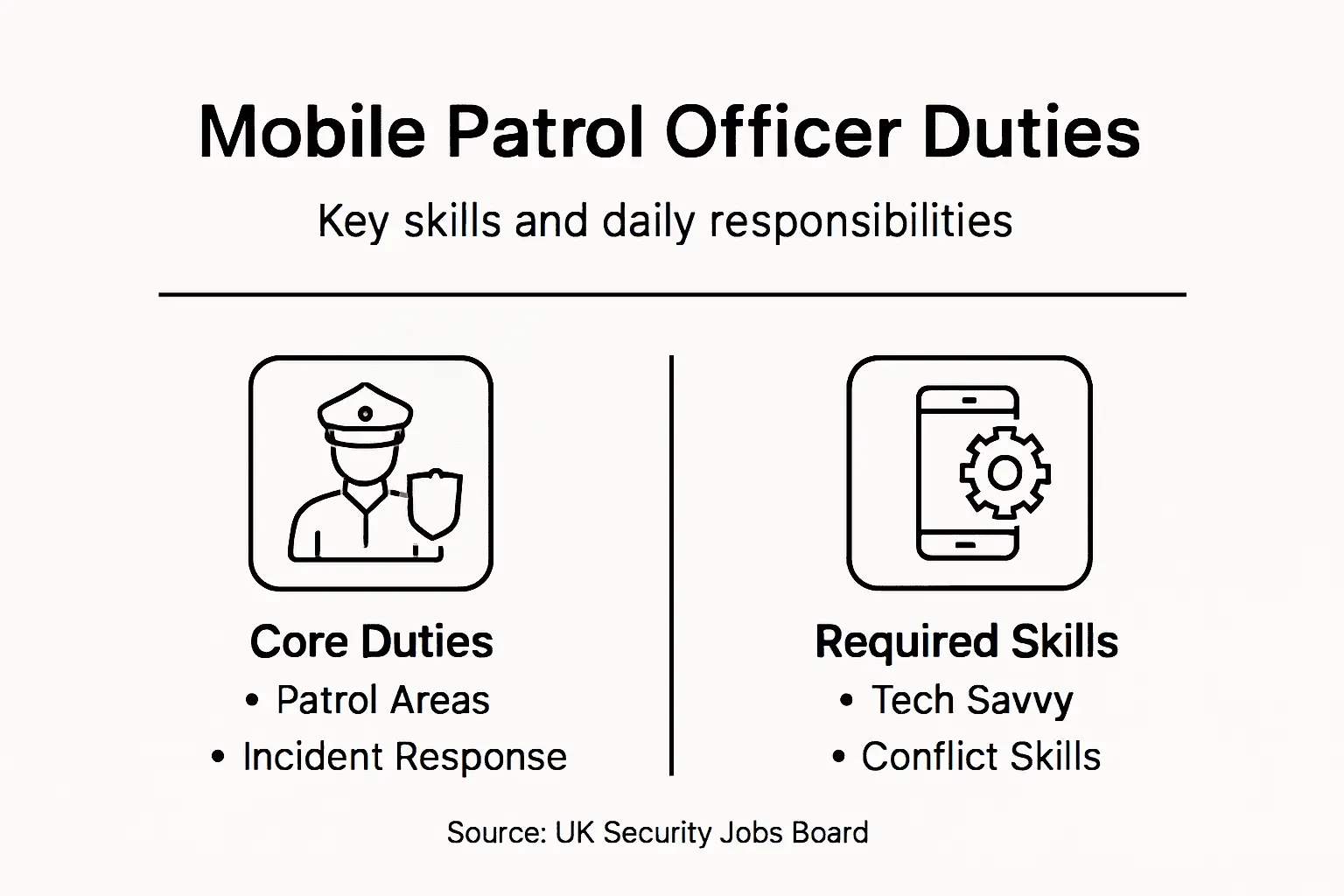
Below is a summary of key technology used by modern mobile patrol officers:
| Technology | Purpose | Business Benefit |
|---|---|---|
| GPS tracking | Location monitoring | Accurate response, efficient routes |
| Incident reporting | Documenting security events | Legal protection, data analysis |
| Communication radios | Team coordination | Faster incident resolution |
Beyond technical skills, mobile patrol officers must possess strong emotional intelligence and conflict resolution capabilities. They frequently encounter challenging situations requiring calm, professional interactions with individuals in distress, potential offenders, or members of the public seeking assistance. Quick decision-making, legal knowledge, and the ability to de-escalate tensions are paramount in ensuring both public safety and personal security.
Pro tip: Aspiring mobile patrol officers should focus on developing robust communication skills, maintaining physical fitness, and continuously updating their knowledge of legal procedures and security technologies.
Legal Requirements and SIA Licensing
Mobile patrol security professionals in the United Kingdom must navigate a comprehensive legal framework governed by the Security Industry Authority (SIA). Mandatory licensing requirements protect public safety and establish professional standards for security personnel operating in both public and private environments.
To legally work in mobile patrol security, individuals must obtain a specific SIA license that validates their professional competence. The licensing process involves several critical steps:
- Verifying age and work eligibility
- Completing approved training courses
- Passing comprehensive background checks
- Demonstrating professional knowledge through assessments
- Maintaining ongoing professional development
The SIA license is not a one-time achievement but a continual commitment to professional standards. Each license is valid for a specific period, typically three years, after which professionals must renew their credentials through additional training and reassessment. This approach ensures that mobile patrol officers remain updated on current security practices, legal requirements, and emerging technological developments.
Criminal record checks form a crucial component of the licensing process. Prospective mobile patrol officers must have a clean background or demonstrate rehabilitation, as the SIA conducts thorough vetting to maintain the integrity of the security profession. Failure to obtain proper licensing can result in significant legal penalties, including fines and potential criminal prosecution for operating without authorisation.
Pro tip: Always verify your SIA license status and renewal requirements well in advance to maintain continuous legal compliance in your mobile patrol security career.
Real-World Benefits and Employer Considerations
Mobile patrol security represents a critical strategic asset for organisations seeking comprehensive protection and risk management. Targeted security patrols reduce crime while simultaneously enhancing public confidence and organisational reputation.
Employers recognise multiple strategic advantages of implementing mobile patrol services. These benefits extend beyond traditional security measures and include:
- Proactive threat prevention
- Cost-effective security coverage
- Enhanced situational awareness
- Rapid incident response capabilities
- Flexible deployment across diverse environments
- Demonstrable risk mitigation
Modern mobile patrol services leverage advanced technological integration, enabling real-time monitoring, data collection, and predictive risk assessment. Employers can utilise sophisticated tracking systems, communication platforms, and analytics tools to optimise patrol strategies, allocate resources efficiently, and develop data-driven security protocols.
The psychological impact of mobile patrols should not be underestimated. A visible security presence acts as a powerful deterrent, signalling to potential offenders that an area is actively monitored and protected. This approach not only reduces criminal activities but also creates a sense of safety among employees, customers, and local communities, ultimately contributing to a more secure and confident operational environment.
Pro tip: When selecting mobile patrol services, prioritise providers who offer comprehensive training, technological integration, and adaptable security strategies tailored to your specific organisational needs.
Secure Your Future in Mobile Patrol Security with The Security Jobs Board
The article highlights the crucial role of mobile patrol teams in maintaining safety across the United Kingdom by providing proactive, flexible security presence and quick response capabilities. Finding the right opportunities in this specialised field requires access to reliable and targeted recruitment platforms that understand the unique demands of mobile patrol roles, including SIA licensing and advanced technology use. If you are eager to join or expand your career in this dynamic security sector, connecting with employers who value expertise in vehicle, foot, and bicycle patrols is essential.

Take control of your security career today by exploring tailored mobile patrol job vacancies on The Security Jobs Board where you can swiftly create a professional profile and upload your CV for free. Employers actively seek candidates who meet licensing requirements and can confidently use communication and tracking technology to deliver top-tier protection. Do not miss this opportunity to step into roles that offer growth and purpose within the UK security industry. Visit The Security Jobs Board now and start applying to positions that match your mobile patrol skills and ambitions.
Frequently Asked Questions
What is mobile patrol security?
Mobile patrol security involves security professionals systematically monitoring designated areas using vehicles, bicycles, or foot patrols to prevent criminal activities and maintain public safety.
What types of mobile patrol services are available?
The primary types of mobile patrol services include vehicle patrols, foot patrols, and bicycle patrols, each tailored to specific environments and security needs.
What are the key roles and duties of mobile patrol officers?
Mobile patrol officers conduct area surveillance, deter criminal activities, respond to emergencies, document security breaches, and interact with community members to enhance safety.
What legal requirements must mobile patrol officers meet?
Mobile patrol officers must obtain a specific license from the Security Industry Authority (SIA) that validates their professional competence, following rigorous training and background checks.


