What Is Security Patrol and Why It Matters UK

Over 85 percent of British organisations rely on regular security patrols to safeguard their premises and deter potential threats. With property crime costing billions each year in the United Kingdom, the role of security patrol officers has never been more vital. Understanding what security patrol actually means—and how these teams actively protect people, assets, and public spaces—offers valuable insight for anyone invested in safety, peace of mind, or compliance across all British sectors.
Table of Contents
- Defining Security Patrol And Its Purpose
- Main Security Patrol Types And Methods
- Essential Security Patrol Responsibilities UK
- Training, Licensing And Legal Requirements
- Risks, Liabilities And Common Challenges
Key Takeaways
| Point | Details |
|---|---|
| Purpose of Security Patrol | Security patrols aim to monitor, prevent, and respond to security threats while providing a visible deterrent against criminal activities. |
| Types of Patrol Methods | Various patrol methods, including initial, routine, random, and incident response patrols, are employed to address specific security needs. |
| Training and Licensing | Security professionals in the UK are required to undergo extensive training, adhere to legal requirements, and maintain ongoing education to ensure competence. |
| Challenges and Risks | Security patrols face numerous challenges such as potential confrontations and legal liability, necessitating strong situational awareness and adaptive strategies. |
Defining Security Patrol and Its Purpose
Security patrol represents a critical protective strategy employed by organisations to monitor, prevent, and respond to potential security threats. At its core, security patrol involves systematically observing and safeguarding physical spaces through trained personnel who proactively detect and mitigate risks.
The primary purpose of security patrols extends far beyond simple surveillance. Security professionals conduct systematic observation and protection of properties with several strategic objectives. These include:
- Providing a visible deterrent to potential criminal activities
- Monitoring high-risk areas and access points
- Identifying potential security vulnerabilities
- Detecting and responding to safety hazards
- Ensuring proper functioning of security systems and equipment
Moreover, security patrols serve as an essential preventative measure that significantly reduces the likelihood of security breaches. By systematically monitoring sites and identifying potential weaknesses, these professionals create a comprehensive protective environment that safeguards people, property, and assets.
Effective security patrols require highly trained personnel who understand nuanced threat assessment, rapid response protocols, and comprehensive situational awareness. Their role is not merely reactive but proactively anticipates and prevents potential security challenges before they escalate.
Main Security Patrol Types and Methods
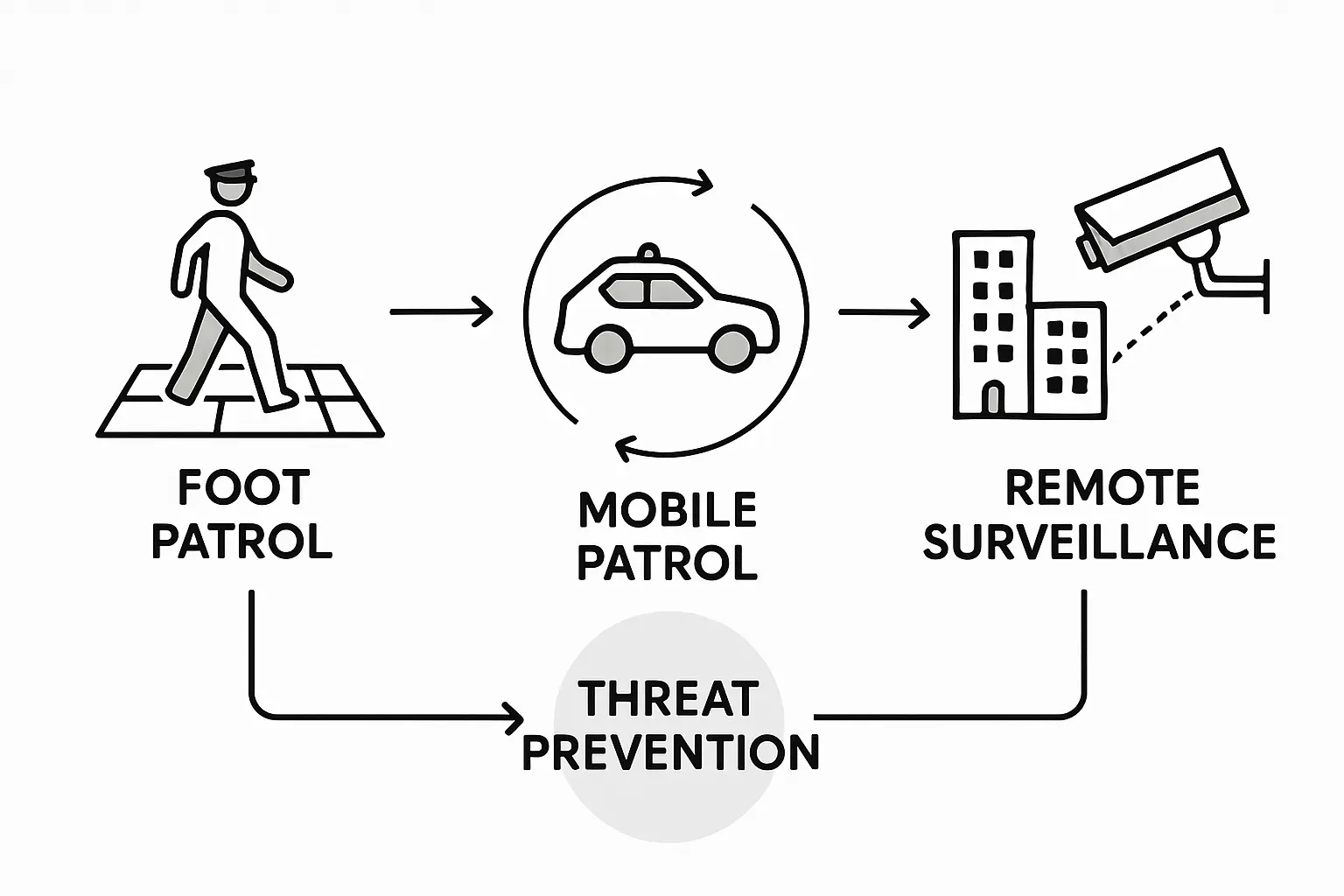
Security professionals employ multiple patrol strategies to ensure comprehensive protection and risk management. Patrol methods range from structured approaches to dynamic response techniques, each designed to address specific security requirements and potential threats.
Different types of security patrols include specialised approaches that address various operational needs:
- Initial Patrols
- Conducted to first identify potential problems
- Establish baseline security conditions
- Assess immediate risks and vulnerabilities
- Routine Patrols
- Regular scheduled inspections
- Maintain consistent security presence
- Provide continuous deterrence against potential incidents
- Random Patrols
- Unpredictable patrol patterns
- Prevent criminals from anticipating security movements
- Enhance overall site security effectiveness
- Incident Response Patrols
- Targeted responses to specific security events
- Rapid deployment to address emerging threats
- Immediate investigation and mitigation
Effective patrolling requires implementing key principles and advanced techniques that go beyond simple walking routes. Modern security professionals utilise sophisticated strategies including electronic tracking, varied patrol timings, and comprehensive communication protocols.

Successful security patrols demand more than physical presence. They require strategic planning, technological integration, and a proactive approach to identifying and neutralising potential security risks before they escalate.
Essential Security Patrol Responsibilities UK
Security patrol responsibilities in the United Kingdom encompass a comprehensive range of critical tasks designed to protect people, property, and organisational assets. These professionals serve as the frontline defence for businesses, institutions, and public spaces across various sectors.
Professional security operatives are responsible for protecting people, assets, and premises through a multifaceted approach that includes:
- Enforcing legal requirements and organisational policies
- Monitoring assigned areas to deter criminal activity
- Responding promptly to alarms and emergency situations
- Conducting thorough site inspections and risk assessments
- Maintaining detailed documentation of security events
Mobile security patrols perform regular inspections of business premises, addressing potential vulnerabilities with a systematic and professional approach. Their responsibilities extend beyond simple observation, requiring active engagement and rapid decision-making in dynamic security environments.
The role demands exceptional situational awareness, physical readiness, and the ability to implement security protocols effectively. Security patrol officers must remain vigilant, communicate clearly, and demonstrate both preventative and responsive capabilities to maintain the safety and integrity of the spaces they protect.
Training, Licensing and Legal Requirements
The security patrol profession in the United Kingdom is governed by stringent training standards and legal frameworks designed to ensure professional competence and public safety. Aspiring security professionals must navigate a complex landscape of qualifications, certifications, and regulatory requirements.
Training for security officers encompasses comprehensive preparedness, covering critical areas such as:
- Understanding patrolling techniques and procedures
- Learning different types of patrol approaches
- Developing pre-patrol preparation protocols
- Mastering situational response strategies
- Comprehending legal and ethical responsibilities
Legal requirements for security professionals are regulated by the Security Industry Authority (SIA), which mandates specific licensing procedures. Individuals must typically complete:
- Mandatory SIA licensing training
- Background security checks
- Qualification in specific security unit standards
- First aid certification
- Physical fitness assessments
The Chartered Security Professional (CSyP) certification represents the highest professional standard, demonstrating strategic competency and advanced operational expertise in the security sector. This prestigious accreditation signals a security professional’s commitment to excellence and continuous professional development.
Beyond initial training, security patrol professionals must engage in ongoing education, staying updated with evolving security technologies, legal frameworks, and threat landscapes. This commitment ensures they remain effective guardians of public and private security interests across the United Kingdom.
Risks, Liabilities and Common Challenges
Security patrol professionals operate in complex environments fraught with potential risks and legal complexities that demand exceptional situational awareness and strategic thinking. The nature of their work exposes them to multiple challenges that require constant vigilance and adaptive response strategies.
Security patrols aim to prevent crime and maintain order while addressing numerous potential threats, including:
- Physical confrontations with potential intruders
- Unpredictable emergency scenarios
- Risk of personal injury
- Complex legal liability issues
- Potential for escalating confrontational situations
Security professionals provide dynamic coverage through human instinct and immediate intervention capabilities, which presents both significant advantages and inherent challenges. The ability to adapt quickly to changing circumstances is crucial, yet this flexibility also introduces potential legal and professional risks.
Liability management represents a critical aspect of security patrol work. Professionals must balance assertive protective measures with legal constraints, ensuring their actions remain proportionate and defensible. This requires extensive training in conflict de-escalation, precise documentation, and understanding the nuanced boundaries of legal intervention. Successful security patrol officers develop a sophisticated approach that prioritises prevention, communication, and measured response over confrontational tactics.
Unlock Your Security Patrol Career with Expert Support
Understanding the demanding roles and vital responsibilities of security patrol professionals in the United Kingdom highlights the need for reliable career resources. Whether you are seeking to apply advanced patrolling skills, meet rigorous licensing requirements, or navigate the complex challenges and liabilities outlined in the article, finding the right job opportunity is essential. The Security Jobs Board offers a focused solution tailored specifically for security jobseekers and employers across the UK.

Take control of your security career today by exploring comprehensive job listings, uploading your CV, and setting job alerts all in one secure platform. Connect directly with employers who value qualified experts trained in the precise patrol techniques and legal standards discussed in the article. Don’t wait to start your journey with a trusted partner in the security industry. Visit The Security Jobs Board now and experience a seamless job search designed for your professional advancement.
Frequently Asked Questions
What is the purpose of security patrols?
Security patrols aim to monitor, prevent, and respond to potential security threats by providing a visible deterrent, identifying vulnerabilities, and ensuring safety in various environments.
What types of security patrols are commonly used?
Common types of security patrols include initial patrols, routine patrols, random patrols, and incident response patrols, each serving specific purposes in enhancing security effectiveness.
What responsibilities do security patrol officers have?
Security patrol officers are responsible for enforcing legal requirements, monitoring areas for criminal activity, responding to emergencies, conducting site inspections, and maintaining detailed documentation of security events.
What training is required for security patrol professionals?
Security patrol professionals must undergo mandatory SIA licensing training, complete background checks, obtain certifications in specific security standards, and engage in ongoing education to stay updated on security practices.


