Future of remote security careers in 2026

TL;DR:
- Remote security careers are expanding rapidly, with over 58% of roles offering remote or hybrid options globally. Professionals combining technical skills with strategic communication, AI proficiency, and relevant certifications like CISSP and cloud platform credentials will capitalize on this growth. Not all remote roles are fully location-independent, so verifying employer expectations and building a strong digital presence are essential for success.
Remote security careers are defined as professional roles securing digital infrastructure, cloud environments, and organisational networks from any location, and they represent the fastest-growing segment of the global cybersecurity workforce. Over 58% of cybersecurity roles in 2026 now offer remote or hybrid arrangements, with 4.8 million positions unfilled globally. That gap signals not a shortage of interest but a shortage of the right skills. The future of remote security careers belongs to professionals who combine technical depth with strategic business thinking and genuine AI proficiency. This guide explains exactly what that means for your career in practical terms.
What are the fastest-growing remote security roles?
The remote cybersecurity job market has moved well beyond the traditional SOC analyst or network defender. Three roles now lead growth across distributed teams: AI and machine learning security analysts, cloud security engineers, and identity and access management (IAM) specialists. Each reflects a structural shift in how organisations protect assets that no longer sit behind a physical perimeter.
Cloud security engineers are in particularly high demand because enterprise infrastructure has migrated to AWS, Azure, and Google Cloud at a pace that outstripped the available talent pool. IAM specialists are critical because zero-trust architecture, which assumes no user or device is inherently trustworthy, requires constant identity verification at scale. GRC (governance, risk, and compliance) analysts round out the picture, as regulators in the UK and EU have raised expectations for documented security frameworks.
The skill requirements for these roles share a common thread. 59% of open roles demand hybrid technical and strategic capabilities, yet only 40% of the current workforce fits this profile. That gap is your opportunity.
The roles worth targeting in 2026 include:
- AI/ML security analyst: Identifies threats in AI model behaviour, mitigates prompt injection risks, and governs AI system outputs
- Cloud security engineer: Architects and monitors secure cloud environments across multi-cloud deployments
- IAM specialist: Designs and enforces identity governance frameworks aligned with zero-trust principles
- Penetration tester (remote): Conducts authorised offensive testing on distributed systems and web applications
- DevSecOps engineer: Embeds security controls directly into CI/CD pipelines and software delivery workflows
- SOC analyst (Tier 2/3): Handles escalated incidents requiring deeper investigation and threat intelligence correlation
Pro Tip: Targeting roles at Tier 2 and above in a SOC significantly improves your remote working prospects. Entry-level Tier 1 roles are more likely to require on-site presence for training and supervision.
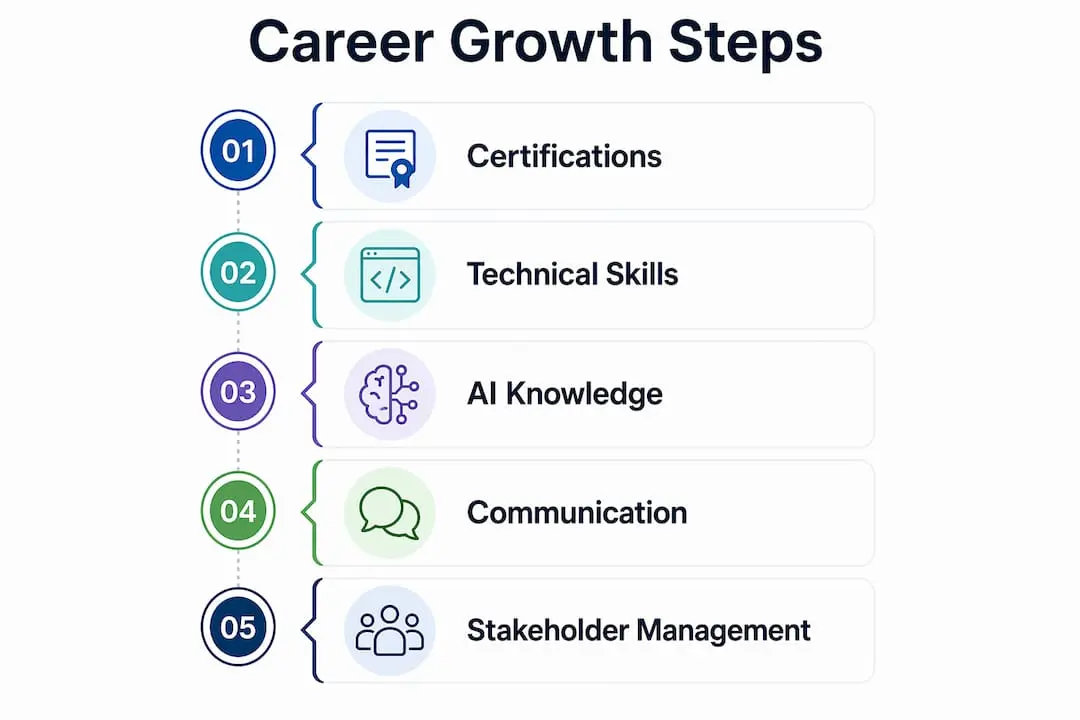
The certification stack that commands the highest employer attention pairs CISSP with a cloud-specific credential such as AWS Certified Security Specialty or Microsoft Azure Security Engineer. CISSP holders with cloud expertise can command a salary premium of £20,000 to £28,000 over peers without it. That return on a single exam investment is difficult to match through any other route.
How are AI and automation shaping remote security roles?
AI and machine learning skills are now the number one required competency in remote security job listings, appearing in 64% of postings with a 45% year-on-year growth rate. This is not a trend to monitor from a distance. It is already the baseline expectation at mid-level and senior roles.
The critical distinction is between AI replacing security professionals and AI augmenting them. Intelligent augmentation scales human judgement rather than replacing it. Security professionals who use AI tools for alert triage, anomaly detection, and secure code review free themselves to focus on complex strategic decisions that machines cannot make. Those who ignore these tools find themselves buried in alert queues while colleagues advance.
“The security professionals advancing fastest in distributed teams are not those who know the most rules. They are those who know how to direct AI tools toward the right problems and interpret the results with business context.”
The practical implication for your career development follows a clear sequence:
- Learn to operate AI-assisted SIEM platforms such as Microsoft Sentinel or Google Chronicle, which use machine learning to correlate alerts across large environments
- Develop prompt engineering skills relevant to security use cases, including threat modelling queries and automated report generation
- Understand AI model security as a discipline in its own right, covering adversarial inputs, model poisoning, and data exfiltration via AI interfaces
- Build governance awareness around AI deployment, since regulators in the UK and EU now expect organisations to document AI risk as part of their security frameworks
The emerging roles in AI security governance and AI red-teaming are genuinely new territory. Professionals who position themselves here in 2026 will be defining the job descriptions that others apply to in 2030.
What strategic skills maximise career growth in remote security?
Technical expertise alone creates a ceiling. The traditional vertical career ladder in security is dissolving, and professionals who combine deep technical knowledge with strategic business acumen are the ones reaching senior and director-level remote roles. Accenture describes this as developing “conductor-level” capability: the ability to orchestrate people, tools, and processes toward enterprise resilience rather than simply executing technical tasks.

The hybrid skill set employers seek in remote security professionals includes written communication, stakeholder management, and the ability to translate technical risk into business language. These are not soft additions to a technical CV. They are the differentiators that determine whether you stay in an individual contributor role or move into positions that shape security strategy.
Pro Tip: Build a portfolio of written incident reports, threat assessments, and policy documents. Remote hiring managers cannot observe you in an office, so your written output becomes your professional reputation.
The certification and development priorities that deliver the best return are:
- CISSP combined with a cloud platform certification as the primary credential stack
- CISM (Certified Information Security Manager) for those targeting GRC and leadership tracks
- CompTIA Security+ as a recognised entry point, followed quickly by specialisation
- Vendor-specific cloud security certifications from AWS, Microsoft, or Google for engineering roles
Bootcamps and focused certification programmes now outperform traditional degrees for entry into remote roles. The time-to-employment is shorter and the skills are directly applicable. That said, a degree remains valuable for roles requiring security clearance or government contracts.
| Development priority | Why it matters for remote roles |
|---|---|
| CISSP with cloud certification | Commands highest salary premium and meets 59% of senior role requirements |
| Written communication skills | Replaces in-person visibility; defines your professional reputation remotely |
| AI tool proficiency | Required in 64% of 2026 listings; separates mid-level from senior candidates |
| Personal project portfolio | Demonstrates applied skill when interview time is limited to video calls |
| Networking in remote communities | Referrals drive a significant share of remote security hiring |
Your digital footprint matters more in remote hiring than in any other sector. A well-maintained LinkedIn profile, contributions to security forums such as Reddit’s r/netsec, and published write-ups on platforms like Medium or a personal blog all signal the kind of self-directed professional that distributed teams want.
Which companies hire remote security professionals?
The employer landscape for remote security roles splits into three distinct categories, and understanding the difference saves you significant time in your job search. Top companies with remote cybersecurity teams include pure-play cybersecurity firms such as Abnormal Security, technology leaders such as Mastercard and Microsoft, and niche security product companies building tools for identity, cloud, and application security.
Pure-play cybersecurity firms tend to offer the most genuinely distributed working arrangements. Their entire product is security, so their teams are built for asynchronous collaboration and global talent acquisition. Technology giants offer remote roles but often within structured hybrid frameworks that require periodic on-site attendance at regional offices.
| Employer type | Remote autonomy | Role types available | Key consideration |
|---|---|---|---|
| Pure-play cybersecurity firms | High | Engineers, analysts, GRC, architects | Fully distributed culture; strong remote norms |
| Technology giants (Microsoft, Mastercard) | Medium | Security engineers, IAM, DevSecOps | Hybrid expectations; regional office attendance likely |
| Defence contractors | Low | Cleared roles, government security | Clearance and on-site requirements often apply |
| Financial services firms | Medium | GRC, risk, compliance, SOC | Regulatory constraints may limit full remote |
Not all remote-designated roles are fully remote. Defence contractor positions labelled as remote frequently carry physical proximity requirements or security clearance constraints that tie you to a specific geography. Reading the job description carefully and asking direct questions about location expectations during screening calls is not optional. It is the difference between a role that genuinely fits your life and one that does not.
For UK-based professionals, UK remote security job trends show strong demand concentrated in financial services, government-adjacent technology firms, and cloud-native startups. Many of these roles carry time-zone requirements aligned to GMT or BST, which actually works in your favour if you are based in the UK and competing against global candidates.
Most applicants fail in remote security job searches because they apply broadly rather than targeting roles that match their specific skill set. GRC and IAM roles in commercial firms are far more accessible to candidates without clearance than defence-adjacent positions. Focusing your applications on the right category dramatically improves your conversion rate.
Key takeaways
The future of remote security careers belongs to professionals who combine cloud and AI expertise with strategic communication skills and a clear understanding of which employers genuinely support distributed working.
| Point | Details |
|---|---|
| Market scale is significant | Over 58% of cybersecurity roles are remote or hybrid, with 4.8 million positions unfilled globally. |
| AI proficiency is now baseline | 64% of 2026 job listings require AI and machine learning skills; this is not optional at mid-level and above. |
| Certification ROI is high | CISSP combined with a cloud certification delivers a salary premium of £20,000 to £28,000 over uncertified peers. |
| Not all remote roles are equal | Defence contractor and government roles labelled remote often carry on-site or clearance requirements. |
| Hybrid skills break the ceiling | Technical depth combined with strategic business acumen is required by 59% of senior remote roles. |
Why I think most security professionals are preparing for the wrong future
The career advice circulating in most security communities still treats the job market as if it were 2019. People are collecting entry-level certifications, waiting for a single employer to sponsor their development, and assuming that deep technical specialisation alone will carry them forward. That model is finished.
What I have seen consistently is that the professionals advancing fastest in remote security are not the ones with the longest list of credentials. They are the ones who can walk into a board-level conversation, explain a threat in business terms, and then go back to their desk and implement the technical fix. That combination is genuinely rare, and employers will pay significantly for it.
The AI shift is real and it is happening now. Professionals who treat AI tools as a threat to their relevance are making a strategic error. The ones who learn to direct these tools effectively are multiplying their output and making themselves indispensable. I would rather be the person who uses Microsoft Sentinel’s AI capabilities to manage 10,000 alerts intelligently than the person manually reviewing 500 of them.
My practical advice is this: stop waiting for the career model you trained for to come back. Build your cloud security career path deliberately, invest in one high-value certification rather than three mediocre ones, and start writing publicly about what you know. Remote hiring managers are reading your digital footprint before they read your CV.
— Rob
Find your next remote security role on Securityjobsboard
Securityjobsboard connects UK security professionals with employers actively recruiting for remote and hybrid roles across the country. Whether you are targeting a cloud security engineering position, a GRC analyst role, or an IAM specialist opportunity, the platform lists vacancies updated daily across all UK regions.

Registering is free, and you can set up job alerts to receive notifications the moment a relevant role is posted. For professionals based in Northern Ireland, security jobs in Northern Ireland are listed with full location and remote-working details so you can assess genuine flexibility before applying. Employers looking to reach qualified candidates can advertise security vacancies directly to a targeted pool of active job seekers. Create your profile today and put your career in front of the right employers.
FAQ
What is the job outlook for remote cybersecurity roles?
Cybersecurity analyst employment is projected to grow by 29% to 33% through 2033, with over 58% of roles currently offering remote or hybrid arrangements. The global talent gap of 4.8 million unfilled positions means qualified candidates face strong demand.
Which certifications are most valuable for remote security jobs?
CISSP combined with a cloud platform certification such as AWS Certified Security Specialty or Microsoft Azure Security Engineer is the most in-demand credential stack. This combination can command a salary premium of £20,000 to £28,000 over uncertified peers.
Are all remote security jobs genuinely location-independent?
No. Defence contractor and government-adjacent roles labelled as remote frequently carry physical proximity or security clearance requirements. Candidates should verify location expectations directly with employers before investing time in an application.
How important is AI knowledge for a remote security career?
AI and machine learning skills appear in 64% of 2026 remote security job listings, making them the single most required competency. Professionals who use AI tools for alert triage and threat analysis advance faster than those who do not.
How do I start a remote security career with no experience?
Bootcamps and focused certifications such as CompTIA Security+ now provide a faster route into entry-level remote roles than traditional degrees. SOC analyst positions are the most common starting point, though Tier 2 and above roles carry stronger remote working prospects.


