Check SIA licence: what UK cyber security jobs involve
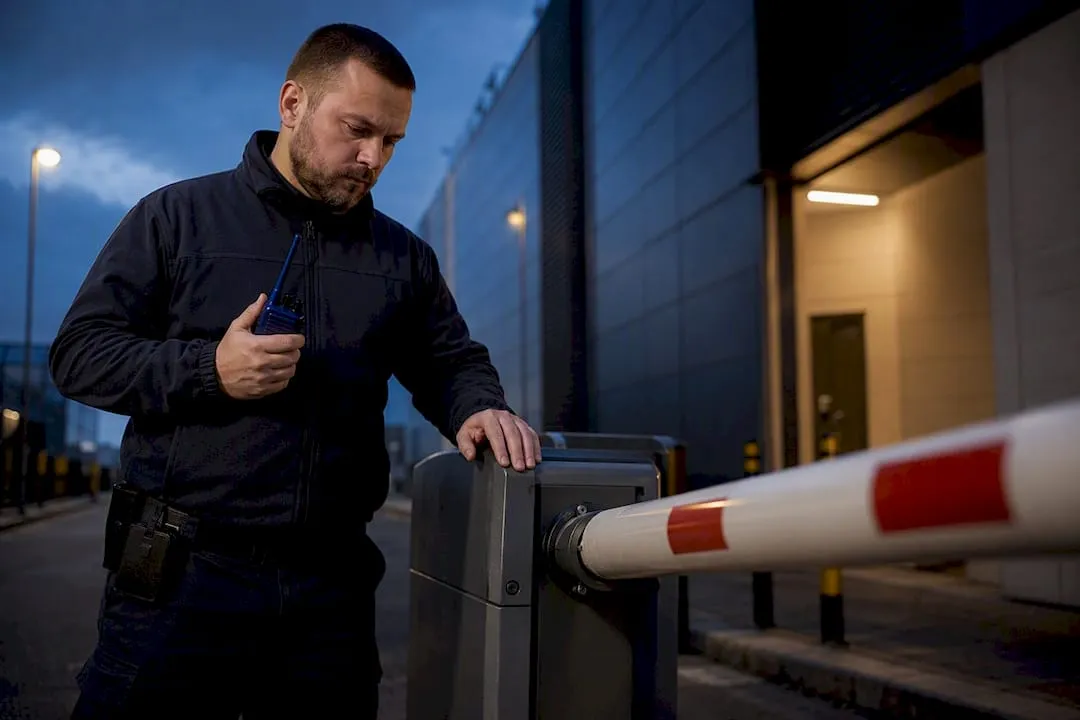
In this context, “cyber security” means physical security roles listed on job boards, such as security guards, CCTV operators and door supervisors, not IT specialists guarding networks. This guide covers what these jobs actually involve, the SIA licences they need, and the practical next steps for both jobseekers and employers hiring through Securityjobsboard.
TL;DR:
- Most roles require an SIA licence for tasks like guarding, CCTV monitoring, or controlling access, and working without one is a legal offence.
- Candidates should complete specific qualifications, such as the BIIAB Level 2 Award, to obtain the necessary licence and legally deploy on commercial security contracts.
- Employers must specify the exact licence type, shift pattern, and pay rate in job adverts to attract compliant and suitable candidates.
- The most valued skills for career advancement include conflict management, attention to detail, communication, report writing, and CCTV literacy.
- Using a specialist platform like Securityjobsboard helps both jobseekers find licensed roles quickly and employers target verified, compliant candidates efficiently.
Table of Contents
- What physical security roles exist and what do they cover?
- What does a typical shift actually involve?
- Licensing and training: what SIA rules actually require
- Skills, qualifications, and where the career goes next
- How do employers write job adverts that actually attract compliant candidates?
- Practical next steps for candidates and employers
- The disambiguation problem nobody talks about
- Sources
- FAQ
What physical security roles exist and what do they cover?
Search for “cyber security jobs” on a general job site and you will often land on IT roles. On a specialist platform like Securityjobsboard, the same phrase should point you towards the physical security sector, where the work is hands-on, site-based, and regulated by an entirely different body of law.
The main job types break down like this:
- Security guard (manned guarding): static or mobile presence at a site, protecting people, property, and assets.
- Door supervisor: manages entry to licensed premises, checks age and behaviour, and handles conflict at the point of entry.
- CCTV operator (public space surveillance): monitors camera feeds from a control room, flagging incidents in real time.
- Close protection operative: personal security for an individual client, often called a bodyguard.
- Key holder: attends alarm activations out of hours and secures premises.
- Mobile patrol officer: drives a circuit between multiple sites, checking locks, alarms, and signs of intrusion.
These roles turn up across retail parks, construction sites, festivals and stadiums, rail stations, and data centres. Shift patterns vary hugely: retail security tends to follow trading hours, while a construction site or critical infrastructure contract might need 24/7 cover with night shifts paid at a premium. Each role type maps to a specific SIA licence category, which the licensing section below covers in detail.
What does a typical shift actually involve?
Ask ten people “what do security guards do all day?” and most will say “stand around”. The reality is closer to a checklist repeated on a loop, with the occasional spike of genuine pressure.
Core duties across most roles include:
- Access control — checking ID, signing in visitors, and operating barriers or turnstiles.
- Patrolling — walking or driving fixed routes at set intervals, both internally and around the perimeter.
- CCTV monitoring — watching live feeds or reviewing footage after an incident.
- Alarm response — attending triggered alarms and assessing whether it’s a false alert or a genuine breach.
- Locking and unlocking — securing a site at close of business, opening it again for staff.
- Incident reporting — writing up anything from a minor trespass to a serious theft, with times, names, and actions taken logged clearly.
The emphasis shifts depending on where you’re working. A retail loss prevention officer spends most of a shift watching for shoplifting patterns and liaising with store staff. A construction site patroller is mostly concerned with theft of plant and materials overnight. A door supervisor at a nightclub deals with far more direct conflict management than someone monitoring an empty office block at 3am.
Shift logs and incident reports matter more than most new recruits expect. According to the National Careers Service, typical duties include liaison with the emergency services, and a poorly written report can genuinely affect whether police act on a theft or an assault. Anything beyond the officer’s authority, a break-in in progress, a medical emergency, gets escalated immediately rather than handled solo.
Pro Tip: If you’re applying for a role, ask what the incident reporting system looks like, paper log or digital app, before your first shift. It tells you a lot about how organised the employer actually is.
Licensing and training: what SIA rules actually require
This is the part candidates and employers get wrong most often, and it’s the one with legal consequences attached.
Under the Private Security Industry Act 2001, most people working in licensable activities in the commercial private security sector must hold a valid Security Industry Authority (SIA) licence. The SIA enforces this, and working without one is a criminal offence.
The main licence categories, mapped to GOV.UK’s guidance on licensable activities, are:
- Security guarding — covers most manned guarding and mobile patrol work.
- Door supervision — required for anyone controlling entry to licensed premises.
- Public space surveillance (CCTV) — needed specifically for monitoring CCTV systems that cover public areas.
- Close protection — for bodyguard and personal protection work.
- Cash and valuables in transit — for staff transporting money or valuables.
To get a licence, candidates must complete an approved qualification first. The SIA’s security guarding specification sets out seven core training sessions: roles and responsibilities, access and egress control, electronic and physical protection systems, personal safety, drugs awareness, searching, and patrolling.
One nuance that trips people up: in-house staff directly employed by the organisation they protect can sometimes be exempt from licensing, unlike contracted or agency staff doing identical work. The rules are specific and worth checking directly on GOV.UK before assuming either way, and our own guide to which UK jobs require an SIA licence walks through common edge cases.
Licence-linked training isn’t optional extra polish, it’s the legal gateway into the job. No approved qualification means no licence, and no licence means an employer cannot legally deploy you on most commercial contracts.
Skills, qualifications, and where the career goes next
Licences get you through the door. What keeps you employed, and promoted, is a different set of skills entirely.
Employers consistently rate these highest:
- Conflict management — de-escalating a confrontation before it becomes an incident report.
- Observation and attention to detail — spotting the thing that looks slightly wrong.
- Clear communication — with the public, colleagues, and control room staff.
- Report writing — accurate, timestamped, and usable if a case goes to court.
- IT and CCTV literacy — increasingly essential as sites rely more on analytics and networked camera systems, per BSIA industry reporting.
The BIIAB Level 2 Award for Security Officers is the qualification most commonly paired with an SIA guarding licence, and it needs periodic refreshing to stay current.
Progression routes tend to run in three directions: specialising (CCTV operations, close protection), moving into supervision and site management, or shifting sideways into delivering the training itself. Our career path guide for SIA-licensed roles breaks these routes down further.
How do employers write job adverts that actually attract compliant candidates?
A vague advert wastes everyone’s time. Candidates without the right licence apply anyway, employers reject them, and the vacancy sits open for weeks longer than it should.
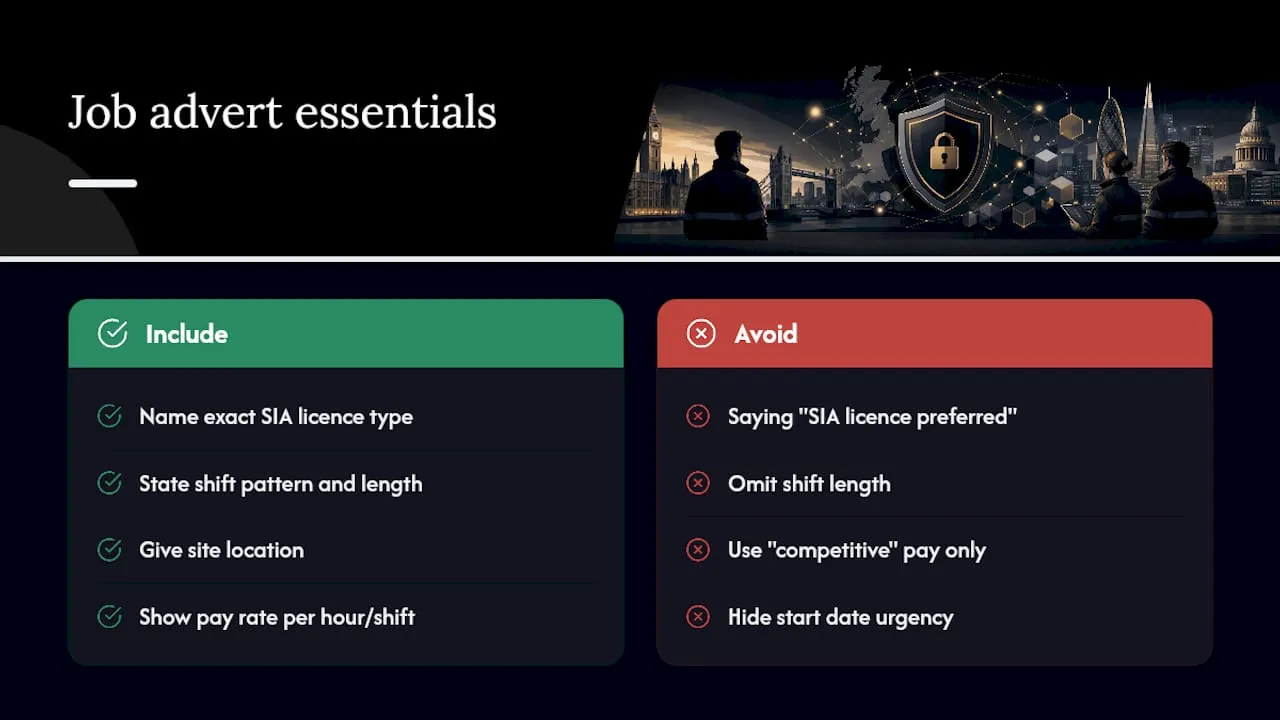
A tight advert names the exact licence type required, not “security experience preferred”, the shift pattern, the site location, and the pay rate per hour or per shift. If the role has a DBS check or specific PPE requirement, say so upfront rather than surprising the candidate at interview stage.
Compare a vague duty description (“general security duties”) against a measurable one (“hourly perimeter patrol, CCTV monitoring for six-hour blocks, incident logging via digital app”). The second attracts candidates who already know what they’re walking into, and it filters out anyone who doesn’t want that specific job.
Watch for these red flags in your own draft: ambiguous licence wording (“SIA licence preferred”) when the role legally requires one from day one, no mention of shift length, and pay listed as “competitive” with no figure attached.
Pro Tip: If the role starts within two weeks, say so explicitly. Candidates with a valid, unexpired SIA licence can move fast, and burying that urgency in generic wording costs you the best applicants.
Practical next steps for candidates and employers
If you’re job hunting, the sequence is straightforward. Confirm which SIA licence category your target roles require, get your CV in order with that licence number clearly stated, upload your profile on Securityjobsboard, set up job alerts for your region and licence type, and apply directly from your phone when something matches.
If you’re hiring, the process runs in parallel:
- Write the role spec with the exact licence type and core duties named.
- Post the vacancy through Securityjobsboard’s employer portal.
- Search the CV database for candidates already holding the right licence.
- Turn on alerts so new matching profiles reach you without repeat searching.
Why use a specialist board rather than a general jobs site? Securityjobsboard’s affiliation with the BSIA gives employers a credibility signal candidates recognise, the platform is GDPR compliant by design, and human support is available rather than a chatbot loop. If you’re recruiting regionally, category pages such as security jobs in Northern Ireland narrow the search fast.
The disambiguation problem nobody talks about
The biggest failure in this corner of recruitment isn’t a bad CV or an under-trained guard. It’s the search term itself. “Cyber security jobs” gets typed by two completely different audiences, IT professionals hunting network roles, and people looking for exactly what this article describes, and most content on the internet only serves the first group.
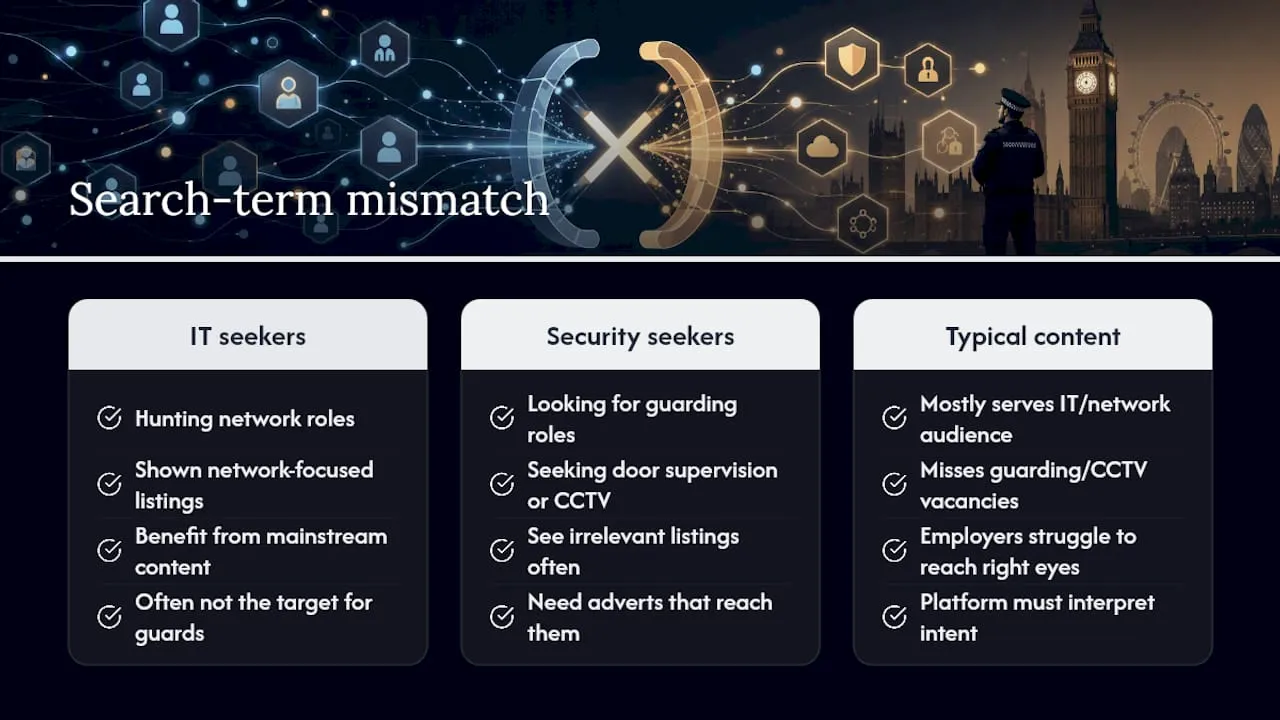
That mismatch has a real cost. Jobseekers waste time on irrelevant listings, and employers hiring for guarding, door supervision, or CCTV monitoring struggle to get their vacancy in front of the right eyes because the phrase itself points elsewhere. The BSIA’s own framing of the modern security officer as a trained professional, not a placeholder job, only lands if the advert actually reaches people searching in this category.
The conventional advice, “just use better keywords”, misses the point. What actually helps is a platform built specifically for this sector, where the search intent is already correctly interpreted before a single filter gets applied. If you take one thing from this article, it’s this: check the licence requirement before anything else, on both sides of the hiring conversation. Everything else, pay, shift pattern, site type, is negotiable. The licence isn’t.
— Rob
Sources
- Gov
- SIA security guarding specification 2021 (PDF) - GOV.UK
- Security officer | National Careers Service
FAQ
What does a cyber security job in this context actually involve?
It involves physical duties, such as access control, patrolling, CCTV monitoring, and alarm response, at sites like retail units, construction projects, and corporate offices, rather than IT network defence.
Do I need an SIA licence for every physical security role?
Most commercial guarding, door supervision, CCTV, and close protection roles require an SIA licence, though some in-house employed staff may be exempt depending on their exact arrangement.
What qualification do I need before applying for an SIA licence?
You need an approved licence-linked qualification, such as the BIIAB Level 2 Award, covering conflict management, first aid, searching, and patrolling, as set out in the SIA’s training specification.
How do employers find licensed candidates quickly?
Posting a clearly specified vacancy naming the exact licence type on a specialist platform like Securityjobsboard and searching the CV database directly tends to work faster than general job sites.
What skills matter most beyond the licence itself?
Conflict management, sharp observation, clear report writing, and comfort with CCTV or digital reporting systems consistently rank as the qualities employers value most, according to BSIA guidance.


