Why soft skills are essential in security careers

Many security professionals assume technical expertise is enough to excel in their roles. Yet across the UK security sector, from physical guarding to cybersecurity, employers increasingly prioritise interpersonal abilities. Communication, empathy, and adaptability often determine who advances and who stagnates. This guide reveals which soft skills matter most, why they outrank many technical competencies in hiring decisions, and how you can develop them to accelerate your career in the UK security industry.
Table of Contents
- Key takeaways
- Understanding essential soft skills for security professionals
- Why soft skills outweigh technical skills in cybersecurity hiring
- How soft skills support career progression and leadership in security
- Practical methods to develop and integrate soft skills in UK security roles
- Enhance your security career with tailored training and job opportunities
- What are soft skills in security?
Key Takeaways
| Point | Details |
|---|---|
| Soft skills boost coordination | Effective soft skills help teams coordinate and resolve conflicts across security operations. |
| Communication builds trust | Clear, empathetic communication helps build trust with the public and stakeholders. |
| Soft skills influence hiring | Hiring data show that soft skills influence recruitment decisions in cybersecurity more than many technical skills for junior roles. |
| Soft skills drive progression | Developing soft skills can accelerate progression into leadership roles within the security sector. |
| Practical training embeds skills | Structured training with real world practice helps embed soft skills more reliably than theory alone. |
Understanding essential soft skills for security professionals
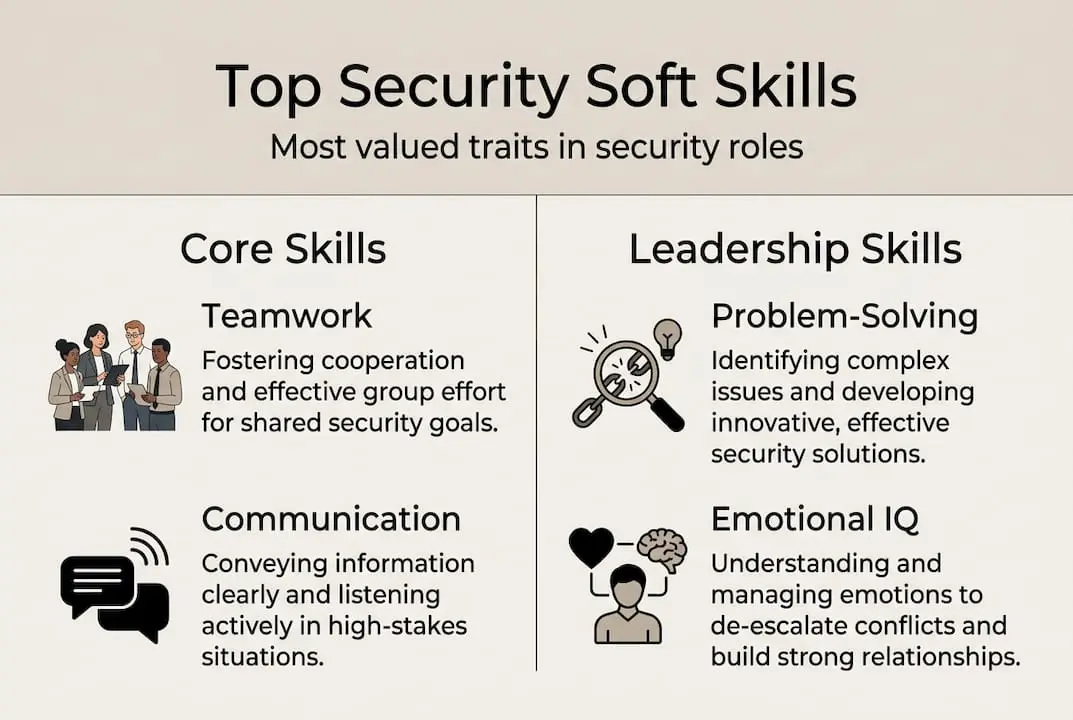
Soft skills encompass the interpersonal and behavioural abilities that enable you to interact effectively with colleagues, clients, and the public. In UK security roles, communication, empathy, teamwork, emotional intelligence, problem-solving, and adaptability are crucial for handling public interactions, de-escalating conflicts, coordinating teams, and communicating risks effectively. Unlike technical skills, which focus on specific tools or procedures, soft skills shape how you apply your knowledge in dynamic, people-centred environments.
Consider a door supervisor managing an intoxicated patron. Technical training covers legal powers and restraint techniques, but the ability to read body language, speak calmly, and show empathy determines whether the situation resolves peacefully or escalates. Similarly, a cybersecurity analyst must translate complex threat data into clear recommendations for non-technical stakeholders. Without strong communication, even the most sophisticated analysis loses impact.
Emotional intelligence, the capacity to recognise and manage your own emotions whilst understanding others’ feelings, improves threat assessment and decision-making under pressure. When you can stay composed during emergencies and read subtle cues from colleagues or suspects, you make better judgements. Adaptability allows you to pivot strategies when circumstances shift, whether responding to an unexpected security breach or adjusting patrol routes based on real-time intelligence.
Pro Tip: Practise active listening by paraphrasing what others say before responding. This simple habit sharpens your communication and builds trust with colleagues and clients.
Key soft skills for UK security professionals include:
- Communication: Conveying information clearly to diverse audiences, from control room operators to senior management
- Empathy: Understanding others’ perspectives to build rapport and defuse tension
- Teamwork: Collaborating seamlessly with colleagues across shifts and departments
- Emotional intelligence: Managing stress and reading social cues to inform decisions
- Problem-solving: Analysing situations quickly and devising practical solutions
- Adaptability: Adjusting tactics and approaches as threats and environments evolve
These abilities apply across physical security, close protection, and cybersecurity. A CCTV operator who communicates anomalies clearly helps response teams act faster. A penetration tester who explains vulnerabilities empathetically to developers fosters collaboration rather than defensiveness. Mastering top soft skills positions you as a well-rounded professional capable of handling the human complexities inherent in security work.
Why soft skills outweigh technical skills in cybersecurity hiring
Recent hiring data reveals a surprising trend: UK cybersecurity employers value non-technical soft skills like teamwork, problem-solving, analytical thinking, and communication higher than many technical skills for entry and junior-level roles. An empirical analysis of 12,161 job advertisements identified communication and project management as the top soft skills demanded for cybersecurity professionals. This shift reflects the reality that junior analysts spend much of their time collaborating with cross-functional teams, documenting findings, and presenting recommendations rather than performing deep technical exploits.
The table below illustrates the most frequently requested soft skills in UK cybersecurity job adverts, based on recent research:
| Soft skill | Frequency in job ads | Why employers prioritise it |
|---|---|---|
| Communication | High | Essential for reporting threats and liaising with non-technical stakeholders |
| Project management | High | Coordinates security initiatives across teams and timelines |
| Teamwork | High | Security operations require seamless collaboration with IT, legal, and business units |
| Problem-solving | Medium-High | Rapidly analysing incidents and devising mitigation strategies |
| Analytical thinking | Medium-High | Interpreting data patterns and assessing risk severity |
Employers recognise that technical skills can be taught through on-the-job training and certifications, but soft skills often take longer to develop and prove harder to instil. A candidate who communicates clearly, works well in teams, and thinks analytically can learn new tools and frameworks more effectively than a technically proficient individual who struggles to collaborate or articulate findings.
For junior cybersecurity roles, the most essential non-technical skills include:
- Teamwork: Coordinating with incident response teams, developers, and compliance officers
- Problem-solving: Diagnosing the root cause of breaches and recommending fixes
- Analytical thinking: Evaluating threat intelligence and prioritising vulnerabilities
- Communication: Writing clear incident reports and presenting risk assessments to leadership
- Adaptability: Responding to evolving attack vectors and regulatory changes
This hiring preference extends beyond cybersecurity. Physical security employers also seek qualities like reliability, communication, and situational awareness, recognising that technical training alone does not guarantee effective performance. By developing these soft skills early, you position yourself as a competitive candidate even if your technical portfolio is still growing.
How soft skills support career progression and leadership in security
Developing soft skills does more than help you land your first role. These abilities directly enhance job performance, promotions, and leadership opportunities throughout your security career. Managers and team leaders consistently demonstrate strong communication, emotional intelligence, and conflict resolution skills. As you progress from frontline roles to supervisory and strategic positions, your ability to inspire teams, negotiate with stakeholders, and make nuanced decisions becomes more critical than any single technical competency.
Consider a security officer promoted to shift supervisor. Technical knowledge of access control systems and patrol procedures remains important, but the new role demands coaching junior staff, resolving interpersonal conflicts, and liaising with clients. Supervisors who communicate expectations clearly and show empathy towards team members build cohesive, motivated teams. Those who lack these skills often struggle with high turnover and poor morale.
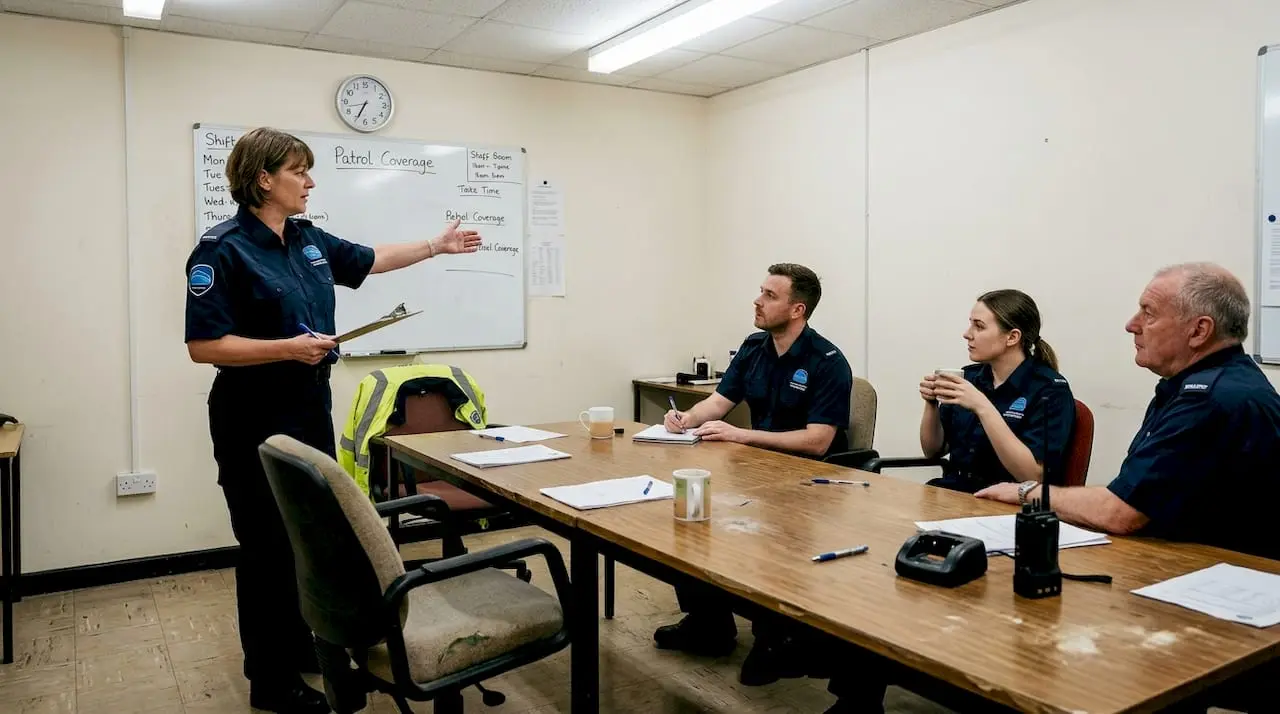
Emotional intelligence stands out as a key leadership trait. Leaders who regulate their own stress and recognise when colleagues feel overwhelmed create healthier work environments. They anticipate friction before it escalates and mediate disputes constructively. In high-pressure security operations, this emotional awareness prevents burnout and maintains operational effectiveness.
Pro Tip: Seek feedback regularly from peers and supervisors to refine your interpersonal skills. Constructive criticism helps you identify blind spots and adjust your approach.
Career growth strategies centred on soft skills include:
- Volunteering for cross-functional projects: Exposure to different teams sharpens communication and adaptability
- Mentoring junior colleagues: Teaching others reinforces your own skills and demonstrates leadership potential
- Pursuing leadership training: Courses in conflict resolution and team management formalise your development
- Requesting stretch assignments: Taking on responsibilities beyond your current role builds problem-solving and decision-making abilities
- Building a professional network: Engaging with industry peers enhances collaboration and opens doors to new opportunities
By investing in soft skills, you signal to employers that you are ready for greater responsibility. A strategic job search that highlights these abilities alongside technical qualifications positions you as a well-rounded candidate capable of growing into leadership roles. Security professionals who master both technical and interpersonal competencies enjoy longer, more fulfilling careers with access to senior positions and higher earning potential.
Practical methods to develop and integrate soft skills in UK security roles
Building soft skills requires deliberate practice and structured training. UK security organisations increasingly adopt methodologies like roleplay, scenario-based training, and integrating soft skills into certifications to develop de-escalation and teamwork in high-pressure environments. These approaches create realistic contexts where you can practise communication, empathy, and problem-solving before encountering similar challenges on duty.
Roleplay involves simulating interactions with colleagues, clients, or adversaries. For example, a training session might cast one participant as an aggressive visitor and another as a reception security officer. Through repeated practice, you learn to modulate your tone, maintain composure, and employ calming techniques. Scenario-based training extends this concept by embedding soft skills within broader operational exercises, such as responding to a simulated active threat where coordination and clear communication determine success.
The table below compares common training methodologies and their outcomes:
| Training method | Strengths | Limitations | Best for |
|---|---|---|---|
| Roleplay | Immediate feedback, low cost, flexible | Can feel artificial, limited realism | Communication, empathy, conflict resolution |
| Scenario-based training | Realistic pressure, integrates multiple skills | Requires resources and planning | Teamwork, decision-making, adaptability |
| E-learning modules | Scalable, self-paced, accessible | Lacks interpersonal interaction | Foundational knowledge, theory |
| Mentorship programmes | Personalised guidance, real-world context | Time-intensive, depends on mentor quality | Leadership, emotional intelligence, career planning |
Integrating soft skills into everyday security practice involves:
- Debriefing after incidents: Discuss what went well and what could improve, focusing on communication and teamwork
- Setting personal development goals: Identify one soft skill to strengthen each quarter and track progress
- Seeking cross-training opportunities: Rotate through different security functions to broaden your perspective
- Participating in team-building activities: Regular exercises strengthen trust and collaboration
- Engaging with professional bodies: Attend industry events and workshops to learn from peers
A word of caution: over-reliance on AI tools may hinder early-career development of human judgement, particularly in cybersecurity. Whilst automation can handle routine tasks, elite teams benefit most from augmentation that frees them to apply soft skills like strategic thinking and stakeholder engagement. Junior professionals who lean too heavily on AI risk missing opportunities to develop critical interpersonal abilities.
UK security certifications increasingly incorporate soft skills modules. When selecting training and courses, look for programmes that combine technical instruction with communication, teamwork, and ethical decision-making components. This holistic approach ensures you graduate as a well-rounded professional ready for the complexities of modern UK security roles.
Enhance your security career with tailored training and job opportunities
Now that you understand the value of soft skills, it is time to put them into practice. The Security Jobs Board connects UK security professionals with employers who prioritise interpersonal abilities alongside technical expertise. Whether you are seeking roles in Northern Ireland or exploring opportunities across England, Scotland, and Wales, our platform showcases vacancies where communication, teamwork, and adaptability are essential.

Beyond job listings, we provide resources to help you develop the soft skills employers demand. Browse articles on effective communication strategies, leadership development, and career planning. Connect with security employers who value well-rounded candidates and offer training programmes to support your growth. By combining targeted job searches with continuous skill development, you position yourself for long-term success in the UK security industry.
What are soft skills in security?
What are soft skills and why do they matter in security?
Soft skills are interpersonal and behavioural abilities like communication, empathy, teamwork, and problem-solving. In security, they enable you to de-escalate conflicts, build public trust, and coordinate effectively with colleagues. These skills often determine career success as much as technical knowledge.
How do soft skills differ from technical skills in security roles?
Technical skills involve specific tools, procedures, and knowledge, such as operating CCTV systems or conducting penetration tests. Soft skills govern how you apply that knowledge through interaction, collaboration, and decision-making. Both are essential, but soft skills often prove harder to teach and more valuable for leadership.
What practical steps can I take to develop soft skills?
Engage in roleplay and scenario-based training, seek regular feedback from peers, volunteer for cross-functional projects, and pursue mentorship opportunities. Practise active listening and reflect on your interactions to identify areas for improvement. Consistent effort over time builds strong interpersonal abilities.
Do soft skills really impact career progression in UK security?
Yes. Employers prioritise candidates who communicate clearly, work well in teams, and demonstrate emotional intelligence. These abilities unlock promotions, leadership roles, and higher earning potential. Investing in top soft skills accelerates your career trajectory and opens doors to senior positions.
Where can I find training and job resources focused on soft skills?
The Security Jobs Board offers articles, job listings, and employer connections that emphasise interpersonal abilities. Look for certifications and courses that integrate soft skills modules, attend industry events, and join professional networks to learn from experienced security professionals.


