What Is Cyber Security and Why It Matters

More than 80 percent of British organisations have faced at least one cyber attack in recent years. As digital threats become more sophisticated, understanding cyber security is no longer limited to experts alone. This topic matters because misconceptions can leave even seasoned professionals at risk. By revealing the truth behind common myths and highlighting real vulnerabilities, you gain practical insights that empower you to make smarter digital security choices.
Table of Contents
- Cyber Security Defined and Common Myths
- Types of Cyber Threats Facing UK Security
- Core Principles and How Cyber Security Works
- UK Laws and Standards for Cyber Protection
- Employer and Employee Responsibilities in Cyber Security
Key Takeaways
| Point | Details |
|---|---|
| Comprehensive Cyber Security | Protecting digital systems and data is essential for organisations of all sizes, requiring a strategic approach that includes proactive defence and continuous learning. |
| Common Myths | Misconceptions about cyber security, such as the belief that only large corporations are targeted, can leave individuals and small businesses vulnerable to attacks. |
| Core Principles | Cyber security revolves around confidentiality, integrity, availability, authentication, and non-repudiation, which must be integrated into layered defence strategies. |
| Collaborative Responsibility | Both employers and employees share the responsibility for cyber security; creating a culture of awareness and adherence to protocols is crucial for organisational resilience. |
Cyber Security Defined and Common Myths
Cyber Security represents the comprehensive strategy of protecting digital systems, networks, programmes, and data from malicious digital attacks, breaches, and unauthorised access. The digital landscape continues to evolve rapidly, making understanding cyber security critical for professionals and organisations.
According to the National Crime Agency, cybercrime encompasses criminal activities conducted through computers or internet platforms, posing significant threats to individuals, businesses, and national security infrastructure. These threats range from sophisticated hacking attempts to targeted phishing campaigns designed to compromise sensitive information.
Common myths about cyber security often mislead professionals and create dangerous misconceptions:
- Myth 1: Only large corporations are targeted by cybercriminals
- Myth 2: Basic antivirus software provides complete protection
- Myth 3: Strong passwords are sufficient to prevent breaches
- Myth 4: Cyber attacks are always technologically complex
In reality, cyber threats are increasingly sophisticated and can impact organisations of all sizes. Small businesses and individual professionals are equally vulnerable, making comprehensive security strategies essential. Understanding the nuanced landscape of digital threats requires continuous learning and proactive defence mechanisms.
Security Awareness Pro Tip: Regular cyber security training and staying updated on emerging digital threats are more important than relying solely on technological solutions. Invest time in understanding current cybercrime trends and implementing multi-layered protection strategies.
Types of Cyber Threats Facing UK Security
Cyber threats represent increasingly sophisticated digital risks that can compromise organisational and individual security across the United Kingdom. National Crime Agency investigations reveal a complex landscape of digital vulnerabilities that target businesses, government institutions, and private networks with alarming precision.
The most prevalent cyber threats currently facing UK security include:
- Ransomware Attacks: Malicious software that encrypts organisational data and demands financial payment for restoration
- Phishing Campaigns: Deceptive digital communications designed to trick individuals into revealing sensitive credentials
- Distributed Denial of Service (DDoS): Overwhelming digital systems to disrupt network functionality and cause operational chaos
- Social Engineering: Psychological manipulation techniques that exploit human vulnerabilities
- Malware Infiltration: Sophisticated software designed to breach digital defences and steal critical information
Each threat represents a unique challenge, requiring specialised defensive strategies and comprehensive digital security protocols. The increasing complexity of these attacks demands continuous monitoring, rapid response mechanisms, and proactive threat intelligence gathering.

Here is a summary of the most common cyber threats and their potential impact on UK organisations:
| Threat Type | Main Method | Typical Target | Business Impact |
|---|---|---|---|
| Ransomware | Data encryption | All business sizes | Operational shutdown, ransom |
| Phishing | Deceptive communications | Employees, individuals | Data loss, credential theft |
| DDoS Attacks | Network flooding | Online services | Service outages, reputation |
| Social Engineering | Human manipulation | All staff | Data leaks, financial fraud |
| Malware Infiltration | Malicious software | Company systems | Data theft, system damage |
Beyond technical interventions, organisations must cultivate a robust security culture that emphasises employee awareness and systematic risk management. Understanding the nuanced nature of these threats allows security professionals to develop multilayered defence strategies that protect against evolving digital risks.
Security Awareness Pro Tip: Implement regular cybersecurity training programmes that simulate real-world threat scenarios, enabling employees to recognise and respond effectively to potential digital vulnerabilities before they become critical breaches.
Core Principles and How Cyber Security Works
Cyber Security operates through a comprehensive framework of strategic principles designed to protect digital infrastructure, data, and organisational assets from potential threats. Cyber security protocols fundamentally revolve around proactive risk management, continuous monitoring, and adaptive defence strategies.
The core principles of cyber security encompass several critical domains:
- Confidentiality: Protecting sensitive information from unauthorised access
- Integrity: Ensuring data remains unaltered and trustworthy
- Availability: Maintaining system accessibility for legitimate users
- Authentication: Verifying the identity of users and devices
- Non-repudiation: Creating accountability for digital actions
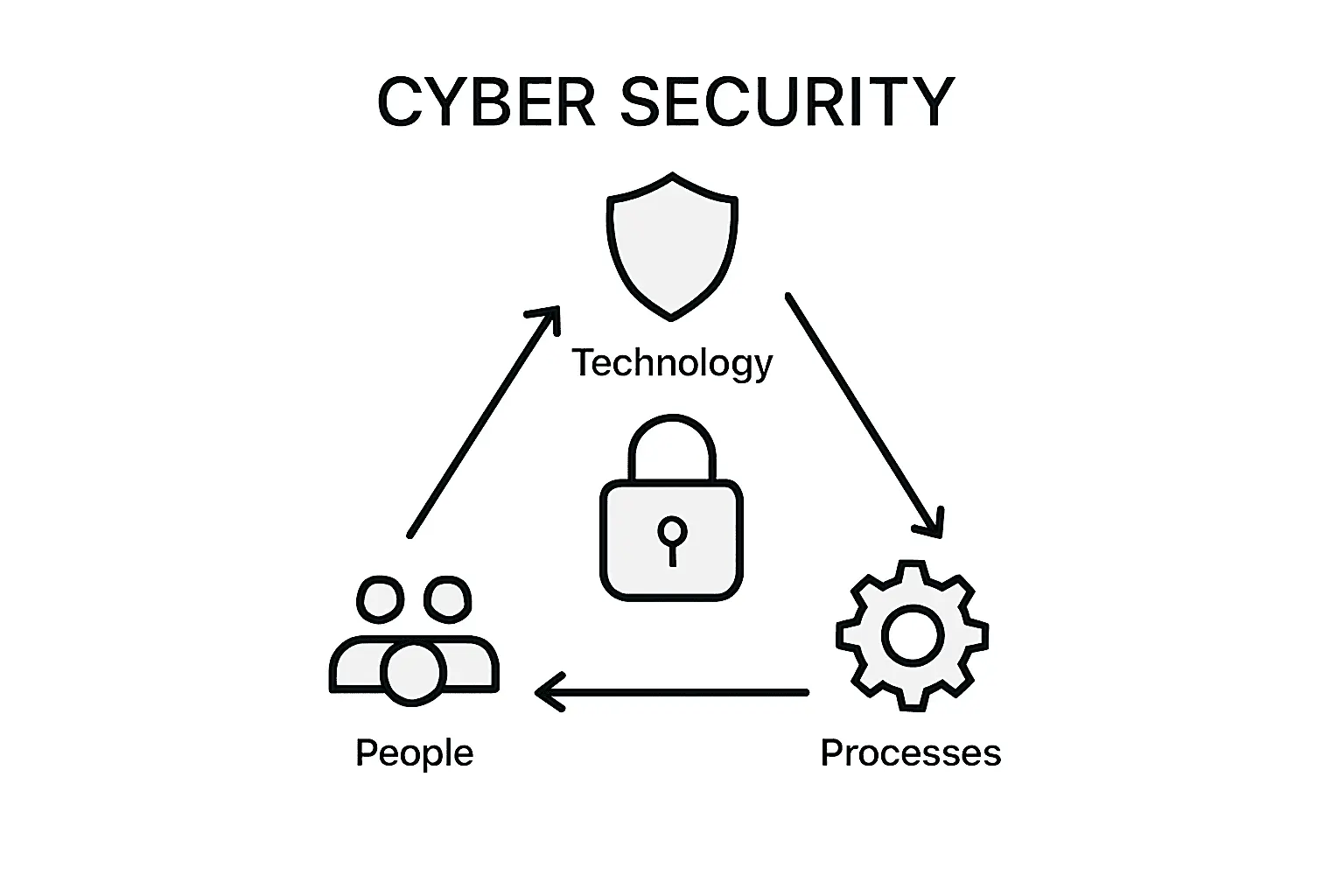
Implementation of these principles requires a multilayered approach that combines technological solutions, human awareness, and systematic risk assessment. Supply chain risk management plays a crucial role in identifying and mitigating potential vulnerabilities across interconnected digital ecosystems.
Effective cyber security demands continuous adaptation. Organisations must develop dynamic defence mechanisms that can anticipate, detect, and respond to emerging digital threats. This involves regular system updates, comprehensive employee training, and sophisticated threat intelligence gathering to stay ahead of potential security breaches.
Security Strategy Pro Tip: Develop a holistic cyber security strategy that treats digital defence as an ongoing process, not a one-time implementation. Regularly review and update your security protocols to address evolving technological landscapes and emerging threat vectors.
UK Laws and Standards for Cyber Protection
The United Kingdom has developed a comprehensive legislative framework to address the rapidly evolving landscape of digital security threats. Emerging technologies continue to reshape cyber protection standards, requiring constant adaptation of legal and regulatory mechanisms.
Key legislative frameworks and standards governing cyber protection in the UK include:
- Data Protection Act 2018: Implementing GDPR principles and protecting individual data privacy
- Network and Information Systems (NIS) Regulations: Mandating security requirements for critical infrastructure
- Computer Misuse Act 1990: Establishing legal consequences for unauthorized digital access
- Cyber Security Breaches Survey: Annual government assessment of organisational cyber resilience
- Cyber Essentials Scheme: Baseline security certification for organisations
The Funded Cyber Essentials Programme represents a pivotal government initiative designed to support smaller organisations in implementing robust cyber defence mechanisms. This programme provides crucial guidance and resources for businesses seeking to enhance their digital security posture.
Compliance with these standards is not merely a legal requirement but a strategic imperative. Organisations must proactively develop comprehensive cyber security strategies that align with national regulations, anticipate emerging threats, and protect critical digital assets across all operational domains.
Below is an overview comparing key UK cyber security laws and their organisational focus:
| Legislation/Standard | Main Focus | Affected Sector |
|---|---|---|
| Data Protection Act 2018 | Data privacy and rights | All organisations |
| NIS Regulations | Critical infrastructure | Essential service providers |
| Computer Misuse Act 1990 | Illegal access penalties | All digital users |
| Cyber Essentials Scheme | Baseline security | Businesses (esp. SMEs) |
| Cyber Security Breaches Survey | Cyber resilience tracking | All UK organisations |
Regulatory Compliance Pro Tip: Regularly review and update your organisation’s cyber security policies to ensure alignment with the latest UK legislative requirements and technological advancements. Conduct annual comprehensive security audits to identify and address potential vulnerabilities.
Employer and Employee Responsibilities in Cyber Security
Cyber security is a shared responsibility that demands active participation from both employers and employees. Emerging cybercrime trends highlight the critical need for collaborative approaches to digital protection, recognising that organisational security is only as strong as its weakest link.
Employer responsibilities encompass several key domains:
- Infrastructure Protection: Implementing robust technological defences
- Policy Development: Creating clear cyber security guidelines
- Training Programmes: Educating staff about digital risks
- Incident Response Planning: Establishing protocols for potential breaches
- Regular Risk Assessments: Continuously evaluating organisational vulnerabilities
Cyber security implementation strategies require employees to actively engage in organisational defence mechanisms. Individual responsibilities include maintaining strict password protocols, recognising potential phishing attempts, reporting suspicious activities, and adhering to established security policies.
The interconnected nature of modern digital environments means that every team member plays a crucial role in maintaining organisational cyber resilience. Employers must create a culture of security awareness, while employees must remain vigilant and proactive in their approach to digital protection.
Collaborative Security Pro Tip: Develop a comprehensive cyber security training programme that transforms security awareness from a mandatory compliance exercise into an engaging, interactive learning experience that empowers employees to become active defenders of organisational digital assets.
Strengthen Your Cyber Security Career and Protect the UK Digital Landscape
The increasing complexity of cyber threats demands skilled security professionals who understand key principles like confidentiality, integrity, and authentication. If you are passionate about defending organisations against ransomware, phishing, and social engineering attacks, exploring specialised opportunities in the security sector can make all the difference. The challenge is finding roles that match your expertise and career goals quickly and securely.

Take control of your future by visiting the Security Jobs Board today. Our dedicated platform connects UK security professionals with employers seeking talent to build resilient cyber defences. Create your profile, upload your CV, and set job alerts—all free of charge. Employers also benefit from streamlined recruitment and GDPR-compliant processes. Don’t wait for cyber risks to escalate in your organisation or career path—secure your next role now and join a trusted community focused on making the UK safer through expert security recruitment. Find out more about how to enhance your career with Security Jobs Board and become an active part of the solution in the evolving cyber security landscape.
Frequently Asked Questions
What is cyber security?
Cyber security refers to the comprehensive strategy of protecting digital systems, networks, programmes, and data from malicious attacks, breaches, and unauthorised access.
Why is cyber security important for businesses?
Cyber security is crucial for businesses to protect sensitive information, maintain customer trust, prevent operational disruptions, and comply with legal regulations regarding data protection.
What are common types of cyber threats?
Common types of cyber threats include ransomware attacks, phishing campaigns, Distributed Denial of Service (DDoS) attacks, social engineering, and malware infiltration.
How can employees contribute to cyber security?
Employees can enhance cyber security by adhering to strong password protocols, recognising phishing attempts, reporting suspicious activities, and participating in regular training to stay updated on cyber threats.


