What Is Security Consulting? Complete UK Guide

Did you know that UK organisations face an estimated 65,000 attempted cyber attacks every day? With threats growing more sophisticated, the need to protect sensitive data and critical operations has never felt more urgent. Security consulting brings expert insight to help companies identify vulnerabilities, meet regulations, and build defences against digital and physical risks. This guide uncovers the true value, purpose, and expanding opportunities within the security consulting profession.
Table of Contents
- Defining Security Consulting And Its Purpose
- Types Of Security Consulting Services In The UK
- Core Responsibilities Of Security Consultants
- Qualifications And Skills For Security Consultants
- Costs, Benefits And Career Opportunities
Key Takeaways
| Point | Details |
|---|---|
| Security Consulting Purpose | Security consulting involves strategic guidance for organisations to protect assets and mitigate risks through bespoke security strategies. |
| Core Responsibilities | Consultants focus on risk assessment, compliance, training, and policy development to ensure effective security management. |
| Qualifications Required | Successful consultants need technical expertise and certifications like CISSP, alongside strong analytical and communication skills. |
| Career Opportunities | Security consulting offers diverse career paths and competitive salaries, with roles in varied sectors emphasizing the importance of continuous learning and adaptation. |
Defining Security Consulting and Its Purpose
Security consulting represents a specialised professional service where experts provide strategic guidance to organisations about protecting their critical assets, information systems, and personnel. According to the National Cyber Security Centre, security consulting fundamentally involves “providing expert advice to organisations to help them identify, assess, and mitigate security risks”.
At its core, security consulting is about creating comprehensive protective strategies tailored to an organisation’s unique vulnerabilities and operational landscape. Security consultants act as independent advisors who analyse potential threats, evaluate existing security infrastructure, and develop actionable recommendations. These professionals combine technical expertise, risk management skills, and strategic thinking to design robust security frameworks that safeguard an organisation’s physical and digital domains.
The purpose of security consulting extends far beyond simple risk identification. Consultants deliver value through:
- Comprehensive threat assessment and vulnerability mapping
- Development of customised security protocols
- Implementation guidance for advanced security technologies
- Strategic planning for potential security incidents
- Regulatory compliance and industry standards alignment
As the Association of Security Consultants highlights, these advisory services are critically about developing “independent advisory services” that create “effective security strategies tailored to an organisation’s specific needs”. This bespoke approach ensures that security solutions are not generic templates but precisely engineered responses to each client’s distinct operational environment and risk profile.
Types of Security Consulting Services in the UK
Security consulting in the United Kingdom encompasses a diverse range of specialised services designed to address complex security challenges across multiple domains. According to the British Security Industry Association, these services span critical areas including close protection, technical surveillance countermeasures, surveillance, IT forensics, cyber security, and critical national infrastructure protection.
The landscape of security consulting services can be broadly categorised into several key specialisations. Cyber Security Consulting has emerged as a particularly critical service, where experts help organisations defend against digital threats, assess vulnerabilities, and develop robust digital protection strategies. The National Cyber Security Centre highlights three primary service categories within this domain:
- Risk Management Consulting: Identifying and evaluating potential security risks
- Security Audit and Review Services: Comprehensive assessments of existing security infrastructure
- Security Architecture Design: Creating strategic frameworks for comprehensive protection
Beyond digital domains, security consulting also encompasses physical security services. These include threat assessments for corporate environments, design of security protocols for physical spaces, personnel protection strategies, and comprehensive risk mitigation planning. Security consultants work across sectors like finance, healthcare, government, and critical infrastructure, providing tailored solutions that address each organisation’s unique security challenges.

For professionals seeking to understand this field more deeply, our guide to security sector jobs in the UK offers additional insights into the diverse opportunities within security consulting.
Core Responsibilities of Security Consultants
Security consultants play a pivotal role in safeguarding organisations against complex and evolving security threats. According to the National Cyber Security Centre, their core responsibilities encompass conducting comprehensive risk assessments, developing robust security policies, implementing protective measures, and providing critical training to mitigate potential vulnerabilities.
The multifaceted nature of security consulting demands a strategic approach to threat management. Risk Assessment and Mitigation stands as the foundational responsibility, where consultants systematically:
- Identify potential security vulnerabilities
- Evaluate the likelihood and potential impact of threats
- Develop targeted strategies to minimise organisational risk
- Create detailed contingency and response plans
- Recommend technological and procedural safeguards
Beyond technical analysis, The Association of Security Consultants emphasises the importance of advisory and compliance roles. Security consultants are responsible for ensuring organisations meet rigorous security standards, providing expert guidance on regulatory requirements, and developing comprehensive security frameworks that address both physical and digital protection needs.
Training and education represent another critical aspect of a security consultant’s responsibilities. Professionals in this field must not only design security strategies but also empower organisations to implement and maintain these protective measures. This involves conducting workshops, developing security awareness programmes, and providing ongoing guidance to help teams understand and respond effectively to potential security challenges.
For those interested in exploring the diverse career paths within this dynamic field, our 7 Career Paths in Security guide offers valuable insights into the exciting opportunities available in security consulting.
Here’s a summary comparison of core responsibilities for security consultants:
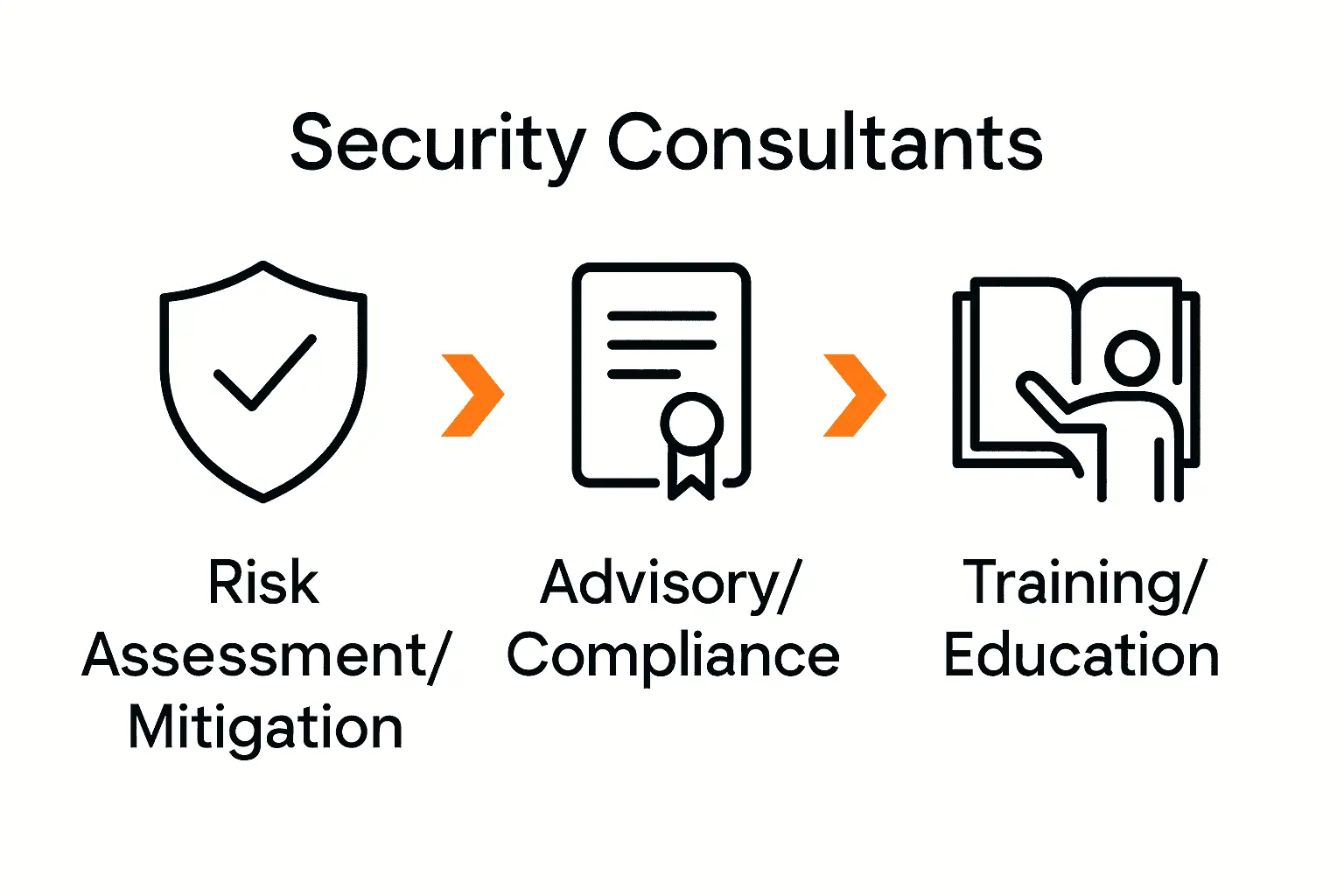
| Responsibility Area | Key Tasks | Importance |
|---|---|---|
| Risk Assessment & Mitigation | Identify threats Evaluate vulnerabilities Design mitigation strategies |
Foundational role |
| Advisory & Compliance | Regulatory guidance Develop security frameworks Ensure standards alignment |
Critical for compliance |
| Training & Education | Conduct workshops Develop awareness programmes Ongoing team guidance |
Empowers organisations |
| Policy Development | Draft security policies Implement procedures Review effectiveness |
Supports consistency |
Qualifications and Skills for Security Consultants
Becoming a successful security consultant requires a sophisticated blend of academic qualifications, technical expertise, and professional credentials. According to the National Cyber Security Centre, consultants must demonstrate the ability to provide independent, high-quality advice backed by robust technical knowledge and practical experience.
Key qualifications for aspiring security consultants typically include:
- Academic Background: Degrees in cybersecurity, computer science, information technology, or related fields
- Professional Certifications: Industry-recognized credentials such as CISSP, CompTIA Security+, or ethical hacking certificates
- Technical Skills: Profound understanding of network security, risk assessment methodologies, and emerging technological threats
- Analytical Capabilities: Strong problem-solving and critical thinking skills
- Communication Expertise: Ability to translate complex technical concepts for non-technical stakeholders
The Chartered Security Professional (CSyP) certification represents a pinnacle of professional achievement in this field. Wikipedia’s entry on Chartered Security Professionals highlights that this prestigious credential requires demonstrating comprehensive competencies across multiple domains, including security knowledge, practical application, communication, leadership, and personal commitment.
Beyond technical prowess, successful security consultants must cultivate a holistic skill set that combines technical depth with strategic thinking. This involves staying current with rapidly evolving security landscapes, understanding complex regulatory environments, and developing innovative solutions to emerging threats. Continuous learning, adaptability, and a proactive approach to professional development are essential.
For professionals looking to navigate their career path in this dynamic field, our 7 Types of Security Roles guide offers valuable insights into the diverse opportunities within security consulting.
Costs, Benefits and Career Opportunities
Security consulting represents a dynamic and financially rewarding professional field with significant strategic value for organisations. According to the National Cyber Security Centre, engaging certified security consultants can lead to improved risk management, enhanced compliance with regulations, and substantially increased organisational resilience—often outweighing the associated consulting costs.
The financial landscape for security consultants varies widely, influenced by factors such as:
- Specialisation and technical expertise
- Years of professional experience
- Industry sector complexity
- Geographic location within the UK
- Additional professional certifications
Typical annual earnings for security consultants range from £35,000 for junior roles to £90,000+ for senior consultancy positions, with top specialists in cyber security and critical infrastructure protection commanding even higher compensation packages.
Wikipedia’s exploration of global risk consultancies highlights the diverse career opportunities available in this field. Security consulting offers professionals pathways across multiple specialisations, including political risk assessment, security strategy development, integrity risk management, and technological threat mitigation. These roles exist across various sectors—from financial services and government institutions to technology firms and multinational corporations.
Beyond financial rewards, security consulting provides intangible benefits like continuous learning, intellectual challenge, and the opportunity to make meaningful contributions to organisational safety. Professionals in this field become critical problem solvers, protecting businesses and institutions from complex, evolving threats.
For professionals seeking to explore the breadth of potential career paths, our 7 Types of Security Roles guide offers comprehensive insights into the exciting opportunities within the security consulting landscape.
Take the Next Step in Your Security Consulting Career Today
Understanding the complexities of security consulting highlighted in the “What Is Security Consulting? Complete UK Guide” shows just how crucial expert knowledge and tailored strategies are for success. Whether you are aiming to specialise in cyber security, risk assessment, or physical protection, the challenges of finding the right opportunity or talent in this competitive UK sector can feel overwhelming. You need a dedicated platform that truly understands your professional needs and connects you with the best roles or candidates efficiently.

Discover how Security Jobs Board can bridge that gap for you. Our specialised UK security jobs platform allows jobseekers to showcase their skills, upload CVs, and receive job alerts tailored to security consulting roles. Employers find qualified professionals fast through a GDPR compliant, easy-to-use interface trusted by industry leaders such as the BSIA. Don’t delay in advancing your career or securing top security talent in this vital field. Visit Security Jobs Board now and take control of your future with confidence.
Frequently Asked Questions
What is security consulting?
Security consulting is a professional service where experts provide strategic guidance to organizations on protecting their critical assets, information systems, and personnel from various security threats.
What are the types of security consulting services offered?
Security consulting services include cyber security consulting, risk management consulting, security audits, physical security services, and compliance with regulatory standards.
What qualifications are needed to become a security consultant?
Aspiring security consultants typically need academic degrees in cybersecurity or related fields, professional certifications like CISSP or CompTIA Security+, and strong analytical and communication skills.
How much do security consultants earn?
Annual earnings for security consultants can range from £35,000 for junior roles to over £90,000 for senior positions, depending on specialization, experience, and industry sector.


