Static Guarding Explained: Roles, Duties and Legal Aspects
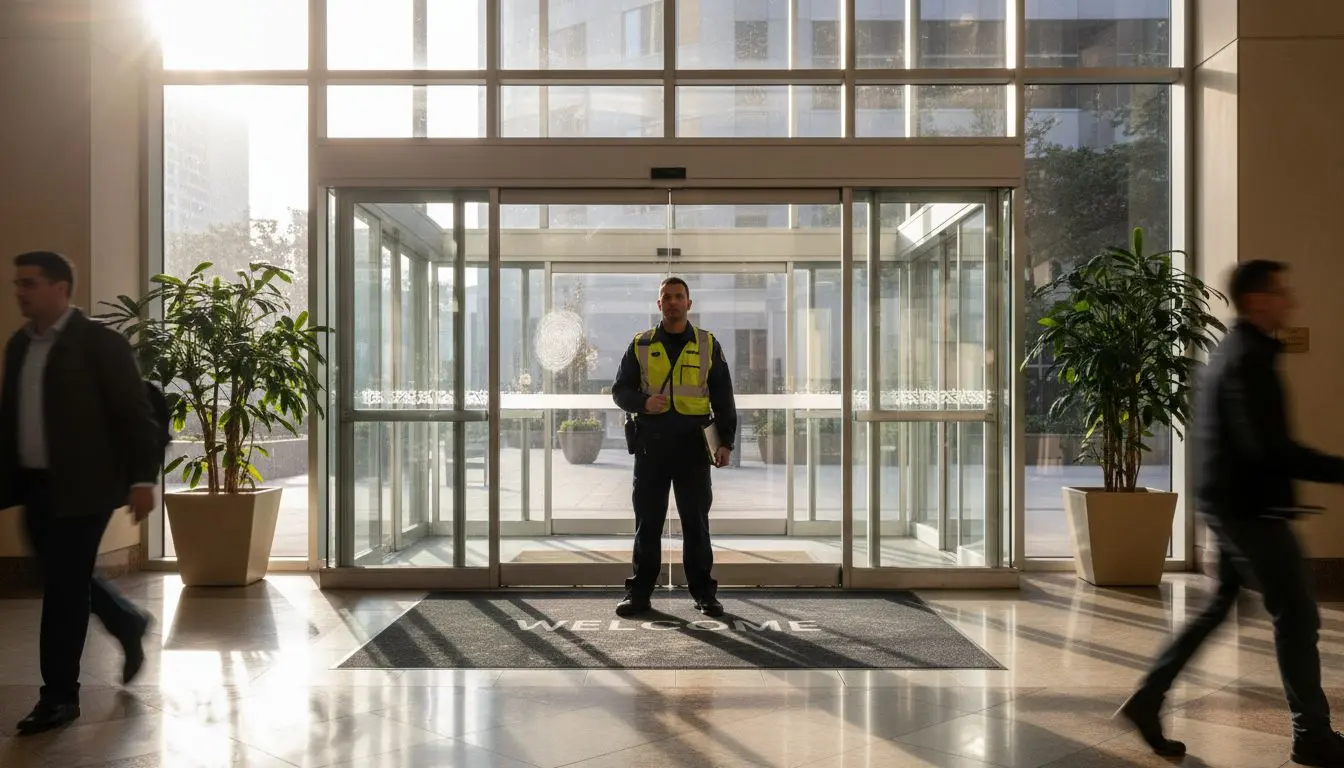
Nearly every British security professional will encounter static guarding at some stage, making it a core skill for career progression. With thousands of static guards securing sites across the United Kingdom each day, understanding this role unlocks new opportunities and leads to better frontline performance. Whether posted at a corporate reception or a critical infrastructure checkpoint, learning the essentials of static guarding strengthens your confidence and prepares you for more advanced responsibilities.
Table of Contents
- What Is Static Guarding In Security?
- Key Functions And Duties Of Static Guards
- Legal Requirements And SIA Licensing
- Typical Work Environments And Industry Sectors
- Common Challenges And Professional Risks
Key Takeaways
| Point | Details |
|---|---|
| Importance of Static Guarding | Static guarding is essential for providing physical security, ensuring real-time monitoring and access control. |
| Core Responsibilities | Static guards are accountable for incident documentation, operating security systems, and emergency response coordination. |
| Legal Compliance | Obtaining an SIA licence and adhering to legal standards is crucial for maintaining professionalism and service quality. |
| Adaptability Across Sectors | Static guards must be adaptable, understanding the unique security needs of various industries for effective protection. |
What Is Static Guarding in Security?
Static guarding represents a fundamental pillar of physical security management, where trained professionals maintain a vigilant presence at a fixed location to protect property, assets, and people. A static security guard is positioned at a specific site, serving as a critical human barrier against potential security threats.
Unlike mobile security patrols, static guards remain stationed at predetermined points such as building entrances, reception areas, warehouses, or critical infrastructure sites. Their primary responsibilities include monitoring access points, verifying credentials, conducting initial security screenings, and maintaining a visible deterrent presence that discourages potential criminal activities. The strategic positioning of these professionals allows for immediate response and continuous surveillance of a specific area.
Static security guards must possess a unique combination of observational skills, communication abilities, and professional demeanour. They are often the first point of contact for visitors and must balance approachability with firm security protocols. Their role involves careful documentation of incidents, maintaining visitor logs, operating security equipment like CCTV and access control systems, and potentially coordinating with local law enforcement if unusual circumstances arise.
Here is a summary of how static and mobile guarding differ in their core approach and impact:
| Aspect | Static Guarding | Mobile Patrols |
|---|---|---|
| Positioning | Fixed at key locations | Move across multiple sites |
| Deterrence | Continuous, visible presence | Unpredictable, intermittent patrols |
| Response Speed | Instant within assigned area | Delayed if off-site |
| Surveillance Method | Monitors specific entry/exit points | Roves, checks broad areas |
Pro Tip: Develop Situational Awareness: Always maintain a 360-degree awareness of your environment, practice active observation techniques, and stay mentally prepared to respond quickly and professionally to any unexpected security scenarios.
Key characteristics of effective static guards include:
- Exceptional attention to detail
- Strong communication skills
- Physical fitness and stamina
- Professional appearance and demeanour
- Ability to remain calm under pressure
Key Functions and Duties of Static Guards
Static guards play a critical role in maintaining physical security across various environments, with comprehensive responsibilities that extend far beyond simple observation. These professionals are tasked with protecting premises, managing access, and ensuring the safety of people and property through a multifaceted approach to security management.

Their primary duties encompass several key areas of security operations. Static security guards conduct crucial tasks such as traffic control, gatekeeping, and systematic surveillance, which involve monitoring entry points, verifying credentials, and maintaining a constant vigilant presence. Access control forms a fundamental aspect of their role, requiring guards to systematically check identification, log visitor movements, and prevent unauthorized entry into secured areas.
Beyond perimeter protection, static guards are responsible for emergency response and incident management. This includes conducting regular building safety checks, operating surveillance systems like CCTV, responding to potential security breaches, and coordinating with local law enforcement when necessary. Their role demands a unique blend of observational skills, quick decision-making, and the ability to remain calm and professional under challenging circumstances.
Specific responsibilities typically include:
- Monitoring surveillance equipment
- Conducting periodic site patrols
- Documenting and reporting security incidents
- Managing visitor and staff access
- Preventing theft, vandalism, and unauthorized activities
- Maintaining detailed activity logs
- Responding to alarms and potential security threats
Pro Tip: Professional Preparedness: Always maintain a comprehensive understanding of your specific site’s security protocols, keep communication devices fully charged, and develop a comprehensive mental map of your assigned area to enable rapid and effective response to any potential security situation.
Successful static guards must demonstrate exceptional attention to detail, strong communication skills, and the physical and mental resilience to maintain high-alert status throughout their shifts.
Legal Requirements and SIA Licensing
Navigating the legal landscape of static security guarding in the United Kingdom requires a comprehensive understanding of regulatory frameworks and professional licensing standards. BS 7499 provides a critical standard for static guarding and mobile patrol services, establishing essential guidelines that security professionals must adhere to in their operational practices.
The Security Industry Authority (SIA) plays a pivotal role in regulating and licensing security professionals. Obtaining an SIA licence is a mandatory requirement for anyone working in the static guarding sector, ensuring that individuals meet specific competency standards and background checks. The BS 7499:2020 code of practice outlines detailed requirements for security service providers, emphasizing the importance of documented policies, defined roles, and demonstrable staff competence.
Key legal requirements for static guards include:
- Mandatory SIA licensing
- Passing background criminal record checks
- Completing approved training programmes
- Maintaining current professional certifications
- Adhering to strict confidentiality and professional conduct standards
The licensing process involves several critical steps:
- Complete a recognised security training course
- Pass a criminal background check
- Apply through the official SIA online portal
- Pay the required licensing fee
- Receive and display the official SIA licence
Pro Tip: Licence Maintenance: Always keep your SIA licence up to date, renew it before expiration, and maintain a clean professional record to ensure continuous employability in the security sector.
Ultimately, legal compliance is not just about meeting minimum requirements but demonstrating professionalism, integrity, and commitment to maintaining the highest standards of security service delivery.
Typical Work Environments and Industry Sectors
Static security guards play a crucial role across diverse industry sectors, providing essential protection and surveillance in environments ranging from commercial to sensitive institutional settings. Their versatility allows them to adapt to the unique security challenges presented by different workplace configurations, making them indispensable professionals in modern security management.
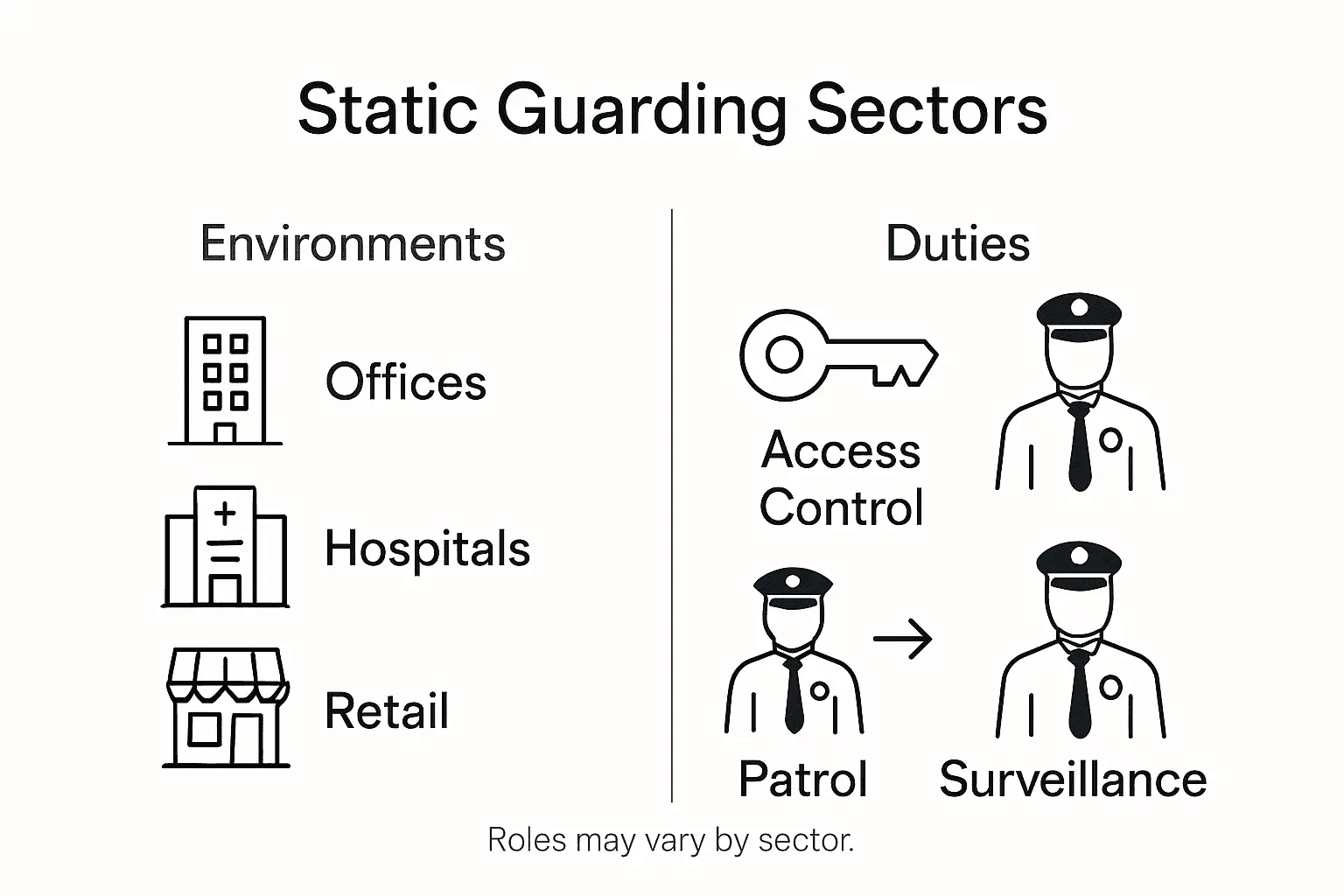
Commercial environments constitute a significant portion of static guard deployment. Security professionals are commonly stationed in warehouses, retail parks, and construction sites, where they monitor access points, prevent theft, and maintain site integrity. These locations demand heightened vigilance and a proactive approach to potential security breaches.
Key industry sectors where static guards are predominantly employed include:
- Retail establishments
- Corporate office complexes
- Healthcare facilities
- Educational institutions
- Manufacturing plants
- Residential developments
- Logistics and distribution centres
- Entertainment venues
- Financial institutions
- Government buildings
Each sector presents unique security challenges that require specialised knowledge and adaptive strategies. For instance, healthcare facilities demand discrete yet vigilant protection, while construction sites necessitate robust physical presence and strict access control.
The following table highlights key industry sectors employing static guards and their typical security focuses:
| Industry Sector | Main Security Focus | Common Site Examples |
|---|---|---|
| Retail | Theft prevention, access control | Shopping centres, shops |
| Healthcare | Patient safety, asset protection | Hospitals, clinics |
| Manufacturing | Asset safeguarding, compliance | Factories, warehouses |
| Residential | Access management, deterrence | Gated communities, flats |
Pro Tip: Sector Specialisation: Develop expertise in specific industry sectors by understanding their unique security protocols, technological systems, and risk management strategies to enhance your professional marketability and effectiveness.
Successful static guards must remain flexible, continuously learning about the evolving security requirements across different professional environments while maintaining unwavering professionalism and attention to detail.
Common Challenges and Professional Risks
Static security guards face a complex array of professional challenges that test their skills, resilience, and adaptability, requiring a sophisticated approach to maintaining safety and security in dynamic environments. These professionals must simultaneously manage physical protection, interpersonal interactions, and potential emergency scenarios while maintaining composure and professionalism.
Professional risks encompass multiple dimensions beyond physical confrontations. Guards must balance maintaining rigorous security protocols with allowing appropriate freedom of movement, particularly during challenging shifts like overnight or off-peak hours when potential for anti-social behaviour increases. The psychological demands of constant vigilance can create significant mental strain, requiring exceptional emotional intelligence and stress management skills.
Key professional challenges include:
- Managing potential confrontational situations
- Maintaining alertness during extended shifts
- Navigating complex interpersonal interactions
- Responding to unexpected emergency scenarios
- Preventing potential security breaches
- Documenting incidents accurately
- Maintaining personal safety while protecting others
Specific risks that static guards regularly encounter involve:
- Potential physical threats from aggressive individuals
- Psychological stress from constant surveillance
- Legal implications of inappropriate response
- Risk of burnout from high-pressure environments
- Potential exposure to dangerous situations
- Complex communication challenges
Pro Tip: Emotional Resilience: Develop strong mental coping strategies, practice regular stress management techniques, and maintain professional boundaries to protect your psychological well-being while performing high-pressure security responsibilities.
Successful static guards transform these challenges into opportunities for professional growth, continuously refining their skills and maintaining a proactive, strategic approach to security management.
Ready to Take the Next Step in Your Static Guarding Career
Understanding the demanding roles, legal requirements and professional challenges of static guarding can prepare you for success but finding the right opportunity is equally vital. If you want to secure positions where your attention to detail, situational awareness and commitment to professional standards truly matter, explore the wide range of security jobs designed specifically for professionals like you.

Visit the Security Jobs Board today to create your profile, upload your CV and access up-to-date vacancies in static guarding and related security roles throughout the UK. With easy-to-use job alerts and a focus on quality matches, you can accelerate your career while ensuring compliance with essential licensing and sector requirements. Don’t wait – take control of your future and find your ideal static guard position now at Security Jobs Board.
Start your search and gain access to exclusive employer listings that value your skills in access control and emergency response. Every moment counts when building your career in this critical security field.
Frequently Asked Questions
What is static guarding in security?
Static guarding involves trained professionals stationed at fixed locations to protect property, assets, and individuals, acting as a human barrier against potential security threats.
What are the key duties of a static guard?
Static guards are responsible for monitoring access points, verifying credentials, conducting surveillance, managing visitor access, documenting incidents, and responding to emergencies, ensuring the safety of people and property.
What legal requirements must static guards meet?
Static guards must obtain a mandatory SIA licence, pass background checks, complete approved training programmes, and adhere to professional conduct standards to ensure they meet competency requirements in the security industry.
In what environments are static guards typically employed?
Static guards work in various environments, including retail establishments, corporate offices, healthcare facilities, educational institutions, manufacturing plants, and residential developments, adapting their security strategies to meet the unique challenges of each sector.


