
Over 14,000 security professionals work in the UK public sector alone, reflecting just how vital these jobs have become for national safety. Whether guarding critical infrastructure or developing advanced cyber defences, each role shapes the daily stability millions rely on. Understanding the range of careers, required skills, and legal standards can open up a world of opportunity for anyone considering this dynamic and impactful field.
Key Takeaways
| Point | Details |
|---|---|
| Diverse Roles | The UK security sector comprises various roles in public service, government security, and private sector security, each with unique functions. |
| Essential Qualifications | Key qualifications include a valid SIA licence, first aid certification, and specialized training depending on the role. |
| Career Progression | Numerous pathways exist for advancement, ranging from entry-level positions to strategic roles in management and consultancy. |
| Employer Expectations | Professionals must uphold high standards of integrity, continuous learning, and adaptability to new technologies to meet employer demands. |
Table of Contents
- Defining Security Sector Jobs In The Uk
- Types Of Security Roles And Specialisations
- Essential Skills And Qualifications Needed
- Understanding Legal And Regulatory Framework
- Career Progression And Industry Opportunities
- Employer Expectations And Common Challenges
Defining Security Sector Jobs in the UK
The security sector in the United Kingdom represents a diverse and critical landscape of professional roles dedicated to protecting people, property, and national interests. According to Prospects.ac.uk, this dynamic sector encompasses an extensive range of positions across multiple domains.
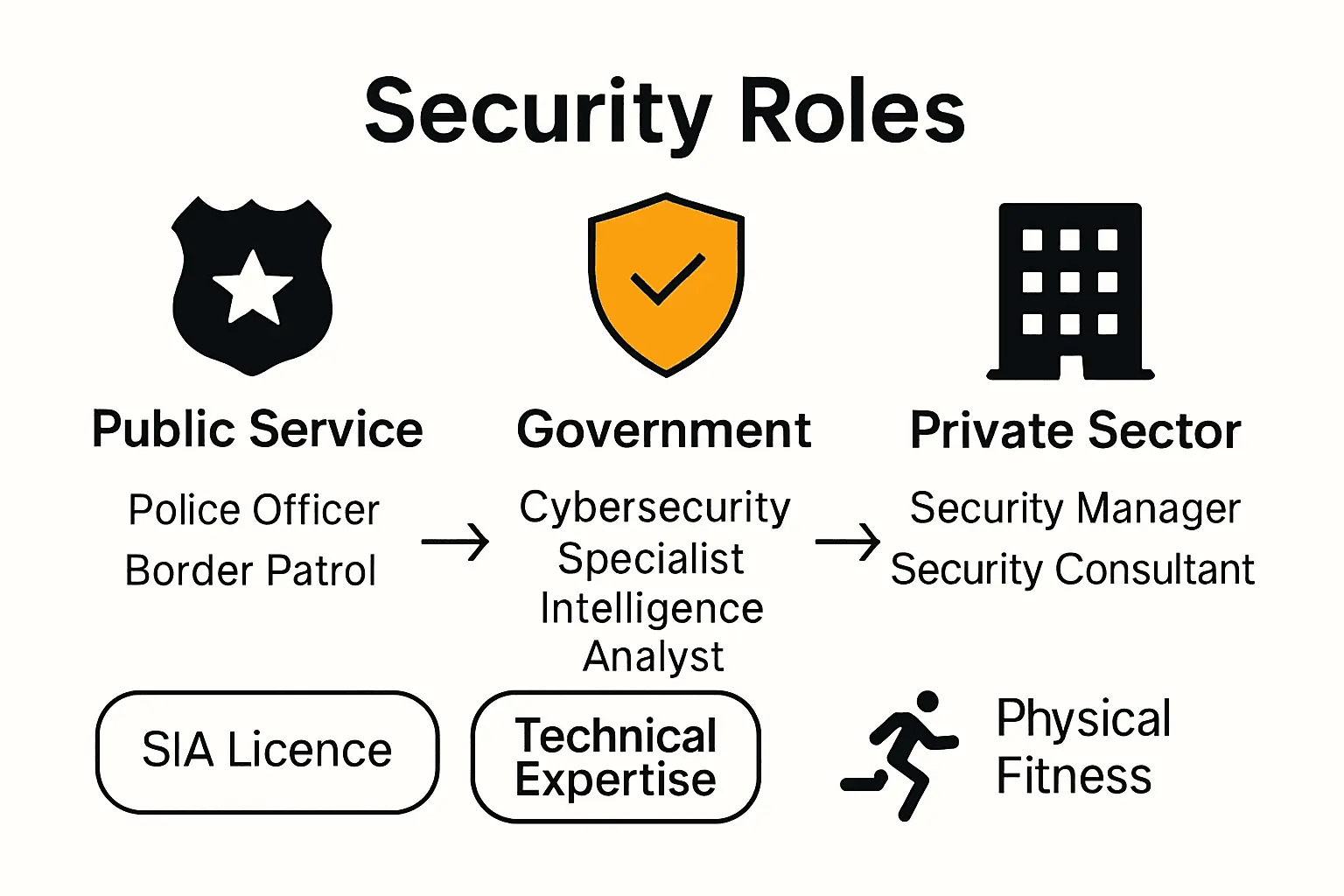
Security sector jobs in the UK can be broadly categorised into several key areas:
- Public Service Roles: Includes positions in law enforcement, Border Force, emergency planning, intelligence analysis, and prison services
- Government Security Profession: Covers seven specialized areas including physical security, personnel protection, cyber security, technical security, resilience planning, governance, and leadership
- Private Sector Security: Encompasses corporate security, event security, cybersecurity consulting, and risk management positions
According to the Government Security Profession, the public sector alone comprises over 14,000 security professionals working across multiple specialized domains. These professionals play a crucial role in maintaining national safety, protecting critical infrastructure, and responding to emerging security challenges.

While the sector offers diverse opportunities, successful candidates typically require a combination of specialized training, relevant qualifications, and personal attributes like attention to detail, physical fitness, and strong analytical skills. Read more about security job classifications to understand the specific requirements and career pathways available in this dynamic field.
Types of Security Roles and Specialisations
The security sector offers a remarkably diverse range of professional opportunities across multiple specialisations. According to Security Jobs Board, several key areas define the contemporary security landscape in the United Kingdom, each presenting unique career pathways and skill requirements.
Primary security role specialisations include:
- Manned Guarding & Door Supervision: Physical security roles involving protecting premises, managing access, and maintaining order
- CCTV & Alarm Systems: Technical roles focused on installation, monitoring, and management of surveillance infrastructure
- Control Room Operations: Strategic positions managing security monitoring, incident response, and communication systems
- Cyber & Digital Security: Technical specialisations protecting digital assets, networks, and information systems
- Event Security & Stewarding: Specialized roles managing crowd control, safety, and logistics at public and private events
Each specialisation demands distinct skill sets and qualifications.
For instance, cyber security professionals require advanced technological knowledge, while manned guarding roles emphasize physical fitness and situational awareness. Professional certifications, specialized training, and continuous learning are crucial for career progression across these domains.
Here’s a comparison of security role specialisations and their core skill requirements:
| Specialisation | Main Responsibilities | Key Skills Required |
|---|---|---|
| Manned Guarding & Door Supervision | Protect premises Manage access |
Physical fitness Situational awareness |
| CCTV & Alarm Systems | Install Monitor surveillance |
Technical proficiency Attention to detail |
| Control Room Operations | Incident response Comms management |
Decision-making Clear communication |
| Cyber & Digital Security | Protect digital assets Network security |
IT expertise Analytical skills |
| Event Security & Stewarding | Crowd control Event safety |
Teamwork Problem-solving |
Explore our comprehensive guide to understanding different security job roles to gain deeper insights into the specific requirements, career opportunities, and potential growth trajectories within this dynamic and essential sector.
Essential Skills and Qualifications Needed
Building a successful career in the UK security sector requires a strategic combination of professional qualifications, legal credentials, and specialized skills. According to Randstad’s career guidance, frontline security roles demand specific legal certifications, with a valid Security Industry Authority (SIA) licence being fundamental for most positions.
Key qualifications and essential skills include:
- Mandatory Licensing: SIA licence for roles like security guard, door supervisor, and CCTV operator
- First Aid Certification: Basic first aid and emergency response training
- Physical Fitness: Ability to perform demanding physical tasks and maintain alertness
- Communication Skills: Clear verbal and written communication
- Technical Proficiency: Understanding of security systems, surveillance technologies
- Problem-solving Abilities: Quick decision-making in high-pressure situations
The Government Security Profession offers structured development pathways, including specialized apprenticeships like the Government Cyber Security Academy and professional titles such as Chartered Security Professional. These structured learning opportunities provide career progression routes and advanced skill development.
Learn more about developing essential security skills to understand how continuous professional development can enhance your employability and career potential in this dynamic sector.
Understanding Legal and Regulatory Framework
The UK security sector operates under a stringent legal and regulatory framework designed to ensure professional standards, public safety, and individual accountability. According to Randstad, a critical cornerstone of this framework is the Security Industry Authority (SIA) licensing system, which serves as a mandatory legal requirement for most private security positions.
Key regulatory requirements and legal considerations include:
- SIA Licensing: Mandatory for front-line and non-front line security roles
- Legal Compliance: Verifying employer legitimacy and SIA-approved contractor status
- Statutory Regulations: Adherence to professional conduct standards
- Background Checks: Comprehensive screening for security-sensitive positions
- Ongoing Training: Continuous professional development requirements
As highlighted by Get Licensed, job seekers must exercise caution to avoid illegal employment practices. This includes steering clear of cash-in-hand jobs that could potentially jeopardize SIA licensing and professional credibility. Understanding these regulatory nuances is crucial for maintaining legal compliance and professional integrity.
Explore our comprehensive guide to navigating security job regulations to ensure you’re fully informed about the legal landscape of security employment in the UK.
Career Progression and Industry Opportunities
The UK security sector presents an expansive landscape of career development opportunities, with multiple pathways for professional growth and specialisation. According to the UK Government’s Cyber Skills Labour Market Analysis, the demand for security professionals continues to surge across diverse industries including public sector, aerospace, defence, fintech, and telecommunications.
Potential career progression routes encompass:
- Entry-Level Positions: Security guard, junior monitoring roles
- Technical Specialisations: Cyber security analyst, network security engineer
- Management Tracks: Security team supervisor, operations manager
- Strategic Roles: Chief security officer, risk management consultant
- Specialized Consultancy: Cybersecurity advisor, compliance specialist
The Government Security Profession offers structured development frameworks, including leadership programmes like the Secure Leaders Programme and advanced postgraduate qualifications in partnership with institutions such as King’s College London. These opportunities provide clear advancement paths and professional recognition.
Discover the top career paths in the security industry to help you navigate and plan your professional journey in this dynamic and evolving sector.
Employer Expectations and Common Challenges
Navigating the UK security job market requires understanding complex employer expectations and industry challenges. According to Get Licensed, reputable employers like G4S, Securitas, and Mitie Security set high standards for professionalism, ethical practices, and ongoing employee development.
Key employer expectations include:
- Professional Credentials: Valid SIA licensing and current certifications
- Continuous Learning: Commitment to skill enhancement and training
- Ethical Conduct: Demonstrable integrity and reliability
- Physical and Mental Fitness: Ability to handle high-pressure environments
- Technical Adaptability: Quick learning of new security technologies
The UK Government’s Cyber Security Skills Report highlights emerging challenges, noting a slightly decreased recruitment through agencies in 2024 and increased competition for specialized roles, particularly in cyber security. This trend underscores the importance of continuous skill development and adaptability.
Learn strategies for meeting employer expectations in the security sector to enhance your employability and successfully navigate the evolving job market.
Find the Right Security Sector Job Faster and Easier
Ready to turn your knowledge of the security industry into a real opportunity? Many readers of our Complete Guide to Security Sector Jobs UK face the same challenges you do: navigating complex job requirements, understanding essential qualifications such as SIA licensing, and keeping up with ever-changing employer expectations. With intense competition in areas like cyber security and manned guarding, finding roles that truly match your skills can feel overwhelming.

Now is the time to take control of your career journey. At Security Jobs Board, you will find a dedicated platform built just for the UK security industry. With our user-friendly tools, you can create a profile, upload your CV, and set targeted job alerts in minutes. Employers are actively seeking candidates with your unique skills, whether you are interested in career progression paths or building new essential security skills. Join today to connect directly with quality employers and make your next move securely. Register free at Security Jobs Board and get started while top vacancies are still available.
Frequently Asked Questions
What types of roles are available in the security sector?
Security sector jobs include public service roles such as law enforcement and emergency planning, government security professions in areas like cyber security and resilience planning, and private sector positions such as corporate security and risk management.
What qualifications do I need to work in the security sector?
To work in the security sector, a valid Security Industry Authority (SIA) licence is often required, along with specific skill sets such as physical fitness, communication skills, and sometimes technical proficiency depending on the role.
How can I progress my career in the security field?
Career progression in the security sector can involve moving from entry-level roles to technical specialisations, management positions, or strategic roles. Continuous professional development and certifications can enhance advancement opportunities.
What are the key skills needed for a successful career in security?
Essential skills include strong communication, attention to detail, problem-solving abilities, physical fitness, and technical proficiency, especially for roles in cyber security or advanced surveillance technologies.


