Interview Scheduling: Impact on UK Security Careers

Most British security jobseekers face hidden obstacles in the interview scheduling process, with manual coordination causing delays and lost opportunities. Research shows poor interview timing can reduce candidate engagement by more than 30 percent in busy organisations across the United Kingdom. Understanding how modern scheduling works is vital for anyone hoping to land a role in this competitive sector. This guide reveals practical tips and proven strategies to help you manage interview times efficiently and improve your chances of getting hired.
Table of Contents
- Interview Scheduling Defined and Debunked
- Types of Interviews in Security Sector
- How the Scheduling Process Works
- Technology and Tools for Scheduling
- Legal Duties: Gdpr and Data Protection
- Common Mistakes and How to Avoid Them
Key Takeaways
| Point | Details |
|---|---|
| Interview Scheduling is Complex | Effective interview scheduling is crucial for enhancing candidate experience and organisational efficiency, yet it often involves significant coordination challenges. |
| Embrace Technological Solutions | Implementing AI-assisted and automated scheduling tools can streamline the recruitment process and reduce administrative burdens. |
| Variety of Interview Types | Different interview methodologies in the security sector—structured, semi-structured, and unstructured—should be matched to the role to ensure thorough evaluations. |
| Prioritise Data Protection Compliance | Adhering to GDPR and data protection laws is vital to maintain candidate trust and ensure legal compliance throughout the recruitment process. |
Interview Scheduling Defined and Debunked
Interview scheduling represents a critical yet often overlooked component of the recruitment process. While many assume it is a straightforward task, the reality reveals a complex coordination challenge that can significantly impact candidate experience and organisational efficiency. Advanced interview scheduling approaches demonstrate how strategic planning transforms this seemingly mundane administrative task.
Traditionally, interview scheduling has been a manual process fraught with communication delays and logistical complications. Recruiters would spend hours juggling calendars, coordinating interviewer availability, and managing candidate communication. This approach not only consumes substantial administrative time but also increases the risk of miscommunication and potential candidate disengagement. Modern recruitment strategies now recognise scheduling as a strategic touchpoint that can either enhance or undermine the entire hiring experience.
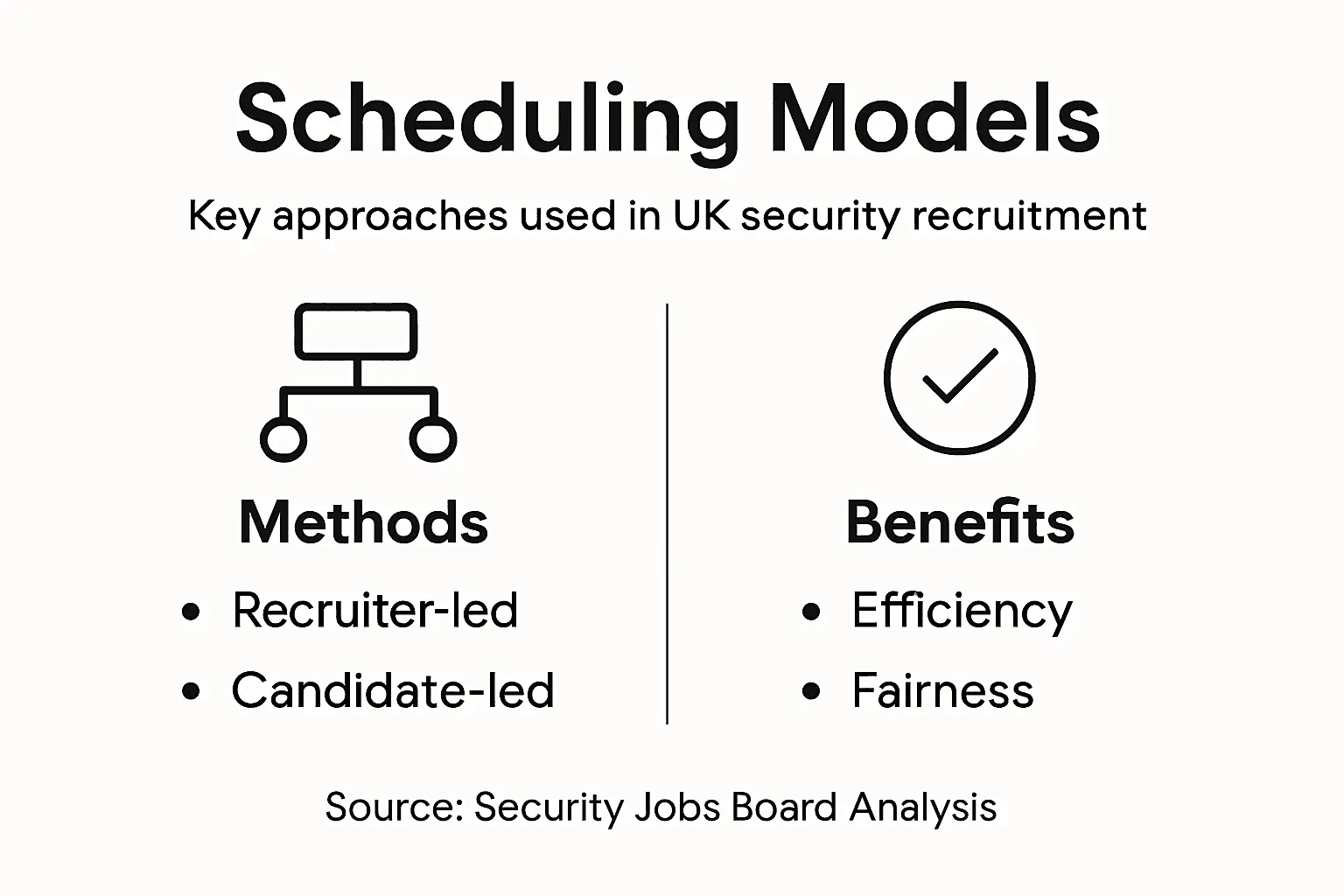
The evolution of interview scheduling has introduced three primary coordination models: recruiter-led, candidate-led, and AI-assisted scheduling. Each model offers distinct advantages:
Here is a quick comparison of primary interview coordination models highlighting their strategic implications:
| Coordination Model | Candidate Experience | Administrative Burden | Speed of Process |
|---|---|---|---|
| Recruiter-Led | Highly personalised support | High effort for staff | Often slower |
| Candidate-Led | Empowers candidate choice | Moderately reduced | Generally quicker |
| AI-Assisted | Efficient and consistent | Minimal manual input | Fastest overall |
- Recruiter-Led Scheduling: Provides personalised coordination but demands significant manual effort
- Candidate-Led Scheduling: Offers flexibility and empowers candidates to choose convenient time slots
- AI-Assisted Scheduling: Automates routine tasks, reduces administrative burden, and accelerates recruitment timelines
Top tip: Invest in a robust scheduling platform that allows flexibility between these models to optimise your recruitment workflow and candidate experience.
Types of Interviews in Security Sector
The security sector encompasses a diverse range of interview methodologies, each designed to assess candidates’ suitability for complex and sensitive roles. Interview strategies in high-stakes investigations reveal the critical importance of selecting the appropriate interview approach to ensure comprehensive candidate evaluation.
Three primary interview types dominate the security sector landscape: structured, semi-structured, and unstructured interviews. Each approach offers unique advantages and challenges. Structured interviews follow a rigidly predetermined set of questions, ensuring consistency and standardisation across candidate assessments. Semi-structured interviews provide more flexibility, allowing recruiters to explore candidate responses while maintaining a general interview framework. Unstructured interviews offer the most conversational approach, enabling deeper insights into a candidate’s personality and adaptability.
Specific interview techniques tailored to security roles often include:
- Behavioural Interviews: Assessing past performance and potential future actions
- Competency-Based Interviews: Evaluating specific skills relevant to security work
- Situational Judgement Interviews: Testing decision-making abilities in complex scenarios
- Technical Interviews: Examining specialised knowledge in security technologies and protocols
Pro tip: Prepare comprehensive interview notes and standardise your evaluation criteria to ensure fair and consistent candidate assessment across different interview formats.
How the Scheduling Process Works
Interviewing in the security sector demands a meticulously planned scheduling approach that balances multiple stakeholder requirements. Strategic interview scheduling techniques reveal a complex coordination process involving multiple critical stages and careful communication management.
The scheduling process typically unfolds through several interconnected stages. Initially, recruiters identify potential interview slots by mapping candidate availability against interviewer calendars. This involves considering factors such as time zones, individual schedules, and specific role requirements. Preliminary screening occurs where initial candidate details are collected, and potential interview windows are identified. During this phase, recruiters must confirm key logistical details including interview format (virtual or in-person), expected duration, and the specific interview panel members.
Key steps in the scheduling process include:
- Initial Contact: Reaching out to potential candidates and confirming their continued interest
- Availability Mapping: Synchronising interviewer and candidate schedules
- Invite Coordination: Sending formal interview invitations with precise details
- Confirmation Management: Tracking responses and managing potential rescheduling requests
- Reminder Communication: Sending timely interview reminders to reduce no-show rates
Pro tip: Implement a standardised digital scheduling system that automatically tracks communications, sends reminders, and provides real-time availability updates to streamline the entire interview coordination process.
Technology and Tools for Scheduling
The security recruitment landscape has been dramatically transformed by technological innovations in interview scheduling. AI-powered scheduling solutions are revolutionising how organisations coordinate and manage candidate interactions, creating unprecedented efficiency in talent acquisition processes.
Modern scheduling technologies offer sophisticated capabilities that go far beyond traditional manual coordination. These advanced tools integrate seamlessly with existing calendar systems, automatically adjust for multiple time zones, and provide intelligent communication workflows. Automated scheduling platforms can now handle complex logistical challenges, such as coordinating multiple interviewer schedules, managing candidate preferences, and sending intelligent reminders and follow-up communications.

Key technological features in interview scheduling tools include:
This summary highlights where key interview scheduling technologies add value to the recruitment workflow:
| Technological Feature | Workflow Impact | Candidate Benefit |
|---|---|---|
| Intelligent Calendar Sync | Reduces scheduling errors | Minimises coordination waits |
| Automated Time Zone Handling | Prevents timing confusion | Supports international hires |
| Communication Automation | Ensures prompt notifications | Fewer missed opportunities |
| Real-Time Status Tracking | Enables live process updates | Increases transparency |
- Intelligent Calendar Integration: Synchronising availability across multiple platforms
- Automated Time Zone Conversion: Eliminating scheduling conflicts for remote candidates
- Communication Automation: Sending personalised invitations and reminders
- Machine Learning Prediction: Optimising interview slot allocation
- Real-Time Tracking: Monitoring interview status and candidate progression
Pro tip: Select a scheduling platform that offers robust integration capabilities, ensuring seamless communication between your recruitment systems and minimising manual data entry.
Legal Duties: GDPR and Data Protection
The security sector operates within a stringent legal framework governing candidate data management and privacy. Data protection guidelines for organisations establish critical compliance requirements that recruiters must meticulously follow during interview scheduling and candidate interactions.
Under the UK GDPR and Data Protection Act 2018, organisations are legally obligated to handle personal information with the utmost care and transparency. Candidate data protection involves several key principles: lawful processing, data minimisation, purpose limitation, and ensuring individual rights. This means recruiters can only collect information directly relevant to the recruitment process, must clearly communicate how data will be used, and must provide candidates with mechanisms to access or request deletion of their personal information.
Critical legal considerations in interview scheduling include:
- Consent Management: Obtaining explicit permission for data collection
- Data Minimisation: Collecting only necessary candidate information
- Storage Limitation: Retaining data only for required duration
- Transparency: Clearly communicating data usage and storage practices
- Individual Rights: Enabling candidates to access, modify, or delete their data
Pro tip: Develop a standardised data protection protocol that outlines explicit consent procedures, data handling processes, and candidate rights communication to ensure consistent legal compliance.
Common Mistakes and How to Avoid Them
Recruitment professionals in the security sector frequently encounter scheduling challenges that can derail the interview process. Common interview scheduling mistakes highlight critical areas where organisations consistently stumble, ultimately impacting candidate experience and recruitment efficiency.
The most prevalent errors stem from poor communication, inadequate coordination, and inflexible scheduling approaches. Systemic scheduling failures often emerge from manual processes that lack technological support, create unnecessary complexity, and fail to account for candidate preferences. These mistakes can result in high no-show rates, candidate frustration, and significant time wastage for both recruiters and potential employees.
Key mistakes to avoid during interview scheduling include:
- Poor Time Zone Management: Failing to confirm and align candidate and interviewer time zones
- Inadequate Communication: Not providing clear, comprehensive interview instructions
- Rigid Scheduling: Offering limited interview slot flexibility
- Manual Coordination: Over-relying on manual calendar management
- Insufficient Reminders: Neglecting timely interview confirmation and reminder communications
Pro tip: Implement a dynamic scheduling system that automatically handles time zone conversions, sends intelligent reminders, and provides multiple interview format options to accommodate diverse candidate needs.
Streamline Your Security Career Journey with Efficient Interview Scheduling
The challenges highlighted in “Interview Scheduling: Impact on UK Security Careers” underscore the critical need for seamless coordination, GDPR compliance, and flexible communication throughout the recruitment process. If managing multiple interview time zones, candidate preferences, and ensuring timely communication feels overwhelming, you are not alone. These hurdles can affect your chances of landing the ideal security role or finding the best candidate quickly.

Discover how The Security Jobs Board simplifies these complexities by offering a user-friendly platform tailored specifically for the UK security sector. With features like quick CV uploads, job alerts, and secure profile management, candidates can bypass common scheduling frustrations and connect directly with trusted employers. Employers benefit from streamlined candidate searches and GDPR-compliant communication tools designed to enhance efficiency and candidate experience. Take control of your career or recruitment process today by visiting The Security Jobs Board and experience interview scheduling made simple and reliable.
Frequently Asked Questions
What is interview scheduling in the recruitment process?
Interview scheduling is a coordination challenge in the recruitment process that involves aligning candidate and interviewer availabilities, ensuring smooth communication, and managing logistical details to create a positive candidate experience.
What are the main coordination models for interview scheduling?
The three primary interview coordination models are recruiter-led scheduling, candidate-led scheduling, and AI-assisted scheduling. Each model offers unique advantages in terms of candidate experience, administrative burden, and speed of the process.
How does interview scheduling impact the candidate experience?
Effective interview scheduling can significantly enhance the candidate experience by minimising waiting times and communication delays, providing flexibility, and ensuring the process is smooth and straightforward. Poor scheduling, on the other hand, can lead to candidate frustration and disengagement.
What common mistakes should be avoided in interview scheduling?
Common mistakes include poor time zone management, inadequate communication, rigid scheduling, over-reliance on manual coordination, and insufficient reminders, all of which can negatively impact the efficiency of the recruitment process.


