Candidate Profiling in Security Recruitment – Why It Matters

Recruiting for security roles in British organisations demands more than a quick scan of a resume. In fact, over 60 percent of security breaches involve internal actors, making careful candidate profiling a top priority. Understanding exactly how employers evaluate both technical and psychological readiness helps reduce these risks. This guide reveals the practical steps and advanced assessment methods British teams rely on to pinpoint trustworthy, capable security professionals.
Table of Contents
- Defining Candidate Profiling For Security Roles
- Types Of Candidate Profiling Methods Used
- How Candidate Profiling Works In Recruitment
- Legal And Ethical Aspects In The UK
- Common Pitfalls And Best Practice Advice
Key Takeaways
| Point | Details |
|---|---|
| Comprehensive Candidate Assessments | Implement multi-dimensional profiling methods that assess technical skills, psychological resilience, and ethical standards for effective candidate selection. |
| Importance of Structured Methods | Use structured assessments like practical tests and psychometric evaluations to obtain a holistic view of a candidate’s capabilities. |
| Legal and Ethical Compliance | Ensure recruitment processes adhere to UK data protection regulations while maintaining transparency and fairness to protect candidate rights. |
| Mitigating Recruitment Risks | Regularly review and standardise candidate profiling frameworks to avoid unconscious bias and improve overall hiring quality. |
Defining Candidate Profiling for Security Roles
Candidate profiling in security recruitment represents a systematic approach to evaluating potential employees based on their professional capabilities, psychological attributes, and suitability for specific security roles. This strategic process goes beyond traditional hiring methods by creating comprehensive assessments that match an individual’s skills, experience, and personal characteristics with the precise requirements of security positions.
At its core, candidate profiling involves thorough personnel screening techniques designed to evaluate an applicant’s potential performance, reliability, and compatibility with organisational security standards. Security professionals must examine multiple dimensions of a candidate’s profile, including technical competencies, psychological resilience, ethical standards, and adaptability to high-pressure environments. These multifaceted assessments help organisations identify candidates who not only possess the requisite technical skills but also demonstrate the mental fortitude and integrity essential in security roles.
The UK Government Security Profession Career Framework highlights the critical importance of aligning candidate capabilities with specific job requirements. By developing detailed candidate profiles, organisations can reduce recruitment risks, improve workforce quality, and enhance overall security infrastructure. This approach involves detailed background checks, skills assessments, psychological evaluations, and comprehensive interviews that provide a holistic view of potential security personnel.
Pro Tip: Strategic Candidate Assessment: When building candidate profiles for security roles, focus on creating multi-dimensional assessments that evaluate technical skills, psychological resilience, and ethical standards simultaneously to ensure comprehensive candidate selection.
Types of Candidate Profiling Methods Used
Security recruitment requires sophisticated candidate profiling methods that go far beyond traditional hiring approaches. These techniques encompass a comprehensive range of assessment strategies designed to evaluate a candidate’s technical skills, psychological attributes, and potential performance in high-stakes security environments. By utilising multiple evaluation techniques, organisations can create a holistic understanding of each potential employee’s capabilities and compatibility.

One primary method involves structured assessment techniques that include practical tests, role-play scenarios, and comprehensive interviews. These methods allow recruiters to observe candidates’ real-world problem-solving skills, communication abilities, and response to simulated security challenges. Psychometric testing plays a crucial role, measuring cognitive abilities, personality traits, stress management capacities, and emotional intelligence that are critical in security roles.
Advanced candidate profiling also incorporates background checks, skills assessments, and detailed psychological evaluations. Comprehensive selection methods might include written assessments, group exercises, technical skill demonstrations, and behavioural interviews. These multi-dimensional approaches help organisations identify candidates who not only meet technical requirements but also demonstrate the psychological resilience and ethical standards necessary for security professionals.
Pro Tip: Holistic Candidate Assessment: Develop a standardised yet flexible profiling framework that combines technical skills tests, psychological evaluations, and practical scenario assessments to create a comprehensive candidate profile that goes beyond traditional recruitment methods.
To better understand the nuances of profiling methods in security recruitment, here is a comparison of key candidate assessment approaches:
| Profiling Method | Focus Area | Typical Tools | Organisational Benefit |
|---|---|---|---|
| Structured Assessments | Practical skills and decision-making | Role-plays, practical tests | Reveals real-world aptitude |
| Psychometric Testing | Cognitive and psychological traits | Personality and aptitude tests | Identifies stress and integrity markers |
| Background Checks | Historical reliability and trustworthiness | Verification databases, reference checks | Reduces insider risk exposure |
| Behavioural Interviews | Past behaviours and ethical standards | Scenario-based questions | Predicts future actions and culture fit |
How Candidate Profiling Works in Recruitment
Candidate profiling in recruitment is a sophisticated process that transforms traditional hiring methods into a strategic, data-driven approach. At its core, the process involves creating comprehensive candidate assessments that go beyond simple resume screening, focusing instead on a holistic evaluation of an individual’s capabilities, potential, and alignment with organisational requirements.
The recruitment process begins with detailed screening methodologies that systematically analyse a candidate’s professional background, technical skills, psychological attributes, and cultural compatibility. By implementing a risk-based approach, organisations can identify potential candidates who not only possess the necessary technical competencies but also demonstrate the psychological resilience and ethical standards required for security roles.
Candidate Profiling Framework
- Initial Document Screening
- Skills and Competency Assessment
- Background and Security Checks
- Psychological and Behavioural Evaluation
- Final Comparative Analysis
Under the success profile assessment model, recruiters evaluate candidates across multiple dimensions, including technical expertise, cognitive abilities, emotional intelligence, and adaptability. This comprehensive approach ensures that selection processes are objective, transparent, and aligned with the specific requirements of security positions. By combining quantitative assessments with qualitative evaluations, organisations can make more informed recruitment decisions that minimise potential risks and maximise candidate potential.
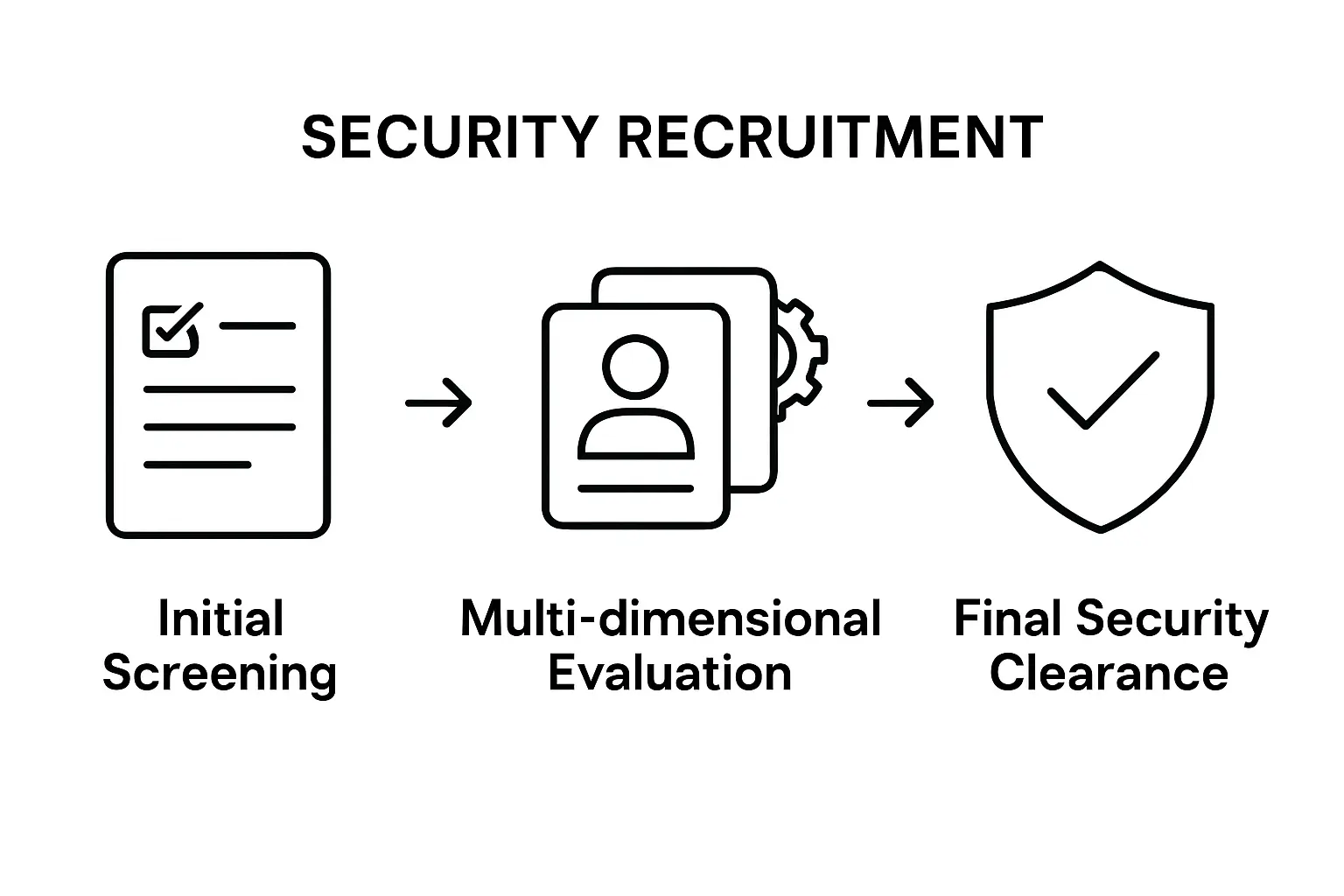
Pro Tip: Holistic Candidate Evaluation: Develop a standardised yet flexible profiling framework that integrates technical assessments, psychological evaluations, and behavioural analysis to create a comprehensive candidate profile beyond traditional recruitment metrics.
Legal and Ethical Aspects in the UK
Candidate profiling in security recruitment operates within a complex legal and ethical framework that demands rigorous compliance with UK data protection regulations, employment laws, and professional standards. Organisations must navigate a delicate balance between thorough candidate assessment and protecting individual privacy rights, ensuring that every stage of the recruitment process maintains transparency, fairness, and legal integrity.
Pre-employment screening protocols require organisations to implement comprehensive background checks that respect legal boundaries while gathering essential information about potential candidates. These protocols involve careful verification of professional credentials, criminal record checks, and assessment of an individual’s suitability for security-sensitive roles, all conducted within the strict parameters of the Data Protection Act and General Data Protection Regulation (GDPR).
Key Legal Considerations in Candidate Profiling
- Compliance with Data Protection Legislation
- Consent for Background Investigations
- Non-Discriminatory Assessment Practices
- Transparent Information Handling
- Proportional and Relevant Information Gathering
Ethical Recruitment Principles
The recruitment process must prioritise candidate protection by implementing safeguards against discriminatory practices, potential exploitation, and inappropriate information gathering. This involves developing robust policies that ensure fair assessment, maintain candidate confidentiality, and provide clear mechanisms for candidates to understand and challenge recruitment decisions.
Pro Tip: Candidate Rights Protection: Always establish clear, written consent procedures and provide candidates with comprehensive information about how their personal data will be collected, processed, and protected during the security recruitment process.
Common Pitfalls and Best Practice Advice
Candidate profiling in security recruitment presents numerous challenges that can undermine the effectiveness of the selection process. Organisations must remain vigilant against common mistakes that can compromise candidate assessment, potentially leading to poor hiring decisions and increased operational risks.
Assessment methods require careful design to ensure fairness, objectivity, and comprehensive evaluation of candidates. The most frequent pitfalls include unconscious bias, over-reliance on limited screening criteria, insufficient depth in background checks, and failure to create standardised evaluation frameworks that provide consistent and reliable candidate insights.
Key Pitfalls in Candidate Profiling
- Unconscious Bias in Candidate Evaluation
- Inconsistent Assessment Criteria
- Inadequate Background Verification
- Overlooking Psychological Compatibility
- Insufficient Skills Matching
Best Practice Recommendations
Implementing fair and consistent selection processes is crucial for organisations seeking to develop robust candidate profiling strategies. This involves creating multi-dimensional assessment frameworks that combine objective technical evaluations, comprehensive background checks, psychological profiling, and skills assessments. By developing standardised yet flexible evaluation methods, organisations can mitigate risks associated with subjective recruitment practices.
Below is a summary of best practice strategies that help mitigate common profiling pitfalls in security recruitment:
| Challenge | Impact if Unaddressed | Best Practice Solution |
|---|---|---|
| Unconscious bias | Skewed candidate selection | Implement bias training for assessors |
| Inconsistent criteria | Incomplete candidate comparisons | Standardise assessment frameworks |
| Limited background checks | Hidden risk factors missed | Expand and cross-verify checks |
| Ignoring psychological fit | Poor cultural integration | Integrate robust psychological screening |
Pro Tip: Continuous Improvement Strategy: Regularly audit and update your candidate profiling methodology, incorporating feedback from successful placements and conducting periodic reviews of your assessment techniques to ensure ongoing effectiveness and legal compliance.
Elevate Your Security Recruitment with Expert Candidate Profiling
Understanding the complexities of candidate profiling is essential to securing the best talent in the UK security sector. The article highlights key challenges such as assessing technical skills, psychological resilience, and ethical standards to reduce recruitment risks. Traditional hiring methods often fall short of capturing these critical factors, which can lead to costly hiring mistakes and operational vulnerabilities.
The Security Jobs Board offers a tailored platform designed specifically to address these pain points by enabling employers to connect with candidates who meet rigorous security criteria. With features that support detailed candidate profiles, CV uploads, and GDPR-compliant communication, our site helps you implement the holistic candidate assessment strategies discussed in the article. Harness structured screening and ethical recruitment practices seamlessly through The Security Jobs Board to improve your hiring process.

Are you ready to bridge the gap between comprehensive candidate profiling and effective recruitment? Visit The Security Jobs Board today, create an employer account, and start accessing a pool of verified security professionals prepared to meet your organisation’s exact demands. Take control of your recruitment journey with our specialist tools that safeguard quality and compliance in line with UK legal standards.
Explore how candidate profiling transforms hiring results at The Security Jobs Board, where speed, accuracy, and security converge to serve the UK security industry’s unique needs.
Frequently Asked Questions
What is candidate profiling in security recruitment?
Candidate profiling in security recruitment is a systematic approach to evaluating potential employees based on their professional skills, psychological attributes, and suitability for specific security roles. It involves comprehensive assessments that match an individual’s capabilities with the requirements of security positions.
Why is psychological evaluation important in candidate profiling for security roles?
Psychological evaluation is crucial as it helps assess a candidate’s mental resilience, ethical standards, and ability to perform under pressure. These traits are essential in security roles, where candidates must respond effectively to high-stress situations and demonstrate integrity.
What methods are used in candidate profiling for security roles?
Methods commonly used include structured assessment techniques, psychometric testing, background checks, and behavioural interviews. These multi-dimensional approaches provide organisations with a holistic view of candidates, ensuring they meet both technical and psychological requirements.
How do legal considerations impact candidate profiling in security recruitment?
Legal considerations, such as compliance with data protection regulations and fairness in assessment practices, ensure that organisations conduct thorough candidate evaluations while protecting individual privacy rights. This balance is crucial for maintaining transparency and integrity in the recruitment process.


