Improving Candidate Experience for Security Recruitment

Frustrated by talented candidates dropping out before onboarding? For HR professionals and hiring managers in UK security companies, optimising candidate touchpoints is an effective way to transform recruitment outcomes. Each stage from job advert visibility to final offer shapes the candidate journey, directly influencing engagement and retention. This guide highlights practical steps to assess, streamline, and communicate through every interaction, helping you build a welcoming recruitment experience that attracts and retains top security talent.
Table of Contents
- Step 1: Assess Current Candidate Touchpoints
- Step 2: Streamline Job Listings And Application Processes
- Step 3: Enhance Communication With Applicants
- Step 4: Optimise Interview Scheduling And Feedback
- Step 5: Verify Satisfaction Through Candidate Feedback
Quick Summary
| Key Point | Explanation |
|---|---|
| 1. Assess Candidate Touchpoints | Map each candidate interaction to identify improvement areas and enhance candidate experience during recruitment. |
| 2. Streamline Job Listings | Create clear and concise job descriptions and simplify the application process to increase engagement and reduce candidate drop-off rates. |
| 3. Enhance Communication | Implement a transparent communication strategy to keep candidates informed about their application status and next steps throughout the hiring process. |
| 4. Optimise Interview Processes | Develop efficient scheduling and feedback systems to maintain candidate interest and reduce anxiety during the recruitment journey. |
| 5. Collect Candidate Feedback | Systematically gather and analyse candidate feedback to continuously improve recruitment processes and strengthen your employer brand. |
Step 1: Assess current candidate touchpoints
Assessing your current candidate touchpoints is a strategic first step in transforming your recruitment process. By thoroughly mapping out each interaction a potential candidate experiences, you can identify opportunities for improvement and create a smoother, more engaging recruitment journey.
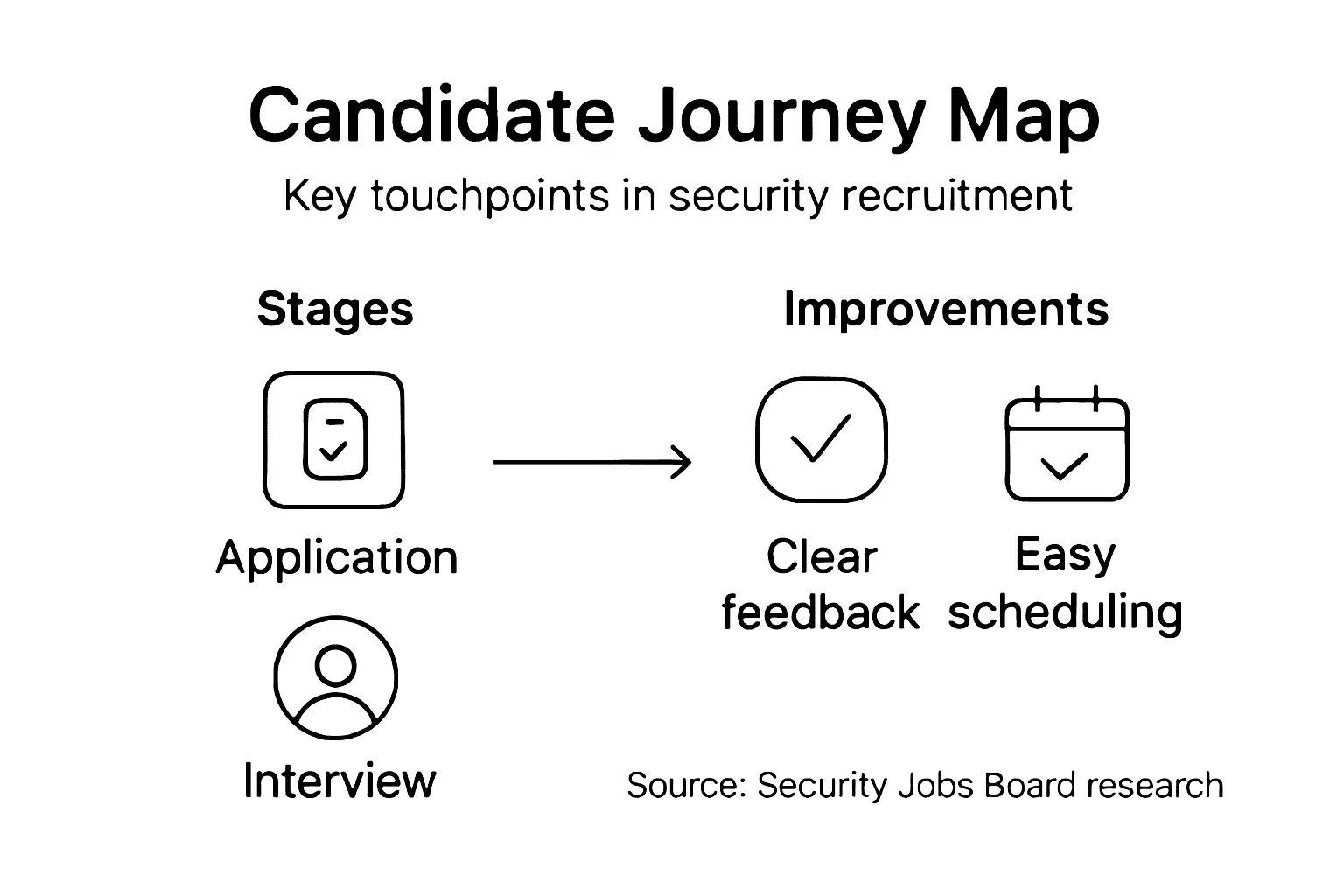
To begin, map out every candidate interaction point, from initial job advertisement to final offer. Candidate journey research reveals these touchpoints typically include:
- Job advertisement visibility
- Application submission process
- Initial screening communications
- Interview scheduling
- Interview experience
- Post-interview feedback
- Offer negotiation
- Onboarding preparation
Carefully document each stage, noting potential bottlenecks or friction points. Pay close attention to communication quality, response times, and candidate experience metrics. Look for patterns that might discourage top talent from completing the recruitment process.
Tracking candidate touchpoints reveals critical insights into your recruitment efficiency and candidate engagement levels.
Use surveys, feedback forms, and analytics to gather quantitative and qualitative data about each interaction. UK policing recruitment guidance emphasises the importance of monitoring these touchpoints to ensure fair and inclusive processes.
Here is a summary of common bottlenecks in the candidate journey and their typical business impact:
| Candidate Touchpoint Stage | Common Bottleneck | Business Impact |
|---|---|---|
| Application Submission | Complex forms | Increased drop-off rate |
| Interview Scheduling | Slow coordination | Lower candidate engagement |
| Post-Interview Feedback | Delayed responses | Negative employer reputation |
| Offer Negotiation | Lack of clarity | Offer rejections |
Pro tip: Create a visual candidate journey map that highlights every interaction, helping your recruitment team quickly identify and address potential improvement areas.
Step 2: Streamline job listings and application processes
Streamlining your job listings and application processes is crucial for attracting top security talent and reducing candidate drop-off. A well-designed recruitment approach ensures you capture the best candidates efficiently and create a positive first impression of your organisation.
Effective job advertisement strategies emphasise creating clear, engaging job descriptions that provide comprehensive information. Your job listings should include:
- Precise role responsibilities
- Required qualifications
- Specific security clearance levels
- Competitive salary range
- Location and work arrangement details
- Expected interview timeline
When designing your application process, focus on minimising unnecessary complexity. Candidates appreciate straightforward, user-friendly application systems that respect their time and effort.
A streamlined application process directly correlates with higher-quality candidate engagement and improved recruitment outcomes.
Implement recruitment and selection best practices by ensuring your application platform is accessible, mobile-friendly, and allows candidates to complete submissions quickly. Consider reducing the number of mandatory fields and providing clear guidance at each stage.

Pro tip: Test your application process by completing it yourself and asking colleagues to provide honest feedback about usability and potential friction points.
Step 3: Enhance communication with applicants
Effective communication is the cornerstone of a positive candidate experience in security recruitment. Your goal is to create a transparent, supportive dialogue that keeps candidates informed and engaged throughout the entire hiring process.
Recruitment communication protocols emphasise maintaining consistent and respectful interactions with potential candidates. Develop a comprehensive communication strategy that includes:
- Prompt initial acknowledgement of application receipt
- Regular status updates
- Clear explanation of next steps
- Realistic timeline expectations
- Personalised feedback mechanisms
- Accessibility for candidate queries
Ensure your communication approach addresses potential candidate concerns proactively. This means providing comprehensive information about the role, expected assessment processes, and potential progression pathways.
Professional communication transforms candidate perception from a transactional interaction to a meaningful engagement opportunity.
Supporting candidates through assessments requires a structured approach that reduces candidate anxiety and promotes transparency. Consider implementing automated yet personalised communication touchpoints that keep candidates informed without overwhelming them.
Pro tip: Create email templates with a warm, professional tone that can be quickly personalised for different stages of the recruitment process to maintain consistency and efficiency.
This table outlines effective communication methods and their strengths during recruitment:
| Communication Method | Best Use Case | Key Benefit |
|---|---|---|
| Personalised Email | Application receipt & updates | Builds trust and clarity |
| Automated Notifications | Interview confirmations | Saves time, improves speed |
| Phone/Video Calls | Feedback and support | Strengthens engagement |
| Candidate Portal | Status tracking | Reduces candidate anxiety |
Step 4: Optimise interview scheduling and feedback
Optimising your interview scheduling and feedback processes is critical for maintaining candidate engagement and creating a positive recruitment experience in the security sector. A streamlined approach can significantly reduce candidate anxiety and improve overall perception of your organisation.
Recruitment interview practices demonstrate that timely communication and structured scheduling are essential for attracting top security talent. Develop a robust interview management strategy that includes:
- Advance interview date communication
- Flexible scheduling options
- Consistent interview duration
- Clear pre-interview instructions
- Technology-enabled booking systems
- Multiple interview time slots
Ensure rapid response and feedback mechanisms that keep candidates informed about their application status. Transparency builds trust and prevents candidates from feeling left in the dark during the recruitment process.
Swift and professional interview coordination directly influences a candidate’s perception of your organisational efficiency.
Candidate journey insights highlight the importance of minimising delays between interview stages. Implement digital tools that enable quick scheduling, automated confirmations, and prompt feedback delivery to maintain candidate momentum and interest.
Pro tip: Develop a standardised feedback template that allows hiring managers to provide constructive, personalised insights quickly and consistently.
Step 5: Verify satisfaction through candidate feedback
Measuring candidate satisfaction is a crucial step in continuously improving your recruitment processes and enhancing your organisation’s employer brand. By systematically collecting and analysing feedback, you can identify strengths and address potential weaknesses in your hiring approach.
Candidate assessment feedback strategies highlight the importance of structured feedback mechanisms throughout the recruitment journey. Design your feedback collection process to capture insights at multiple stages:
- Post-application survey
- Mid-recruitment stage questionnaire
- Post-interview evaluation
- Final recruitment process review
- Unsuccessful candidate feedback
- New hire onboarding assessment
Ensure your feedback mechanisms are confidential and accessible to encourage honest, comprehensive responses. Use a mix of quantitative ratings and qualitative open-ended questions to gather nuanced insights.
Systematic candidate feedback is your most valuable tool for continuous recruitment process improvement.
Candidate journey research demonstrates that regularly gathering and analysing feedback helps recruiters refine their approach, reduce friction points, and enhance overall candidate experience.
Pro tip: Implement an anonymous digital survey platform that allows candidates to provide candid feedback without fear of professional repercussions.
Elevate Your Security Recruitment with Streamlined Candidate Experience
Improving candidate experience is essential to overcoming common recruitment challenges such as complex application processes, slow communications, and unclear interview scheduling. The article emphasises how these pain points can damage your employer reputation and lower candidate engagement. By focusing on clear communication, easy application systems, and timely feedback, you can transform your recruitment journey into a trusted, efficient experience that attracts top security talent.
The Security Jobs Board is designed specifically to address these challenges within the UK security sector. Our platform offers a user-friendly interface where candidates can quickly upload CVs, set job alerts, and apply to relevant roles free of charge. Employers benefit from GDPR-compliant tools to post targeted vacancies and communicate seamlessly with applicants, helping you create a smooth recruitment process that aligns with best practices discussed in the article such as simplifying touchpoints, enhancing communication, and accelerating feedback.
Discover how to optimise your hiring process on our main site and access resources that support every stage of your candidate journey. Take control now and create an exceptional recruitment experience that delivers results.
Start improving your security recruitment today
Unlock efficient job listings and candidate management
Frequently Asked Questions
How can I assess my current candidate touchpoints in security recruitment?
To assess your current candidate touchpoints, map out every interaction a candidate has with your organisation, from job advertisement to offer acceptance. Document each stage and identify potential bottlenecks, focusing on communication quality and response times to enhance the candidate experience.
What are the best practices for streamlining job listings and application processes in security recruitment?
To streamline job listings and application processes, ensure your job descriptions are clear and comprehensive, detailing responsibilities, qualifications, and application instructions. Focus on reducing unnecessary complexity in the application forms, aiming to enhance candidate engagement and reduce drop-off rates.
How can I improve communication with candidates during the recruitment process?
Enhance communication with candidates by establishing a comprehensive strategy that includes prompt acknowledgements, regular updates, and personalised feedback. This proactive approach fosters transparency and builds trust, ensuring candidates feel valued throughout the recruitment journey.
What steps should I take to optimise interview scheduling and feedback?
To optimise interview scheduling, implement flexible options and clear communication about interview dates to minimise candidate anxiety. Establish rapid response mechanisms for feedback that keep candidates informed about their application status, enhancing their perception of your organisation.
How do I measure candidate satisfaction to improve the recruitment process?
To measure candidate satisfaction, create feedback mechanisms that capture insights at various stages, such as post-application and post-interview evaluations. Collect both quantitative ratings and qualitative comments to identify strengths and weaknesses in your recruitment approach, aiming for continuous improvement.
Recommended
- Candidate Experience – Why It Matters in UK Security|BM
- 7 Ways to Improve Candidate Experience in Security Hiring
- What is Security Recruitment? Understanding its Importance|BM
- Candidate Profiling in Security Recruitment – Why It Matters|BM
- Personal Branding for Students: Career-Ready Strategies - team I
- Marketing Digital LinkedIn Guide: Strategies for 2026 Success - Aim Set Win


