Candidate Experience – Why It Matters in UK Security

Almost 60 percent of British candidates say recruitment experiences shape their opinion of an employer for years. In the security sector, every detail of the hiring journey can make or break trust, professionalism, and even your organisation’s reputation. Understanding what makes a candidate feel valued is now critical for successful British security recruitment. This guide breaks down the real impact of each step and shows how thoughtful experiences can set you apart from the competition.
Table of Contents
- Defining Candidate Experience In Recruitment
- Core Stages Of The Candidate Journey
- How Candidate Experience Shapes Security Hiring
- Common Pitfalls And Candidate Concerns
- Improving Experience For UK Security Roles
Key Takeaways
| Point | Details |
|---|---|
| Importance of Candidate Experience | A positive candidate experience enhances an organisation’s reputation and aids in attracting top talent, especially in high-stakes sectors like security. |
| Critical Stages in the Candidate Journey | The recruitment process encompasses five key phases, from awareness to selection, each influencing candidates’ perceptions and engagement. |
| Strategies for Improvement | Organisations should implement clear selection criteria, ensure timely communication, and utilise technology to streamline processes and enhance candidate respect. |
| Consequences of Poor Experience | Negative candidate experiences can lead to reputational damage, increased dropout rates, and loss of potential talent, impacting overall recruitment effectiveness. |
Defining Candidate Experience in Recruitment
Candidate experience represents the comprehensive journey a job seeker undertakes when interacting with a potential employer, from initial job advertisement to final hiring decision. In the security sector, this experience becomes particularly critical given the high-stakes nature of recruitment. Candidate interactions form a holistic perception that can significantly impact an organisation’s reputation and future talent acquisition strategies.
The recruitment process involves multiple touchpoints that collectively shape a candidate’s overall impression. These include initial job posting clarity, application process accessibility, communication frequency, interview professionalism, feedback mechanisms, and post-interview engagement. Each interaction contributes to building either a positive or negative perception of the potential employer. Poorly managed candidate experiences can result in talented professionals withdrawing from recruitment processes or sharing negative experiences within professional networks.
Specifically within security recruitment, candidate experience takes on additional nuance. Security roles demand high levels of trust, professional competence, and interpersonal skills. Candidates evaluating such positions are not just assessing job opportunities but also gauging an organisation’s professionalism, communication standards, and cultural alignment. A seamless, respectful recruitment journey signals an employer’s commitment to excellence and potential workplace standards.
Pro Tip: Candidate Engagement Strategy: Develop a transparent, timely communication protocol that provides clear updates and constructive feedback at every stage of the recruitment process, ensuring candidates feel valued and respected throughout their application journey.
Core Stages of the Candidate Journey
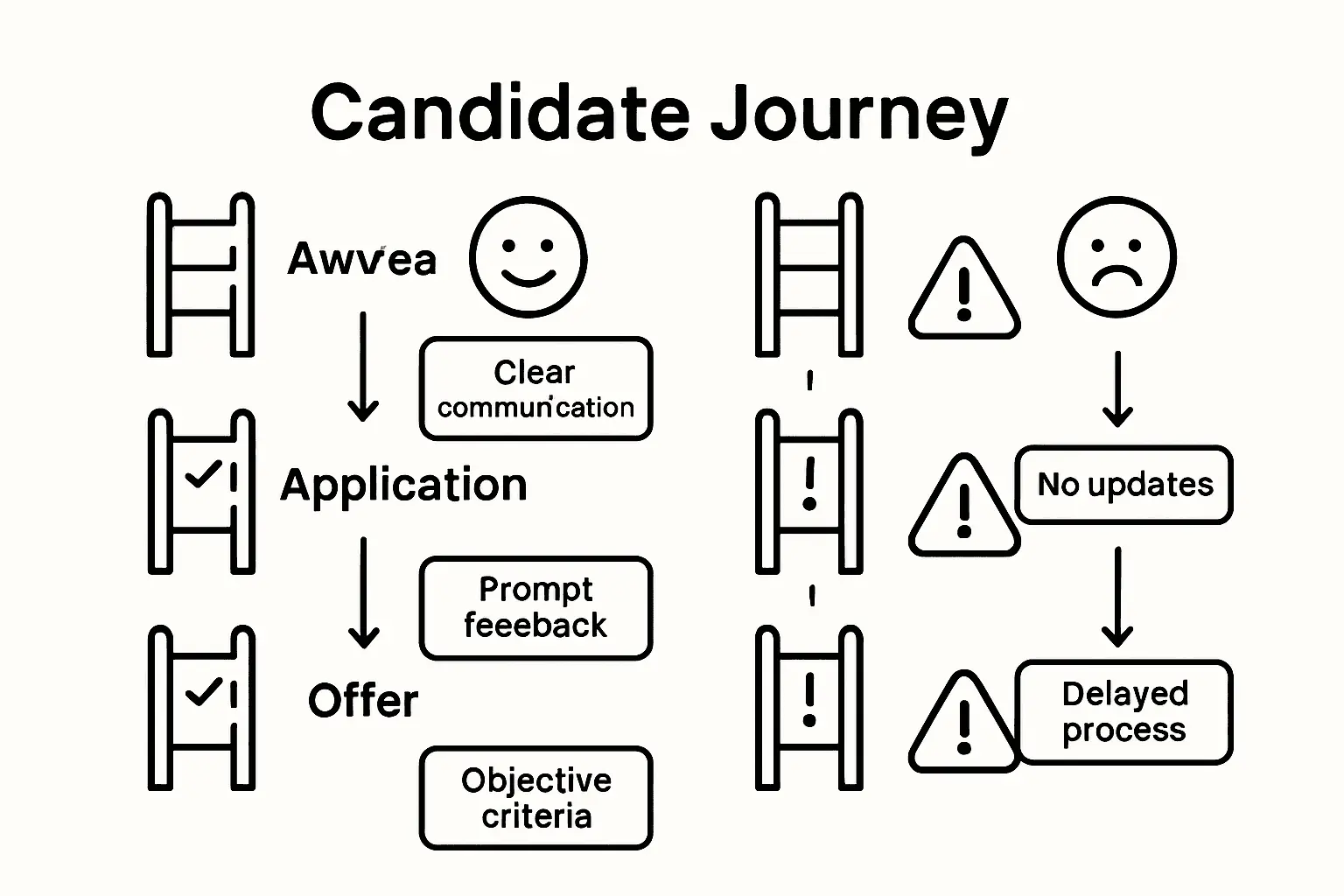
The candidate journey in security recruitment represents a strategic progression through multiple interconnected stages, each designed to assess and engage potential talent effectively. Comprehensive candidate journeys typically encompass five critical phases that transform a potential applicant from an initial job seeker into a potential team member.
These stages begin with Awareness, where candidates first encounter job opportunities through various channels such as job boards, professional networks, and company websites. During the Consideration phase, candidates research the organisation’s reputation, evaluate job requirements, and determine alignment with their career objectives. The Interest stage involves active engagement, where candidates explore detailed job descriptions, company culture, and potential growth opportunities within the security sector.
The subsequent stages focus on formal application and selection processes. Application represents the critical moment when candidates submit their professional credentials, requiring a streamlined, user-friendly approach that respects their time and effort. The Selection phase involves rigorous screening, skills assessments, and interviews designed to identify candidates who not only possess technical competencies but also demonstrate the interpersonal skills crucial in security roles. Each interaction during these stages contributes to the candidate’s perception of the potential employer.
Pro Tip: Candidate Journey Optimisation: Design a transparent, consistent communication strategy that provides timely feedback and clear expectations at each recruitment stage, ensuring candidates feel respected and informed throughout their application experience.
How Candidate Experience Shapes Security Hiring
Positive candidate experiences fundamentally transform security recruitment by creating a strategic advantage in talent acquisition. In an increasingly competitive job market, the quality of interactions between employers and potential candidates can significantly determine an organisation’s ability to attract top-tier security professionals.
Within the security sector, candidate experience extends far beyond simple transactional interactions. It represents a comprehensive approach that encompasses communication transparency, respect for candidates’ time, professional engagement, and clear expectations. Organisations that prioritise candidate experience demonstrate a commitment to valuing potential employees, which resonates deeply with professionals seeking roles that demand high levels of trust, integrity, and personal commitment.

The implications of a well-managed candidate journey are profound. Exceptional candidate experiences can reduce recruitment timelines, minimise candidate dropout rates, and create a positive employer brand reputation that attracts higher-calibre security professionals. This approach transforms recruitment from a mere selection process into a strategic engagement that builds long-term talent relationships. Candidates who feel respected and professionally treated are more likely to accept job offers, recommend the organisation to peers, and become engaged employees who contribute meaningfully to organisational security objectives.
Here is a concise summary of how candidate experience influences outcomes in security recruitment:
| Recruitment Factor | Positive Candidate Experience | Negative Candidate Experience |
|---|---|---|
| Employer Brand | Enhanced reputation, attracts top talent | Damaged image, deters applicants |
| Recruitment Speed | Faster hiring decisions | Prolonged vacancies |
| Candidate Acceptance Rate | Higher likelihood of offer acceptance | Increased offer rejections |
| Talent Referrals | More likely to recommend employer | Fewer referrals from candidates |
Pro Tip: Recruitment Relationship Building: Develop a structured feedback mechanism that provides personalised, constructive communication to every candidate, regardless of their progression through the recruitment process, thereby maintaining professional dignity and potential future opportunities.
Common Pitfalls and Candidate Concerns
In security recruitment, candidate expectations around recruitment timelines and experience represent critical challenges that organisations must carefully navigate. Top security professionals are increasingly discerning about their career choices, placing significant emphasis on the quality and efficiency of recruitment processes.
Several recurring pitfalls consistently undermine candidate experiences in the security sector. These include prolonged communication delays, opaque selection criteria, lack of personalised feedback, and inconsistent interview processes. Candidates frequently report frustration with recruitment approaches that feel impersonal or bureaucratic, particularly in a field like security where interpersonal trust and professional respect are paramount. The absence of clear, timely communication can rapidly erode a candidate’s confidence in an organisation’s professionalism and operational standards.
Moreover, candidates in security roles are particularly sensitive to systemic recruitment issues that might signal broader organisational inefficiencies. Extended recruitment timelines, repeated rescheduling of interviews, and generic rejection communications can be interpreted as red flags about an organisation’s internal management capabilities. These concerns are especially pronounced among high-calibre security professionals who view the recruitment process as a preview of potential workplace culture and operational effectiveness.
Pro Tip: Communication Integrity: Establish a standardised recruitment communication protocol that guarantees personalised, prompt feedback within specified timeframes, demonstrating respect for candidates’ professional time and maintaining transparent, professional engagement throughout the selection process.
Improving Experience for UK Security Roles
Improving candidate experience in UK security recruitment requires a strategic approach that goes beyond traditional hiring practices. Employers must prioritise legal compliance and candidate fairness when designing their recruitment processes, ensuring transparency and respect throughout every interaction.
Key strategies for enhancing candidate experience in security roles include implementing clear, objective selection criteria, providing comprehensive communication, and creating a welcoming, inclusive recruitment environment. This means developing standardised interview protocols that assess candidates’ technical competencies and interpersonal skills while maintaining professional dignity. Security professionals particularly value recruitment processes that demonstrate the same level of precision, integrity, and attention to detail they are expected to bring to their roles.
Technological integration can significantly improve candidate experiences by streamlining communication and providing real-time updates. Implementing user-friendly application platforms, automated status tracking, and personalised feedback mechanisms can transform the recruitment journey. These approaches not only demonstrate organisational efficiency but also reflect the professional standards expected in security sector roles. Candidates seek employers who show technological sophistication, clear communication channels, and a commitment to treating potential employees with respect and professionalism.
To support improvements, here is a reference table of best practice strategies for UK security role recruitment:
| Strategy | Description | Business Impact |
|---|---|---|
| Clear Selection Criteria | Objective measures for fair candidate review | Ensures transparency and fairness |
| Real-time Communication | Automated status updates for applicants | Reduces candidate uncertainty |
| Personalised Feedback | Tailored responses post-interview | Builds goodwill and encourages re-application |
| Technology Integration | User-friendly platforms ease applications | Increases process efficiency |
Pro Tip: Recruitment Process Refinement: Create a structured candidate feedback loop that allows applicants to share their recruitment experience, enabling continuous improvement and demonstrating organisational commitment to transparency and professional development.
Enhance Candidate Experience with The Security Jobs Board
The article highlights how crucial candidate experience is in UK security recruitment and the challenges organisations face such as communication delays and opaque selection criteria. If you want to overcome these issues and provide a transparent, respectful recruitment journey that attracts top security talent, The Security Jobs Board offers tailored solutions designed for your needs. Our platform ensures fast, GDPR-compliant interactions and easy access to a specialised pool of candidates who value professionalism and clear communication.

Discover how The Security Jobs Board can help you streamline your hiring process while enhancing candidate engagement at every stage. Visit the Security Jobs Board landing page now to post security-specific roles, browse CVs, and connect with qualified professionals committed to the highest standards in the security sector. Take control of your recruitment success today and build relationships that last.
Frequently Asked Questions
What is candidate experience in recruitment?
Candidate experience refers to the overall journey a job seeker undergoes when interacting with a potential employer, including job postings, application processes, interviews, and feedback mechanisms.
Why is candidate experience important in security recruitment?
In security recruitment, candidate experience is crucial as it influences an organisation’s reputation and ability to attract top talent. A positive experience indicates professionalism and respect, essential in roles that demand high levels of trust and competence.
How can organisations improve candidate experience?
Organisations can improve candidate experience by implementing clear communication protocols, providing timely feedback, ensuring transparency in the selection process, and using technology to streamline applications and updates.
What are common pitfalls in candidate experience for security roles?
Common pitfalls include prolonged communication delays, lack of personalised feedback, impersonal recruitment processes, and opaque selection criteria, all of which can negatively impact candidates’ perceptions and deter them from pursuing opportunities.


