How to negotiate job offers in the security sector

TL;DR:
- Many security professionals fail to negotiate job offers, leaving potential earnings and benefits on the table.
- Preparation, market research, and clear communication are essential to effectively negotiate salary and non-salary benefits.
Job offer negotiation is the process of discussing and adjusting the terms of an employment offer before you formally accept it. Research from Harvard PON shows that 60% of candidates never negotiate at all, leaving salary, benefits, and career value on the table. That figure is striking because most employers build room into their initial offer. For security professionals in the UK, knowing how to negotiate job offers is not a luxury. It is a practical skill that directly shapes your earnings, your working conditions, and your long-term career trajectory.
How to prepare effectively before negotiating a job offer
Preparation is the single biggest predictor of a successful negotiation. Walking in without data is the equivalent of attending a site briefing without a risk assessment. You need facts, figures, and a clear sense of your own value before you say a word.
Start by researching salary benchmarks specific to your security role. The 2026 UK salary guide on Securityjobsboard covers current pay ranges across roles from security officer to control room operative, giving you a credible reference point. HBS Online advises setting both a baseline figure (the minimum you will accept) and a stretch goal (your ideal outcome) before any conversation begins. This dual-target approach stops you from anchoring too low under pressure.
Next, take stock of what you bring to the role specifically. Your SIA licence, first aid qualifications, CCTV certifications, or experience in high-risk environments all carry measurable value. Write these down. Concrete achievements, such as reducing incident response times or managing a team through a high-profile event, give you evidence to cite rather than vague claims about being a “hard worker.”
Consider the full compensation package, not just the base salary. HBS Online notes that remote work options, shift allowances, annual leave entitlement, pension contributions, and professional development budgets are all negotiable components. A role offering an extra five days of annual leave or a funded SIA renewal can be worth several hundred pounds annually.
- Research market salary benchmarks using Securityjobsboard’s salary benchmarking guide
- List your certifications, licences, and measurable achievements
- Set a baseline salary and a stretch target before any conversation
- Identify which non-salary benefits matter most to you
- Practise your talking points out loud so they feel natural under pressure
Pro Tip: Rehearse your counteroffer with a specific number ready. Saying “I was hoping for £28,500 based on my SIA licence and three years of lone-working experience” is far more persuasive than “I was thinking a bit more.”
What are the best strategies for conducting a salary negotiation?
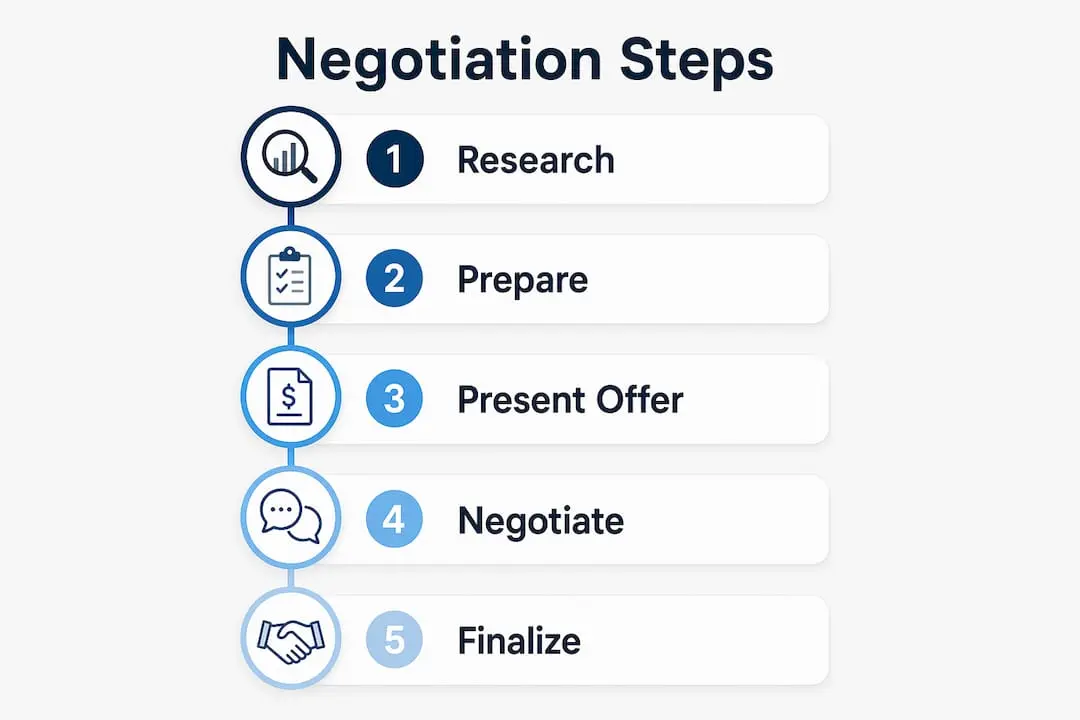
Once you receive an offer, the sequence of your response matters as much as the content. Harvard PON recommends expressing genuine enthusiasm for the role before raising any concerns about terms. This signals that you are engaged and professional, not simply chasing the highest bidder.

The next step is to buy yourself time. CareerOneStop advises requesting at least 24 hours before responding, even if you already know what you want to say. This pause lets you review the full offer, consult your benchmarks, and frame your counteroffer clearly. Rushing an acceptance or a counteroffer in the moment often leads to regret.
When you do respond, make a direct counteroffer without asking for permission to negotiate. Harvard PON is explicit that employers typically set initial offers below their actual budget, so treat the first figure as an opening bid. Asking “is there any flexibility?” signals hesitation. Stating “based on my experience and current market rates, I am looking for £30,000” signals confidence.
- Thank the employer and express genuine enthusiasm for the role
- Request 24 to 48 hours to review the full offer before responding
- Make a direct counteroffer tied to market data and your specific qualifications
- If salary is fixed, negotiate benefits such as additional leave, remote shifts, or a funded training course
- Remain firm but collegial throughout. Avoid ultimatums or adversarial language
- Prepare a fallback position in case your primary request is declined
- Confirm all agreed changes in writing before you accept
Robert Walters recommends asking for 5 to 10% above the initial offer as a starting point, with up to 20% possible when market conditions clearly justify it. That range gives you room to reach a figure both parties feel good about. Framing your request collaboratively, rather than as a demand, keeps the relationship intact.
Pro Tip: If the employer says the salary is non-negotiable, shift the conversation to benefits. Asking for an earlier performance review, an extra week of annual leave, or a contribution towards your next SIA renewal costs the employer relatively little but adds real value to your package.
Common mistakes to avoid during job offer negotiations
Even well-prepared candidates make avoidable errors. The most costly is accepting an offer on the spot without evaluating it fully. Berkeley Executive Education stresses that knowing your walkaway number before the conversation is as important as knowing your target. Without it, you risk accepting terms you will regret within weeks.
A second common mistake is basing your request on personal financial need rather than market evidence. Telling an employer you need more money because of your rent or commute costs is unlikely to move them. Telling them that the current market rate for a licensed security officer with your experience in Belfast or Birmingham is £X, and that their offer falls short of that, is a different conversation entirely.
- Do not accept an offer immediately. Take the time you are entitled to.
- Never anchor your request on personal finances. Use market data and your credentials.
- Avoid naming a salary that is too low out of fear. Underselling yourself costs you money every year.
- Do not use aggressive or zero-sum tactics. They damage the relationship before you have even started.
- Always ask for the revised offer in writing, including every agreed term.
UK employment law adds a layer of complexity that many candidates overlook. Gowling WLG warns that accepting a conditional offer can create an enforceable contract before your start date. This means the terms you agree to verbally or in writing carry legal weight. Read every clause carefully, particularly around notice periods, probationary conditions, and any salary review commitments.
“Negotiation risk is consistently overestimated by candidates. Expressing appreciation and seeking improvements is well received by the vast majority of employers.” — Harvard PON
Treat the negotiation as an opportunity to demonstrate the professionalism you will bring to the role. Employers notice how candidates handle pressure, and a well-conducted negotiation often strengthens their confidence in you.
How to evaluate and finalise your negotiated job offer
Once you have reached an agreement, the work is not quite finished. Reviewing the final written offer carefully is the step most candidates rush, and it is where misunderstandings tend to surface. Berkeley Executive Education advises that every negotiated term, including salary, bonuses, benefits, and start date, must be documented clearly before you sign anything.
Check the offer letter against what was discussed verbally. If a training allowance or an additional leave day was agreed in conversation but does not appear in the written document, raise it before signing. Verbal agreements are difficult to enforce once you have accepted the written terms.
| What to check | Why it matters |
|---|---|
| Base salary figure | Confirms the agreed pay is correctly stated |
| Bonus or shift allowance terms | Defines when and how additional pay is triggered |
| Annual leave entitlement | Locks in any extra days negotiated above the statutory minimum |
| Notice period length | Affects your flexibility to leave if the role does not work out |
| Probationary period conditions | Clarifies any salary review or benefit activation timelines |
Understanding your notice period is particularly relevant in the security sector, where shift-based contracts can complicate exit timelines. Davidson Morris notes that statutory minimums and contractual notice periods are distinct, and candidates should understand both before committing. Once you are satisfied that every agreed term is in writing, accept promptly and professionally. A clear, timely response leaves the employer with a positive impression that carries into your first week.
Key takeaways
Effective job offer negotiation in the security sector requires preparation, evidence-based counteroffers, and a clear written record of every agreed term before signing.
| Point | Details |
|---|---|
| Prepare with market data | Use salary benchmarks for security roles to set a realistic baseline and stretch target. |
| Make a direct counteroffer | Treat the initial offer as an opening bid and respond with a specific, evidence-backed figure. |
| Negotiate beyond base salary | Shift allowances, annual leave, and training budgets are all legitimate negotiation points. |
| Know your UK legal position | Accepting a conditional offer can create a binding contract, so verify all terms in writing first. |
| Document everything | Confirm every agreed term in the written offer before you sign to protect your negotiation gains. |
Why most security professionals leave money on the table
The anxiety around negotiating a job offer is real, and I have seen it hold back genuinely skilled candidates time and again. People worry they will seem greedy, or worse, that the employer will withdraw the offer entirely. In practice, that almost never happens. What does happen, far more often, is that a candidate accepts the first number offered and spends the next two years watching a colleague on the same grade earn more simply because they asked.
The security sector has its own particular culture around this. There is a tendency to be grateful for the offer and move on. That instinct is understandable, but it is expensive. When you factor in that a higher starting salary compounds through every future pay review, the cost of not negotiating adds up quickly. CareerOneStop frames it well: negotiating starting pay is an investment in every future raise and bonus you will ever receive.
What I have found works best is reframing the conversation in your own mind before you have it. You are not asking for a favour. You are presenting evidence that the role and your contribution to it are worth a specific figure. That shift in perspective changes how you speak, and employers respond to it differently. The candidates who negotiate with the most confidence are rarely the most aggressive. They are the most prepared.
If you are new to salary negotiation, start with the non-salary components. Asking for an extra day of annual leave or a funded first aid renewal is lower-stakes and builds the muscle for the bigger conversations. Every negotiation you conduct, however small, makes the next one easier.
— Rob
Find your next security role and negotiate with confidence
Securityjobsboard connects security professionals across the UK with employers who are actively hiring. Whether you are looking for your next step in guarding, control room operations, or supervisory roles, the platform gives you access to live vacancies alongside salary data to inform your negotiation before you even apply.

If you are based in Northern Ireland, browse the latest security jobs in Northern Ireland to see current openings and get a feel for what employers in your region are offering. For a broader search across the UK, visit Securityjobsboard to create your free profile, upload your CV, and set job alerts tailored to your experience and location. The more offers you receive, the stronger your negotiating position becomes.
FAQ
Should you always negotiate a job offer?
Yes. Harvard PON research confirms that most employers expect negotiation and set initial offers below their actual budget. Expressing appreciation and requesting improved terms is well received by the majority of hiring managers.
How much more salary can you ask for in a negotiation?
Robert Walters recommends asking for 5 to 10% above the initial offer as a standard starting point, with up to 20% possible when your qualifications and market data clearly justify the request.
What questions should you ask during a salary negotiation?
Ask about the salary review timeline, shift allowances, annual leave entitlement, and any funded training or professional development. These questions signal that you are evaluating the full package, not just the headline figure.
Is a verbal job offer legally binding in the UK?
Gowling WLG advises that accepting a conditional offer, whether verbally or in writing, can create an enforceable contract in UK employment law. Always confirm every agreed term in a written offer letter before signing.
What if the employer says the salary is non-negotiable?
Shift the conversation to benefits. Annual leave, remote working arrangements, shift premiums, and funded certifications are often more flexible than base salary and can add significant value to your overall package.


