How do you get a job with homeland security in UK private security?
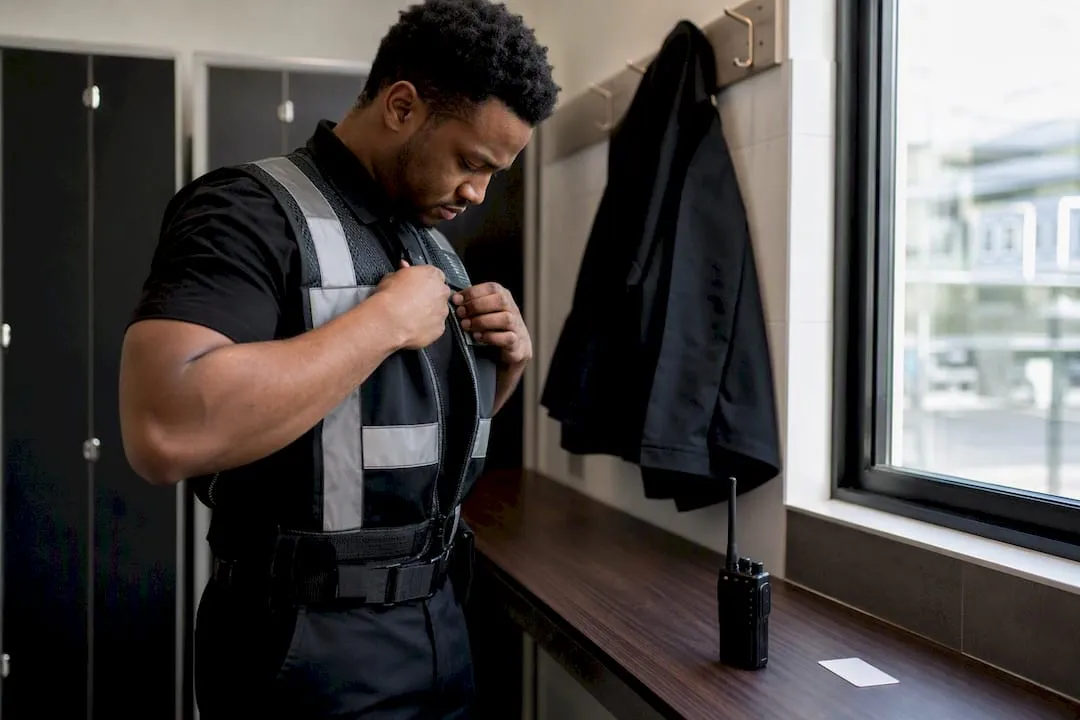
You get a UK private security job by holding the right SIA front line licence for the role, completing licence-linked training and a first-aid certificate first, then applying through the Security Industry Authority. From there, list your licence and certificates on a specialist job board such as Security Jobs Board, set alerts and apply the day a suitable role appears.
TL;DR:
- Candidates holding multiple licences, such as security guarding and CCTV, can access a broader range of shifts and increase their job prospects.
- The qualification must be obtained within three years of applying for the licence, or retraining will be required before submission.
- Most SIA licence applications are delayed by identity or criminal-record checks, making it important to prepare and include complete documents.
- Employers can apply for the licence on your behalf if they are an approved contractor, reducing costs and administrative steps.
- Using a sector-specific job platform with verified profiles and filters significantly shortens the recruitment process and improves matching accuracy.
Table of Contents
- SIA licences and the training you must complete first
- Step-by-step: from training to SIA application
- How do you use a job board to apply for security roles?
- Practical tips to stand out and succeed at interview and on the job
- A brief guide for employers: how hiring through a specialist job board speeds recruitment
- Overview of different Homeland Security roles available within the UK private security sector
- Typical eligibility criteria and qualifications employers seek beyond the SIA licence
- Advice on building relevant experience or transferable skills for Homeland Security-related jobs
- Information on background checks and vetting processes unique to Homeland Security positions
- Author perspective: where the UK security job market is heading
- How Security Jobs Board helps you get hired
- Sources
- FAQ
SIA licences and the training you must complete first
Most operational security roles in the UK legally require a front line SIA licence before you can start work, and the licence type depends entirely on what you’ll be doing on shift.
The common front line categories are:
- Security guarding — static site work, patrols, access control
- Door supervision — pubs, clubs and licensed venues
- CCTV (public space surveillance) — control room monitoring
- Close protection — bodyguard and personal security work
- Cash and valuables in transit — secure transport roles
Each licence links to a specific qualification you must complete with an approved provider before you apply. GOV.UK’s guidance on licence-linked training confirms the awarding organisation must notify the SIA that you’ve passed before your application can go anywhere, so choosing a provider that reports results promptly genuinely speeds things up.
Pro Tip: Ask your training provider how quickly they notify the SIA after your assessment. Some take days, others take weeks, and that gap can stall your entire application.
Here’s the rule that catches people out most: your qualification must have been achieved no more than three years before you submit your licence application. Wait too long after finishing the course and you’ll need to retrain, according to GOV.UK’s guidance on licence-linked training changes.
Beyond the qualification itself, the SIA runs mandatory checks on every applicant. You must be 18 or over, pass an identity check, pass a criminal record check, and hold the right to work in the UK, as set out in the SIA’s official ‘Get licensed’ guidance. A current first-aid certificate is also required before most training providers will even let you enrol on the licence-linked course. Renewing a licence or switching to a different licence type may mean refresher or top-up training rather than starting from scratch, so check what your specific route needs before booking anything.
If you’re unsure which roles actually need a licence at all, our breakdown of which jobs require an SIA licence covers the exceptions worth knowing.
Step-by-step: from training to SIA application
Getting from zero to a valid licence follows a fairly fixed order, and skipping a step usually just means backtracking later.
- Get first aid certified first. You need a certificate valid for at least 12 months before most licence-linked training providers will accept you onto a course. This typically takes a single day and costs relatively little compared with everything that follows.
- Complete your licence-linked course. Find an SIA-approved training provider, sit the course for your chosen licence type, and pass the assessments. Course length varies by licence, door supervision generally running longer than basic security guarding.
- Apply once your provider confirms notification. Check the awarding body has told the SIA you’ve passed, then create your SIA account, submit ID and right-to-work documents, and pay the licence fee.
Processing times fluctuate, and identity or criminal-record checks are usually where delays creep in, particularly if your documents are incomplete or inconsistent with what the SIA holds on record. Build in a buffer rather than assuming a fast turnaround.
There’s also a route that skips the fee entirely for you. If an employer who’s an SIA-approved contractor has already offered you a job, they can apply for the licence on your behalf and you simply link accounts and supply your identity documents, as GOV.UK explains for the SIA application process. It’s worth asking any employer you’re negotiating with whether this is on offer, because it removes both cost and admin from your side.
Pro Tip: Book your first-aid course the same week you decide to pursue a security career. It’s the one prerequisite that quietly delays everyone who leaves it until last.
For a longer breakdown of realistic timelines and cost ranges, our step-by-step guide to landing security jobs in 2026 goes into more detail.
How do you use a job board to apply for security roles?
Once your licence is sorted (or close to it), the fastest route to actual interviews is a platform built specifically for the security sector rather than a general jobs site.
Start by building a complete profile and uploading your CV to Security Jobs Board. List your SIA licence type, your licence number once it’s issued, and your training dates clearly near the top. Employers scanning candidate profiles want that information immediately, not buried in a paragraph further down.
From there:
- Set job alerts filtered by licence type, location and shift pattern so relevant roles land in your inbox rather than you hunting for them daily.
- Use fast apply where it’s available, but keep digital copies of your certificates ready to send the moment an employer asks.
- Respond to verification requests quickly and specifically; a same-day reply with the right document attached does more for your chances than a long covering message.
Holding more than one licence, say security guarding plus CCTV, genuinely widens the pool of shifts you’re eligible for, and a current first-aid certificate can be the differentiator on event and crowd-management postings specifically. Platforms built for the sector let candidates create profiles, upload CVs and set alerts while employers use the same system to manage recruitment and check qualifications, which cuts out a lot of the back-and-forth that slows down general job sites. Security Jobs Board’s BSIA affiliation, GDPR-compliant handling and mobile access all matter here because employers filtering candidate databases are looking for exactly that kind of verified, professional presentation.
Practical tips to stand out and succeed at interview and on the job
Your CV should lead with your licences, not bury them. Put the licence type, licence number, issue date and first-aid certificate expiry right at the top, followed by any continuous learning such as conflict management short courses.
At interview, use a STAR format (Situation, Task, Action, Result) when asked about handling conflict or reporting an incident. Employers in this sector care more about how you de-escalated a situation calmly than how dramatic the story sounds. Reliability and punctuality come up constantly in security hiring precisely because shift cover is the industry’s biggest operational headache.
The skills that consistently get mentioned as valuable beyond the licence itself:
- Sharp observation and clear, concise incident reporting
- Customer service, especially for door supervision and event roles
- Conflict de-escalation rather than confrontation
- Basic IT and logging skills for control room and CCTV positions
Pro Tip: A short conflict management course costs relatively little and signals to employers that you take de-escalation seriously, not just enforcement. It’s one of the cheapest CV upgrades in this sector.
Small, low-cost additions like an extra first-aid refresher or a short customer service module often punch well above their price when a hiring manager is comparing two similarly licensed candidates.
A brief guide for employers: how hiring through a specialist job board speeds recruitment
A vacancy post that specifies the exact licence required, the shift pattern, the pay band and right-to-work expectations attracts far fewer unsuitable applications than a vague listing. Candidates filter against these details before they even click apply, saving everyone time.
On the employer side, Security Jobs Board lets you search the CV database by licence type and experience level rather than sifting through generic applications.
- Filter candidates by licence type and location before reviewing any CV in detail.
- Request certificates and right-to-work evidence directly through the platform rather than a separate email chain.
- Use the platform’s BSIA affiliation and GDPR-compliant data handling as a compliance safeguard when verifying candidates quickly.
That combination, targeted filtering plus built-in verification, is usually what separates a two-week shortlist from a two-day one.
Overview of different Homeland Security roles available within the UK private security sector
“Homeland security” style roles in the UK private sector cover a wider range than most jobseekers first assume. Security guarding remains the largest category, covering static site protection, mobile patrols and access control across retail, industrial and residential sites. Door supervision sits alongside it for licensed venues, requiring a different temperament and a distinct licence.
CCTV and public space surveillance roles have grown steadily as town centres and transport hubs expand their camera networks, and these positions suit candidates who prefer control room work over patrol duties. Close protection sits at the more specialist end, typically requiring prior security or military experience alongside the licence itself.
Cash and valuables in transit work demands a particular risk tolerance and usually pays a premium reflecting that. Event and crowd management roles, often covered under security guarding or door supervision licences depending on the venue, spike seasonally around festivals, sport and concerts, making them a strong entry point for candidates building experience before specialising further.
According to occupational mapping from Skills England, professional security operatives are employed across retail, corporate, industrial and public sector settings, which means the same licence can open doors across very different working environments depending on where you target your applications.
Typical eligibility criteria and qualifications employers seek beyond the SIA licence
The SIA licence gets you through the door legally, but employers filtering CVs are usually looking for more than the minimum. A clean employment history with no unexplained gaps matters, particularly for roles involving lone working or access to sensitive sites.
Many employers favour candidates who’ve completed a recognised apprenticeship route or structured training programme, which National Careers Service guidance on security officer roles highlights as a common entry pathway alongside direct licence-linked training. Physical fitness and the ability to stand or patrol for extended shifts count for site-based roles, while a calm, articulate telephone manner matters more for control room and CCTV positions.
References from previous employers, particularly if you’ve worked in retail, hospitality or another customer-facing role, carry real weight because they speak to reliability under pressure. A full, clean driving licence opens up mobile patrol and cash-in-transit roles that static-site candidates can’t access.
Employers also increasingly ask about basic digital literacy, given that incident logging, rota systems and communication now run through apps and portals rather than paper logs. If you’re weak here, a short familiarisation course before interview costs little and removes an easy objection.
Advice on building relevant experience or transferable skills for Homeland Security-related jobs
If you’re starting with no security experience, roles in retail, hospitality, or customer service transfer more directly than most people expect. Handling difficult customers, staying calm under pressure and following clear procedures are the exact behaviours security employers screen for at interview.
Volunteering as event stewarding crew, even unlicensed, builds a track record you can reference once your SIA licence comes through. Many event companies run stewarding shifts that don’t require a licence but sit alongside licensed door supervisors, giving you visibility of how the licensed role actually works day to day.
Military or emergency services background transfers particularly well into close protection and higher-risk roles, and employers recognise it immediately on a CV. If that’s not your background, consider a short conflict management or physical intervention course. These build genuinely relevant skills and give you something concrete to discuss at interview beyond “I completed my SIA training.”
Building relationships with a couple of specialist recruiters or checking a job board regularly for entry-level shifts also helps you accumulate the kind of varied experience, different site types, different shift patterns, that makes a second or third job significantly easier to land than the first.
Information on background checks and vetting processes unique to Homeland Security positions
Every front line SIA licence application involves a criminal record check as standard, run as part of the identity and background verification the SIA carries out before issuing a licence. This isn’t optional and it isn’t a formality; certain unspent convictions can result in a licence refusal depending on their nature and how recent they are.

Beyond the SIA’s own check, individual employers often run their own additional vetting, particularly for roles involving access to sensitive sites, cash handling, or close protection work. This can include employment reference checks going back several years, credit checks for cash-in-transit roles, and in some cases enhanced vetting for sites like airports, government buildings or critical infrastructure, which may require additional site-specific clearance on top of your SIA licence.
Right-to-work verification happens at both the SIA application stage and again at the employer level, so keep your documents current and easily accessible rather than scrambling when an employer asks. If you’re applying for close protection or cash-in-transit work specifically, expect the vetting process to take noticeably longer than a standard security guarding application, and factor that into how far ahead you start your job search.
Author perspective: where the UK security job market is heading
Demand is concentrated in CCTV, events and transport right now, and candidates holding more than one licence are consistently first through the door. My advice: start front line, add a second specialism within your first year, then aim for supervisory training once you’ve got steady shift experience behind you. Keep every licence current, and let a specialist job board do the matching rather than chasing listings manually.
— Rob
How Security Jobs Board helps you get hired
Security Jobs Board is built specifically for the sector, so you’re not competing against a general audience or getting lost in listings that have nothing to do with SIA-licensed work.

Upload your CV, list your licence details, and set alerts filtered by licence type and location, and you’ll get matched against roles that actually fit rather than scrolling through irrelevant postings. Fast apply gets your details to employers quickly, and because the platform is BSIA affiliated and GDPR compliant, employers trust the profiles they’re reviewing enough to verify and shortlist faster. Human support is available if you get stuck on any step, which general job sites rarely offer.
Employers benefit the same way in reverse: filtered CV searches by licence type mean shortlisting takes hours rather than days. If you’re specifically looking at roles in Northern Ireland, the Northern Ireland security jobs listing is worth checking directly. Create your free profile at Security Jobs Board today and set your first job alert before your licence application even clears.
Sources
FAQ
How do you get a job with homeland security in the UK private sector?
You secure the correct SIA front line licence for the role, complete licence-linked training and a first-aid certificate, then list your credentials on a specialist job board like Security Jobs Board to apply for matching vacancies.
What is the SIA licence-linked training three-year rule?
Your qualification must have been achieved no more than three years before you submit your SIA licence application, or you’ll need to retrain before applying.
Can an employer apply for my SIA licence for me?
Yes. An employer who is an SIA-approved contractor can apply on your behalf, and you simply link accounts and provide your identity documents.
Do I need first aid before starting SIA training?
Most licence-linked training providers require a first-aid certificate valid for at least 12 months before you can enrol on the course itself.
How long does the SIA application process take?
Timelines vary depending on how quickly identity and criminal-record checks clear and how promptly your training provider notifies the SIA, so building in a buffer beyond the minimum is sensible.


