Covert Surveillance – Impact on UK Security Careers

Security professionals across the UK know that surveillance goes far beyond what the public sees in popular films and television. Working within a modern organisation means grappling with legally controlled activities where the stakes are high and the margin for error is narrow. Mastering the distinctions between directed surveillance and intrusive surveillance sets the foundation for advancing your career, protecting assets, and staying compliant with strict national regulations. This guide sheds light on what covert surveillance really means for your job and how to apply these techniques ethically and lawfully in real-world scenarios.
Table of Contents
- Covert Surveillance Defined for Security Roles
- Types of Covert Surveillance Methods Used
- How Surveillance Works in Practice
- Legal Framework and Employer Obligations UK
- Risks, Ethics and Common Pitfalls
Key Takeaways
| Point | Details |
|---|---|
| Understanding Surveillance Types | Security professionals must differentiate between directed and intrusive surveillance, as each has distinct legal requirements and operational implications. |
| Legal Framework Compliance | Familiarity with the Regulation of Investigatory Powers Act 2000 and other laws is essential for lawful surveillance operations. |
| Ethical Considerations | It is crucial to navigate the moral implications of covert surveillance, ensuring respect for privacy and minimising harm to subjects. |
| Importance of Documentation | Maintaining thorough documentation of authorisations and operations is vital for legal compliance and evidence admissibility. |
Covert Surveillance Defined for Security Roles
Covert surveillance isn’t some abstract concept confined to spy thrillers. It’s a practical, legally defined activity that security professionals in the UK encounter regularly, whether they’re conducting investigations, protecting assets, or gathering intelligence for their organisations. Understanding what covert surveillance actually is forms the foundation of working effectively and lawfully within this space.
Directed surveillance and intrusive surveillance represent the two main categories you’ll encounter in UK security roles. Directed surveillance involves covertly monitoring an individual’s movements and conversations, typically conducted by specialist officers who follow targets, observe their activities, and record their interactions. This might include watching someone enter and exit a location, documenting their routine, or listening in on conversations in public spaces. Intrusive surveillance, by contrast, is far more invasive. It involves monitoring someone within their home or vehicle using electronic devices, CCTV systems, or listening equipment. This category carries stricter legal requirements and demands explicit authorisations under UK law before proceeding.
What distinguishes covert surveillance from other security activities is its fundamental characteristic: the subject remains entirely unaware that monitoring is occurring. Unlike overt security measures such as uniformed officers or visible CCTV signage, covert work operates in secrecy. The monitoring is personalised rather than generalised, often conducted over extended periods, and frequently gathers intimate information about an individual’s behaviour, relationships, and daily routines. This contrasts sharply with mass public surveillance practices that monitor broad populations without targeting specific individuals. The secretive nature of covert operations means that those being observed have no knowledge of the scrutiny they’re under, which creates significant ethical and legal implications for security professionals executing these operations.
For security jobseekers considering covert surveillance roles, grasping these definitions is your first step toward understanding your responsibilities. Organisations posting positions on Security Jobs Board frequently seek professionals with expertise in these distinctions, particularly for roles involving corporate investigations, asset protection, or compliance work. The legal framework governing covert surveillance in the UK is rigorous, and employers expect candidates to demonstrate baseline knowledge of what constitutes directed versus intrusive surveillance. When reviewing job descriptions for security positions, you’ll often see phrases like “covert surveillance experience” or “directed surveillance trained,” which directly reference these categories. Knowing the difference demonstrates you understand the landscape and are serious about advancing your career in this specialised field.
Here’s how directed and intrusive surveillance differ in UK security roles:
| Aspect | Directed Surveillance | Intrusive Surveillance |
|---|---|---|
| Typical Locations | Public spaces, business premises | Private homes, vehicles |
| Legal Authorisation | Internal, organisational approval | Judicial warrant under UK law |
| Equipment Used | Notebooks, cameras, basic audio tools | Electronic devices, hidden cameras, mics |
| Operational Impact | Collects routine activity data | Accesses private, intimate information |
| Ethical Considerations | Lower privacy intrusion risk | Significant privacy concerns |
Professional advice: When interviewing for covert surveillance roles, ask specific questions about whether the position involves directed or intrusive surveillance, as this directly impacts the training, authorisations, and legal responsibilities you’ll undertake.
Types of Covert Surveillance Methods Used
Covert surveillance methods in UK security roles span a wide spectrum, from traditional human observation to sophisticated technical systems. Each method carries distinct operational requirements, legal implications, and skill sets. Understanding which methods exist and how they’re deployed is crucial for security professionals navigating this field, whether you’re training for a new role or advancing within your current position.
Directed surveillance encompasses human intelligence gathering where trained officers covertly monitor individuals in public spaces without their knowledge. This includes foot surveillance, where operatives follow targets on foot whilst documenting their movements, timing, and interactions. Vehicle surveillance involves tracking subjects using unmarked vehicles, maintaining safe distances whilst recording patterns of behaviour. Static surveillance positions officers at fixed locations to observe entry and exit points, monitor activity at specific premises, or document who visits particular locations. All directed surveillance methods rely on specialist training, situational awareness, and the ability to remain undetected whilst gathering actionable intelligence.
Intrusive surveillance operates in a fundamentally different realm. These methods involve covert eavesdropping or monitoring within private spaces such as homes or vehicles, utilising electronic devices, microphones, or visual recording equipment. Technical interception captures communications through phones, email systems, or messaging platforms. Audio surveillance uses concealed microphones or listening devices to monitor conversations in private settings. Visual surveillance within restricted areas employs hidden cameras or observation equipment. Penetration testing, another sophisticated method, involves authorised individuals attempting to breach security systems to identify vulnerabilities before malicious actors exploit them. Cyber surveillance monitors digital activities, network traffic, and online communications. These intrusive methods demand rigorous legal authorisations under UK law, documented justifications for deployment, and strict oversight to ensure compliance with regulations such as the Investigatory Powers Act 2016.
The distinction between these methods matters considerably when seeking roles within security organisations. Some employers focus exclusively on directed surveillance operations for corporate investigations, asset protection, or fraud detection. Others require expertise in technical countermeasures and cyber surveillance for sophisticated security threats. A few select organisations dealing with serious crime or national security concerns utilise intrusive methods with appropriate legal backing. When reviewing positions on Security Jobs Board, you’ll notice job postings specify which surveillance methodologies the role demands. A corporate investigator might need foot surveillance and static observation skills, whilst a cyber security professional requires digital monitoring and penetration testing capabilities.
Pro tip: Develop expertise in the specific surveillance methods your target roles require by seeking accredited training courses and seeking mentorship from experienced practitioners already working in your chosen specialism.
How Surveillance Works in Practice
Theory becomes reality when you’re deployed on an actual surveillance operation. The difference between understanding what covert surveillance is and executing it effectively separates experienced professionals from those struggling through their first roles. Practical surveillance work demands meticulous planning, disciplined execution, and constant awareness of legal and ethical boundaries.
Before any operation begins, thorough preparation establishes the foundation for success. Risk assessments and proper authorisations form the backbone of legitimate surveillance activity. Security professionals must document why surveillance is necessary, justify that less intrusive methods won’t achieve the objective, and obtain appropriate authorisations from their organisation or regulatory bodies. For intrusive surveillance, this means acquiring official warrants and demonstrating necessity under legal frameworks like the Human Rights Act 1998. For directed surveillance, internal authorisations must align with your organisation’s policies and relevant legislation. Risk assessments identify potential hazards to operatives, the subject, and the public. They consider how to minimise collateral impact on innocent bystanders and ensure the operation doesn’t compromise other investigations or security measures. This groundwork isn’t bureaucratic box-ticking; it protects everyone involved and ensures evidence gathered remains admissible should legal proceedings follow.

During active surveillance operations, adherence to necessity and proportionality principles governs every decision. Operatives deploy using various techniques suited to the target and environment. Foot surveillance requires operatives to track subjects on foot whilst blending into their surroundings, maintaining safe distances, and adapting to changing circumstances. Vehicle surveillance uses unmarked vehicles with trained drivers who manage traffic, adapt routes naturally, and avoid creating suspicion through repetitive patterns. Fixed observation posts position officers at strategic locations to monitor specific premises, document visitors, or track movement patterns over extended periods. Throughout operations, teams maintain strict operational security. Communications use coded language or secure channels. Operatives rotate positions to avoid detection patterns. Surveillance logs document times, locations, activities, and observations with precision. This meticulous documentation serves multiple purposes: it creates evidence for investigations, demonstrates legal compliance, and allows supervisors to oversee operations remotely.
Oversight mechanisms run parallel to active operations. Internal supervisors review surveillance logs, assess whether operations remain necessary and proportionate, and authorise continuation or cessation. External oversight bodies, particularly for intrusive methods, verify that operations comply with legal standards and don’t breach privacy rights excessively. This dual oversight structure exists because covert surveillance operates in a grey zone where the need for operational security conflicts with public accountability. Security professionals working in this space must embrace oversight as protection rather than hindrance. It ensures your operations withstand scrutiny, protects your organisation from legal challenges, and maintains public confidence in security work.
For candidates pursuing surveillance careers, understanding practical operations means grasping how theory translates into real workflows. When you encounter job descriptions on Security Jobs Board, phrases like “demonstrated experience in covert operations” or “proven understanding of authorisation frameworks” reflect these practical realities. Employers seek professionals who understand not just what surveillance is, but how to execute it lawfully, document it properly, and operate under oversight without compromising effectiveness.
Professional advice: Seek roles that include structured mentorship with experienced operatives, as learning surveillance tradecraft requires hands-on training and real-world feedback that no classroom can fully provide.
Legal Framework and Employer Obligations UK
Covert surveillance doesn’t operate in a legal vacuum. The UK has constructed a detailed framework governing who can conduct surveillance, under what circumstances, and with what safeguards. For security professionals, understanding this framework isn’t optional. It’s the difference between a career progressing smoothly and facing serious legal consequences that could destroy your professional future.
The Regulation of Investigatory Powers Act 2000 (RIPA) forms the cornerstone of UK surveillance law, working alongside the Intelligence Services Act 1994 and the Human Rights Act 1998. These statutes create strict hierarchies of authorisation and oversight. RIPA defines directed and intrusive surveillance categories, each with different authorisation requirements and oversight mechanisms. For directed surveillance, public authorities and employers conducting investigations must obtain proper authorisations demonstrating that the surveillance is necessary and proportionate. Intrusive surveillance demands far stricter scrutiny, typically requiring judicial approval and demonstrating that alternative methods cannot achieve the legitimate objective. The legislation specifies that surveillance must be necessary for legitimate purposes such as preventing crime, protecting public safety, or safeguarding national security. Proportionality means the intrusion on privacy must not exceed what’s genuinely required to achieve those objectives.
Employers undertaking covert surveillance bear substantial legal obligations under this framework. Your organisation becomes responsible for ensuring all surveillance activities comply with relevant legislation before they begin. This responsibility includes conducting thorough impact assessments documenting why surveillance is necessary, why less invasive methods won’t work, and how the organisation will minimise harm to innocent individuals. Employers must establish clear authorisation procedures, typically requiring approval from senior management or designated authorising officers who understand the legal implications. Documentation becomes critical. Every authorisation decision, every surveillance operation, and every piece of evidence collected must be recorded meticulously. This documentation doesn’t just protect subjects’ rights; it protects your employer from legal challenges and demonstrates good faith compliance if investigations occur. Organisations operating within the security sector increasingly understand that cutting corners on legal compliance creates liability exposure far exceeding any short-term operational gains.
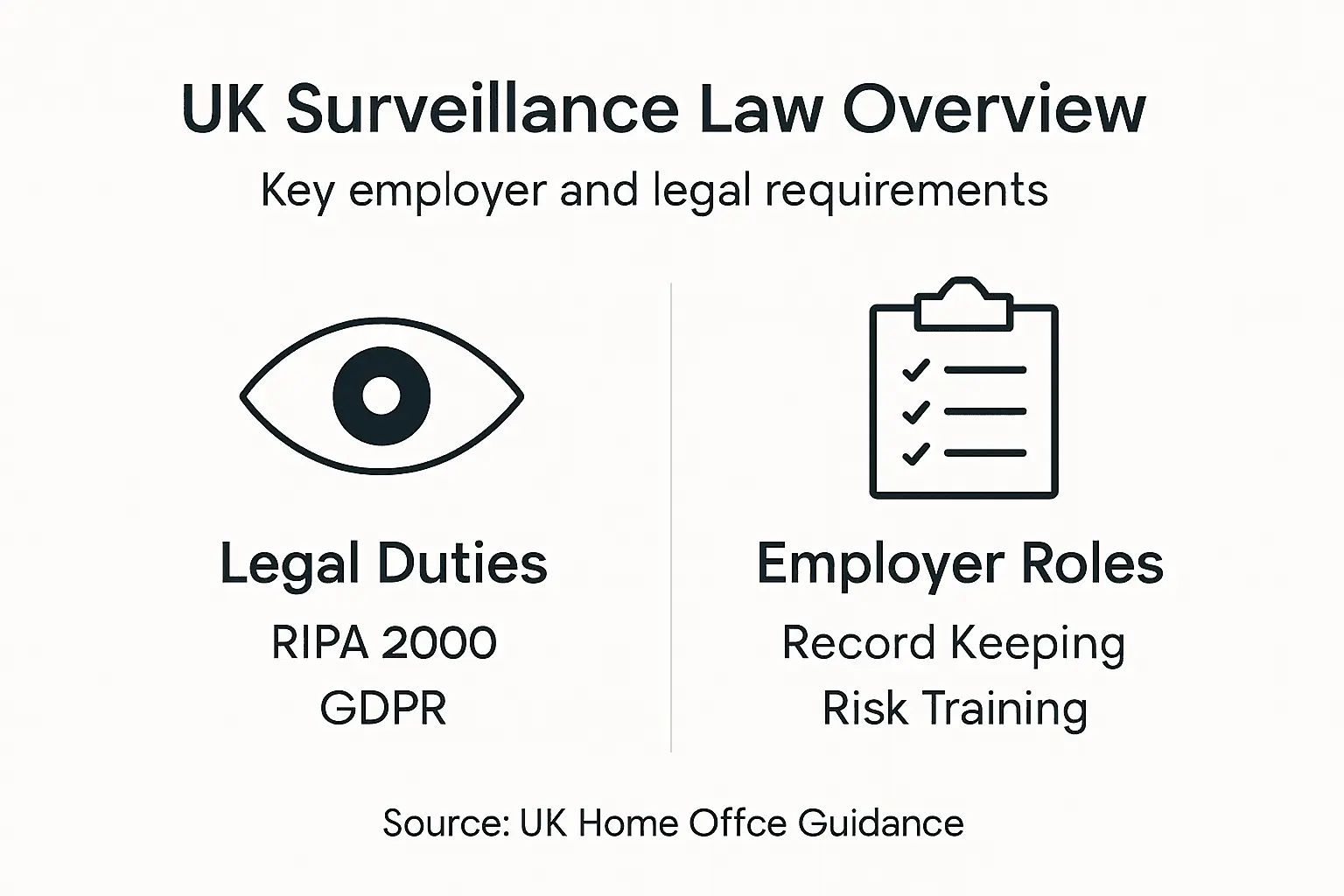
Transparency and privacy protection form the ethical backbone of these obligations. UK employers using covert surveillance must recognise that such activities represent a last resort, implemented only when standard investigative methods cannot achieve legitimate objectives. The Human Rights Act 1998 guarantees rights to privacy, and surveillance activities must balance security needs against individual privacy carefully. This creates tension. You’re gathering intelligence secretly, yet you must do so within frameworks designed to protect privacy. Managing that tension requires constant awareness of legal boundaries and regular reassessment of whether operations remain justified. External oversight bodies review particularly sensitive operations, especially intrusive surveillance, verifying that organisations haven’t overstepped legal limits. This oversight structure exists not to obstruct legitimate security work but to maintain public confidence that surveillance powers remain accountable and controlled.
When evaluating security roles, understanding employer obligations becomes crucial to your career planning. Organisations that take legal compliance seriously invest in proper training, maintain robust authorisation processes, and screen candidates carefully through security checks and vetting procedures. These organisations protect their employees and their reputations. When reviewing positions on Security Jobs Board, organisations highlighting their commitment to legal compliance and proper oversight suggest they’ll support your career development appropriately. Conversely, employers cutting corners on authorisations or documentation create personal risk for operatives who might find themselves legally exposed if operations face scrutiny. Seek roles with organisations that treat legal obligations as non-negotiable foundations rather than bureaucratic inconveniences.
Professional advice: During interviews, ask specifically about the organisation’s authorisation procedures, legal review processes, and training programmes for covert operations, as these questions signal you understand legal risks and take compliance seriously.
Risks, Ethics and Common Pitfalls
Covert surveillance isn’t morally neutral. The moment you begin monitoring someone without their knowledge, you enter ethically complicated territory where good intentions can produce harmful outcomes. Understanding the risks and ethical dimensions separates responsible security professionals from those who stumble into serious problems. The consequences extend beyond legal liability; they damage careers, organisations, and the individuals being surveilled.
Covert surveillance carries significant psychological and emotional impacts on those being monitored, particularly when operations extend over months or years. Subjects often experience anxiety, paranoia, and trust issues that persist long after surveillance ceases. The invasion of privacy cuts deeper than most people realise. You’re documenting someone’s relationships, financial habits, medical visits, and daily routines without consent. This information, once gathered, exists permanently. The potential for abuse becomes substantial when such intimate details remain accessible to organisations or individuals with poor oversight. Beyond psychological harm, ethical dilemmas emerge when balancing operational efficacy against privacy rights, especially as criminal activity increasingly moves online where digital monitoring becomes temptingly easy. Security professionals face constant pressure to expand surveillance scope, justify intrusive methods, and gather “just a bit more” intelligence. Resisting that pressure requires ethical clarity and organisational cultures that support restraint over maximum information gathering.
Common operational pitfalls create both legal and ethical problems. Exposure represents the most obvious risk. Poor tradecraft, careless communications, or simple bad luck can compromise an entire operation and alert your target that they’ve been under surveillance. This destruction of operational security often stems from inadequate training, fatigue, or overconfidence. Another critical pitfall involves scope creep. Surveillance authorised for investigating specific allegations gradually expands to monitor broader activities, relationships, or communications unrelated to the original justification. Operatives convince themselves that tangential information “might become relevant,” slowly exceeding authorised parameters. Legal missteps compound these problems. Missing authorisation renewals, failing to document decisions properly, or applying surveillance techniques beyond those explicitly authorised create evidence admissibility issues and potential legal exposure for your organisation. Perhaps most damaging, loss of public trust occurs when surveillance abuses become public. Historical cases of surveillance overreach have severely damaged public confidence in security institutions. A single high-profile abuse case can undermine years of legitimate operations and creates political scrutiny that restricts all future surveillance work.
Mismanaging these risks typically follows predictable patterns. Insufficient training leaves operatives unaware of ethical implications and legal boundaries. Weak authorisation procedures allow questionable surveillance to proceed without proper scrutiny. Inadequate oversight creates blind spots where problematic practices persist undetected. Poor communication between operational teams and legal advisors results in authorisations that don’t match actual field activities. The most dangerous pitfall involves organisations where ethical concerns are dismissed as weak sentimentality or obstruction. Teams that frame legal compliance as “permission to operate freely within a technical framework” rather than “boundaries protecting both subjects and the organisation” eventually face serious problems.
For security professionals building careers in this space, navigating these risks requires active choices. Seek organisations where ethics aren’t afterthoughts but integral to how operations are approved and executed. During interviews, ask how your potential employer handles ethical concerns raised by operatives. Do they create space for questioning whether surveillance remains justified, or do they expect unquestioning compliance with authorisations? Look for evidence of robust training programmes addressing not just technical tradecraft but ethical decision-making. Organisations investing in ethics training signal they take these issues seriously. When you encounter pressure to exceed authorisation scope or continue surveillance beyond justified necessity, escalate concerns through proper channels rather than proceeding quietly. Your career longevity depends on working within ethical frameworks that will protect you if decisions face later scrutiny.
Here is a summary of common risks and ethical pitfalls in covert surveillance operations:
| Risk/Pitfall | Impact on Operation | Prevention Approach |
|---|---|---|
| Exposure of Operatives | Operation compromised | Regular training, tradecraft review |
| Scope Creep | Unauthorised data gathered | Strict authorisation boundaries |
| Poor Documentation | Legal inadmissibility | Detailed operational records |
| Psychological Harm | Long-term subject distress | Ethical oversight, impact assessment |
| Loss of Public Trust | Damaged organisation reputation | Transparent compliance |
Professional advice: Document your concerns about authorisation scope or ethical issues in writing, discuss them with your supervisor and legal advisors, and never proceed with surveillance activities you believe exceed legal or ethical justification, regardless of pressure from colleagues.
Elevate Your Covert Surveillance Career with Confidence
Navigating the complex world of covert surveillance in UK security roles demands not only skill but also a thorough understanding of legal obligations, ethical considerations and operational challenges. If you are looking to advance your career or break into this specialised field, you need a platform that understands these unique demands and connects you with employers who value your expertise in directed and intrusive surveillance.

Discover relevant opportunities and gain access to employers committed to compliant, professional covert surveillance work at Security Jobs Board. Create your profile, upload your CV and stay ahead with tailored job alerts designed specifically for security professionals navigating these demanding career pathways. Don’t wait to take the next step in your career journey where compliance, experience and ethical integrity open doors. Visit Security Jobs Board now and connect with your next covert surveillance role today.
Frequently Asked Questions
What is the difference between directed and intrusive surveillance?
Directed surveillance involves monitoring individuals in public spaces without their knowledge, while intrusive surveillance involves monitoring individuals in private spaces such as their homes or vehicles and requires stricter legal authorisation.
What legal frameworks govern covert surveillance in security careers?
Covert surveillance is governed by the Regulation of Investigatory Powers Act 2000 (RIPA), the Intelligence Services Act 1994, and the Human Rights Act 1998, all of which outline the legal requirements and authorisation processes necessary for conducting surveillance.
How can security professionals ensure they are complying with legal obligations when conducting covert surveillance?
Security professionals can ensure compliance by conducting thorough impact assessments, obtaining proper authorisations, maintaining detailed documentation of surveillance activities, and adhering to the principles of necessity and proportionality.
What are some ethical considerations involved in covert surveillance?
Ethical considerations in covert surveillance include the potential psychological impact on those being monitored, the need for transparency, the importance of minimising privacy invasion, and the responsibility of security professionals to operate within clearly defined legal and ethical boundaries.
Recommended
- Physical Surveillance Explained: Key Skills for UK Security|BM
- The Essential Guide to Choosing the Security Industry|BM
- Why Work In Security Sector: Complete UK Guide | Brainiac Media
- Understanding Why Security Jobs in UK Matter | Brainiac Media
- How to Find A Hidden Camera Using Mobile Phone: 5 Methods - Amateur Photographer Guide


