Why Update Your CV – Boost Security Job Success

Most advice about updating a CV in the security industry overlooks one major truth—more than 60 percent of British employers automatically reject outdated applications. In an environment where regulations and security clearance rules change frequently, falling behind can instantly stall your career. This guide reveals how a modern, regularly refreshed CV can set you apart and keep you in line with strict British security standards.
Table of Contents
- Defining A CV Update In The Security Sector
- Key Benefits For Security Jobseekers
- Evolving Industry Standards And Employer Expectations
- Risks Of Outdated CVs In Security Recruitment
- Best Practices For Regular CV Updating
Key Takeaways
| Point | Details |
|---|---|
| Importance of Regular Updates | Security professionals must keep their CVs current to align with evolving sector requirements and maintain employability. |
| Advantageous for Jobseekers | An updated CV enhances visibility and streamlines pre-employment checks, reflecting commitment to continuous professional development. |
| Risks of Outdated Information | Failing to maintain an accurate CV can lead to disqualification from roles and damage to professional reputation. |
| Best Practices for Maintenance | Professionals should conduct regular reviews and promptly document significant changes to ensure CV accuracy and compliance. |
Defining a CV Update in the Security Sector
In the dynamic security industry, a CV update represents far more than a routine document revision. It’s a strategic process of refreshing professional credentials to align with evolving sector requirements and security vetting standards. For security professionals, keeping your CV current isn’t just recommended—it’s essential.
A comprehensive CV update involves several critical elements specific to the security sector. These include refreshing professional qualifications, documenting recent training certifications, updating security clearance levels, and highlighting new skill sets acquired through professional development. The UK Government’s strict personal circumstances reporting guidelines underscore the importance of maintaining accurate personal and professional information, particularly for roles requiring security clearances.
Key components of a security sector CV update typically encompass:
- Recent professional training and certifications
- Updated security clearance status
- New technical or specialist skills
- Professional development milestones
- Current contact and employment details
Professionals who proactively manage their CVs demonstrate a commitment to industry standards and personal accountability. By regularly reviewing and updating their professional documentation, security personnel not only enhance their employability but also maintain compliance with rigorous sector requirements.
Key Benefits for Security Jobseekers
Updating your CV offers substantial advantages for security jobseekers, particularly in an industry where professional credibility is paramount. By maintaining a current and comprehensive document, professionals can significantly enhance their employability and streamline pre-employment checks required in the security sector.
The primary benefits of a strategic CV update extend beyond simple documentation. Security professionals who regularly refresh their credentials demonstrate commitment to professional development and alignment with evolving industry standards. This proactive approach signals to potential employers that you are dedicated to continuous learning and maintaining cutting-edge expertise in a rapidly changing security landscape.
Key advantages of maintaining an updated CV include:
- Enhanced visibility to potential employers
- Faster clearance and vetting processes
- Demonstration of ongoing professional growth
- Improved alignment with current industry requirements
- Better representation of advanced skills and qualifications
Moreover, an up-to-date CV serves as a strategic tool for career progression. It allows security jobseekers to highlight recent training, certifications, and specialised skills that distinguish them in a competitive job market. By presenting a dynamic and current professional profile, candidates can effectively communicate their value proposition and increase their chances of securing preferred roles in the security sector.
Evolving Industry Standards and Employer Expectations
The security sector is experiencing rapid transformation, with employers increasingly demanding professionals who can adapt to sophisticated and dynamic operational requirements. Understanding the UK Government Security Profession Career Framework has become crucial for jobseekers aiming to meet contemporary industry expectations and demonstrate their professional relevance.

Employers now seek candidates who not only possess technical skills but also demonstrate continuous learning and adaptability. The landscape of security roles has shifted dramatically, with an emphasis on understanding complex technological threats, cybersecurity principles, and comprehensive risk management strategies. Professionals must showcase their ability to navigate these evolving standards through meticulously crafted CVs that reflect their most current capabilities and qualifications.
Key expectations from modern security employers include:
- Comprehensive understanding of emerging security technologies
- Proven ability to adapt to changing threat landscapes
- Advanced digital and technological literacy
- Demonstrated commitment to continuous professional development
- Flexibility across multiple security domains
Moreover, staying aligned with official security vetting clearance requirements is no longer optional but a fundamental expectation. Security professionals must proactively demonstrate their compliance with the latest regulatory frameworks, showcasing not just their technical expertise but their understanding of the broader security ecosystem and commitment to maintaining the highest professional standards.
Risks of Outdated CVs in Security Recruitment
In the high-stakes world of security recruitment, an outdated CV can be more than just a professional setback—it can be a career-ending liability. Failing to report critical personal changes presents significant risks that extend far beyond simple documentation errors, potentially compromising an entire professional trajectory.
The security sector operates under stringent scrutiny, where even minor discrepancies can trigger substantial consequences. Professionals with obsolete CVs risk immediate disqualification from recruitment processes, loss of existing security clearances, and potential legal complications. Official security vetting protocols demand absolute transparency and accuracy, leaving no room for outdated or incomplete information.
Potential risks of maintaining an outdated CV include:
- Automatic disqualification from security roles
- Suspension or revocation of existing security clearances
- Potential legal investigations
- Damaged professional reputation
- Reduced employability in the security sector
Moreover, security employers view an unmaintained CV as a direct reflection of professional negligence. It signals a lack of attention to detail, a critical characteristic in security roles where precision and current knowledge are paramount. By consistently updating professional documentation, security professionals demonstrate their commitment to excellence, adaptability, and the highest standards of professional conduct.
Best Practices for Regular CV Updating
Maintaining an up-to-date CV is a strategic imperative for security professionals who aim to remain competitive and compliant with industry standards. Promptly reporting significant personal changes forms the foundation of a robust CV management approach, ensuring transparency and reliability in security recruitment processes.
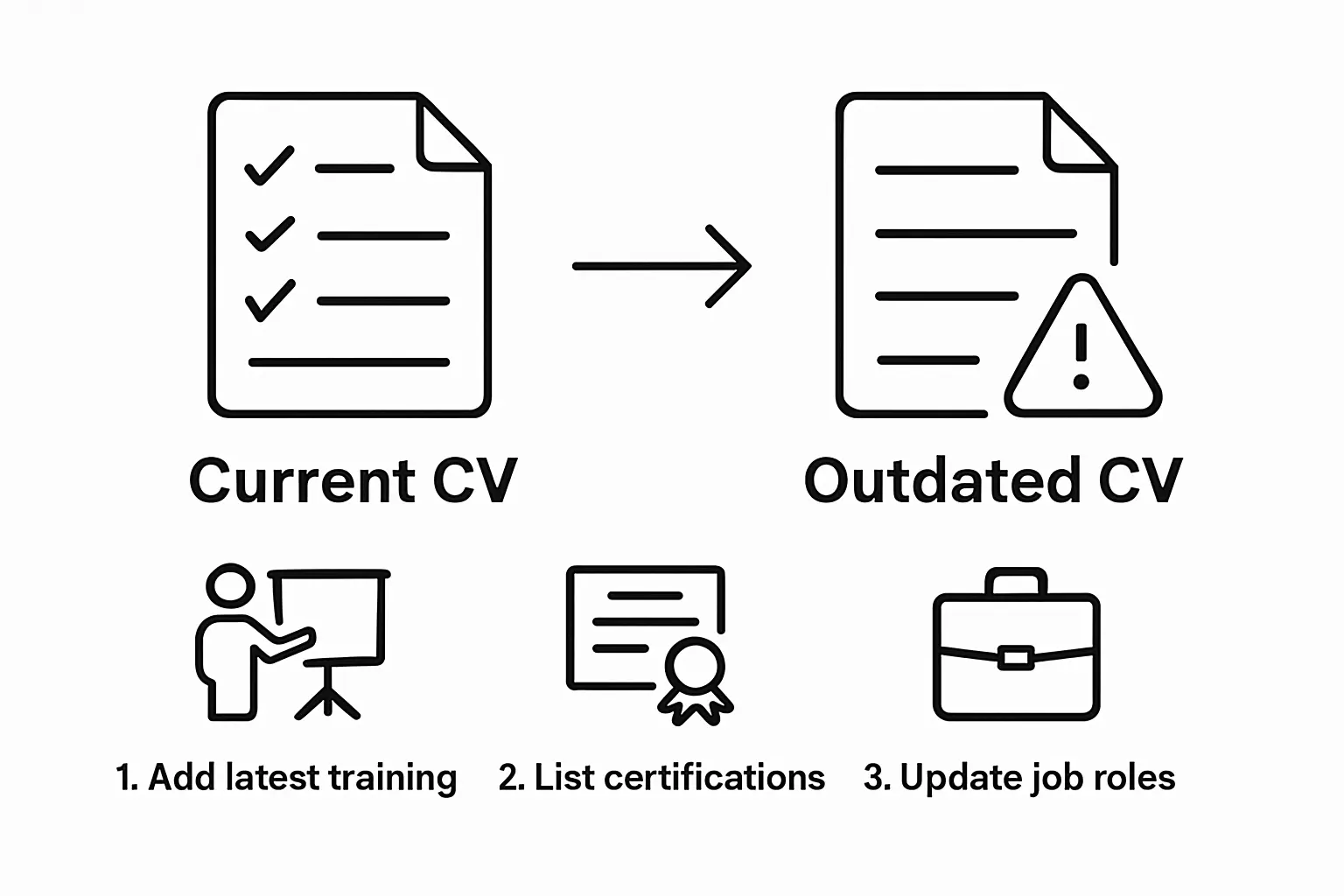
Professionals should adopt a proactive approach to CV maintenance, treating their professional document as a dynamic representation of their evolving capabilities. The UK Government Security Profession Career Framework emphasises continuous professional development, which directly translates to regular and meaningful CV updates that reflect one’s current skills, qualifications, and professional trajectory.
Recommended CV updating practices include:
- Quarterly comprehensive review of professional credentials
- Immediate documentation of new certifications or training
- Tracking and incorporating recent professional achievements
- Removing outdated or irrelevant historical information
- Aligning CV content with current security sector requirements
Successful CV management goes beyond mere documentation. It represents a professional’s commitment to excellence, adaptability, and continuous learning. Security professionals who view their CV as a living document—constantly refined, updated, and optimised—position themselves as forward-thinking, detail-oriented candidates who understand the dynamic nature of the security industry.
Take Control of Your Security Career with a Fresh CV
Staying ahead in the security sector means keeping your CV current and perfectly aligned with the latest industry standards. As the article highlights, an outdated CV risks disqualification, lost security clearances, and missed opportunities. You need a platform that understands these challenges and supports your professional growth by connecting you directly with UK security employers actively seeking candidates like you.

Unlock your potential now by creating and updating your profile on Security Jobs Board. With a user-friendly interface tailored for security professionals, you can upload your latest CV, set targeted job alerts, and apply quickly to roles that demand your vetted skills and certifications. Don’t let an outdated CV hold you back. Join the Security Jobs Board today and secure your next career move with confidence.
Frequently Asked Questions
Why is it important to update my CV regularly in the security sector?
Regularly updating your CV is crucial in the security sector as it ensures that your qualifications, training certifications, and security clearance levels are current. This not only enhances your employability but also demonstrates your commitment to ongoing professional development and adherence to industry standards.
What key elements should I include when updating my security CV?
When updating your security CV, include recent professional training and certifications, your current security clearance status, new technical or specialist skills, and any achievements or milestones in your professional development.
How can an updated CV improve my job prospects in security?
An updated CV improves your job prospects in the security sector by enhancing your visibility to potential employers, streamlining pre-employment checks, and showcasing your ongoing professional growth. This reflects your commitment to meeting evolving industry standards and makes you a more competitive candidate.
What are the risks of having an outdated CV in the security industry?
An outdated CV can lead to automatic disqualification from job roles, suspension of security clearances, and damage to your professional reputation. In the security sector, where accuracy and transparency are paramount, failing to update your CV may also raise concerns about your attention to detail.
Recommended
- Why Your CV Matters When Applying for Security Jobs|BM
- 7-Step Security Job Search Checklist for UK Professionals|BM
- Master the Security Jobseeker Onboarding Process Easily|BM
- 7 Essential Security Job Hunting Tips for 2025 UK Seekers|BM
- Upskilling in Hospitality 2025: Complete Canadian Guide - Probe IT


